Tag Archives: Bali

Lake Toba Off the Beaten Track: What to See, What to Do, and How to Go from Bali

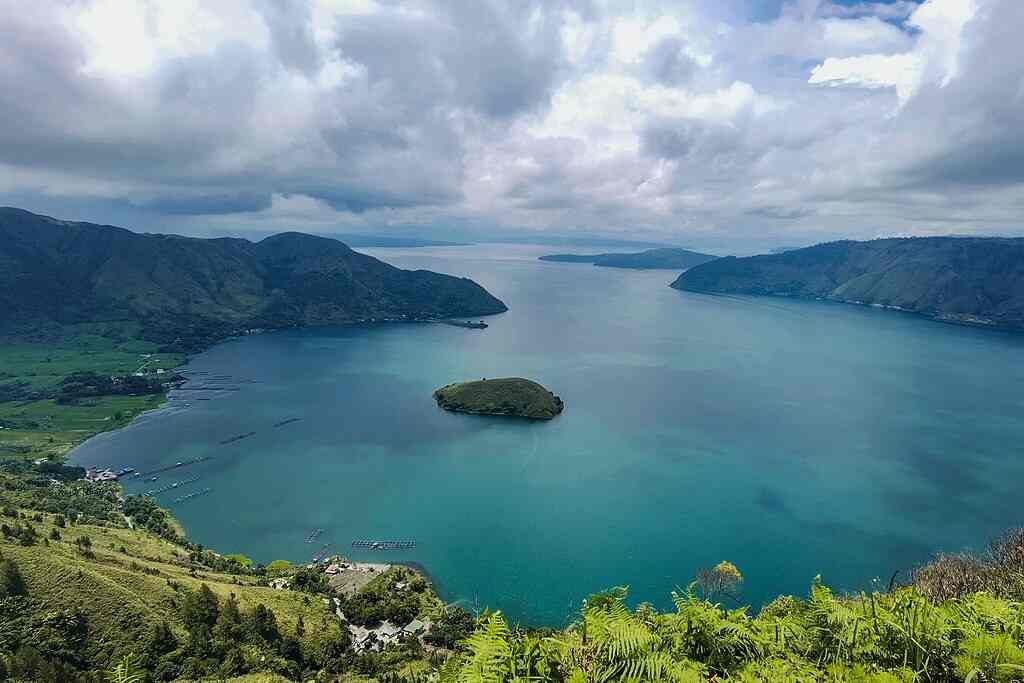
Lake Toba is one of those places that feels almost unreal the first time you see it. A huge dark volcanic caldera, a deep blue lake inside it, and a fertile island floating in the middle: the whole landscape looks like a masterpiece of nature. It is magnificent, peaceful, rejuvenating, and one of the most rewarding stops on a journey through Sumatra.

At the same time, Lake Toba is a destination that has to be earned. It usually takes more time, more planning, and more transport changes than an easier Bali getaway or a quick Java escape. But that is also part of its appeal. Once you arrive, the atmosphere is calmer, the scenery is bigger, and the experience feels deeper.

If you are asking what to see at Lake Toba, what to do around Samosir Island, and how to travel from Bali to Lake Toba, this guide is designed to help you get inspired, stay practical, and arrive well prepared.

Quick overview: Lake Toba is the largest lake in Southeast Asia and around 450 meters deep (1,476 ft). Samosir Island sits in the middle of the lake and is one of the best bases for travelers who want scenery, culture, and a slower pace.

What Can You Imagine About Lake Toba?

Lake Toba is the kind of destination where atmosphere matters as much as attractions. You can imagine a canoe drifting on still water, a fisherman carrying his net, and the whole lake turning bluish or soft pink toward evening. On the shore, the unusual rooflines of Batak houses point skyward, and time slows down enough for long lunches, quiet views, and conversations you remember long after the trip is over.

It is a place of calm. You do not come here for frantic sightseeing. You come here for perspective, for a feeling of space, and for the quiet satisfaction of reaching one of Indonesia’s truly special landscapes.

The History and Scale of Lake Toba

Lake Toba was not “created” in the ordinary sense. It was formed by one of the largest known volcanic eruptions in Earth’s history, around 74,000 to 75,000 years ago. The eruption caused the magma chamber roof to collapse, creating the huge caldera that later filled with water.

Length
100 km (62 miles)
Width
31 km (19 miles)
Depth
450 m (1,476 ft)

Samosir Island is not just any island in the middle of a lake. It is part of the caldera structure itself, which is why the whole area feels geologically unique. The scale is also larger than many first-time visitors expect: Lake Toba behaves more like an inland sea than a small mountain lake.

Travel tip: because the lake is so large, travel times around it can be longer than they look on a map. Build in extra time for ferries, viewpoints, winding roads, and weather changes.

How to Go from Bali to Lake Toba

By Plane: Bali to Silangit Airport (DTB)

One of the most practical ways to reach Lake Toba from Bali is to fly from
Ngurah Rai Airport (DPS)
to Silangit Airport (DTB), usually with a transit in Jakarta.

Typical route

  • Ngurah Rai (DPS) → Jakarta (CGK)
  • Transit in Jakarta
  • Jakarta (CGK) → Silangit (DTB)
  • Then continue by road to the Lake Toba area

Airlines often used on this route

By Plane: Bali to Medan (KNO)

Another common option is flying from Bali to Medan / Kualanamu International Airport (KNO), then continuing by road to Parapat before taking the ferry to Samosir Island.

Why choose the Medan route?

Medan is a major gateway city and often gives travelers more choices when searching domestic or international flight combinations. It can also make sense if you plan to combine Lake Toba with Medan city visits or Bukit Lawang.

By Car or Bus

Traveling all the way from Bali to Lake Toba by land is possible in theory, but it is extremely long and impractical for most travelers. For almost everyone, flying first is the realistic choice.

How to Get to Lake Toba Step by Step

Visiting Lake Toba, and especially Samosir Island, usually means combining several forms of transport. The route is not difficult, but it does reward a little preparation.

Step 1: Fly to Medan or Silangit

If you fly to Medan, you will usually have more booking options. If you fly to Silangit, you can save time on the overland transfer to the lake.

  • Bali (DPS) → Medan (KNO): often the easiest route to search and compare
  • Bali (DPS) → Silangit (DTB): usually with a stop, often in Jakarta
  • Silangit Airport to parts of the Lake Toba area: much closer than Medan

Step 2: Continue by Road to Parapat

From Medan, most travelers continue to Parapat, the ferry town on the lakeshore. Depending on traffic, weather, and the operator, the road transfer can be long, so do not overload your arrival day with too many extra activities.

Possible options usually include:

  • Shared taxi or minivan
  • Private car
  • Public bus
Important: I removed fixed fare numbers from this rebuilt version because transport prices change and I did not verify them as current. It is better to confirm current fares locally or with your hotel before travel.

Step 3: Ferry from Parapat to Tuk Tuk on Samosir Island

Once in Parapat, many travelers head straight to Tuk Tuk on Samosir Island. Tuk Tuk is one of the most popular places to stay because it combines lake views, guesthouses, restaurants, and easy access to island exploration.

Ferry schedules can vary, so it is always safer to re-check locally when you arrive rather than relying on an old online timetable.

How to Go from Medan to Parapat

If you arrive in Medan first, the next practical goal is getting to Parapat. Many travelers use a tourist minibus or shared taxi because it reduces the complexity of multiple bus changes. Local buses can still work if budget matters more than comfort.

How to Go from Parapat to Tuk Tuk

Parapat has little long-stay appeal for many travelers, so most visitors continue directly to Samosir unless they arrive too late for the boat. Once in Tuk Tuk, it is much easier to settle into guesthouses, find food, and organize your next day’s sightseeing.

Read also:
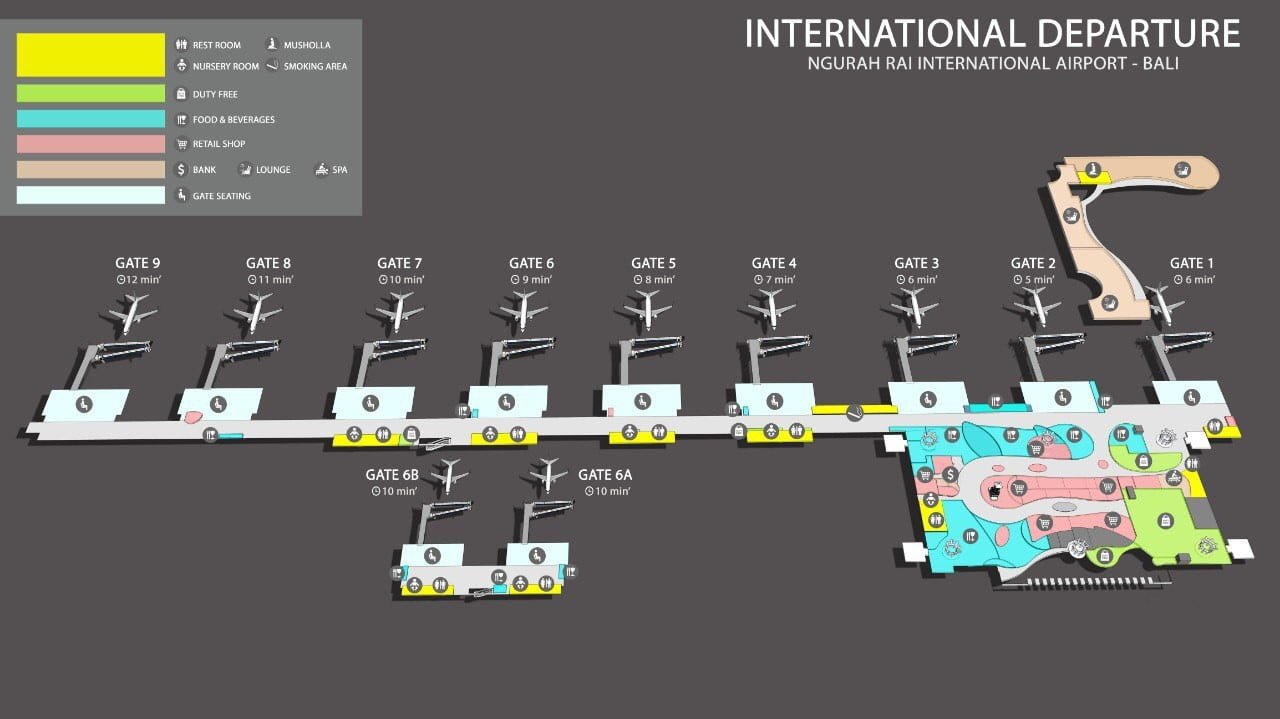
Bali Airport DPS | Important and Practical Tips to Improve Your Experience at Ngurah Rai Airport

Other International Gateways to Lake Toba

Direct Flight from Kuala Lumpur to Medan

If you are combining Indonesia with Malaysia, Kuala Lumpur can be a convenient gateway into North Sumatra before continuing to Lake Toba.

Direct Flight from Singapore to Medan

Singapore is another useful international jumping-off point if you want to continue into North Sumatra and then Lake Toba.

Culture and People of Lake Toba

Lake Toba is not only a natural destination. It is also one of the most distinctive cultural regions in Indonesia. Although Indonesia is the world’s largest Muslim-majority country, the Batak area around Lake Toba is especially known for its strong Christian Protestant heritage today, layered over much older Batak traditions and beliefs.

Samosir Island is widely associated with the cultural heartland of the Batak Toba people. As you travel, you may hear Batak songs, notice bold painted motifs on buildings, and see the remarkable wooden houses with their dramatic boat-shaped roofs.

Even when some experiences are adapted for visitors, they still offer real insight into a living culture. The region feels different from Bali, Java, or even other parts of Sumatra, and that difference is one of its greatest strengths.

Activities to Do and Visits Around Lake Toba

Lake Toba rewards travelers who stay a little longer. It is not only about looking at the view, although the view alone is worth the trip. It is also about village life, cultural sites, easy scenic stops, volcano hikes, lakeside boat journeys, and discovering corners of North Sumatra that still feel less crowded than Indonesia’s most famous tourist circuits.

1. Samosir Island

Samosir is often the heart of a Lake Toba itinerary. A day cruise can take you past traditional villages, white-sand stretches, swimming spots, and cultural sites such as Tomok and Simanindo. If you only have a few days in the region, staying on or around Samosir usually gives the strongest Lake Toba experience.

Tomok Village

Tomok is one of the easiest and most rewarding cultural stops on Samosir. It is known for its Batak houses, historical character, and convenient location for visitors arriving by ferry or exploring nearby.

Tomb of King Sidabutar

One of Tomok’s best-known attractions is the Tomb of King Sidabutar. Around it, you may also find traditional carvings, stone statues, cultural performance spaces, and stalls selling typical Batak souvenirs.

Binangalom Waterfall

Binangalom Waterfall, also called Situmurun by many locals, is one of the most memorable natural excursions around the lake because the waterfall flows directly into Lake Toba. It is one of those places that feels cinematic in person.

Hike Pusuk Buhit Volcano

Pusuk Buhit is more than a mountain hike. It is a place tied to Batak ancestral stories and remains spiritually meaningful for many local people. If you enjoy hiking and want one of the region’s most symbolic viewpoints, this is a powerful choice.

Depending on your pace and route, the climb can take most of the day, so start early, carry enough water, and prepare for changing conditions.

Holbung Hill (Bukit Holbung)

Holbung Hill is often recommended because it offers one of the best effort-to-reward ratios in the region. The climb can be fairly short, but the views are wide and memorable, with rolling slopes, fresh air, and sweeping views over the lake. Some travelers call it “Teletubbies Hill” because of its rounded, open landscape.

It is especially good for those who want a scenic stop without committing to a full-day mountain hike.

Huta Bolon Simanindo Batak Museum

The museum is a worthwhile stop if you want a stronger sense of Batak history, architecture, and artistic traditions. The complex itself is part of the appeal, not just the objects inside.

  • Location: Simanindo, Samosir Regency
  • Published hours: daily, 10:00 AM to 5:00 PM
  • Entrance: check current fee locally before visiting

Bathe in the Natural Hot Springs: Aek Rangat

At the foot of Pusuk Buhit near Pangururan, the Aek Rangat hot springs offer a more relaxing contrast to hiking and road transfers. If you like balancing adventure with recovery, this is a smart addition to the itinerary.

Entrance pricing can change, so it is best to confirm current fees locally before your visit.

2. Parapat

Parapat is often treated as a transition point, but it has a few places worth noting if your timing or itinerary gives you room.

The Sunday Market in Pekan Tigaraja

The Sunday market in Pekan Tigaraja is useful if you want a more local feel, with Batak handicrafts, regional produce, traditional clothing, and the day-to-day energy of a working lakeside town.

Batu Gantung Rock in Parapat

Batu Gantung is linked to one of Parapat’s better-known local legends. Even if you are not a legend-seeker, it adds a layer of narrative to the town and can make a short stop more meaningful.

3. Merek

Sipiso-piso Waterfall

Sipiso-piso Waterfall is one of the standout natural sites in the greater Lake Toba region. It drops around 120 meters (394 feet) and is framed by green highlands and dramatic viewpoints. It is one of the most photogenic places in North Sumatra and a strong addition to any itinerary that includes road exploration.

Read also:
From Bali to Raja Ampat (4 Kings) | Complete Guide to Visit West Papua

Preparation tip: roads around Lake Toba are scenic but winding. If you are combining viewpoints, waterfalls, and ferry crossings in a single day, keep your plan realistic and leave room for delays.

Medan Region and Bukit Lawang

If you are traveling all the way to North Sumatra, it often makes sense to combine Lake Toba with at least one more regional destination. One of the most rewarding combinations is Medan + Lake Toba + Bukit Lawang, because together they give you urban culture, volcanic scenery, and rainforest wildlife.

Medan Region

Medan is the capital of North Sumatra and a major transport hub. Many people transit quickly, but the city has enough history and architectural interest to justify a short stay.

  • Maimun Palace
  • Tjong A Fie Mansion
  • Masjid Raya Al Mashun Mosque
  • Graha Maria Annai Velangkanni Temple

Bukit Lawang

Bukit Lawang is one of North Sumatra’s most famous nature destinations and a classic place for orangutan-focused jungle trips. It serves as a gateway to Gunung Leuser National Park and gives the trip a completely different mood from Lake Toba.

At Lake Toba, the rhythm is calm, open, and lakeside. In Bukit Lawang, it becomes forested, humid, and full of wildlife anticipation. That contrast is exactly why the combination works so well.

  • Jungle trek in search of orangutans
  • Bukit Lawang Wisata Alam
  • Bukit Lawang Bat Cave
  • River-based experiences on the Bahorok River

From Medan to Bukit Lawang

Also useful:
Sumatra Travel Guide: Discover the Top Must-Visit Places and Unforgettable Experiences

Practical Planning Advice Before You Go

What to prepare

  • Cash for local transport, smaller guesthouses, and markets
  • Extra time buffer for flights, transfers, ferries, and weather changes
  • Sun protection and a light rain layer
  • Comfortable shoes for villages, viewpoints, waterfalls, and ferries
  • A flexible mindset, especially if using public transport

Why people love Lake Toba

  • The scenery is genuinely grand and different from Bali
  • The Batak culture gives the trip real depth
  • The region feels calmer and less rushed
  • It suits slow travel better than checklist tourism
  • It combines geology, culture, villages, and nature in one destination

Sources and Useful Reading

Sources:
CleverlySmart,
PinterPandai,
Wonderful Indonesia,
Northabroad,
TripCanvas

Read also:
Bali Airport DPS Guide,
From Bali to Raja Ampat,
Sumatra Travel Guide

Ready to Book Your Villa in the Heart of Lively Seminyak, Bali?

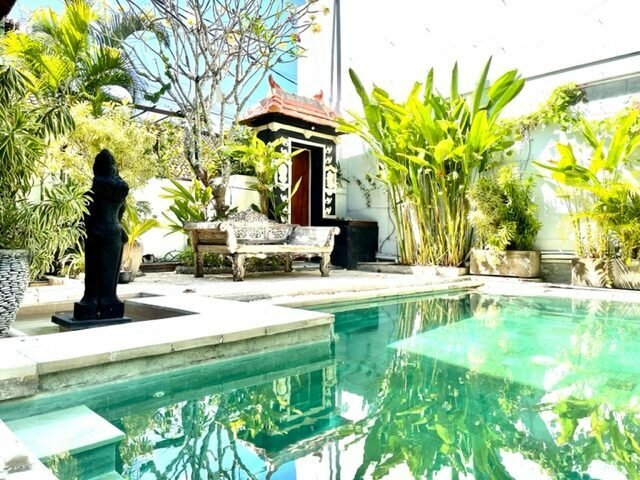
If you are planning Bali before or after Sumatra, Villa Carissa in Seminyak offers a private pool, enclosed garden, and a central location that makes it easy to enjoy the best of Bali in comfort.

Whether you are traveling with family, friends, or on a romantic getaway, Villa Carissa in Seminyak offers the perfect base for exploring Bali’s many attractions and enjoying a relaxing vacation.


Villa Carissa in Seminyak Center, Bali
Villa Carissa in Seminyak Center.

Mount Agung Trekking

Located in the east of the island and culminating at 3,142 meters (10 308 ft), Mount Agung or Gunung Agung is the highest and most sacred mountain in Bali. Mount Agung is not only a mountain, but it is also a dangerous volcano. Indeed, during the 1963 eruption, approximately 1,500 people lost their lives. Tens of thousands more also lost their homes. The flanks of the volcano are highly prized by farmers in the region, as they are very fertile. Be careful, all the same, this volcano is still active and closely monitored by scientists. Fortunately, all this does not prevent its ascent, from the moment you are accompanied by a reliable guide. It is strongly advised not to embark on an ascent alone, at the risk of getting lost.

Mount Agung Sunrise trekking: the legend

Like every important place, Mount Agung is accompanied by a legend made up of false gods and their incredible stories. Regarding the Agung volcano, the story is a bit complicated, but we will try to simplify it for you…

At the beginning of time, the mythical God Sang Hyang Widi, began a long meditation, during which he created the foundations of his universe. It was separated into three parts: the sky was the domain of the gods, the basement was that of the demons and the sea that of the animals.

However, this imperfect god had forgotten to create a place for Men. He then decided to take a large fish from the sea which he transformed into Bali. The eye of this fish has become the famous Mount Agung, its hearing Lake Batur, its caudal fin (the tail of fishes and some other aquatic vertebrates.) the Gunung Abang and its backbone the chain of volcanoes that crosses Bali. The Balinese therefore live today in Bali, land of men, above the world of demons and under the benevolent eye of their legendary gods.

Gunung Agung Sunrise Descension
Taken during a descension of Mount Agung, the highest peak on Bali, you can see the highest peak of the island of Lombongon through the sunlight and clouds. Elizabeth.rice, CC BY-SA 4.0, via Wikimedia Commons

Climbing Mount Agung

Choose the season for your trekking

Although more difficult than the ascent of its neighbor Mount Batur or Mount Bromo in Java, the trek that leads to the summit of Gunung Agung is accessible to all with good equipment. However, it is preferable to climb during the dry season (March to November) rather than during the rainy season, which can make the trails difficult to pass.

Prepare your trek

DepartureDurationDistanceAltitude MinAltitude MaxPositive elevationOrientationLevel
Pura Pasar Agung1/2 day6 Km1600 m
5249 ft
2820 m
4265 ft
1300 m
4265 ft
NorthDifficult
5-7 hours
Pura Besakih1 day15 Km1100 m
3608 ft
3142 m
10308 ft
2100 m
6889 ft
EastDifficult
3-4 hours

Two routes are possible:

1. From Pura Pasar Agung

One starts from Pura Pasar Agung, a temple located on the southern flank of the volcano, 1600 meters (5249 ft) above sea level. It is shorter but does not offer access to the highest point. The second starts from a little lower on the western slopes of the volcano, from Pura Besakih.

The start and the ascent always take place at night, so that you can enjoy the sunrise at the top. It is therefore imperative to have a headlamp to climb! Also, a rain jacket, good shoes and warm clothes – even gloves and a hat! – are recommended. For around IDR 750,000 per person (about € 50), you will treat yourself to the services of a local guide who will accompany you to the crater, including breakfast at the top.

2. From Pura Besakih

From Pura Besakih, count about six hours of ascent and three hours of descent. The trek starts in the jungle, then you’ll gradually leave the tropical forest for these lunar landscapes, and these paths lined with slag. The slope can be steep in some places, the paths sometimes slippery and steep, so caution is advised during the entire ascent and descent.

Arrived at dawn at the top, before the mist and clouds set in, you’ll are struck by this breathtaking panorama – and by the fresh air a little, too! The magical view offered by Gunung Agung is worth the effort made during the night. To the east, you can see Mount Rinjani, which soars majestically towards the sky. You’ll enjoy an absolutely grandiose view of the whole of Bali: its lush vegetation, its hills and its rice terraces, surrounded by this sea on the horizon which extends indefinitely.

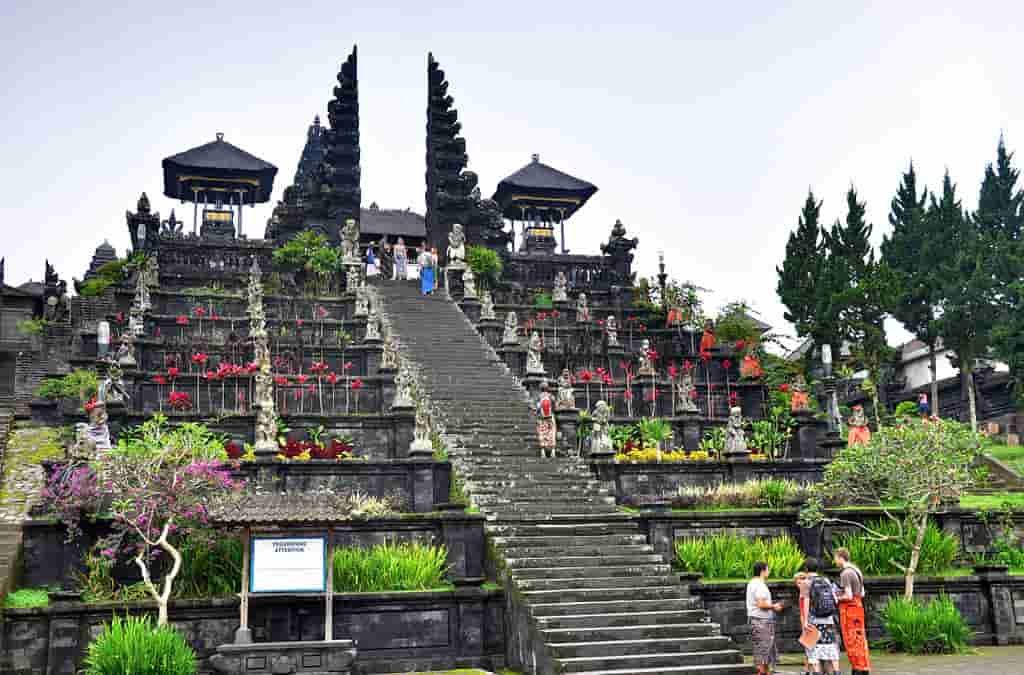
Besakih Bali Indonesia Pura-Besakih-03
The Mother Temple of Besakih, or Pura Besakih, in the village of Besakih on the slopes of Mount Agung in eastern Bali, Indonesia, is the most important, the largest and holiest temple of Hindu religion in Bali. Photo by CEphoto (CC BY-SA 3.0), Uwe Aranas via Wikimedia Commons

Read also: Useful Tips for Visiting Temples in Bali

Indonesia being the geographical area with the greatest concentration of volcanoes in the world, organizing a stay in Bali or the Sunda Islands without tasting the joys of a night trek and the breathtaking views offered by these curiosities of the nature would be missing something!

Puncak gunung agung
An inscription at 3142 meters (10308 feet) above sea level of the mountain peak. Rendika Iswandi, CC BY-SA 4.0, via Wikimedia Commons

5 Reasons that will make you visit Mount Agung

From Mount Agung in Bali, the panorama is simply magnificent. Do not hesitate to climb this superb sacred volcano!

1. Because Mount Agung is a remarkable religious symbol

This imposing mount was already considered sacred before the expansion of Hinduism. Nearly 900 meters on one of its flanks, there was a sanctuary where the cults of the mountain and the ancestors were carried out. This site will become one of the best attractions in the area. This is the temple of Besakih. It is the largest Hindu temple in Bali! You must visit it.

Here you will see altars, shrines and precious statues. So take the opportunity to climb the mountain and fetch the palm fronds and wet them with holy water, as the pilgrims to the site do. A fine example of cultural sharing.

2. Because its ascent is a very exciting challenge

It is always very exciting to face such a colossus. Put your muscles to the test, and show your courage by trying to climb this mountain. Several options are available to you to achieve this! You can launch from Besakih Temple to reach the top in approximately 6-7 hours. Others can approach it from Pasar Agung Temple with around 3-4 hours drive.

There is a route located in the north at sakti, very suitable for you who are not very fit physically. So it’s up to you to make your choice! The only thing that is clear is that you will be thrilled whichever path you choose.

3. Because you will discover marvelous valleys there

Other priceless riches surround this mountain. Head to the area between Sidemen and Selat. She is incredibly beautiful! This is the most scenic area in all of Bali. Marvelous rice terraces are observed. Rice being a very popular food in this part of the world, its cultivation is widespread. What will strike you is the care given to the plants. Ingenious!

The decor is very uplifting! You will also see lush wooded hillsides. This area is a real attraction. Make your stay unique by visiting these magical places.

4. Because charming guides will make your visit more rewarding

To allow you to take full advantage of this trip, you are strongly advised to seek the services of a guide. It’s primordial ! Several reasons may justify this state of affairs. The guides, who are generally natives, have a better understanding of the places and will be able to show you around the best places that exist. They know the trails even in bad weather conditions.

They can speak local languages. All this saves you a lot of inconvenience! Given the sacredness of the site, they really put their heart into it to offer you the best memories of your life in complete safety.

Read also: Hiking Mount Batur in Bali | Hike to witness the sunrise from the top of the volcano!

5. Because it is a real providential locality

Everything is done in Agung to make it a piece of paradise on earth. Once at the top of the mountain, you will have panoramic views in all directions. Exquisite wildlife is found there! Wild pigs and macaques are present in the wooded depressions of the site. Eagles and falcons are frequently seen there. At the base of the mount, you will see an elegant well-stocked forest.

Observed from several positions, Agung is just grandiose. To top it off, witnessing the sunrise is luminous. It is an extraordinary moment!

Besakih Bali Indonesia Pura-Besakih-03
Besakih temple with Mount Agung background. Besakih is The Mother Temple of Besakih, or Pura Besakih, in the village of Besakih on the slopes of Mount Agung in eastern Bali, Indonesia, is the most important, the largest and holiest temple of Hindu religion in Bali. Photo by CEphoto, Uwe Aranas, CC BY-SA 3.0 via Wikimedia Commons

The place of Mount Agung in Balinese culture

The Savior Mount

Its size, its majesty, but also its dangerousness have made gunung Agung, literally the “high mountain”, the most sacred mountain in Bali. Nevertheless, it’s a safe bet that Mount Agung has been worshiped for a long time, even before the introduction of Hinduism on the island. Indeed, archaeologists have discovered that Pura Besakih, – the largest and most important Hindu temple in Bali, located 1000 meters above sea level on the southwestern slope of the volcano – was erected on an ancient shrine, several thousand years.

Myth

Like every important place, Mount Agung is accompanied by a legend made of Gods and their incredible stories. Regarding the Agung volcano, the story is a bit complicated, but we will try to simplify it for you… At the beginning of time, the mythical God Sang Hyang Widi, began a long meditation, during which he created the foundations of his universe. It was separated into three parts: the sky was the domain of the Gods, the basement was that of the demons and the sea that of the animals.

However, this imperfect God had forgotten to create a place for Men. He then decided to take a large fish from the sea which he transformed into Bali. The eye of this fish has become the famous Mount Agung, its hearing Lake Batur, its caudal fin the Gunung Abang and its backbone the chain of volcanoes that crosses Bali. The Balinese therefore live today in Bali, land of men, above the world of demons and under the benevolent eye of their legendary Gods.

Read also: Things To Do When Arriving at Bali Airport (DPS) | Tips for Every Traveler As Soon As We Land

The capricious mountain

Mount Agung is both feared and revered by the Balinese people. Because despite its sometimes deadly anger, it is its eruptions and its deposits of ash and mineral matter on its slopes and in its valleys that make the excellent fertility of the Balinese soil. And the inhabitants return it well, multiplying the offerings and the prayers in his honor, in the hope of obtaining his clemency. During the 1963 eruption, the lava stopped just a few meters from the Pura Besakih temple.

The Balinese saw it as a sign of the Gods who had shown their omnipotence and their anger with this eruption, but ultimately decided to spare their place of worship from the lava. For the inhabitants of the Island of the Gods, Mount Agung is equated with Mount Meru. In Hindu mythology, the latter designates the central mountain, the axis around which the world revolves. Mount Agung at the center of the world is more than enough reason to decide to climb its slopes and reach its summit!

Mount Agung 2016-08-06 (28796213173)
The South side of Mount Agung, Bali, Indonesia.. Gunung Agung is a stratovolcano, which explains this perfectly conical and sloping shape. Everyone Sinks Starco, CC BY-SA 2.0, via Wikimedia Commons

Practical info | Mount Agung trekking preparations

For the ascent, bring good walking shoes, warm clothes, water bottles and torches or headlamps.

For who?

Trekking on Mount Agung requires being in good physical shape. Indeed, it is not an ordinary walk, but a hike reserved for the most athletic among you. If you’re out of breath just from walking around your neighborhood, don’t try the adventure. In addition, the ascent is prohibited for women who are menstruating. The Balinese are very superstitious and consider this an omen of bad luck.

When to go there?

It is advisable to climb Mount Agung during the dry season, i.e. from April to September. During the wet season, the paths can be dangerous, as they are too slippery. In addition, the sunrise will be less impressive than in the dry season. Attention, the ascent is prohibited during April, when there is a ceremony at the Besakih temple or at the Pasar Agung temple.

Bali Local Ecosystems | Exploring Bali’s Natural World

How much does it cost?

Officially, a trek to Mount Agung costs nothing. The only thing you will have to pay for will be your guide. Depending on your negotiating skills, you will get IDR 900,000 to IDR 1,800,000, or about €50 to €100 per person.

Find the right guide

Apart from a good physical condition, you will have to find the right guide, the one who will be able to manage your excursion with pleasure. Some tourists come back very disappointed from their trek because of an incompetent guide or one who does not listen to their needs. We advise you to book through a serious agency and ask for the number of years of experience that the guide has on the counter. If the name of the guide changes at the last minute, refuse! You do not know if the person is competent to accompany you.

Prepare

At the start of the hike, you may get hot quickly, so a t-shirt should suffice. However, the higher you go, the more the temperatures will drop. So remember to bring a warmer garment. Then, it is advisable to put on real good quality hiking shoes. Finally, take supplies, sandwiches, protein bars, drinks and pharmacy supplies in case of injury.

Suasana Pagi dan Kemegahan Gunung Agung
Morning atmosphere and the splendor of mount Agung. Tri Arya Dhyana K., CC BY-SA 4.0, via Wikimedia Commons

Photo credit (main picture): Arthamade, CC BY-SA 4.0 via Wikimedia Commons

Photo description: view of Mount Agung from Sanur beach, which is only visible in the morning.

Notes: all prices are subject to change without prior notice.

Rinjani Trek: A Comprehensive Guide to Conquering Lombok’s Majestic Volcano


Have you booked your villa in Seminyak center (South Bali)?

I need more information

Located in Seminyak Center – Bali, Villa Carissa offers a private swimming pool and enclosed garden to guarantee your privacy. You can book your private pool villa here with us.

Private Pool at Villa Carissa in Seminyak Center

What to Do and See in Seminyak, Bali?

Seminyak is one of the most stylish and convenient places to stay in South Bali. It blends beach life, sunset views, shopping, upscale dining, family-friendly villas, wellness experiences, and lively nightlife in one easy-to-enjoy area. If you are wondering what to do in Seminyak Bali, this guide covers the best beaches, shopping streets, spas, restaurants, beach clubs, temples, and couple-friendly experiences.

Best things to do in Seminyak
Family-friendly + couple-friendly
Luxury, lifestyle, beach & dining
SEO-optimized internal links
Sunsets one of Seminyak’s biggest highlights
Walkable core shops, cafés, spas and dining
Great for couples romance, beach clubs, villas
Great for families private villas and easy beach access

Why Visit Seminyak, Bali?

Seminyak is one of the most polished beach areas in Bali. Compared with neighboring Kuta, it feels more refined, more spacious, and more design-focused. You will find beach clubs, boutique shopping, stylish cafés, family villas, spa treatments, sunset bars, and some of Bali’s best restaurants, all within a relatively compact area.

It is also one of the easiest places in Bali for travelers who want comfort and convenience. You can spend the morning at a café, shop along Kayu Aya or Petitenget, enjoy a spa in the afternoon, catch sunset on the beach, and finish with dinner or cocktails without needing to cross the island.

Why travelers love Seminyak

  • Beautiful beach and easy sunset access
  • Excellent restaurants, cafés and brunch spots
  • Chic shopping streets and designer boutiques
  • Family-friendly villas with private pools
  • Beach clubs, nightlife and romantic dining
  • Good base for a stylish Bali stay

Best Things to Do and See in Seminyak

Seminyak is ideal for travelers who want a mix of relaxing and social experiences. You can start slow with coffee and breakfast, move into shopping or spa time, then end the day with sunset, dinner, and nightlife. It works equally well for families, couples, solo travelers, and groups of friends.

Take Your Morning Coffee or Brunch

One of the simple pleasures in Seminyak is café-hopping. The area is known for stylish breakfast places, brunch cafés, espresso bars, and all-day dining spots. If you are curious about kopi luwak, ask how it is sourced before ordering and choose places that can clearly explain the origin of the coffee.

Seminyak is especially strong for late breakfast culture, casual brunches, smoothie bowls, artisan coffee, and people-watching. It is one of the easiest places in Bali to start your day slowly and comfortably.

Shopping Extravaganza in Seminyak

Seminyak is one of the best shopping districts in Bali, especially if you enjoy fashion, home décor, jewelry, swimwear, gifts, and lifestyle boutiques. It is more polished and more upscale than many other areas of the island, so prices can be higher, but the selection is also stronger.

Walk Through the Main Streets

The most popular shopping and dining corridors include Jalan Kayu Aya, Jalan Petitenget, Jalan Dhyana Pura, and the wider Oberoi area. These streets are packed with boutiques, cafés, restaurants, bars, salons, and small concept stores.

Seminyak Village Shopping Mall

If you want something easy and air-conditioned, Seminyak Village is a simple stop for shopping, dining, and escaping the heat for a while.

Watch: shopping and strolling around Seminyak
This Seminyak-focused vlog is a good visual match for the shopping and day-out section. :contentReference[oaicite:1]{index=1}

Read also:
Shop Till You Drop: Best Places to Go Shopping in Bali

Seminyak Flea Market

The Seminyak Flea Market is a classic stop for souvenirs, beachwear, accessories, gifts, and small decorative items. It is not huge, but it is convenient and fun if you are already in the Kayu Aya area. Bargaining is still part of the experience in many stalls.

Watch: Seminyak flea market and street atmosphere
Reliable indexed Seminyak video used as a stronger replacement for older embed blocks. :contentReference[oaicite:2]{index=2}
Map: from Villa Carissa to Seminyak Flea Market

Seminyak Beach and Mesmerizing Sunsets

Seminyak Beach is one of the area’s main attractions. The long stretch of sand is ideal for beach walks, sunset drinks, casual lounging, beginner-friendly surf sessions, and simply slowing down for a few hours. Compared with some busier parts of South Bali, it often feels more relaxed and more stylish.

Late afternoon is the best moment. Grab a seat at a beachfront venue, order a fresh juice, cocktail, or coconut, and watch the sky shift into orange, pink, gold, and violet over the Indian Ocean.

Watch: sunset at Seminyak Beach
Replaces the old Wikimedia sunset image block with a more immersive Seminyak sunset video. :contentReference[oaicite:3]{index=3}

Read also:
Seminyak Beach: the ideal beach to see a wonderful sunset in Bali

Vibrant Beach Clubs and Nightlife

As the sun goes down, Seminyak becomes one of Bali’s most entertaining nightlife districts. It is known for beach clubs, rooftop dining, cocktail bars, live music, DJ sets, and stylish dinner-to-drinks venues.

Go to Seminyak’s Beach Clubs

Seminyak has a wide choice of beach clubs and sunset venues. Some are better for daytime lounging, others for a sunset session, and others for a more festive night. Ku De Ta remains one of the classic sunset names in the area, while the broader Seminyak–Petitenget strip gives you many more options depending on your style.

Read also:
Seminyak Beach Club | Chic, Glamorous and Flashy | Perfect For Both Day and Night
and
Bali nightlife guide

Relaxation, Spas and Wellness

Seminyak is one of the best places in Bali for massages, beauty treatments, yoga classes, and spa days. If part of your Bali idea is to relax and disconnect, this is exactly where Seminyak shines.

You will find everything from simple, affordable massages to luxury spa rituals in high-end wellness spaces. It is also easy to add manicures, pedicures, facials, yoga classes, and wellness workshops to your stay.

Cultural Exploration: Petitenget Temple

If you want to add culture and spirituality to your Seminyak stay, Petitenget Temple is the most important nearby temple to visit. It is one of the landmark temples in the area and offers a beautiful contrast to Seminyak’s modern beach clubs, villas, and boutiques.

The temple is especially atmospheric in softer late-afternoon light, and ceremonies sometimes extend toward the beach. Wear a sarong if you plan to enter respectfully, as temple dress standards still apply in Bali.

Watch: Petitenget Temple ceremony and atmosphere
This indexed Petitenget Temple video is a stronger and more relevant replacement for the broken Wikimedia image section. :contentReference[oaicite:4]{index=4}

Read also:
Best temples in Bali

Thrilling Water Adventures and Surfing

Surfing is one of the easiest water-based activities to try in Seminyak. The area works well for beginners and casual surfers, especially when conditions are friendly. If you want a relaxed first surf lesson without heading too far from your villa, Seminyak is a practical place to start.

You can also look into wider Bali water activities such as jet skiing, parasailing, paddleboarding, snorkeling, and diving in other parts of the island.

Good local habit: Seminyak is easiest on foot for short outings, but traffic can be busy. For longer distances, use a taxi, ride-hailing app, or driver. If you rent a scooter, ride carefully and only if you are comfortable with Bali traffic.

Art Galleries and Creative Expression

Seminyak is not only about beach clubs and shopping. It also has galleries, interior design shops, concept stores, and creative corners that reflect the stylish side of Bali. If you like contemporary art, home décor, or creative browsing between lunch and sunset, Seminyak gives you plenty to explore.

Read also:
Best Bali art galleries


What to Do and See in Seminyak for 1 Day

If you only have one full day in Seminyak, keep it simple and stylish:

  1. Start with coffee or brunch in a café.
  2. Browse Jalan Kayu Aya, Oberoi, or Petitenget for shopping.
  3. Take a spa or massage break in the afternoon.
  4. Visit Petitenget Temple if you want a cultural stop.
  5. Head to Seminyak Beach for sunset.
  6. Finish with rooftop dining, a romantic dinner, or beach club cocktails.
Watch: a day in Seminyak
Used here because it is clearly indexed as a Seminyak day-style vlog. :contentReference[oaicite:5]{index=5}

What to Do in Seminyak for Couples

Seminyak is one of the best places in Bali for couples because it combines romance, comfort, dining, design, beach life, and nightlife without requiring long transfers. It can be soft and relaxing during the day, then elegant and lively at night.

Best Seminyak experiences for couples

  1. Enjoy the beach together — especially late afternoon into sunset.
  2. Plan a romantic dinner — ocean views, rooftop settings, or candlelit dining.
  3. Book a spa treatment — a couple’s massage is an easy Bali classic.
  4. Shop together — boutiques, gifts, jewelry, resort wear, and small design stores.
  5. Visit Petitenget Temple — a peaceful cultural stop near the beach.
  6. Go out for drinks — beach clubs, bars, and stylish late-night venues.
  7. Try a private-pool villa stay — one of the most comfortable and romantic ways to stay in Seminyak.
  8. Watch the sunset every day you can — it never really gets old in Seminyak.

FAQ: What to Do in Seminyak, Bali

Is Seminyak worth visiting?

Yes. Seminyak is one of the best Bali destinations for travelers who want beach access, restaurants, boutique shopping, sunset views, spas, and a stylish atmosphere.

Is Seminyak good for families?

Yes. It is especially convenient for families staying in private villas with kitchens, multiple bedrooms, and private pools.

Is Seminyak good for couples?

Very much. Seminyak is strong for romantic dinners, spas, sunset bars, shopping, and private-pool villa stays.

What is the best thing to do in Seminyak?

The classic Seminyak rhythm is café, shopping, spa, beach, sunset, dinner, and nightlife.

Is Seminyak better than Kuta?

They offer different experiences. Kuta is busier and more budget-party oriented, while Seminyak feels more refined, more design-led, and more lifestyle-focused.

Source note:
External inspiration originally referenced CleverlySmart and Pixabay. Main destination copy here has been rewritten, cleaned up, and expanded to fit Villa Carissa Bali’s tone, structure, and internal-link strategy.


Have you booked your private villa in Seminyak center?

Nestled in the heart of Seminyak Center, Bali, Villa Carissa offers a private oasis with a swimming pool and enclosed garden for total privacy. It is an excellent base for enjoying Seminyak Beach, the best restaurants, boutique shopping, and Bali’s most stylish lifestyle district.

Whether you are traveling with family, friends, or as a couple, Villa Carissa gives you a comfortable and elegant home base for discovering
Bali’s many attractions.

I Need More Information

Book Your Private Villa

Promotions


Villa Carissa in Seminyak Center Bali

Villa Carissa in Seminyak Center

HIKING MOUNT BATUR IN BALI: HIKE AT SUNRISE!

No need to say much more than what we see in the photos… The landscape offered when hiking mount Batur is a sea of ​​clouds, the Agung volcano, and the sun peeking out from the horizon. It is simply beautiful! Do you want to discover Mount Batur in Bali? How to get there? How is the ascent going? Mount Batur is a 1 717 meter (5 633 ft) volcano that you can hike in 3-4 hours. In this article, we will provide guidance on how to embark on the hike either on your own or with the companionship of a guide. The options primarily presented by agencies, hotels, and guides revolve around sunrise ascents, often referred to as “sunrise trekking.”

Try the sunrise hike during your stay in Bali

One of the well-known hikes is the ascent of Mount Batur in the early morning. Indeed the principle of the excursion is to witness this sunrise from the top of the volcano!

In short, we pass on this point since the ascent is still really nice but you will absolutely have to climb Mount Batur with a guide by buying the ticket directly in Bali for about € 45 or even simpler by booking your ticket online (at least you have your tickets on the phone and you don’t have to run down the street to find the right provider…).

Mount Batur is an area of Kintamani region with a beautiful lake, Lake Batur. Both are designated as Global Geoparks by the Indonesian government. then, while climbing this mountain, you climbed one of the places recognized by UNESCO.

Batur insunSun is already un and shining on Batur volcano, Bali, Indonesia. Syselpunk, CC BY-SA 4.0, via Wikimedia Commons

Access to the start of the Mount Batur hike

To get straight to the heart of the matter, YES there is a kind of “guide mafia” that prevents you from accessing Mount Batur without being accompanied. The ascent could very well be done without a guide but it is simply IMPOSSIBLE!

If you are lucky enough to experience a sunrise or a sunset, then the experience is unique and you will be amazed! The Mount Batur hike is extraordinary and we highly recommend you do it!

In short, we pass on this point since the ascent is still really nice but you will absolutely have to climb Mount Batur with a guide by buying the ticket directly in Bali for about € 40 (around AU$ 70) or even simpler by booking your ticket online (at least you have your tickets on the phone and you don’t have to run down the street to find the right provider…). If you want, findout in this article concerning an excursion (on the bottom you have Traveloka, a local website): Bali Airport PickUp, Drop-Off Service, Excursion, Travel and Transportation Services at Villa Carissa

Where is Mount Batur?

Mount Batur is located in the east of the island of Bali, so if you are not staying nearby, access to the start of the hike around 4 a.m. is not really trivial…

We share in this article my experience of hiking in an all-inclusive package (this one, with a driver who brings you to the site from his accommodation, hike accompanied by a guide, and return to his accommodation).

But if you want to do the hike by yourself in the early morning, the ideal is clearly to stay close to the starting point of the hike. This is to minimize travel time as much as possible in the middle of the night, barely awake, and on the small Balinese roads…

For this there are in particular these villas not far from the starting point, or the Batur Green Hill hotel.

In any case, whether you go there via the transport of a driver, or whether you go to Mount Batur by yourself, the start of the hike is located at the parking lot of the Pura (temple) Jati Batur.

Di bawah keAgungan MuIn the middle of the magnificent Batur Caldera. Pepperomia, CC BY-SA 4.0, via Wikimedia Commons

With or without a guide?

For the hike consisting of reaching the summit of Mount Batur in the early morning, we had read during our preparations for a trip to Bali, that when you are not accompanied by an official guide, access from hiking can bring tension started when you arrive at the parking lot. Apparently it is not well seen to hike solo, but personally we did not notice it.

This remark is in any case not valid during the day. Indeed, hiking accompanied by a guide during the day is not very interesting: you can see the path perfectly well.

But beyond the professional guide during the climb, the service also includes transport from your accommodation. Which is clearly appreciable in the middle of the night, and this regardless of where we are staying (in my case, he came to pick us up near Seminyak, a few kilometers north of Denpasar).

In summary, we can say that:
  • In the early morning, hiking in the dark and with a night start requires being well prepared. Beyond the fact that it is the most practiced solution, it is also the easy solution to be able to take full advantage of this moment. Without this solution, clearly we would not have done it.
  • During the day, the guide is not necessary. On the other hand, the “show” is not the same as in the early morning…

Go through a local agency

To avoid having to worry, we did the simplest thing and went through a local agency (this one), via an online booking site.

Beyond the driver, we benefited from a guide during the hike, which we really appreciated.

Even lit with a headlamp, the ground being volcanic, the supports are not always easy to find. And the experience of someone who knows the way well is a significant plus. Remember that it is 4am, and that we are not yet fully awake…

For the price we had paid around fifty euros per person (for this service, reserved in advance).

Get up early: the constraint to take into account

I do not hide the fact that for this excursion to Mount Batur the awakening is harsh… It varies according to the season, but the sun generally rises around 6am. Add to that the climb to the summit, which takes 2 hours, and the travel time from your hotel or villa.

Depending on your location, this means getting up between 1:30 and 2:30 a.m. approximately! The drivers can indeed pick you up in the south of the island, on the Kuta coast. But also from closer points such as from Ubud or Amed. As an indication, it is still necessary to count an hour’s drive from Ubud.

Sunrise at Mt Batur, BaliSunrise at Mt Batur, Bali. Olderthangoogle, CC BY-SA 4.0, via Wikimedia Commons

Hiking Mount Batur

The route, stage, itinerary, route, trajectory,

We rate hiking mount Batur as medium difficulty. As with any hike that consists of climbing, the difficulty lies above all in finding your rhythm so as not to lose your breath too quickly.

The elevation gain of this hike is 800 meters (2625 feet).

However, Mount Batur is a volcano, and past eruptions have lined some flanks with lava that has hardened and mostly flaked over time.

The hiking path is therefore often filled with black pebbles, more or less large, not very stable, and on which you sometimes have to climb to move forward.

You must be careful where you put your feet and take good support. And let’s not forget that on the way out we walk by the light of the flashlight…

Equipment for hiking Mount Batur

We therefore advise to have a pair of sneakers that catch a minimum. Avoid smooth soles! Note that the guide is still there to help us clear our way, and give us a hand to climb the rocks if necessary.

For the record, on the way down you will see people doing the descent in sandals! beware of slippery!

For this ascent it takes between 1h30 and 2h depending on your pace. Admittedly, you’ll be a bit in the dark, but the torch allows us to orient ourselves. And above all, we are far from alone… You will see a ballet of beams of flashlights in front, and behind. This hike is more or less a victim of its own success and is therefore relatively popular.

Some ascents may be foggy, and it often is apparently the case. But that is part of the scenery of this hike, because after a while we finish crossing this cloud cover.

You will be in the end above the mist, which makes all the beauty of the sunrise!

Read also: Mount Agung Adventure Travel in Bali

View from Mount Batur at sunriseView from Mount Batur at sunrise. Christophe95, CC BY-SA 4.0, via Wikimedia Commons

At the top of Mount Batur

The sunrise

In terms of altitude, Mount Batur is the second volcano in Bali: it culminates at 1 717 m (5 633 ft). It comes after Mount Agung, which rises to 3 142 meters (10 308 ft).

An enchanting moment!

In the early morning, and at altitude, the temperatures are rather low. So plan a good sweater for the hike, and especially for the summit where you stop moving.

In addition to the accompaniment, the guides also provide breakfast once you reach the top. Sandwiches, bananas, coffee and boiled eggs that can be cooked in the heat sources of the volcano 😉. There is also a cabin where you can sit and quietly wait for the sunrise.

The crater of the volcano

The ascent of Mount Batur allows you to enjoy the first light of day!
Once the spectacle of the sunrise is over, it is possible to walk around, and in particular to get a little closer to the crater. This shows that this volcano is indeed still active, because we can see several sources of smoke.

The last eruption dates from the year 2000. But the most significant was that of 1917 when several thousand victims were counted. As well as many houses and temples that were wiped off the map.

You then have to return to the car park by doing the reverse. The difficulty is different than during the climb, because it is a question of finding your grips well so as not to slip forward.

Nevertheless, this descent is done well, and it is faster than the ascent, of course. We can then visualize the path traveled on the outward journey and observe the landscape this time.

What equipment for the Mount Batur hike?

If you are like us, and do the hike before sunrise, you must above all take a good sweater. This will be used both for the ascent of Mount Batur and especially for the wait at the summit.

The waiting time can seem long and chilly. For the descent, however, the sun has risen and the weather is better.

We said it above, equip yourself with a pair of shoes that grip the ground. You don’t necessarily need a great hiking shoes, just sneakers without a smooth sole will be ok.

If you decide to do it by yourself (without a guide), absolutely bring flashlights (and if possible headlamps). In the case of services accompanied by a guide that we mentioned above, these are provided.

Mount batur and lake
Mount Batur and lake. TropicaLiving, CC BY-SA 3.0, via Wikimedia Commons

Batur region

The road rises and the thermometer slowly drops. From Ubud, fruit and vegetable sellers are increasingly present on the side of the roads, in addition to the usual warungs and stalls. The piles of tropical fruits and jeruk (orange), those very fragrant green-skinned oranges typical of the region, pile up as one approaches the village of Kintamani, in the north of Bali. For a few thousand rupees, you can treat yourself to a basket of fruits in the colors of the rainbow and taste the different local varieties: pineapples, mangosteens, watermelons, bananas…

Kintamani region

The Kintamani region is known to be the breadbasket of Bali. No or few rice fields compared to the rest of the island, but a cooler and more humid climate all year round which allows the cultivation of citrus fruits, but also tomatoes, eggplants, coffee or shallots.

Depending on the route taken, you will sometimes have to pay of a few tens of thousands of Rupiahs to access the village of Kintamani. Past a few shops and a few restaurants at the entrance to the village, the panorama on the right of the roadway is striking.

Lake Batur

A grandiose view of the entire caldera is offered to us, with the volcano in the center, and Lake Batur overlooked by Mount Abang (3rd highest mountain on Bali and is located on the southeast side of Batur Lake and 10.6km or 6.6 miles northwest of Gunung Agung). The latter culminates at 2152 meters (7060 ft) and is the second highest peak in Bali behind the famous Mount Agung.

Pura JatiA beautiful ancient temple located on the shores of Lake Batur, Kintamani, Bangli. The Temple provides holy water for the Pura Ulun Danu ceremony. Surya Edy Gautama, CC BY-SA 4.0, via Wikimedia Commons

On the flanks of Gunung Batur, large flows of black basaltic lava testify to past eruptions and have permanently settled in the landscape. A still active volcano whose last eruption dates back to 2000, one can occasionally observe white fumaroles escaping from its craters – there are three craters at the top of Mount Batur.

In Kintamani, many restaurants offering an extraordinary view of the entire caldera allow you to take a break to eat and drink, before descending to the lake and exploring its surrounding villages.

Batur 1998 04Lake in the crater of Mount Batur with Trunyan village on the shore. Bangli Regency, Bali, Indonesia. LBM1948, CC BY-SA 4.0, via Wikimedia Commons

Trunyan village

Trunyan village is an ancient village inhabited by the Bali Aga who are descendants of the first Balinese, this community lives in a very different way compared to the rest of the population of Bali. The Trunyan village temple is called Puser Jagat which means vessel of the universe and its architecture is unusual and is erected in the protective shade of a massive banyan tree.

Penelokan village

At more than 1 400 meters (4 593 ft) above sea level, you may find it difficult to appreciate the charms of the village of Penelokan despite the beauty of the panorama that stretches out at its feet. Located on the southern edge of the caldera, this natural balcony embraces its view inside it: the lake and the Batur volcano and the Abang volcano to the east. The name of the village also means: “place where to look”.

On arrival, you have to pay for entry into the Batur area (IDR 52,000 per adult) for cameras and cameras, for parking, and, in addition, you have to endure the pressure of small street vendors, aggressive hawkers, an avalanche of small groups of women carrying baskets full of memories on their heads.

Most tourists, arriving by bus and in groups, will stay in Penelokan for lunch in one of the many panoramic restaurants in the village. Independent travellers, assailed as soon as they arrive, generally stop there for photography before continuing on their way.

Gunung Batur, Kintamani MWD 34Gunung Batur (Mount Batur), Kintamani, Bali. Eka343, CC BY-SA 4.0, via Wikimedia Commons

Sources: PinterPandai, CleverlySmart

Photo credit: Aaron Rentfrew via Wikimedia Commons (CC BY-SA 4.0)

Things To Do in Bali and What to Visit, Where To Go While Vacationing in Bali? (Top Attractions)


Have you booked your private villa in Seminyak center?

I need more information

Located in Seminyak Center – Bali, Villa Carissa offers a private swimming pool and enclosed garden to guarantee your privacy. You can book your private pool villa here with us.

Whether you’re traveling with family, friends, or on a romantic getaway, villa Carissa in Seminyak center offers the perfect base for exploring Bali’s many attractions and enjoying a relaxing vacation.

Carissa villa in seminyak
Villa Carissa in Seminyak Center

Things to do when arriving at Bali Airport

Once the tickets are purchased, your bag is ready and you know where to sleep during your trip to Bali for your first night, all you have to do is fly quietly to paradise. Once you got your luggages and out from the Customs (Douane), here are things to do when arriving at Bali Airport:

Don’t forget to check how you are covered by your travel insurance!

Once you arrived, you will see that the Balinese culture will jump out at you (or above… we will come back to this!). You may be a bit lost if it’s the first time. But we are here to help and reassure you. So what to do when you arrive at Bali airport? Here are our tips on the 5 things to do when you get off your plane.

1 – Complete the Electronic Customs Declaration (e-CD) before you arrive

This will save you time at the airport and make the immigration process smoother. You can complete the e-CD online up to 4 days before your arrival in Indonesia.

2 – Have your passport, visa (if required)

Make sure your passport is valid for at least six months after your departure date from Indonesia. If you are a visa-exempt citizen, you will receive a visa on arrival (VOA) at the airport. If you are not a visa-exempt citizen, you will need to apply for a visa before you travel to Indonesia.

3 – Go through the immigration queue

Once you have your documents ready, join the immigration queue. There are separate queues for visa-exempt citizens and those who need a VOA.

4 – Collect your luggage

After you have cleared immigration, you will collect your luggage from the baggage carousel. Safety: Stay cautious of your belongings and be aware of your surroundings, especially in crowded areas. Read here for: Passing through Customs, how will it happen? WELCOME TO BALI and Enjoy your trip to Bali!

5 – Arrival in Bali: withdraw money from the ATM machine at the airport (once you collected your bags)

As you know, your $, €, £, AUD… will clearly not be able to be used in Indonesia! You will have to withdraw Indonesian Rupiahs. As soon as you arrive you will have the opportunity to do so. Moreover, we strongly advise you to withdraw directly from Bali airport so that you are safe for your first purchases. There are several ATMs in the airport you will see after you finish with immigration and customs (douane) and pickup your bags. If you do not know how much to withdraw, we advise you to withdraw the maximum per withdrawal, that is to say IDR 2.5 million around: USD 165 or AUD 245 or EUR 150 or SGD 220 or GBP 130 or CHF 150).

Read also: Bali Airport DPS | Important and Practical Tips to Improve your Experience at Ngurah Rai Airport

But what to do in Bali with all that money?

Seen like that, IDR 2.5 million is a lot! But in reality it is only around EUR 150. It’s quite surprising at first, and you can quickly get lost in it. With time and experience you will get used to it.

IMPORTANT: if you go to a money changer, ALWAYS count again right infront of the person handing that money to you. Read also: Cheapest Credit Card to Use Abroad | Maximizing Savings and Convenience, Especially When Traveling to Bali

Duty Free

Duty Free on Bali airport arrival is not at all interesting and extremely expensive. if you can, do your shopping before your arrival if you are stopping over in Singapore, Dubai, Kuala Lumpur. Or when departing from Bali, indeed, the Duty free in Bali on departure is much more interesting and with prices close to those of other airports in Asia.

Bali Airport (DPS) I Gusti Ngurah Rai International AirportBali Airport DPS | Important and Practical Tips to Improve your Experience at Ngurah Rai Airport Bali Airport (DPS) I Gusti Ngurah Rai International Airport. Pinterpandai.com, CC BY-SA 3.0, via Wikimedia Commons

6 – Use your cell phone in Bali

Your plane lands, you get off and arrive in the hall to collect your luggage and your first instinct will surely be to turn on your phone to tell the parents that you have arrived safely. For that, no problem: there is free wifi in the airport!

We advise you to buy your local SIM card directly at Bali airport. If you wish to use your own SIM, make sure before going to Indonesia, ask your phone company to activate the international option. This is one of the most important things to do when arriving at the Bali Airport, get a SIM card! If you stay in Bali for more than 90 days… scroll down for important info.

But once out, you will need your phone to communicate with someone there or find your direction. In this article we intervene to help you! Recently, stands located in Bali airport have been selling SIM cards at very good prices. You have the choice between SIM cards with internet+call or SIM cards with internet only. It all depends on what you want, but we, for example, only take data, just to use the internet and communicate via WhatsApp. The good thing is that it’s really cheap. We often take between 15 and 20 Gigas for barely EUR 7, and that makes you the whole stay. Or you can buy online an eSIM (Google it: eSIM), or if you want, you can buy Airalo. Revolutionize Your Connectivity with Airalo eSIM!

WHICH OPERATOR TO CHOOSE AT BALI AIRPORT?

There are 6 operators in Indonesia. Some have fairly good global coverage and others cover specific small regions. We advise you to turn to a large operator that covers a large territory with 4G present in Bali, Lombok, Java and Flores. The two biggest are Telkomsel and XL. For having tested both, we advise you to take Telkomsel which covers many more areas than XL and which is not more expensive.

WHY BUY A SIM CARD AND NOT USE WIFI IN HOTELS AND CAFES?

It is above all a story of comfort. We communicate a lot on social networks so we need to have a 24/7 connection, no matter where we are. We use TikTok, WhatsApp, Facebook, Instagram, emails, Skype etc… It is also good to orient you on the island with Google Map or to seek important / emergency information when you are on the move.

SUPER IMPORTANT INFO

Since April 2018, a new law obliges any purchaser of an Indonesian SIM card to present an identity document in order to register the SIM card. We recommend that you buy your SIM card at Bali Ngurah-Rai International Airport (DPS Airport) or in town in an official shop, and not in a small street shop. If you buy from a street shop, your card will not be registered with your passport and will be blocked for a few days after first use. You can’t know everything when you arrive in Bali and that’s why we thought it was important to write this article.

Read also: Itinerary in Bali, Lombok and Gilis in 3 Weeks Stay

Can I still use my mobile phone in Indonesia without registering the IMEI?

The answer is yes, if you purchased your phone from abroad, and if you are going to stay less than 3 months in Indonesia, you will be able to acquire a SIM card called Telkomsel PraBayar or Telkomsel Tourist Card, which will work for 3 months and it will not be necessary to register the IMEI of your phone. THE BEST is using the eSIM. You can Google them, there are many operators for international eSIM out there. For examples: Holafly, Nomad or you can compare them by using esimdb.

Or if you want, you can buy Airalo (our referral code: ALDO8725 to get US$3 discount, when you buy it for the first time).

Register your IMEI if you wish to stay for more than 90 days, and if you want to use Indonesian SIM

If you are going to stay more than 3 months in Indonesia and want to continue using your phone (purchased abroad) with an Indonesian SIM card, you must register the IMEI at the Customs office in Jakarta or Bali.

If you are planning to stay in Indonesia for over 90 days and wish to use a local SIM card, you will have to register your phone (if it is not already in the database). You can do so at the airport of Jakarta or directly in Bali.

  • The IMEI (International Mobile Equipment Identity) registration for the phones that are worth less than US$500 is free of charge. Read also: Bali Online Customs Form to Complete | A Complete Guide to Filling it out the ECD
  • The amount of tax to be paid for foreigners is 40% of the cost of the phone, exceeding the rate of US$500. For example, if your phone costs US$800 the 40% will be charged from US$300, therefore the tax amount would be US$120. No one really finds much fault in the cost of the phone, so it can be understated, but within reasonable limits of course.
  • If you have Indonesian work / residence permit for foreign nationals (KITAS) and a tax number (NPWP) the tax amount will be 30% of the cost of the phone exceeding the rate of US$500. Read also: Entry Requirements to Bali and Navigating Stay Visas in Indonesia
  • If you don’t register the phone within first 5 days, will lose the opportunity to get the discount of USD 500 and must pay 30-40% of the original price of the mobile.
  • Keep in mind that you must register your phone within 90 days of your arrival in Indonesia if you wish to use it. Alternatively, you can buy a mobile phone in Indonesia and use it as a Wi-Fi modem.

7 – Taxi / driver at Bali airport

Once you have money and a working phone, all you have to do is get out of the airport and discover the wonderful Balinese world. If this is your first time to Bali, please leave a comment to tell us how you felt and how it went! Read also: Bali for the Firstimer | Advice, Good Adresses and Idea for Visit

Some people were very surprised to see about fifty Balinese people literally jumping on clients to get them into their taxi! They felt a little attacked by them and they do not hide it from you. Nowadays they dont really jump on you or a bit less aggresive.

In Bali, they all want to be your driver. After several times, you get used to it, but the first time can be shocking. That’s why we’re telling you about it, so you won’t be surprised. But above all, this is only to give you good ideas about it. Read also: How to Take a Taxi in Bali Without Getting Scammed or Cheated?

WHAT TO DO AT BALI AIRPORT TO NOT BE RIPPED FOR TAXI?
GOOD DEAL N°1

If you’ve followed the steps from our previous article, you’ve likely secured your first night’s stay for a peaceful arrival. Don’t forget to ask your host if they provide airport transfer services. If not, they’ll likely assist you in arranging a reliable driver. Balinese hospitality is renowned for its warmth and exceptional service, ensuring your needs are met with care and attention.

GOOD DEAL N°2

Arranging a driver to pick you up at Bali airport offers great comfort and peace of mind. By negotiating the price in advance, you avoid scams and save time, as your driver already knows your destination.

If you wish, you can even explore the island by taxi. Ask your airport driver if they’re available for future trips or if they can recommend someone reliable.

Alternatively, with internet access on your phone, you can use transport apps like Grab or Gojek to book rides at fair prices. These apps provide a convenient and budget-friendly way to get around Bali.

GOOD DEAL N°3

Book online your airport transfer via Traveloka (local website / Apps), they proposed fixed price. Find more about this: Bali Airport PickUp, Drop-Off Service, Excursion, Travel and Transportation Services at Villa Carissa

BALI INDONESIA AIRPORT: OUR SUPER IMPORTANT INFO

As a reminder, the price of an Uluwatu / Sanur / Kuta / Seminyak / Canggu / Denpasar airport trip should not exceed Rp 200,000. To go to Ubud, count double of that.

8 – Rent a scooter in Bali

Renting a scooter in Bali is the best way to explore the island, enjoy breathtaking views, meet locals, and experience ultimate freedom.

Traveling with a backpack instead of a suitcase is more practical for scooter rides. Rentals are widely available, and many hotels offer them too.

Here are 3 essential tips to ensure a safe and enjoyable scooter adventure:

  • Take a helmet, really. It may seem like silly advice to you, but you will see a lot of Balinese and especially a lot of tourists without helmets.
  • On the other hand, be aware that the roads are still super dangerous and that the traffic is dense. There are serious accidents every day on the island. And then the controls get tighter. Before, they let pass the non-wearing of a helmet. Now they are stricter. It can save you a fine and your life.
  • DOUBLE CHECK YOUR TRAVEL INSURANCE! insurance for scooter accident overseas. If you have a motorbike accident and are injured overseas, who will pay for your emergency medical treatment and hospital expenses?

Do not rent your small scooter + helmet more than IDR 80,000 per day (= € 5) so as not to be fooled!

Read also: Tips for Scooter Travelers in Bali | Safety, Price, Road conditions, Driving license and Insurance

9 – A few Indonesian words to know

Make yourself understood as soon as you arrive at Bali airport.
When you speak the same language, it is easier to be understood but above all more difficult to be scammed. So if you want to find a good place to stay in Bali cheap because your travel budget is limited, or even find the best restaurant in Bali, these few words will help you enormously. For this, we give you a small simple list to express yourself a minimum in Indonesian language.

INDONESIAN LANGUAGE BASICS
  • Ya: Yes
  • Tidak: No (a word that will be extremely useful for you to get rid of a salesman who is a little too pushy)
  • Terima kasih: Thank you (soksma in Balinese dialect)
  • Sama-sama: You’re welcome
  • Halo: Hi
  • Sampai jumpa: goodbye
  • Selamat makan: Bon appetit
  • Selamat datang: Welcome
  • Selamat jalan: Have a good trip
  • Maaf: sorry
MOMENTS OF THE DAY
  • Pagi: morning
  • Siang: noon
  • Sore: afternoon
  • Malam: evening / night
  • Selamat tidur: good night
POLITE FORMULAS
  • Selamat pagi: Good morning (in the morning)
  • Selamat siang: Good afternoon (noon, from 11 am say)
  • Selamat sore: Good afternoon (afternoon, between 4 p.m. and 7 p.m.)
  • Selamat malam: Good evening (evening and night)
  • Selamat tidur: Good night

The locals often remove the “selamat” to go faster. You can then say “pagi” (morning) to say hello. It’s like you know.

Now you now about things to do when arriving at Bali airport, why don’t you share your experience when the first time you arrived in Bali airport, in the below…

Sources: Forbes, Huffingtonpost, Traveller

Photo credit: RainerPrang via Pixabay


Ready to book your villa in Seminyak center?

I need more information

Book Your Private Villa

Promotions

Located in Center Seminyak – Bali, Villa Carissa offers a private swimming pool and enclosed garden to guarantee your privacy. You can book your private pool villa here with us.

Whether you’re traveling with family, friends, or on a romantic getaway, villa Carissa in Seminyak center offers the perfect base for exploring Bali’s many attractions and enjoying a relaxing vacation.

 
Carissa villa in seminyak
Villa Carissa in Seminyak Center

Best Golf Courses in Bali

As one of the main tourist destinations in Southeast Asia, Bali offers a multitude of tourist infrastructures and facilities, including golf courses. There are many best golf courses Bali and some only offer nine-hole half courses. They are located in different places on the island, and each has its own particularity. Here are the best golf courses in Bali:

Bali National Golf Club – Nusa Dua – 18 holes par 72 (7166 yards)

Established in 2013 and located in a luxury resort of Nusa Dua in South Bali, this golf course is ranked as one of the “best golf courses in Asia” according to the American magazine “Fortune”. Designed by a good team of architects (Nelson & Wright), this golf course has a different character on which the course is very hilly and the fairways are quite narrow. As one of the best courses in Southeast Asia with a magnificent panorama of the Indian Ocean and Mount Agung, since its construction in 1991 it has welcomed some prestigious golfers from around the world, including Tigerwood, Vijay Singh , Alfred Dunhill and Colin Montgemerie.

Address: The MAJ Nusa Dua, Kawasan Wisata, Lot S-5, Nusa Dua, Bali 80363
Email: reservations@balinational.com

Phone: +62 361 771 791 or +62 361 849 2600
(WhatsApp available) +62 811 3898 416

Website: https://balinational.com

Reservation tee times: https://balinational.com/golfvisitors/golfteetimes/

New Kuta Golf – Uluwatu – 18 holes par 72 (7515 yards)

Built in 2007 and benefiting from the standards to host the major international championships. This golf course designed by Golfplan, Ronald Fream; occupies an area of almost 85 hectares (210 acres) of land on the limestone cliff overlooking the Indian Ocean.

It is located just 20 minutes drive from Denpasar Ngurah Rai International Airport. At the end of the day, this great course also benefits from a magnificent sunset. Designed in 18 holes and each with 4 tees, this golf course obviously allows you to play on a first class championship course. More than just a golf course, this one has enough character to guarantee the satisfaction of all players, whatever their level.

Address: Jalan Raya Uluwatu, Kawasan Pecatu Indah Resort Pecatu, Jimbaran, Kec. Kuta Sel., Kabupaten Badung, Bali 80361, Indonesia

Phone: +62 361 8481333

Website: https://newkutagolf.co.id

Bali Handara Kosaido Country Club – Near Lake Bedugul – 18 holes par 72 (7024 yards)

Established 1974 and located at 1200 meters above sea level on the mountain of Central West Bali on the edge of the rainforest, this course really offers a spectacular panorama of the nearby high altitude lakes. Benefiting from the good temperature and the freshness of the mountains all year round, this place is really ideal to practice your favorite sport during your holidays on this small island of paradise. Designed by Peter Thompson & Michael Wolveridge on 6 385 meters (20 948 ft) with lots of obstacles, you will find a few more obstructions here than elsewhere.

Address: Desa Pancasari- Singaraja, Bali Indonesia

Phone (+62-362) 3422 646 / hotline
(WhatsApp available) +62 878 888 36 888

Website: https://www.handaragolfresort.com

Bukit Pandawa Golf Course

Experience the pinnacle of golfing luxury at the Bukit Pandawa Golf and Country Club in Bali. Set against the breathtaking backdrop of the Indian Ocean, this par 3 course offers an array of packages, allowing you to choose from 18, 27, or 36 holes based on your preference.

Nestled on the Bukit Peninsula, the Bukit Pandawa Golf Course is a world-renowned destination for golf enthusiasts. Its strategic layout and meticulously manicured greens offer a challenging yet rewarding golfing experience. Combined with its top-notch amenities and idyllic surroundings, this course ensures an unforgettable game for players of all levels.

Address: Jl. Gunung Payung Banjar Panti Giri No.8, Bukit Peninsula – Bali 80361, Indonesia

Website: https://www.bukitpandawagolf.com

Reservation tee times: https://www.bukitpandawagolf.com/booknow/

Nirwana Bali Golf Club – Tanah Lot – 18 holes par 72 (6805 yards) PERMANENTLY CLOSED 🙁

Established in 1997 and located on the southwest coast of Bali, this course is a masterpiece of beauty with the spectacular view of the Indian Ocean and lush tropical vegetation offering a unique experience for golfers of all levels. Designed by world-renowned golfer Greg Norman in the heart of the Balinese rice fields, this 18-hole golf course is ranked as the finest golf course in Indonesia and the most photographed in the world. With three holes on the cliffs overlooking the ocean and also the hearing of the rice terraces, this golf course is one of the most demanding courses offering exceptional obstacles and also testing the precision of each golfer.

Address: Jl. Tanah Lot, Beraban, Kec. Kediri, Kabupaten Tabanan, Bali 82121, Indonesia

Phone: +62 361 815900

Horse riding in Bali – Exploring Bali on Horseback: Top Equestrian Experiences

Bali Beach Golf Course – Sanur – 9 holes par 36 (3650 yards)
PERMANENTLY CLOSED 🙁

Established in 1972 and ocated opposite the Grand Bali Beach Hotel in the resort town of Sanur, this course is the smallest of all the previous four with only nine holes (half course), designed by Rajakulasingham. Initially, this golf course was intended for customers of the Grand Bali Beach hotel who like to seek the pleasure of playing golf that is not too far in the mountains.

Nevertheless, over time the course is now open to the wider public who would like to devote a day or two to indulge in golf in Bali. It is a pretty little course, aesthetically constructed, very well maintained, well planted, of medium difficulty and very friendly staff. As the seaside climate is always warmer, the best time to start here is early in the morning in order to beat the heat.

Address: Kompleks Inna Grand Bali Beach Hotel and Resort
Jalan Hangtuah No 58
Sanur – Bali

Phone : +62 361 287 733
Website: https://www.balibeachgolfcourse.com

Sources: CleverlySmart, PinterPandai

Photo credit: Jillrose999 via Pixabay

Navigating Paradise: Exploring Bali’s Coastlines with a Yacht Rental


Ready to book your villa with a private pool in Seminyak center?

I need more information

Book Your Private Villa

Promotions

Situated in the vibrant heart of Seminyak, Bali, Villa Carissa beckons as a sanctuary of tranquility. With its exclusive features including a private swimming pool and enclosed garden, we hold your privacy in the highest regard. Don’t delay, secure your private pool villa with us today.

Whether you’re embarking on a family adventure, creating lasting memories with friends, or seeking a romantic escape, Villa Carissa in Seminyak center is your perfect starting point for exploring Bali’s diverse attractions and immersing yourself in a truly serene vacation experience.

Carissa villa in seminyak
Villa Carissa in Seminyak Center

Sanur

If you are looking for a peaceful place to spend a family vacation by the sea, Sanur might just be the place for you. With its white sand beaches, calm and shallow waters, children can swim safely while you sip a cocktail on your deckchair.

Sanur is one of Bali’s popular destinations and it’s easy to see why. White sand beach, protected lagoon, luxurious hotels, very good quality restaurants and calm throughout the city, it has something to please almost everyone. It’s only 30 minutes’ drive from Kuta, Seminyak and 40 minutes’ drive from Ubud.

Families, divers and retirees alike love it, but it can definitely win the hearts of many more people. In general terms, Sanur is more expensive than Kuta but cheaper than Seminyak.

Sanur is one of Bali’s oldest and most famous beachside destinations and attracts visitors by the hundreds with its stunning beach and restaurants. Quieter than Bali, Sanur is full of tourist attractions where you can stay, eat and drink, and will be the perfect place to relax for a few days before continuing your journey to other parts of the island or even to other islands, such as Nusa Penida. This little piece of paradise is a popular tourist attraction which, although it lacks some tourist infrastructure, will be the perfect place to take a short getaway from Sanur. Famous for its ornithological sanctuary, various breathtaking diving spots and its superb landscapes, do not hesitate to travel from Sanur to Nusa Penida if you want to discover another side of Bali!

With its four kilometers of beautiful white sand beaches, Sanur is known to have been Bali’s first real tourist and seaside destination from the first half of the 20th century. Today, the sand is still there but Sanur is more of a so-called secondary destination. The small city, which gossips say is sleepy, is in fact a good alternative to Kuta-Legian-Seminyak, with its overcrowded streets, its less clean beaches and its already legendary traffic jams!

The famous white and black checkered fabric (poleng), a notorious symbol of harmony in Balinese Hinduism and of opposing forces that intersect, is the emblem so well chosen of the rival station of Sanur, which we are going to draw here briefly the portrait. A passage by this long beach, which we reach so quickly via the bypass (motorway) just nearby…, a resort that is both old and modern, remains a guarantee of calm in comparison, even if the real tranquility is to be sought elsewhere on the island, in the north and east especially…

Sanur Beach, Bali 2017-08-21 (2)Sanur beach, Bali. Magul, CC BY-SA 4.0, via Wikimedia Commons

What to do in Sanur?

1. Sanur Beach

It is located in a lagoon east of Bali. Sanur Beach is very family friendly. Children can play at the edge of the shallow water, and parents can watch them while having a drink in one of the many bars that line the beach. If you are looking for a calm and safe beach, this is the beach for you!

The sunrises in Sanur are very beautiful to see especially since the seafront of Sanur offers views of Nusa Penida and pretty scenes of local life in the middle of tourists with its fishermen or even the portions of public beaches of Sanur where the locals come to spend time with family or lovers at the end of the day, especially on weekends. What we like is the long pedestrian promenade that runs along the sea, you can easily walk or cycle there.

Sanur Beach, Bali 2017-08-21 (12)
Sanur Beach, Bali. Magul, CC BY-SA 4.0, via Wikimedia Commons

2. Pasar Sindu (local market)

The local Pasar Sindu market is a must. When you arrive around 10am, it was already almost a little late and some shopkeepers had already been tidied up. It must be said that with the humid heat, life begins at 5 a.m. in Bali. But you can discover fruits and vegetables that you might not see every day. Like the Salak, a curious fruit in the shape of a snake’s egg (it is also called snake fruit). After peeling it, its texture a little rough, but its taste is close to the apple. Nice discovery!

In the market, there are also many flower stalls for making daily offerings in front of houses and temples. According to local belief, this offering protects and blesses. Before going to work, the Balinese place an offering and say a prayer in front of one of the many small temples in each street. In these flower offerings, the Balinese sometimes also add sweets or crackers, then burn incense. Which diffuses a typical and unique smell in the streets.

3. Le Mayeur Museum

This small museum located north of Sanur hides works of art and the personal history of the painter Adrien-Jean Le Mayeur de Merpres, a Brussels artist in love with Bali and the shores of Sanur. The Le Mayeur Museum is located in the main part of Sanur Beach, behind many art and souvenir stalls. This museum was actually the home of Adrien and his wife who was a Balinese dancer named Ni Wayan Polok Tjeoglik. After Adrien’s death, this house was transformed into a museum.

Unfortunately the beautiful paintings of Le Mayeur are poorly maintained by the Indonesian State and are deteriorating which is a shame.

4. Fishing

On Sanur beach, many fishing companies offer day trips, so you can choose what kind of fishing you want to do. If you want more authenticity, you can also join the local fishermen on a small boat. It’s a great experience and most of the time you can eat your own caught fish afterwards!

5. Dive

The coral reef is mostly damaged, which makes it less attractive to divers. If you want to dive in the most beautiful spots in Bali, a day trip with Dune Atlantis to the Gilis Islands, Padang Bay or one of our many other destinations, is the ideal solution. Read also: Best Dive Spots in Bali

6. Fastboat to Nusa Islands

From Sanur, you can take a fastboat to one of the islands of Nusa. The fastboat only takes half an hour to reach Nusa Penida, Nusa Lembongan or Nusa Ceningan.

Read also: Nusa Lembongan or Nusa Penida | What to choose between the two islands?

7. Visit the temples

  • Pura Segara

This temple, visible from the street, is dedicated to the gods of the sea. At the entrance, you will see a black portal guarded by two black demons, while the altar in the central courtyard will give you a superb view of the ocean. .

Address: Jl. Segara Ayu (near Segara Village Hotel)

  • Pura Mertasari

Here is a temple that is worth the detour, especially after the spring equinox. Indeed, the Balinese attach great importance to this temple which hosts rites of black magic. During this annual ceremony, a warrior dance is performed, sometimes ending in a violent trance. This temple is located at the southern end of Sanur Beach. So you can easily get there after your walk on the beach. Indeed, the latter extends over more than 4 km and is very popular with joggers.

Address: Jl. Merta Sari, Sanur, Bali.

  • Pura Blanjong

A temple to go and see because of its age! Vestige of an ancestral era, this very old temple holds a column dating from 914, attesting that the Indian influence was already present at that time. It is still animated today by the Balinese who continue to perpetuate the tradition and to honor the deities with offerings. Read also: Must Visit Temples in Bali | You need to visit one of them at least once during your stay in Bali

Address: Jl. Danau Poso, Sanur, Bali

Blanjong temple Bali-05
The Blanjong Temple, Sanur, South Denpasar, Bali. DayakSibiriak, CC BY-SA 4.0, via Wikimedia Commons

8. Try the swings overlooking the sea at Dream Island Park

If you have prepared your trip to Bali, you must have heard of the famous swings in the ocean on the Gili Islands. Note that in Sanur, you can also test these pretty swings with your feet in the water at Dream Island, an ideal park to spend the day with the family. Located on Mertasari Beach, one of the locals’ favorite beaches, Dream Island is also the perfect place to try out various activities such as camel and horse riding, windsurfing, canoeing, diving and snorkeling. You can also enjoy authentic Indonesian meals in their restaurant and relax by the beach in their spa for an unforgettable day in Bali.

Dream Island

Entry: IDR 200,000
Address: Jalan Pengembak No.44, Sanur Kauh, Denpasar Selatan, Kota Denpasar, Bali
Hours: daily from 9 a.m. to 7 p.m.
Telephone: +62 812-3629-7088

9. Visit the abandoned Festival Taman amusement park

If you have children who love ghost stories or if you are a big fan of all things scary yourself, be sure to visit the Taman Festival, one of the spookiest places in Bali! The Taman Festival is a large amusement park in Sanur whose works have never been completed. Since the park and its crocodile pit were abandoned 14 years ago, it has literally collapsed, leaving behind a huge amusement park potential that would no doubt have been very successful…

Today, with crumbling buildings threatening to fall at any moment, missing tiles and treacherous steps, locals refer to this park as a “ghost town”.

Taman Festival

Address: Jl. Padang Galak No.3, Kesiman, Denpasar Tim., Kota Denpasar, Bali.

10. Swim with sharks with Bali Sharks on Serangan Island

Give your children a unique experience while educating them about environmental conservation.

Unfortunately, unregulated shark fishing is still a reality in Bali, and it is now very rare to see the reef sharks that once prowled the coral-lined shores of the Island of the Gods. Bali Sharks is the island’s premier shark conservation program. The founders even created a man-made “shark island” in Serangan.

Reef sharks, mostly black and white tip sharks, are kept in large pens on the high seas. The sharks are brought near the sanctuary after being bought from fishermen or after being rescued from entanglement in nets. Eventually, healthy sharks are released back into the wild. Embark on this 3-hour ecological excursion that will make you overcome your fears by living an unforgettable experience!

Bali Sharks

Website: http://www.balisharks.com
Address: Jalan Tukad Punggawa No. 25, Serangan
Telephone: +62 361 9965101
Hours: daily from 7 a.m. to 3 p.m.

11. Enjoy an unforgettable underwater walk at Bali Seawalker

Treat your children to a unique water experience on the Island of the Gods with Bali Seawalker! The waters surrounding Bali are teeming with stunning marine life and with Bali Seawalker, even little travelers can swim with the fish or snorkel to admire the aquatic wonders that populate Balinese waters.

Bali Seawalker

Website: http://www.seawalker.co.id
Address: Puri Santrian, Sanur, Denpasar City, Bali 80228
Hours: daily from 9 a.m. to 2 p.m.
Phone: 0813-3739-9432

12. Admire the kites at the Bali Kite Festival

Looking up at the blue skies of Bali, it’s rare not to spot at least one kite, and once a year during the month of July / August, the sky is filled with these colorful wonders, during the Bali Kite Festival in Sanur. The Bali Kite Festival brings together kite teams from all over the island on Padang Galak beach. Kites are an integral part of Balinese culture and the festival is accompanied by traditional gamelan music.

Morning in Sanur Beach, Bali
Morning in Sanur Beach. Danangtrihartanto, CC BY-SA 4.0, via Wikimedia Commons

Where to eat in Sanur?

There are many places to eat, here are some of our favourites:

Big Garden Corner

Big Garden Corner is a feast for your eyes and your taste buds! As well as serving delicious, mostly Western-style food, this restaurant also has a large park where your kids can have fun in whimsical huts perched in trees, with lots of colorful umbrellas.

Address: Sanur, Jl. By Pass Ngurah Rai, Kesiman, Denpasar Sel., Kota Denpasar, Bali 80237
Hours: daily from 9 a.m. to 9 p.m.

Warung Little Bird

This little warung is the perfect place to spend a relaxing evening listening to reggae music with a good beer and delicious local specialities! Food and cocktails are perfectly priced and all served by friendly servers. In this local restaurant with a friendly atmosphere, you can even play a piece on the guitar if you feel like it.

Address: Jl. Danau Tamblingan No.34, Sanur, Denpasar Sel., Kota Denpasar, Bali 80228
Opening hours: every day from 11 a.m. to 11:30 p.m.

Warung Dapoer Oma

Located a little further than Sanur, this warung is totally worth the trip! This restaurant in the form of a buffet-showcase presenting a wide choice of local specialties, to accompany with white rice, yellow rice with turmeric or red rice. You have the choice between vegan/vegetarian dishes but also with chicken, beef or fish.

Address: Jl. Danau Buyan no. 34, Sanur, Denpasar 80228, Indonesia
Telephone: +62 361 4721864

Massimo Bali

Do you miss Italian food? So don’t hesitate, go to Massimo Bali: they serve the best pizzas and pastas in Sanur! Everything is homemade and the recipes have been carefully concocted by the Italian chef, Massimo, who has been living in Bali for several years. Everything is so good here that this restaurant is always full, so be sure to book a table in advance if you want to taste delicious wood-fired pizzas or real pasta cooked by an Italian starred chef.

Address: Jl. Danau Tamblingan 228
Opening hours: every day from 11 a.m. to 11 p.m.
Telephone: +62 (0361) 288942

History

The word Sanur is made up of the roots saha and nuhur, a denomination echoing the passion for travel and discovery. Originally, it was a small fishing village populated by members of the Brahman caste.

It was at Sanur that the Dutch landed in 1906, and it was from this small village of fishermen and farmers that they reached Denpasar to cause the famous puputan (collective suicide) of sinister memory. Sanur was a small fishing and farming village where there was nevertheless a high proportion of Brahmins.

Later, in the 1930s, Sanur welcomed the photographer Jack Mershon and his choreographer wife Katharane, and several artists such as the Belgian Adrien Jean Le Mayeur de Merfrès who married a young Balinese dancer (Ni Pollok) from Legong dance, renowned for her talent and her beauty.

The German Neuhaus brothers also settled there and created an aquarium and an art gallery. These foreigners, all seduced by the Balinese way of life, are part of the wave of Europeans and Americans who, in Sanur as in Ubud, contributed to making Bali known as the last of the paradises. Tourists began to flock from all over the world and very curiously, like today’s tour operators, bought a 5-day package to visit the island. The Dutch East India Company decided to build a hotel in Sanur (the Sindhu Beach Hotel) and another in Kuta (the Kuta Beach Hotel) in the 1950s.

This is the first attempt to build a Balinese-style hotel relayed by a tourist agency. Under the impetus of President Sukarno, the Bali Beach Hotel was built as war reparations with Japanese capital in 1962, but was not inaugurated until 1966 shortly after the dramatic events that followed the coup d’etat.

Thereafter, in order to counterbalance the disastrous experience of the architecture of Bali Beach which moved the religious and administrative authorities of the island, the first hotel to create a Balinese atmosphere and to found a myth was the Tanjung Sari, became famous in France by Muriel Cerf’s novel, Le Diable vert.

He persisted in representing the model of indigenous tourist architecture, mixing traditional Balinese arts with elements of modernity. Gradually, land prices soared, as Sanur turned out to be Bali’s only resort town.

The Tanjung Sari, of modest size, remained for some time an almost cheap hotel, while the newcomers attracted rather an affluent clientele. Now, Sanur remains the village of Indonesian high society and jet-society, which sets its sights on the most chic hotels, the most southerly.

Its beaches aren’t particularly beautiful, with reefs erupting at low tide in the distance, but the village atmosphere gives off a slightly old-fashioned scent. The tourist manna, older than in Kuta, prefers a ceremonial tranquility. And, while the “summer visitors” are sunbathing in the sun, around certain temples, people still indulge in black magic, a common practice in this part of the island… Evoke Sanur to any Balinese: he will associate black magic and sorcerers with it. The wise advise not to venture late at night in its dark streets…

Sanur town center

Sanur’s bustling town center full of restaurants and bars
Downtown Sanur is not lacking in charm either. Many restaurants, both local and western, are dotted around the streets of Sanur. It is thus easy to leave your hotel and enjoy a meal without necessarily having to take a taxi.

The variety of restaurants in Sanur is great for the pickiest of palates, and the quality is generally very good.

Although there are fewer of them than in other cities in Bali, the bars of Sanur can also be friendly and allow you to watch a football match, play pool or dance with a fresh bintang in your hand in a good-natured atmosphere.

ESEAP2018 Sunrise at Pantai Karang
Sunrise in Sanur Beach. 2ndoct, CC BY-SA 4.0, via Wikimedia Commons

Who frequents Sanur?

Sanur is a small melting pot made up of locals, expatriates, tourists and other people living in Bali who come to spend an afternoon in Sanur.

Here are the people you will surely meet in Sanur:

Expatriate pensioners: the cliché of Sanur

Expatriate pensioners are a bit of a cliché in Sanur. Like every cliché, there is a part of truth. Many Western expatriates have indeed made Sanur their home.

They appreciate the calm and safety of its beach, the presence of many restaurants, the ease of access to the rest of the island and the unique atmosphere that reigns in this place which has kept its soul of a small village.

Families on holiday in Sanur

Sanur is frequented by many families, and it is easy to see why. Sanur is indeed one of the versatile destinations in Bali.

Parents can enjoy the calm of the beach, the good gastronomy, while the children can have fun safely in the swimming pools of the hotels, in the lagoon or during nautical activities. All in the comfort of a luxurious, even very luxurious hotel that quickly makes you forget the problems of everyday life.

Local tourists on resort in Bali

Sanur is a very popular city with locals. The luxurious hotels do not disorient the most urban tourists of Jakarta who appreciate the comfort between their Balinese escapades.

But Sanur is also popular with Balinese living in Renon or East Denpasar who often go there on weekends to fish, spend time on the beach with family or meet friends in a restaurant.

Divers passing through as expatriates

The east coast of Bali concentrates many diving spots. Many diving schools are based in Sanur and allow those who stay in Sanur to be taken to the most famous spots on the island.

It is also possible to scuba dive directly from Sanur into the lagoon, although most divers prefer to venture a little further north. In any case, you are likely to come across many divers in Sanur, whether they live here or are just passing through.

Which audience can Sanur appeal to?

Now that you have a better idea of ​​what Sanur looks like, here’s what kind of people the town is most likely to appeal to.

You’ll like if you like quiet places

If you are looking for calm during your vacation in Bali, then Sanur is a very good option.

It combines the calm of lost coves with the practical aspects of a seaside resort, all in a rather distinguished and discreet style.

This relative calm can therefore please almost everyone depending on their temperament: young people, couples, families and of course retirees.

Is a good base for divers

If you plan to dive often during your stay in Bali, then Sanur is a very good base.

The most famous spots on the east coast are only a few minutes away by car or boat, and it is even possible to cross to Nusa Lembongan, Nusa Ceningan or even Nusa Penida during the day.

Settling in Sanur allows you to be in a central place for diving, all in greater comfort than what is currently found near more famous spots.

If you want a central destination in Bali

This place is really easy to access, and this is a big advantage for an island like Bali that is often plagued by traffic jams.

Traffic jams are rare both in Sanur and its surroundings. It is therefore very fast to get to Nusa Dua, to Amed, to Kuta and Seminyak and even to Uluwatu. The only really bottled up point in Sanur is when you leave the “bypass” to cross Denpasar (to go to Canggu for example). Apart from these rare cases, all Bali is nearby or almost.

Is a versatile destination for families

Families often like Sanur very much because everything is possible there.

The activities are numerous, the access is simple, the accommodation comfortable and all the infrastructures are in place to spend a stay without organizational headaches.

Who is Sanur likely to displease?

Sanur may be a particularly versatile destination, as all tastes are in nature, not everyone will like Sanur. Here are those who may not find their account.

Sanur is not the most festive place in Bali

If you came to Bali for the party, you won’t find many in Sanur. Sanur is certainly relatively lively, but the entertainment is more like a good family man: “little pub, small restaurant”, than truly a party place with beach bar, big nightclubs and other wild parties.

If you absolutely want to party in Bali, Kuta, Seminyak and Canggu are three particularly lively cities, more or less young, each with their own style and specificities. But unfortunately, Sanur is likely to be too boring for you.

You won’t like it, if you want a rural Bali experience

We are not going to lie to each other, Sanur is a haven of peace in the seaside resorts of Bali. But it remains a westernized seaside resort.

Is therefore not quite the very authentic rural experience that some seek. That said, it’s far from the worst place to see some aspects of Balinese culture, despite the tourism.

Some places in Sanur are not very recommendable

It has a sometimes sulphurous reputation with locals and expatriates, even if the majority of tourists who pass there do not even realize it.

The city is indeed one of the hotspots of Bali for those, foreigners as well as locals, who are looking for “girls of joy”. Admittedly, we are still light years away from prostitution in the eyes of all as in Thailand, but it is possible to come across locals, tourists and even expatriates who are there for reasons other than the white sand of Sanur.

If you want to avoid these places, just don’t go to the (brothel) houses marked with an “X” and don’t go to the bars where there are – oddly enough – almost only women seem to be waiting for something or someone.

Notes: opening hours and rates are subject to change without prior notice.

Main photo credit: Wandemokkori via Pixabay

The Best Beaches in Bali | Most famous beach during your holiday


Have you booked your private villa in Seminyak center?

I need more information

Nestled within Seminyak Center, Bali, Villa Carissa beckons with a private swimming pool and enclosed garden, ensuring utmost privacy. Secure your private pool villa reservation with us today.

Ideal for family, friends, or a romantic escape, Villa Carissa in Seminyak Center serves as the ultimate launchpad for discovering Bali’s allure while relishing a serene getaway. Unveil the charm of Bali’s attractions and bask in relaxation at Villa Carissa—an oasis of tranquility. Book now to embark on your perfect Balinese vacation.

Carissa villa in seminyak
Villa Carissa in Seminyak Center

Important and Practical Tips at (DPS) Bali Airport

Your trip to Bali will soon begin! You have been preparing for this trip for several weeks, looking for the best spots for sunrise, the ideal place to observe the animals, the forest to explore, the temples to visit… You can access the island of Bali and its airport located in Denpasar from the airports of Jakarta, Singapore, Kuala Lumpur, Australia and all major European cities. Here are our practical tips at DPS (Bali Airport) for your arrival and departure.

Location on Google map

There is only 1 airport in Bali. Bali’s airport is small, it has 2 terminals, one for domestic flights and the other for international flights. Bali airport is located in the south of Bali and called I Gusti Nurah Rai (local hero), or you can just simply call it Bali Airport.

Airlines and destinations

Bali’s Denpasar Airport is a hub of Garuda Indonesia. Several Indonesian airlines fly from Denpasar, as well as several major airlines from Asia and Australia: Jetstar, Qantas, Virgin Australia, Garuda Indonesia, Scoot, Air Asia, Batik & Malindo Air (Lion Air).

There is no direct flight from Europe to Bali and you will necessarily need to do a stopover with a change of plane.

From Europe only KLM fly from Amsterdam via Singapore and Turkish Airlines from Istanbul to Bali.

With a stopover, Bali can also be reached with the following airlines: Emirates Airlines flies from Dubai, Singapore Airlines from Singapore, Cathay Pacific from Hong Kong, Qatar Airways from Doha and Thai from Bangkok. You can fly to Denpasar via Taipei with China Airlines. At the moment, American or African companies do not fly to Bali.

Read also: International Direct Flights to Bali

Bali Airport (DPS) I Gusti Ngurah Rai International Airport
Bali Airport (DPS) I Gusti Ngurah Rai International Airport. Pinterpandai.com, CC BY-SA 3.0, via Wikimedia Commons

Arrival Procedures at Bali Airport

Once you landed at the Bali airport international terminal, this is how you get through the airport:

During Covid time, please install PeduliLindungi app (an application developed to help government agencies carry out digital tracking to stop the spread of the Corona virus) on Google Play or Apple Store before you arrive to Bali.

1. Immigration (passport control)

There are 2 sections, 1 for Visa-on-Arrival (VoA) and the other for those who got their visa in advance (“Non Visa on Arrival”).

There are at least 169 nations eligible to enter Indonesia visa-free. Read below for the VOA and free entry.

The waiting time can be quite long during peak season. Please read below for the fast track service (in case you need it).

Immigration arrival hall at DPS airport (International Bali Airport)
Immigration arrival hall at DPS airport (International Bali Airport). Pinterpandai.com, CC BY-SA 3.0, via Wikimedia Commons

2. Collecting your luggages

Follow the “Arrival” instructions to the baggage claim. Check the screen information on the conveyer belt according your flight.

Get a trolley bag if you need one. If the luggage lost, you may contact the airline staff at the Lost and Found counter.

There are porters to help carry your luggages (they will get your luggage, escort you to your car, taxi or pick up service and help you load into the car).

Then you will go the the Customs (Douane)….

But before, you must to fill out the Indonesian custom declaration form. Arriving passenger and crew must fill in the Customs Declaration Form and submit it to the Customs and Excise officer at the Customs Inspection Gate. THIS FORM IS NO LONGER USED!!!! Bali Airport is going paperless!

Please go to: Bali Online Customs Form to Complete | A Complete Guide to Filling it out the ECD

Indonesian custom declaration form (BC 2.2) in English
Indonesian custom declaration form (BC 2.2) in English. Pinterpandai.com, CC BY-SA 3.0, via Wikimedia Commons. This is no longer available.

To fill out the E Customs form

If you’re traveling to Bali and need to fill out the Bali Customs Declaration Form, here is a step-by-step guide that will help you through the process, from providing personal information and flight details to declaring any goods or foreign currency you may be carrying, and submitting the form to the customs officer upon your arrival at the Bali airport.

Bali Online Customs Form to Complete | A Complete Guide How to Fill Out the ECD (Bali arrival card)

3. Indonesian customs (Douane)?

Going through customs is never much fun. This passage can even be rather long. So, to make it more enjoyable, we advise you to prepare in advance.

After you get your bags from the conveyer belt, you must put all your luggage and hand luggage through a scanner. If the officers don’t pick you for a luggage check; you may exit the airport building.

Go through customs towards the exit sign and give them the electronic tax card (Customs Declaration). You will only need 1 for PER family. Or you can do it online through: NGURAH RAI CUSTOMS
E-CUSTOMS DECLARATION here.

If Custom officers don’t pick you for a luggage check, you can exit the airport building

Make sure you declare if you bring more then IDR 100,000,000 (around € 6500 or US$ 6600) and of course…

Make sure:
  • You need to make sure that you are not importing prohibited products into Bali.
  • You cannot enter with more than 200 cigarettes or 50 cigars or 100 grams of sliced tobacco. Regarding alcohol, if you carry more than 1 liter of alcoholic beverage, they will be confiscated.
  • For airline crews: 40 cigarettes, 10 cigars, or 40 grams of sliced tobacco or other tobacco products, and/or 350 milliliter of alcoholic beverages
  • You must also declare the import of your cameras, video cameras, binoculars and sports equipment at the time of inspection. This is the only condition to allow their entry into the territory.
  • You MUST notify the Customs Officer if you are bringing:
    • Currency and/or bearer negotiable instrument (cheque, traveller cheque, promissory notes, or bilyet giro) in Indonesian Rupiah or other currencies which equal to the amount IDR 100 million (around € 6500 or US$ 6600) or more. If you fail to declare it, administration penalty is applicable (administration penalty is charged 10% from the amount of cash, in accordance to the regulation of Indonesia Ministry of Finance Number 100 in 2018).
    • Foreign banknotes which equal to the amount of IDR 100 million or more.
    • Tell them the reason why you need to bring this money (holiday, paying hotels, restaurants?)… Or else, you can bring your credit card or one of the cheapest is by using the Wise card.
  • Personal goods:
    • Every personal passenger goods, per person on every arrival, is granted import duties, excise, and taxes exemption of USD 500 on their personal goods (personal effect) that were purchased or obtained abroad and will remain in Indonesia.
    • Every personal crew goods, per person on every arrival, is granted import duties, excise, and taxes exemption of USD 50 on their personal goods (personal effect) that were purchased or obtained abroad and will remain in Indonesia.
    • For those who import goods for other purposes than personal use (e.g. the total amount of the goods are unusual for personal use or the goods are used for commercial purposes such as companies/store/institution/industry), are subject to import duties, excise, and taxes.
  • Obviously, you cannot be armed with a firearm.
  • No narcotic drugs. You may end up enjoying an “all-inclusive” holiday in Bali’s Kerobokan prison for a very long time, or even face the death penalty.
  • In general, the importation of drugs is prohibited. So be sure to take your doctor’s prescriptions with you and mark your medication as being for ‘personal use’ on any customs forms. Likewise, no Chinese medicine can enter the country. Read also: Travelers Diarrhea and MEDICINES IN BALI | Preparing for your trip to Bali
  • Pornographic articles, transmitters and receivers are not allowed in Bali. If you enter with DVDs, these will be filtered by censorship. Better bring your NetFlix or Amazon codes 🙂
  • If you wish to stay in Indonesia for more than 90, register your mobilephone’s IMEI in the Cutoms (read for more info > Things to do when arriving at the DPS airport > Use your cell phone in Bali)

4. Arrival hall

Each terminal has it’s own arrival hall, located in the public area after customs & baggage reclaims.
Airport visitors can verify the terminal and designated exit on the airport monitors.
Meeting points are located in each terminal after the baggage reclaim area.

5. Leaving the airport

Visit their transport section for details on trains, buses or taxis from Bali airport to Kuta, Seminyak, Canggu and beyond. Read also: Things To Do When Arriving at Bali Airport (DPS) | Tips for Every Traveler As Soon As We Land

Read also: Health and Safety in Indonesia

Ngurah Rai Internasional Airport Welcome Sign
The Ngurah Rai Internasional Airport Welcome Sign. Softwarestatistik, CC BY-SA 4.0, via Wikimedia Commons

VISA ON ARRIVAL (VOA) at DPS

Visa On Arrival (VOA) or Visit Visa on Arrival is granted to Foreign Citizens who intend to visit Indonesia in the context of tourism, socio-cultural visits, business visits, or government assignments.

Visa On Arrival is given by immigration officials to foreign nationals who meet the requirements, upon arrival in Indonesian territory through certain immigration checkpoints.

I Gusti Ngurah Rai (DPS) Airport has 20 Visa on Arrival counters at the international arrivals terminal.

The requirements for applying for a Visa On Arrival are as follows:

1. Travel letter or national passport with a minimum validity period of 6 (six) months.
2. Not listed on the deterrence (obstacle) list.
3. Pay fees in accordance with applicable regulations US$35 or IDR 500 000 (you can pay by cash or credit card).

Official website of Directorate General of Immigration (Ditjen Imigrasi Republik Indonesia): https://www.imigrasi.go.id/en/

Visa On Arrival is granted for a period of 30 (thirty) days with the following conditions:
1.The immigration permit can be extended for a maximum of 30 (thirty) days
2.Cannot be changed to another Immigration Permit

Visa On Arrival is given by affixing a visa stamp or sticker on a valid and valid Travel Letter or Nationality Passport.

List of Airports with Visa On Arrival Facilities:
1.Sultan Iskandar Muda, Banda Aceh11.Ahmad Yani, Semarang
2.Kuala Namu, Medan12.Adi Sumarmo, Surakarta
3.Sultan Syarif Kasim II, Pekanbaru13.Juanda, Surabaya (SUB)
4.Hang Nadim, Batam14.Supadio, Pontianak
5.Minangkabau, Padang15.Sepinggan, Balikpapan
6.Sultan Mahmud Badaruddin II, Palembang16.Sam Ratulangi, Manado
7.Soekarno-Hatta, Jakarta17.Sultan Hasanuddin, Makassar
8.Halim Perdana Kusuma, Jakarta18.Ngurah Rai, Bali (DPS)
9.Husein Sastranegara, Bandung19.Selaparang, Mataram
10.Adi Sutcipto, Yogyakarta20.El Tari, Kupang
Based on Presidential Regulation Number 21 of 2016, the following is a list of 169 Citizens of FREE VISA ENTRY:
AlbaniaGuatemalaPhilippines
AlgeriaGuyanaPoland
AndorraHaitiPortugal
AngolaHondurasPuerto Rico
Antigua and BarbudaHong Kong SARQatar
ArgentinaHungaryRomania
ArmeniaIcelandRussia
AustraliaIndiaRwanda
AustriaIrelandSamoa
AzerbaijanItalySan Marino
BahamasJamaicaSao Tome and Principe
BahrainJapanSaudi Arabia
BangladeshJordanSenegal
BarbadosKazakhstanSerbia
BelarusKenyaSeychelles
BelgiumKiribatiSingapore
BelizeKuwaitSlovakia
BeninKyrgyzstanSlovenia
BhutanLaosSolomon Island
BoliviaLatviaSouth Africa
Bosnia and HerzegovinaLebanonSouth Korea
BotswanaLesothoSpain
BrazilLiechtensteinSri Lanka
BruneiLithuaniaSt Kitts and Nevis
BulgariaLuxembourgSt Lucia
Burkina FasoMacau SARSt Vincent and Grenadines
BurundiMacedoniaSuriname
CambodiaMadagascarSwaziland
CanadaMalawiSweden
Cape VerdeMalaysiaSwitzerland
ChadMaldivesTaiwan
ChileMaliTajikistan
ChinaMaltaTanzania
Commonwealth of DominicaMarshall IslandsThailand
ComorosMauritaniaTimor-Leste
Costa RicaMauritiusTogo
Cote D’IvoireMexicoTonga
CroatiaMoldovaTrinidad & Tobago
CubaMonacoTunisia
CyprusMongoliaTurkey
Czech RepublicMoroccoTurkmenistan
DenmarkMozambiqueTuvalu
Dominican RepublicMyanmarUganda
EcuadorNamibiaUkraine
EgyptNauruUnited Arab Emirates (UAE)
El SalvadorNepalUnited Kingdom (UK)
EstoniaNetherlandsUruguay
FijiNew ZealandUSA
FinlandNicaraguaUzbekistan
FranceNorwayVanuatu
GabonOmanVatican City
GambiaPalauVenezuela
GeorgiaPalestineVietnam
GermanyPanamaZambia
GhanaPapua New GuineaZimbabwe
GreeceParaguay
GrenadaPeru

Please kindly note that rules and regulations may be changed without prior notice. Please contact your Indonesian Embassy near your place before departure and double check about the free visa entry to Indonesia.

Entry Requirements to Bali and Navigating Stay Visas in Indonesia


Bali Airport Departures – Practical Tips

The following are the stages that passengers must go through:

1. Security Check

To enter the departure terminal, all passengers must go through the Security Check gate. Things to consider at this stage include:

Prepare your travel documents as follows:

  • Tickets according to the date of departure
  • Passport or ID card for doestic flights.
  • All luggage must be checked through an x-ray machine.
  • For a smooth inspection process, all metal objects such as cell phones, keys, etc. should be put in a bag.
  • All passengers must go through the Walk Through Metal Detector (WTMD).
  • If necessary, passengers and luggage can be checked manually by the Airport Security Officer.
  • Report to the Airport Security Officer if you:
    • Using a pacemaker
    • Bringing a firearm
  • You are not allowed to bring along sharp objects and dangerous goods, such as knives, folding knives, nail cutting tools, cutters, matches, gas lighters, and so on.

2. Check-in

Prepare your travel documents, as follows:

  • Tickets according to the date of departure.
  • Passport.
  • Queue at the check-in counter that corresponds to your airline. The reporting desk opens 2 hours before departure time.
  • For flight safety, please report your baggage that weighs more than 7 Kg, and you are only allowed to bring 1 piece of baggage that weighs less than 7 Kg into the aircraft cabin (depending on the cabin class).
  • Scanning / Tapping Boarding Pass.
  • Hand over your boarding pass to the tapping officer.

3. Security Check 2

Passengers are required to remove their belts, watches, hats, jackets, keys, coins and empty the contents of their pants/shirt pockets.

4. Departure Hall

After checking-in your departure at the check-in desk, you can wait for the departure time in the Departure Room according to the location listed on the Boarding Pass.

5. Waiting…

The hardest part now is to wait at the airport. In general, this moment is the least interesting of your trip! Yet, with a few very simple tips, you can keep busy during all those hours of waiting.

Take a tour of the press side. The kiosks offer newspapers from all over the world. You will discover unsuspected alphabets there. Why not buy one to have fun translating? You can also take an Indonesian magazine to keep up to date with national news. Likewise, if you forgot to take some books for your vacation, jump at the chance and buy some from the airport bookstore!

After that, it’s time to go to one of the restaurants or cafes. In general, the bigger the airport, the more choice you have. It’s the perfect opportunity to grab a bite before your flight, buy a bottle of water or drool over pastries.

While eating, start contemplating the different planes. They all have a different shape, with a more or less appreciable aestheticism. It’s up to you to classify the most beautiful and imagine to which destinations they fly! You may find inspiration there for a future trip…!

Boarding your flight will begin soon! You can stop shopping around the airport and head straight yo yoour next destination. In the meantime, there is nothing better than to observe the landscape through the porthole. Also take the opportunity to rest. The jet lag will be less hard to bear if you take a nap during the journey!

Important tips:

Excess baggage: take your time, before your departure, to weigh your luggage carefully. You might be surprised when you arrive at the airport when your luggage, exceeding the authorized weight, it will be costly and the cost depending on the destination of your holiday


http://villacarissabali.com/things-to-do-when-arriving-at-the-bali-airport-dps/


Departure Bali airport maps

International flights

DPS Bali airport international departure map
DPS Bali airport international departure map. Source: I Gusti Ngurah Rai Airport

Domestic flights

DPS Bali airport domestic departure map
DPS Bali airport domestic departure map. Source: I Gusti Ngurah Rai Airport

Services at DPS Airport to make your journey easier

1. Premium Airport Special Services (PASS) both on departure and arrival

Premium Airport Special Services give the best services for all passenger from Check in Assistance, Baggage Handling & Wrapping, Escort Service For Custom & Imigration Clearance (fast track), and Executive Lounge Service. Passenger may choose one of this services at DPS airport:

  • Domestic PASS
  • International PASS
  • Connecting PASS

Operational Hour: 07.00 – 23.00 (local time)

Prices:

  • PASS International IDR 300 000 for Indonesian and IDR 500 000 for foreigner.
  • PASS Domestic IDR 200 000.

Contact Number: +62 361 8496997 or +62 878 6062 8178
Email: dps@premium-pass.id
Website: https://premium-pass.id/service (in Indonesian)

2. Lounges Ngurah Rai-Bali Airport (DPS)

Indonesia counts among its international airports, that of Bali, one of the most important. Ngurah Rai Airport has private lounges, where departing passengers of international or local flights are invited to wait for their flights in a pleasant setting.

To ensure comfortable while waiting for your boarding, all lounges are equipped with air conditioning, an information monitor, and are accessible to disabled people. They provide their occupants with alcoholic or non-alcoholic beverages, snacks to eat, but also newspapers, magazines, television, telephones, wifi and showers (certain lounges).
All lounges are non-smoking and proper attire is required.

Garuda Indonesia Lounge

DPS airport’s international terminal can be found airside, one floor above the main departures level. Available for, First Class, Business Class, Garuda Miles Platinum, SkyTeam Elite Plus (for gold and platinum cards if you have Air France KLM, SkyTeam Mileage Card).

You can acces via stairs and elevator located along the wall of the central part of the terminal, and it’s located next to the other two lounges in the terminal – T/G Lounge and Premier Lounge.

Premier Lounge

The Premier Lounge, located on the 3rd floor, welcomes international travelers with a Priority Pass, Dragonpass or Diners Club International card free of charge at any time of the day. Also complimentary are First Class passengers of Cathay Pacific, Dragonair or oneworld, Diamond and Emerald members of oneworld on flights on Cathay Pacific, Dragonair or oneworld airlines.

The stay is limited to 2 hours. Visitors are allowed if space is available. Free for children under 2 years old, the price is 24 euros per person online and IDR 250,000 (about € 18) on site. There is also a supplement to consume more than two drinks per person, for international calls and faxes and to benefit from a massage session. This service is only available in the afternoon. A conference room can also be reserved there.

Dewa Lounge

The Dewa Lounge is located on the 2nd floor of the International Terminal, near Gates 7 and 8. It is open from 5:00 am until the last flights. The entrance fee is IDR 100,000 (around €7). Access is possible for all travelers from the airport.

Prada Priority Lounge

The Prada Priority Lounge, located near Gate 7, at the International Terminal is open from 6:00 a.m. to 3:00 a.m. The entrance fee is IDR 150,000 (around €10). Access is possible for all passengers, except those on flights to Europe. In this lounge, wifi is chargeable and a private prayer room is available.

T/G Lounges

The airport has two T/G Lounges. The first, located in the international departures area on the mezzanine level, is open 24/7. It offers Macs, a cinema room, a pool table and cable television. Visitors also have the opportunity to enjoy a reflexology session in the private massage room. Customers can choose to help themselves to the buffet or enjoy the chef’s dishes that he prepares in public. A wide selection of drinks is offered at the bar.

The second is in the Domestic Terminal near Gate 2. It is open between 5am and 10pm. In addition to the various dishes and drinks served at the buffet, pastries are available. Each armchair in the saline is equipped with a terminal that allows you to recharge your electronic devices (smartphone, tablet, laptop, etc.). There are also meeting rooms and VIP areas. Access to the lounges is free with a Dragonpass and children under 5 years old. The stay is limited to 3 hours.

Concordia Lounge (domestic DPS departure)

Passengers who want to travel through domestic Terminal Bali, will be spoiled with different views from other airport lounge. Our specialty are spacious lounge, iconic design, comfortable and well flavored food. Each sofa in T/G Lounge Bali also equipped with recharging terminal. The total area of T/G Lounge Bali Domestic is 620m² (6673 ft²). For the first step, we built within the land area of 420m² (4520 ft²) with around 110 seats. T/G Lounge is open every day from 5am – 10pm.

Operational Hour: 05:00AM – 10:00PM
Contact: +62 361 8496981
Email: tg.sekretariat@taurus-gemilang.com
Website: www.taurus-gemilang.com

How do I access the airport lounges?

There are several ways to access these rooms:

  • If you have a business class or first class ticket, you have access to your company’s VIP lounge (but your company must still have a lounge in the airport from which you are departing, some of them share with one of the lounges available in the airport).
  • If you have a Mastercard World Elite card, you can access 1000 airport lounges in 120 different countries (be careful, the N26 card is not concerned unless you are UK residents).
  • Dragon Pass International is a program providing access to lounges at partner airports around the world. Here’s how it works and how you can enter to take advantage of it, using your credit card.
  • If you have a Revolut card (Premium or Metal only) you can access the 1000 lounges of the Collinson Group. You have free access per year and can buy additional access for GBP 25 (about € 30)
  • The crypto.com card (from a certain status) offers Key Lounge access allowing free access to many lounges.
  • You can buy access directly on site at the lounge counter. The prices vary but it takes on average about forty euros. Objectively we find it expensive but why not if you have a very long stopover and want to be able to rest.
  • Purchase to via LoungeBuddy, to get your airport experience by giving any traveler the ability to discover, book and access premium airport lounges around the world. Previously, access to the lounges was reserved for privileged frequent flyers and certain credit cards only.
  • By having a Priority Pass card which we will tell you about in more detail just below…

Read also: International Direct Flights to Bali

The Priority Pass card

Priority Pass is a subscription that allows access to 1,300 lounges in 600 cities in 148 countries. You will find at least one in all international airports.

Priority Pass offers 3 different formulas:

  • The Standard offer at €89 per year allowing you to access the exhibitions at the price of €28 / visit
  • The Standard Plus offer at €259 per year offering you 10 visits. Additional visits will be charged at €28.
  • The Prestige offer at € 399 / year giving you unlimited access to all lounges.

The Priority Pass subscription is really ideal because it is the way to access as many lounges as possible. You are pretty sure to find one near your boarding gate.

With the Prestige offer, you can even afford to test all the lounges on your terminal until you find the one you prefer.

Note that in addition to the Priority Pass, you must be in possession of a boarding pass for the same day to be admitted to the lounge.

Honestly, we find that unless you travel a lot, the prices remain very high (but this is probably what makes it possible to limit the attendance of the lounges and that they remain “VIP”).

If we take advantage of it, it is because the American Express Platinum card allows you to benefit from a free Priority Pass Prestige subscription.

For information, Priority Pass does not operate the lounges themselves. They negotiate its access for their members to use lounges around the world, so amenities do vary across airports.Please

LoungeKey pass

LoungeKey is owned by the same company as Priority Pass and offers virtually the same service.

Unlike Priority Pass, LoungeKey is not obtained through a subscription but comes in advantage of certain bank cards.

Please note that rules & regulations, opening hours mentioned above; may be changed without prior notice.

Sources: The New York Times, Garuda Indonesia, SkyTeam, Bali Airport, Ngurah Rai Customs

Photo credit: JoshuaWoroniecki via Pixabay


Ready to book your villa in the heart of lively Seminyak, Bali?

I need more information

Book Your Private Villa

Promotions

Located in Center Seminyak – Bali, Villa Carissa offers a private swimming pool and enclosed garden to guarantee your privacy. You can book your private pool villa here with us.

Whether you’re traveling with family, friends, or on a romantic getaway, villa Carissa in Seminyak center offers the perfect base for exploring Bali’s many attractions and enjoying a relaxing vacation.

Carissa villa in seminyak
Carissa villa in Seminyak Center


Nusa Penida Diving Guide
Bali
Manta Rays & Mola Mola

Best Nusa Penida Diving Sites

Nusa Penida is one of the most exciting dive destinations in Bali. It is the only area around Bali where you can
regularly see manta rays all year round, and where sightings of the famous
oceanic sunfish (Mola Mola) are most likely, especially between July and October.

Expect healthy reefs, colorful corals, turtles, eagle rays, reef sharks, blue-spotted stingrays, lionfish,
moray eels, scorpionfish, octopus, triggerfish, barracuda, trevally, snapper, butterflyfish, and much more.

Quick answer: what are the best dive sites in Nusa Penida?

The most famous and rewarding dive sites in Nusa Penida are SD, Crystal Bay,
Gamat Bay, Manta Point, and Toyapakeh. East Nusa Penida also has
excellent advanced sites such as Sampalan, Karang Sari,
Batu Abah, and Malibu.

Important safety note

Currents around Nusa Penida and Nusa Lembongan can be very strong and highly unpredictable.
Currents of 4 knots are not unusual, and many dives are drift dives.
Diving here is not recommended for beginners without proper supervision. Always dive with an experienced local guide,
follow the briefing carefully, and monitor your air and depth closely.

The most beautiful scuba diving sites in Nusa Penida

Nusa Penida Diving: Sekolah Dasar (SD)

SD, short for Sekolah Dasar (“primary school” in Indonesian), is a popular dive site on the north coast
of Nusa Penida. It is located roughly 50 meters (164 feet) from the shoreline, opposite a school.

This is one of the more approachable sites in the area and can work well for divers building experience, especially when conditions are calm.
There are sandy areas where instructors can review basic skills, and the reef slope drops progressively to deeper water.

Once in the water, divers often explore shallow coral gardens before following the slope. Many profiles stay around
12 meters (39 feet), though the site itself descends much deeper.

At a glance

  • Level: Beginner to intermediate, depending on conditions
  • Typical depth: 12 m (39 ft)
  • Maximum area depth: around 30 m (98 ft)
  • Best for: Coral shelves, sponges, reef fish, skill-building

Read also:
Nusa Penida | Places Not To Be Missed

Nusa Penida Diving: Crystal Bay

Crystal Bay is one of the best-known dive sites in Nusa Penida and one of the most visited. Visibility can be outstanding,
which is exactly why the site became famous. Turtles, reef fish, and vibrant corals are common highlights.

It is also one of the sites most associated with Mola Mola sightings, especially when cooler water rises from the depths.
At the same time, this is not a site to underestimate: strong currents and rip currents can make the dive challenging and sometimes very sporty.

First-time scuba dive to 18 meters (59 feet) in Crystal Bay

Many divers remember Crystal Bay as one of their most beautiful dives in Bali because of the clarity of the water and the rich marine life.
With the right guide and the right conditions, it can be unforgettable.

  • Recommended level: Intermediate and above when current is present
  • Typical dive depth: 18 m (59 ft)
  • Visibility: Very good to excellent
  • Main highlights: Turtles, colorful corals, reef life, possible Mola Mola

Nusa Penida Diving: Gamat Bay

Gamat Bay is another outstanding site on the west side of Nusa Penida, known for its healthy reef, strong biodiversity,
and the possibility of seeing turtles, rays, and large schools of fish.

A world-class site for aquatic diversity

This site is also known for encounters with the Titan triggerfish, which can reach about
40 cm (16 inches). It is territorial and can be aggressive around its nesting area, so it is important
to stay calm, keep your distance, and follow your guide’s advice.

Nusa Penida Diving: Manta Point

Manta Point is one of the most famous dive sites in Bali. Located in the southeast of Nusa Penida, it is reached by boat
in around 40 minutes from the port of Toyapakeh, depending on sea conditions.

Manta rays: pure grace underwater

This is the place where manta rays come to visit cleaning stations. Two coral formations are especially well known for attracting them.
Watching mantas circle slowly overhead is one of the most beautiful underwater experiences in Bali.

  • Currents can be strong, and divers often consume more air than expected while watching mantas.
  • Always check your pressure gauge and monitor the remaining air in your tank.
  • Ascents require particular care because the site is very popular and there are often many boats above.

Nusa Penida Diving: Toyapakeh

Toyapakeh is one of the most colorful dive sites in Nusa Penida and lies close to the main harbor area.
The reef is vibrant, the fish life is abundant, and visibility is often very good, which is also why the area is popular for snorkeling.

Currents here can also be powerful, so divers need to watch their remaining gas carefully and avoid rushing ascents.

Can you see Mola Mola here?

Nusa Penida is one of the best places in Indonesia to encounter the Mola Mola, especially between
June and October. Adults can grow to around 1.8 meters (5.9 feet) and weigh roughly
1,000 kg (2,205 lb). They rise from deeper water to visit cleaning stations and warm up in shallower zones.

East Nusa Penida Dive Sites

The east coast of Nusa Penida is less visited and often feels wilder and more preserved. It offers beautiful dives with healthy corals,
dramatic topography, and more adventurous conditions. Some sites are suitable for a broad range of divers, while others are strictly for advanced divers.

Sampalan

Named after the port of Sampalan, this site has moderate current, rich coral patches, large barrel sponges, and plenty of reef life.
It is a rewarding site for photographers and macro lovers too.

  • Level: Beginner to expert
  • Max depth: 30 m (98 ft)
  • Visibility: Good to average
  • Temperature: 19–29°C (66.2–84.2°F), average 25°C (77°F)
  • Current: None to strong

Karang Sari

A little more sheltered than some other drift sites, Karang Sari has a broad plateau and a gentler slope that can work well for less experienced divers,
while still offering blue-water surprises for advanced divers.

  • Level: Beginner to expert
  • Max depth: 35 m (114 ft)
  • Visibility: Very good to average
  • Temperature: 18–29°C (64.4–84.2°F), average 24°C (75.2°F)
  • Current: Low to high

Batu Abah

Batu Abah is one of the most coveted dive sites in Nusa Penida. It is difficult not only because of sea conditions,
but also because the site lies in a highly protected area of the marine reserve.

Strong and shifting currents, undertow, and exposed conditions make this a site for highly experienced divers only.
The reward can be exceptional: large pelagics, sharks, giant trevally, tuna, oceanic mantas, and Mola Mola.

  • Level: Expert / research / conservation
  • Max depth: 35 m (114 ft)
  • Visibility: Good to average
  • Temperature: 18–29°C (64.4–84.2°F), average 24°C (75.2°F)
  • Current: None to strong, with undertow

Malibu

Malibu is one of the wildest sites on the east coast of Nusa Penida. It is famous for sudden changes in current and conditions,
and should be reserved for seasoned divers with strong buoyancy control and situational awareness.

The drop-off is spectacular, coral colonies are beautiful, and the blue water can deliver almost anything:
Mola Mola, eagle rays, blacktip sharks, and more.

  • Level: Good to expert
  • Max depth: 35 m (114 ft)
  • Visibility: Very good to average
  • Temperature: 18–29°C (64.4–84.2°F), average 24°C (75.2°F)
  • Current: Weak to very strong

Dive into Adventure: Nusa Penida’s Dive Sites, Activities & Speed Boat Access

Nusa Penida is not only one of Bali’s best diving destinations, it is also one of the island’s most dramatic day-trip and overnight escapes.
Alongside world-class diving and snorkeling, the island is famous for spectacular viewpoints and beaches.

Popular must-see places include Diamond Beach, Kelingking Beach, Atuh Beach,
Broken Beach, Angel’s Billabong, and Crystal Bay.

If you want one unforgettable wildlife experience in Bali, put swimming with manta rays near the top of your list.
It is one of the most memorable underwater encounters in Indonesia.

Final thoughts

Nusa Penida offers some of the most exciting diving in Bali, from beginner-friendly reef areas to advanced drift dives with pelagic action.
Whether your dream is to see manta rays, Mola Mola, coral gardens, reef sharks, or strong blue-water drift diving, this island delivers an exceptional underwater experience.

If you have already explored the best Nusa Penida diving sites, we would love to hear which one was your favorite.

Sources:
CleverlySmart,
PinterPandai

Related reads:
Nusa Lembongan or Nusa Penida

The Best Dive Spots in Bali

From Bali to Nusa Penida


Have you booked your private villa in Seminyak Center?

Located in Seminyak Center, Bali, Villa Carissa offers a private swimming pool and enclosed garden for complete privacy.
Whether you’re traveling with family, friends, or on a romantic getaway, it is a peaceful base for exploring Bali and relaxing in comfort.


Villa Carissa in Seminyak Center

Villa Carissa in Seminyak Center

Useful Tips for Visiting Temples in Bali

With more than 50,000 temples (including those present in houses, caves, shops, restaurants, nightclubs (!), hotels, markets…), Bali deserves its nickname of “the island of the Gods”. Here are useful tips for visiting temples in Bali.

Some consider the island to be a high place of spiritual energies in Indonesia! So much so that many expats-dressed-in-sari will tell you that Bali is located at a point of convergence of particularly powerful energies!
So “spiritual energy” and “particularly powerful energies”, sincerely, I don’t know, but on the other hand what is certain is that the island is located in a very active seismic and volcanic zone and for once very powerful !

Finally, in any case, a visit to Bali would be incomplete if you failed to visit some of its temples. Indeed, the main religion on the island – Hinduism – is an integral part of the Balinese soul. It is so rooted in the culture that it is what gives rhythm to the life of the island, from the offerings placed in the early morning, to the processions to the temples at the end of the day…

And one of the strengths of the Balinese is their deep respect and attachment to religious traditions.
So much so that Bali is today the only place on earth where, for 36 hours, the inhabitants remain cloistered at home, just like tourists who are prohibited from leaving their hotels. The streets – like the beaches, mountains and rice paddies – are deserted. The island finds itself isolated from the world: no plane lands or takes off from the airport, no boat enters or leaves the ports.
And absolute silence reigns over the island…
This unique event in the world is called Nyepi: it is the Balinese New Year.

Read also: Tanah Lot Bali | Temples Bordering the Indian Ocean

It is also impossible to open a business without celebrating a blessing beforehand (as explained in this article: Blessing Urbi and Bali); or in any case, it is not recommended at all!

Finally, for many visitors visiting a temple in Bali (or “temples” for that matter, it’s true… why restrict yourself?) is one of the best things to do during your stay (it’s also widely recommended by the Lonely Planet guide) and you should read this useful tips for visiting temples in Bali.

Besakih Bali Indonesia Pura-Besakih-03
Seen from the temple of Besakih at the foot of the Mount Agung. Photo by CEphoto, Uwe Aranas (CC BY-SA 3.0) via Wikimedia Commons

“The Pura”: The Temple in Bali

Pura Uluwatu, Pura Ulun Danu, Pura Tirta Empul… So you guessed it: “Pura” (pronounced “Poura”, rolling the “r”) is therefore the name for the Temple in Bali.

Of Sanskrit origin, the word literally means “space surrounded by a wall”.

And while many temples are visible (and again, “many” is an understatement), their construction and meaning are no coincidence because, as with many things in Bali, many small details reveal big symbols.

Thus, the temple is always oriented along a mountain-sea axis; the part facing the mountain contains the sacred heart of the temple, while on the opposite (so, if you follow correctly: facing the sea) is the entrance to the temple.

The mountain they face is Mount Agung, Bali’s sacred volcano.

The temple, like the conception of the Universe in Balinese culture (note also that the houses follow the same architectural scheme), is organized in 3 levels with, from the outside to the inside:

1 > The “Jeroan”

Facing Mount Agung, it is the highest, holiest and holiest (hence the most important) part of the temple. It represents the World of the Gods, or Superior World (“Swah”).
It is here that the ceremonies are organized, that the Balinese come to pray and place the offerings on altars.

2 > The “Jaba Tengah”

Separated from the Jeroan by a large door (“Kori Agung”), this central part of the temple symbolizes the world of Men; the Intermediate World, or Center of the World (“Bwah”), therefore situated between that of the Gods and that of the Demons.
It is in this part of the temple that the Balinese meet to prepare the ceremonies.
Under the “Balés”, the beach (the Balés are a kind of shelter on stilts covered with a roof of tiles or palm leaves), the women make decorations and offerings which will then be deposited in the “Jeroan” during ceremonies.
There is also cooking, and secondary ceremonies can take place there.

3 > The “Jaba Pisan”

Separated from the Jaba Tengah by a door called “Candi Bentar”, it is the part which symbolizes the Lower World (“Bhur”), that of the Demons, outside the temple (although it is inside the walls…). It is therefore the part facing the sea and the lowest part of the temple.
In this area, there are mainly flower gardens, free areas that can be used for religious dances and Bale.
The Balinese also gather there to have lunch together, to play and to organize cockfights (even if they are officially prohibited).
Thus allowing to pass from one part of the temple to another, the different doors (“Candi Bentar” and “Kori Agung”) thus serve as a symbolic passage between the different “worlds” and represent the separation between the material world and the spiritual world.

The Candi Bentar gate would be a representation of Mount Meru, which would have been separated into 2 symmetrical parts by the God Shiva, thus becoming Mount Agung and Mount Batur (the 2 volcanoes of Bali).

The interior walls of the door being smooth, the Candi Bentar door would crush the demons who would like to enter the sacred part of the temple…
– Do you know the story of “Paf le Demon”?
– Uh no…
– So, it’s the story of a demon who wanted to enter the temple and bang the demon” (Balinese variant of “Bang the dog… here, here, here… Sorry!”).

Thus, the most sacred temples are built on the highest parts of the island, therefore in places corresponding to the Swah, or the World of the Gods.

And thanks to the trees, the flowers, and the various offerings placed, the temples are very colorful and fragrant. Symbol carriers, parasols and various fabrics add a little more color. Symbols of the Hindu trinity, 3 colors dominate moreover:

Red, which represents Brahma, the creator God of the universe
Black, which symbolizes Vishnu, the guardian God, the one who maintains and protects the universe
White, which is the color of Shiva, the destroyer God of the world but obviously also of recreation and fertility.
There is also Yellow, to symbolize the God Iswara (it is he who would have given birth to Vishnu, according to Hindu mythology… but at this level, I am a little lost in their Gods and their roles).

Throughout the temple, there is an interwoven black and white checkerboard fabric, the “Poleng”.

Decorative, the Balinese use it to surround, among other things, trees, altars, temples… This motif symbolizes the fact that in life, good and evil, splendor and evil are closely intertwined.

And so for harmony to reign, it is important to maintain a balance between the 2 forces.

Finally, there are also many umbrellas whose color is just decorative white.

Parasols and yellow and white sheets in a temple

Originally, the temples were built of red bricks and white stones. For a long time they were maintained using the same materials. But techniques, materials and technologies are evolving… But now red bricks and white stones are being replaced by new materials: lava stones! These have the significant particularity of being much more resistant to time. But they are also much darker (the aesthetics of the temple is therefore not the same, while the symbolism remains the same).

This is also part of a founding principle of the Hindu religion: construction – maintenance – and destruction (to then be rebuilt)… A symbolism carried by the 3 Gods.

The Meru (towers) of the Temple

In addition to the altars, one of the most important buildings of the temple, and particularly visible (often from outside the temple) is the Meru (pronounced “Meru”, yes, like the fish).

Located in the most sacred part of the temple, the Jeroan, it is a wooden tower erected on a square base built of bricks. Like an arrow pointing towards the sky, the tower is made up of multiple overlapping roofs, made of palm fibers. It symbolizes the mythical Mountain of the Gods of the Hindu religion: Mount Meru.

The number of roofs is always odd and varies according to the importance of the God or the person to whom it is dedicated. This goes up to a maximum of 11 floors. It is located at the Ulun Danu Beratan Temple and is dedicated to Mount Agung – the Sacred Volcano of Bali – and to Shiva (while the Gods Brama and Vishnu are only entitled to 9 floors).

In temples, the Meru is therefore dedicated either to the Supreme Gods of the Hindu pantheon, or to a deified local personality. According to the Balinese, the Meru serves as a “temporary palace” for the gods when they visit for certain ceremonies. However, one does not find in the temples of the statue of the God, or the Goddess, venerated.

Finally, because of its sacred character, the construction is erected on a very, very solid base to prevent the Meru from blowing up (yes, I know, I already made that joke in a previous article, but I got involved in an ecological approach: I recycle the jokes…)!

And as “life is a celebration and a disaster” (Jean d’Ormesson) and the temples in Bali are considered as living beings, each temple celebrates its “semi-anniversary” every 6 months. This is the Odalan ceremony, during which multiple activities celebrate the descent to earth of ancestors from the Odela (uh… beyond, sorry!).

In addition to family temples, each village has 3 types of temples:

1. The Temple of Origins (Pura Puseh), the most important, dedicated to God Brahma (the Creator God) and to the founders of the village. It is located towards Mount Agung.
2. The Village Temple (The Pura Desa), dedicated to Vishnu (the Protector God) is located in the heart of the village; the inhabitants come there to venerate the spirits who protect the community.
3. The Temple of Death (the Pura Dalem), located at the end of the village, towards the sea. It is also the temple of “evil” spirits (not those who make jokes in bad taste) and demons. Indeed, the Balinese also respect the demons in order to maintain a balance between positive and negative energies. It is dedicated to Shiva, the destroyer and regenerator God.

Surprisingly, temples in Bali never have a roof that covers the entire structure. Indeed, the temple is a link between the beyond and the world of the living: it therefore allows the Gods and ancestors who would like to visit the living, to come directly from the beyond. Where a roof would therefore cut communication…

There are also more important temples: some are located in the mountains (like the temple of Besakih, called the “mother” temple, because it was built on one of the slopes of Mount Agung) and others located by the sea (like by example Uluwatu, or even Tanah Lot), which therefore create a kind of spiritual protection that encircles and protects Bali.

The temples in Bali are therefore important places for the life of the village: well decorated, adorned with flowers and trees, they are places of rituals where daily processions take place. Through the various temples and the offerings deposited daily, the Balinese thus attract the good graces of the Gods and also appease the Demons.

The Human Body as a Temple

In the Balinese-style Hindu religion, the Human Being is an integral part of the Cosmos, of which he is both a constituent element and a mirror.

Just as the cosmos is divided into 3 parts, the human body is therefore also (and like the temple) divided into 3 parts:

The Head (directed towards the sky, therefore the Gods; the Swah), therefore the purest (this is why it is recommended not to touch someone’s head);
The Trunk (intermediate zone), “neutral” part;
From the Waist to the Feet (directed towards the ground, therefore the Demons, the Bhur), the impure zone (this is the reason why it is recommended to hide one’s legs during visits).
In Balinese culture, the Universe (and therefore the world) is considered as a living whole.

The material (feminine principle) and spiritual (masculine principle) elements are linked there within an eternal transformation process that unifies 3 forces:

– those of creation (via the God Brahma),
– that of balance (the God Vishnu)
– and that of destruction (the Goddess Shiva).

We also find this balance in a symbol very present in Bali: the swastika, or Hindu swastika.

Still according to Balinese belief, the condition of the human being evolves during cycles of reincarnations, conditioned by karma. These cycles of transmigration of the soul, succession of birth, death, then rebirth (the soul finds itself linked to the body) are called: “Samasara”.

In this way, the human being is fully integrated into the process of transformation of the Universe.

The incarnation is therefore experienced as a condition of suffering that man must strive to overcome, to reach the “Moksa”, namely the ultimate deliverance – or revelation – (the equivalent of Nirvana among the Buddhists): soul and body then return in peace to their cosmic equivalent.

The practice of Yoga, meditation and the respect of certain rules would make it possible to reach this awakened state.

Some Tips before Visiting a Temple in Bali | Useful tips for visiting temples in Bali

When visiting temples in Bali, remember that these are sacred places, and that the Balinese consider them to be “alive”. In addition, remain silent during ceremonies, respect water sources (basins, fountains), offerings or any religious artifacts, because religion is extremely sacred for the Balinese and you should read useful tips for visiting temples in Bali.

In order not to offend the Balinese, here are some rules of good conduct and ethics to follow, whatever the temple:
  • Shoulders and upper arms covered (therefore: no bare torso or “marcel”),
  • Knees covered, either by trousers, or otherwise wearing a sarong tied at the waist (no shorts above the knee therefore). The sarong is a kind of sarong to tie around the waist. You can easily buy one in Bali, otherwise you can always rent one at the entrance of the temple (if you don’t mind that it has been worn by several people before you…).
  • Ideally, tie a scarf or shawl around your waist (like the belt of Balinese outfits: the “sash”)
  • Wear shoes or flip flops, but don’t go barefoot.
  • Do not step on the offerings placed on the ground.
  • Of course: do not spit, do not throw your waste on the ground, do not smoke, do not shout or swear.
  • Do not walk in front of the faithful during prayers, to avoid disturbing them and disrespecting them.
  • So stay back, or to the side.
  • Do not place yourself above the priest during the ceremonies, because to put yourself higher than him is a singular lack of respect.
    Finally, if you are a woman, two more specific rules apply to you:
    • During periods of menstruation – which is considered impure (risks inducing an imbalance of the world, according to the Balinese) – it is possible that access to the temple is simply forbidden to you (so calculate your shot ladies to visit the temples at the right period… or in any case between 2 periods!).
      You cannot enter a temple compound if you are pregnant.

Note: during ceremonies and processions, Balinese men cover their heads with an “udeng”. A sort of hat, or turban, it prevents hair from falling and thus defiling the temple.

I hope this information concerning the useful tips for visiting temples in Bali will be useful to you in order to visit the temples in Bali while respecting the beliefs of its inhabitants.

And in a future post we will list my favorite temples, those that I consider essential during your stay in Bali!

Sources: CleverlySmart, PinterPandai, Bali Holiday Secrets

Photo credit: Author: Sean Hamlin from Wellington, New Zealand (CC BY 2.0) via Wikimedia Commons

Photo description: the Mother Temple of Besakih, or Pura Besakih, in the village of Besakih on the slopes of Mount Agung in eastern Bali, is the most important, the largest and holiest temple of Agama Hindu Dharma in Bali, Indonesia and one of a series of Balinese temples.

Best Temples in Bali | You need to visit one of them at least once during your stay in Bali


Ready to book your villa in the heart of lively Seminyak, Bali?

I need more information

Book Your Private Villa

Promotions

Located in Seminyak Center – Bali, Villa Carissa offers a private swimming pool and enclosed garden to guarantee your privacy. You can book your private pool villa here with us.