Tag Archives: Tips

How to Plan Your Itinerary for Traveling in Indonesia?

If you’re searching for itinerary examples for traveling in Indonesia, you’ve come to the right place. With over 17,000 islands and a rich diversity of cultures, landscapes, and attractions, Indonesia can be a challenging destination to plan for. However, with some careful research and planning, you can create an itinerary that allows you to experience the best of this amazing country. If you’re feeling overwhelmed with the task of planning your trip to Indonesia, searching for itinerary examples for traveling in Indonesia can provide you with some helpful inspiration and guidance.

Indonesia is a vast and diverse country that offers endless opportunities for exploration and adventure. Whether you have one week or two months, there’s plenty to see and do. Here are some itinerary examples for traveling in Indonesia with many suggestions to help you plan your trip.

In this article, we offer several itineraries for a trip of 1, 2 or 3 weeks, 1 or 2 months in Indonesia. They allow you to visit the destinations that are among the favorites of travelers (see our article on places to see in Indonesia). Do not hesitate to adapt them according to your desires, your rhythm or your length of stay, without forgetting to leave room for a little unexpected.

BUILD YOUR ITINERARY

If you’re planning a trip to Indonesia, it’s important to build your itinerary based on your interests and preferences. Some popular destinations to consider include Bali, Lombok, Java, Komodo, Flores, Sulawesi (Celebes), Papua, and the Molucas. Here are some tips to help you build your itinerary:

  1. Research the different destinations and attractions to determine what interests you most.
  2. Consider the length of your trip and how much time you want to spend in each location.
  3. Balance your itinerary: When planning your itinerary, aim for a balance of activities and relaxation time. Don’t cram too much into your schedule and allow time to unwind and explore at your own pace.
  4. Plan your itinerary around the activities and experiences that you want to have. For example, if you love hiking, you might want to include a trek up Mount Rinjani in Lombok.
  5. Don’t forget to factor in travel time and transportation between locations.
  6. Leave some flexibility in your itinerary to allow for unexpected events or changes in plans.

With these tips in mind, you can build an itinerary that is customized to your travel style and preferences. Happy planning!

CHOOSE AN ISLAND

Each island has its own culture, culinary specialties and traditions. Some are really off the beaten track, like Sumatra, Java or Kalimantan. The underdeveloped tourist infrastructure makes them less “easy” to visit: long transport, basic accommodation…, but they offer more adventure. Others, on the contrary, are very touristy (perhaps too much), like Bali. So, which region to target in Indonesia according to your desires?

  • Java: Volcanoes, culture, temples and cities
  • Bali: Spirituality, art of living, rice fields, surfing and partying
  • Nusa Tenggara (Lombok, Komodo, Flores…): Coral atolls, diving, volcanoes, beaches and rice fields
  • Sulawesi (Celebes): Minority ethnic groups, traditions, diving and mountains
  • Sumatra: Fauna, flora, mosaic of peoples, wild beaches and surf
  • Kalimantan (Borneo): Wildlife, Jungle, Adventure and Trekking
  • Moluccas: Beaches, diving, cultural mixing and colonial history
  • Papua: Diving, ethnic minorities, adventure and rainforest

DURATION OF STAY

If you give Indonesia less than a month, we advise you not to visit more than two islands.

In our other guides, you are offered at least one route that goes through all the favorite destinations of travelers, but for Indonesia, it would take almost 6 months.

See our article on places to see in Indonesia: Must See Places in Indonesia | A Guide to the Country & Best Attractions to Explore and Discover

As few world travelers spend so much time in one country, we preferred to create essentially 3-week itineraries that focus on an Indonesian region. If you plan to stay longer, you can combine these itineraries according to your wishes.

TRAVEL TIME

Indonesia is a huge country. It stretches over approximately 5,000 kilometers (3,106 miles) from east to west and over 2,000 kilometers (1,243 miles) from north to south. Even in a month, you will only be able to visit a small part of it.

Joining two destinations, going from one island to another imposes a time constraint, always requires a little organization and above all requires flexibility.

Aim wide and keep a few days of margin. In the worst case, you will probably spend them on a paradise island!

CHOICES OF TRANSPORT

We have chosen not to favor the plane for journeys between two destinations. The proposed itineraries provide for a maximum journey by plane and take into account the time necessary to travel either by boat, bus or car.

See our article on transport in Indonesia

Air

Airplanes – Indonesia is a vast archipelago, and air travel is the quickest and most convenient way to get around the country. There are several domestic airlines that offer flights between major cities and popular tourist destinations. Read also: International Direct Flights to Bali

LAND

To get around by land, you will have a wide choice of transport: train, bus, public minibus, motorcycle taxi…

On the other hand, depending on the region, the travel time / distance ratio can really discourage traveling by land. Indeed, if the state of the roads, the mechanical hazards, the weather are not on your side, you can take about ten hours to cover less than 100 kilometers… But as we say, the journeys often bring as much as the destination.

On the internet, you will not necessarily find all the options available for a planned trip. Do not hesitate to ask the locals, they remain the best source of information and will be happy to help you.

For more speed, many travelers hire the services of a driver and seek companions to share the costs.

SEA

Since Indonesia is an archipelago, ferries and boats are an important mode of transportation for traveling between islands. Crossings between the islands by Pelni (public ferry) usually take several days and the comfort is minimal, but it is a real adventure. You will easily get to know curious locals there. And then, these boats carry so many passengers that we think they are much more ecological than the plane.

Check the days of passage of the Pelni and build your itinerary accordingly. Most run twice a week, but sometimes you have to wait two weeks for some lines. Not to mention that the weather is sometimes capricious.

Around Bali, we have indicated the time that a speed boat takes. You can take a slow boat (ferry) if you have time and want to save money. For other regions, the time noted corresponds to that (approximate) taken by a ferry.

DEPARTURE AND ARRIVAL POINT

The proposed routes do not always form a loop. However, to keep your overall itinerary consistent, we have strategically chosen the arrival and departure points. Indeed, from these, you can reach or arrive directly from a major air hub and continue your journey.

For example, Singapore is a very interesting air hub to connect Indonesia. It offers several flights a day to the airports of Denpasar, Jakarta and Makassar, but you can also reach from there directly:

  • Medan (North Sumatra)
  • Surabaya (East Java)
  • Pekanbaru (Central Sumatra)
  • Balikpapan (Borneo)
  • Manado (North Sulawesi)
  • Bandung (West Java)
  • Semarang (Central Java)
  • Yogyakarta (Central Java)
  • Praya (Lombok)

For travelers arriving from Europe, or the USA, there is no direct flight so you can follow the same logic and plan a stopover in Singapore, Bangkok or Jeddah. Read also: International Direct Flights to Bali

INSPIRING ITINERARY EXAMPLES FOR TRAVELING IN INDONESIA (from 1 week to 2 months)

If you’re planning a trip to Indonesia, there are itinerary examples available for different durations ranging from 1 week to 2 months. Remember to customize your itinerary based on your preferences and interests. Here are some examples and happy travels!

ONE WEEK ITINERARY:

If you have only one week to explore Indonesia, browsing itinerary examples for traveling in Indonesia can help you make the most of your limited time and choose destinations and experiences that align with your interests.

If you only have one week to travel in Indonesia, you can still explore some of the country’s highlights. Here’s a possible itinerary:

  • Days 1-2: Bali – Explore the beautiful beaches, rice paddies, and cultural landmarks like: Seminyak, Ubud and many more.
  • Days 3-4: Gili Islands – Take a boat trip to these picturesque islands for snorkeling, diving, and relaxation.
  • Days 5-6: Lombok – Hike Mount Rinjani, visit traditional Sasak villages, and enjoy the island’s stunning beaches.
  • Day 7: Jakarta – Visit the capital city and explore its museums, markets, and food scene.

Note: This itinerary requires some domestic flights to optimize time.

Read also:

Things To Do in Bali and What to Visit, Where To Go While Vacationing in Bali? (Top Attractions)

TWO WEEKS: BALI AND LOMBOK

If you’re planning a two-week trip to Indonesia and are interested in exploring Bali and Lombok, looking up itinerary examples for traveling in Indonesia can give you an idea of the must-see attractions and experiences that can be incorporated into your itinerary.

If you have two weeks to travel in Indonesia, you can spend one week in Bali and one week in Lombok. Here’s a possible itinerary:

1. Arrival in Denpasar (Kuta)
2. Ubud, 3 days
3. Gili Trawangan, Air and Meno, 3 days
4. Mount Rinjani, 3 days
5. Nusa Penida, 3 days
6. Depart from Denpasar (Kuta)

Day 1

Arrival and journey to Ubud | Bali
Ideally, upon arrival at Denpasar airport, go directly to the town of Ubud. If you land a little late, the easiest way is to sleep near Seminyak, about 25 minutes by taxi. That said, don’t waste too much time here (unless you want to party, Seminyak is the best place).

Beautiful rice terraces in Tagallalang
Rice Terraces Tegallalang. Photo by Pinterpandai, CC BY-SA 3.0, via Wikimedia Commons

Days 2, 3, 4

City of Ubud and surroundings | Bali
Dedicate the first three days to Bali. The Hindu culture of the island is unique and its natural riches are extraordinary, in particular its magnificent terraced rice fields. Unfortunately, some places suffer from mass tourism.

Ubud, the spiritual center of the island, is a good place to experience Bali’s unique culture. Spend some time in the city, stop at the Monkey Forest, stroll through the market and learn about Balinese culinary delicacies.

The other two days, radiate around the city, on the highlands. Visit the temples, marvel at the Tegalalang rice fields and enjoy the beautiful view of the hills of Ubud along the “Campuhan Ridge Walk”.

Watch a traditional dance show or take a cooking class before heading to the neighboring island.

Days 5, 6, 7

The Gili Islands | Lombok
Leave Bali for Lombok directly at the three Gilis: Gili Trawangan, Meno or Air. These very small islands are each surrounded by a unique idyllic white sand beach. Relaxing, snorkeling among the corals and swimming with the turtles are the main activities. But you can also rent a bike, a kayak or go horseback riding. In the evening, sit back and simply enjoy a fabulously colored sunset.

Each island has its own “vibe”. Gili Trawangan, the largest of the three, is also the busiest. There you will find many more restaurants and bars. At night, the atmosphere is very festive. In comparison, Gili Air is much quieter and Gili Meno even more so. Tell yourself that once the bags are put down, you can easily go from one island to another on a day trip.

From Bali to Gili Islands | Complete guide to visit Meno, Air, Trawangan Islands

Days 8, 9, 10

Climbing Mount Rinjani | Lombok
Relaxed and full of energy, take on Mount Rinjani. From Senaru, you make the round trip in two days to the Rim crater. You camp on site to enjoy the sunset and sunrise from the top. If you have one more day, you will have time to descend on the banks of the lake to enjoy the hot springs before starting the return to Sembalun.

Rinjani Trek: A Comprehensive Guide to Conquering Lombok’s Majestic Volcano

Days 11, 12, 13

Nusa Penida Island | Bali
To end your stay, go to the island of Nusa Penida, southeast of Bali. The beaches of the island are all more beautiful than the other and form real postcard settings. Crystal Bay is ideal for snorkeling: the coral bottom is beautiful and full of colorful tropical fish. Kelingking beach is the most famous image of the island. Diamond beach offers incredible shoreline views from the cliffs. Atuh Beach lends itself well to a small picnic. For certified divers, don’t miss the exceptional site of Manta Point to swim with manta rays.

The island is relatively large (200 km² or 77 miles²) and unfortunately, you cannot rent a car there without a driver. The best way to get around easily is to rent a scooter or motorbike, but be careful, some roads are narrow and slippery. Read also: Nusa Lembongan or Nusa Penida | What to choose between the two islands?

Day 14

The return | Bali
Return (via Sanur) and departure from Denpasar

ALTERNATIVES
  • If you are not very athletic, you can replace the ascent of Mount Rinjani with more time in Bali. In this case, discover the region of Sidemen before going up to Amed on the coast.
  • Right next to Nusa Penida, Nusa Lembongan offers more tourist infrastructure than its neighbour.
  • If you are looking for a really quiet island, where there is not much to do except rest, replace the three Gili, by Gili Asahan in the southwest of Lombok.

THREE WEEKS: BALI, LOMBOK AND KOMODO

Planning a three-week trip to Indonesia that includes Bali, Lombok, and Komodo can be a daunting task, but searching for itinerary examples for traveling in Indonesia can help you create a comprehensive itinerary that allows you to experience the best of each destination within your limited time.

If you have three weeks to travel in Indonesia, you can spend one week in Bali, one week in Lombok, and one week exploring the Komodo National Park. Here’s a possible itinerary:

1. Arrival in Denpasar (Kuta)
2. Ubud, 3 days
3. Nusa Penida, 3 days
4. Gili Trawangan, Air and Meno, 4 days
5. Mount Rinjani, 3 days
6. Cruise to Komodo, 4 days
7. Depart from Denpasar (Kuta)

Note: This itinerary can be customized based on your preferences and time constraints. Domestic flights or speedboats may be required to optimize travel time between Bali, Lombok, and Komodo.

Day 1

Arrival and journey to Ubud | Bali
Ideally, upon arrival at Denpasar airport, go directly to the town of Ubud. If you land a little late, the easiest way is to sleep near Kuta, about 10 minutes by taxi. That said, don’t waste too much time here (unless you want to party).

Days 2, 3, 4

City of Ubud and surroundings | Bali
Dedicate the first three days to Bali. The Hindu culture of the island is unique and its natural riches are extraordinary, in particular its magnificent terraced rice fields. Unfortunately, some places suffer from mass tourism.

Ubud, the spiritual center of the island, is a good place to experience Bali’s unique culture. Spend some time in the city, stop at the Monkey Forest, stroll through the market and learn about Balinese culinary delicacies.

The other two days, radiate around the city, on the highlands. Visit the temples, marvel at the Tegalalang rice fields and enjoy the beautiful view of the hills of Ubud along the “Campuhan Ridge Walk”.

Watch a traditional dance show or take a cooking class before heading to the island of Nusa Penida in southeast Bali.

Days 5, 6, 7

Nusa Penida Island | bali
The beaches of Nusa Penida are all more beautiful than the other and form real postcard settings. Crystal Bay is ideal for snorkeling: the coral bottom is beautiful and full of colorful tropical fish. Kelingking beach is the most famous image of the island. Diamond beach offers incredible shoreline views from the cliffs. Atuh Beach lends itself well to a small picnic. For certified divers, don’t miss the exceptional site of Manta Point to swim with manta rays.

The island is relatively large (200 km2) and unfortunately, you cannot rent a car there without a driver. The best way to get around easily is to rent a scooter or motorbike, but be careful, some roads are narrow and slippery.

Days 8, 9, 10, 11

The Gili Islands | Lombok
Leave Nusa Penida for Lombok towards the three Gilis: Gili Trawangan, Meno or Air. These very small islands are each surrounded by a unique idyllic white sand beach. Relaxing, snorkeling among the corals and swimming with the turtles are the main activities. But you can also rent a bike, a kayak or go horseback riding. In the evening, sit back and simply enjoy a fabulously colored sunset.

Each island has its own “vibe”. Gili Trawangan, the largest of the three, is also the busiest. There you will find many more restaurants and bars. At night, the atmosphere is very festive. In comparison, Gili Air is much quieter and Gili Meno even more so. Tell yourself that once the bags are put down, you can easily go from one island to another on a day trip.

Days 12, 13, 14, 15

Climbing Mount Rinjani | Lombok
Relaxed and full of energy, take on Mount Rinjani. From Senaru, you make the round trip in two days to the Rim crater. You camp on site to enjoy the sunset and sunrise from the top. If you have one more day, you will have time to descend on the banks of the lake to enjoy the hot springs before starting the return to Sembalun.

Once this little sporting challenge has been validated, reach the departure destination for the next stage of your stay (different depending on the agency chosen).

Days 16, 17, 18, 19

Komodo National Park | Cruise from Lombok to Flores
Embark on a cruise of a few days to the island of Flores. Most tours pass through a few interesting spots before reaching Komodo National Park.

You will discover in particular the islands of Rinca, Padar and Komodo. Meeting the Komodo dragons is of course the main attraction of the park, but the latter has many other species of animals to discover. You will also appreciate the wild landscapes, the superb deserted white sand beaches and the exceptional seabed.

The cruise ends in Labuan Bajo.

Pulau Padar 1Padar Island is the third largest island in the Komodo National Park area, after Komodo Island and Rinca Island. YUS JULIADI, CC BY-SA 4.0, via Wikimedia Commons

Day 20

Route | From Flores to Bali
Keep a day to rest or enjoy Komodo National Park for a bit more. Some small islands are home to fishing villages, meet their inhabitants.

In the evening, board a Pelni for a night return to Bali.

Day 21

The return | Bali
Leaving Denpasar (Bali airport)

ALTERNATIVES

If you are not very athletic, you can replace the ascent of Mount Rinjani with more time in Bali. In this case, discover the region of Sidemen before going up to than in Amed on the coast.
Right next to Nusa Penida, Nusa Lembongan offers more tourist infrastructure than its neighbour.
If you are looking for a really quiet island, where there is not much to do except rest, replace the three Gili, by Gili Asahan in the southwest of Lombok.

THREE WEEKS: JAVA

If you’ve already explored Bali multiple times, it might be worth considering a trip to Java island for a new and exciting Indonesian adventure.

If you’re planning a three-week trip to Indonesia and are interested in exploring Java, searching for itinerary examples for traveling in Indonesia can provide you with suggestions for destinations, attractions, and activities that can be incorporated into your itinerary to ensure that you make the most of your time on this amazing island.

1. Arrival in Denpasar
2. Kawah Ijen, 1 day
3. Tumpak Sewu, 1 day
4. Mount Bromo, 1 day
5. Yogyakarta, 5 days
6. Pangandaran, 3 days
7. Karimunjawa Island, 4 days
8. Leaving Semarang

Day 1

Arrival and journey to Banyuwangi | From Bali to Java
Ideally, upon arrival at Denpasar airport, go directly to the town of Banyuwangi. If you land a little late, the easiest way is to sleep near Kuta, about 10 minutes by taxi. That said, don’t waste too much time here (unless you want to party).

Days 2, 3

Ascent of Kawah Ijen | Java
Banyuwangi is the access point to Kawah Ijen. You don’t necessarily need a guide to climb, but you will need at least a driver to bring you to the foot of the volcano about half an hour away.

From Bali to Mount Ijen (Kawah Ijen) in East Java | Observe the turquoise lake and the famous blue flames

Days 4, 5

Tumpak Sewu Waterfall | Java
Now reach the village of Jatiroto by train. Spend the night in Lumajang or in the surrounding area, you will easily find a driver to reach the Tumpak Sewu waterfall the next day. After this short immersion in a landscape worthy of Jurassic Park, take the direction of Cemoro Lawang via Probolinggo.

Days 6, 7

Climbing Mount Bromo | Java
From Cemoro Lawang, you can easily climb Mount Bromo. We really advise you to leave organized excursions in 4×4. You have some time in the village to get information and organize the discovery of this site independently.

Days 8, 9, 10, 11, 12

The city of Yogyakarta and surroundings | Java
The journey to Yogyakarta takes a day, but the trains in Java are efficient. Spending a few days in this large and lively city allows you to discover all the richness of the island’s cultural heritage.

To learn more about its history, take a walk through the streets of the Kraton district. It includes the Sultan’s palace and a museum. For the local atmosphere, you can go to the Beringharjo market, before visiting one of the many art galleries and in the evening attend a traditional show (dance, theater, puppets, etc.).

From Bali to Yogyakarta | Complete Guide to Visit Central Java

Located near Yogyakarta, do not miss the visit of the famous temples of Borobudur (at sunrise) and Prambanan (at sunset).

A walk on the slopes of Mount Merapi offers a unique panorama of the region. The most athletic can make its ascent.

Do not leave “Jogja” without having tasted the flagship dish of the region: the gudeg.
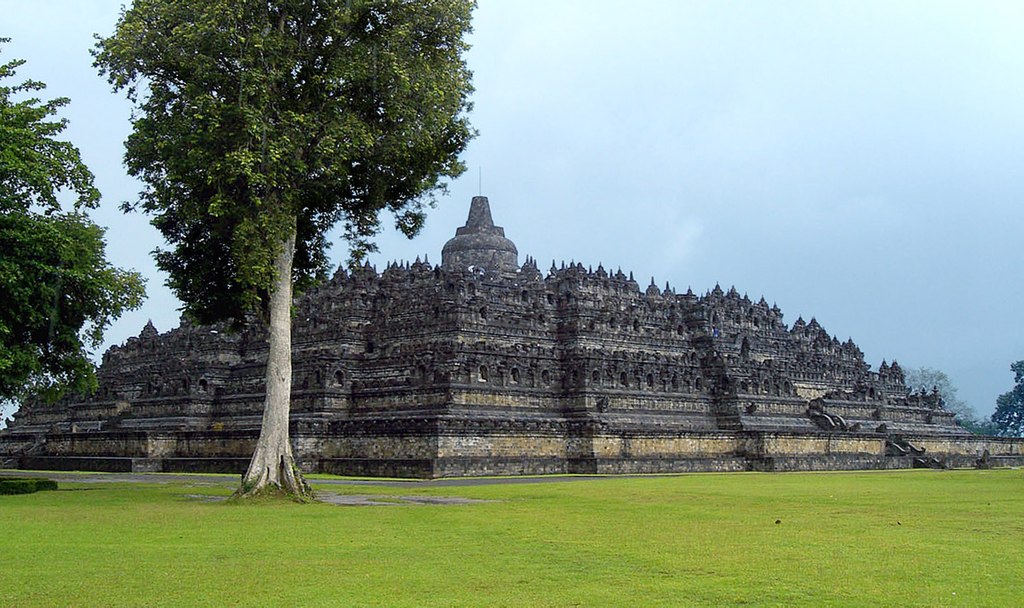
Borobudur Northwest ViewBorobudur temple, Jogja. Gunawan Kartapranata, CC BY-SA 4.0, via Wikimedia Commons

Days 13, 14, 15

The city of Pangandaran and surroundings | Java
After this city and cultural interlude, head to the seaside resort of Pangandaran. The nearby Batu Karas beach is the perfect place to learn to surf! You can also discover the fauna and flora of the national park that occupies the peninsula or opt for an organized visit of the surroundings.

Days 16, 17, 18, 19, 20

The Karimunjawa Islands | Java
From Jepara, sail across the Java Sea to the Karimunjawa Islands. You thus end your stay with island and paradisiacal landscapes.

On the main island, rent a scooter. You can discover superb panoramas from its hilly and green lands or head to one of the island’s beaches to simply relax. Organize a boat trip in the archipelago with your hotel. From desert island to desert island, enjoy the seabed of the archipelago while snorkeling.

Day 21

The return | Java
Leaving Semarang

ALTERNATIVES

In the rainy season, Tumpak Sewu Waterfall may not be accessible. In this case, you can organize a two-day expedition to Meru Betiri National Park from Banyuwangi. Kalibaru is also a very good starting point. You will need a guide or at least a 4×4 driver to visit the park and reach Sukamade beach.
To reach Pangandaran from Yogyakarta, you can use an agency to organize the trip in a three-day circuit. It is quite frequent, they usually pass through Borobudur, Prambanan, Wonosobo and the Dieng plateau.

Exploring the Top Best Must Visit Places in Java | Where to Go and Best Places to Visit for an Unforgettable Adventure

THREE WEEKS: SULAWESI (CELEBES)

If you’re planning a three-week trip to Indonesia and want to explore the stunning island of Sulawesi (Celebes), browsing itinerary examples for traveling in Indonesia can give you ideas for destinations, attractions, and activities to include in your itinerary to ensure that you have a memorable and fulfilling trip.

1. Arrival in Makassar
2. Rantepao and the Toraja country, 4 days
3. Togian Islands, 6 days
4. Bunaken Island, 4 days
5. Departure from Manado

Big ideas

If you have three weeks to travel in Indonesia, consider exploring Sulawesi (Celebes). Start in Makassar and spend a few days exploring the city’s markets and colonial architecture. Then head north to Tana Toraja, known for its unique funeral ceremonies and traditional houses. From there, make your way to the northern tip of the island to visit the Togean Islands, a remote and beautiful archipelago with pristine beaches and excellent snorkeling. Finish your trip in Manado, where you can go diving in Bunaken National Marine Park and sample some of the region’s famous seafood cuisine.

Day 1

Arrival and journey to Rantepao | Sulawesi
Makassar is a big city without much interest. Don’t linger there and head north as quickly as possible. The journey to reach Rantepao will take a long half-day.

Days 2, 3, 4, 5, 6

The village of Rantepao and the Toraja | Sulawesi
Toraja country is the most famous destination in Sulawesi. Rantepao, the most important village, is a good base to discover this region and shine.

Meet one of the main ethnic groups of Sulawesi. The Toraja people are distinguished in particular by the architecture of their dwellings called Tongkonan, but they are best known for their particular funeral rites.

Participate in one of these ceremonies accompanied by a guide (you will easily find one in Rantepao). He will explain the different customs to you and you can also ask him to take you to visit the nearby funeral sites: Kambira, Lemo, Londa… or do it independently.

Beyond this unique cultural identity, the region, located at altitude, offers breathtaking landscapes of rice fields and mountains.

From Bali to Tana Toraja | Complete Guide to Visit South Sulawesi

By scooter, car or on a hike, set off to explore the green hills of the region. You will have the chance to cross authentic villages and appreciate the hospitality and smiles of the local population. Batutumonga offers one of the best vantage points in the region.

For a bit of adventure, organize a white water rafting session on the Sa’dan River.

Don’t leave without tasting a coffee grown here in the highlands.

Keti Kesu, Tana Toraja 1373KeteKesu, Tana Toraja. Kete Kesu is one of the villages that has been designated by the Indonesian government as a national heritage site and, more practically speaking, as a tourist destination. It is arranged in the traditional way, with granaries to the left and houses to the right. The buildings are of course modern, but the boat shape of their roofs is very old, and is thought to trace back to the seafaring origin of this Austronesian people. Michael Gunther, CC BY-SA 4.0, via Wikimedia Commons

Days 7, 8

Journey to the Togian Islands | Sulawesi
Now take a night bus to Tentena. From there, you can take a new bus to reach the small port of Ampana. You will probably have to spend the night there while waiting for the boat that will take you to your next destination: the Togian Islands.

Days 9, 10, 11, 12, 13, 14

The Togian Islands | Sulawesi
Enjoy the sweetness of the Togian Islands archipelago. Treat yourself to a short week in this real little unspoilt paradise off the beaten track.

Not all islands have electricity, fresh water or shops… Robinson mode activated! On the other hand, you will not need to look far to find a small bungalow with your feet in the water on a white sand beach. On the program: nature, idleness, snorkeling and diving!

Wakai is the main port of the archipelago. It serves all the islands.

Join the village of Bomba to enjoy its superb surrounding dive sites. The seabed of Kadidiri Island is also very popular with divers. Near Togian Island, you can swim in the jellyfish lake (harmless).

Do not miss to pass by Malenge: in addition to spectacular coral reefs, you can visit the Bajo fishing village and its houses on stilts.

Days 15, 16

Journey to Bunaken Island | Sulawesi
Arm yourself with a little patience to reach Bunaken Island. Twelve hours by boat await you to reach Gorontalo, then eleven hours by bus to Manado.

Bunaken Marine Park (8)Bunaken National Marine Park, Manado, Indonesia. Sakurai Midori, CC BY-SA 3.0, via Wikimedia Commons

Days 17, 18, 19, 20

Bunaken Island | Sulawesi
You have arrived in a diver’s paradise: the Bunaken Marine National Park.

This vast protected area benefits from a particular topography and ecosystem. The depth of its crystalline waters is impressive, as much as the immense walls covered with corals, without forgetting an intense and varied marine life.

You will discover exceptional dive sites: Likuan, Fukui Point, Molas Wreck… Organize your outings with one of the island’s dive centers.

On the land side, a hiking trail leads to the summit of the Manado Tua volcano in a four-hour walk.

Day 21

The return | Sulawesi
Departure from Manado

ALTERNATIVES
  • If you have time, Bira may be worth a visit. In this small seaside village off the beaten track, diving remains the main activity.
  • If you’ve done enough diving, take a short excursion into the jungle of Tangkoko National Park near
  • Bunaken. You will have the opportunity to observe rare fauna such as the tarsier (the smallest primate in the world), the crested black macaque, the crested hornbill or the Sulawesi bear.

Sulawesi Travel Guide: Exploring the Wonders of Celebes for an Unforgettable Trip (Indonesia)

THREE WEEKS: KALIMANTAN (BORNEO)

If you’re planning a three-week trip to Indonesia and want to explore the fascinating island of Kalimantan (Borneo), looking up itinerary examples for traveling in Indonesia can provide you with suggestions for destinations, activities, and experiences that can be incorporated into your itinerary to make the most of your time on this beautiful island.

1. Arrival at Pangkalan Bun (from Jakarta)
2. Tanjung Puting, 4 days
3. Derawan Islands, 5 days
4. Sipadan (Malaysia), 4 days
5. Departure from Tawau (Malaysia)

Big ideas

If you have three weeks to travel in Indonesia, consider exploring Kalimantan (Borneo). Begin your trip in the city of Pontianak, and take a boat ride to see the stunning sunset at Equator Monument. Next, visit the Orangutan Rehabilitation Center in Tanjung Puting National Park to see the endangered primates up close. From there, head to the city of Banjarmasin, known for its floating market and traditional diamond mining. Then, visit the Derawan Islands, a group of remote islands with some of the world’s best diving sites. Finish your trip in Samarinda, where you can explore the Kutai National Park and learn about the indigenous Dayak culture.

Day 1

Arrival | Kalimantan
Upon arrival in Kalimantan (Borneo), reach the river port of Kumai.

Days 2, 3, 4, 5

Tanjung Puting Park Cruise | Kalimantan
Arrange a three-day river cruise in Tanjung Puting National Park. It will take you to meet the extraordinary fauna of the park: orangutans, proboscis monkeys, crocodiles, monitor lizards, giant butterflies, fireflies…

You must be accompanied by a guide to enter the park. If you don’t want to join a tour group, you can hire an independent guide and rent your own klotok, the traditional wooden houseboat. It’s cheaper than going through an agency.

If you follow the classic circuit, you will stop at several “platforms”. The orangutans come here to collect the bananas and milk left by the park rangers. There are four active research centers. Camp Leakey is the original one and has a visitor center. From there you usually take a short walk through the jungle to get to the camp feeding station.

Days 6, 7, 8, 9

Journey to the Derawan Islands | Kalimantan
A long journey awaits you to reach your next destination: the Derawan Islands in northeast Borneo. If it does not present any particular tourist attraction, that does not mean that it will not be enriching. You have to see it as an experience in its own right.

Join Balikpapan first. The total bus journey will take 24 hours. You will probably prefer to spend a night in Banjarmasin to cut the trip in half. If you have time, take a trip to the Lok Baintan floating market.

In Balikpapan, the “oil town”, you will find the necessary comfort to rest before continuing the journey. Ready?

To reach the Derawan Islands, you will first have to resist the 18 hour bus ride to Berau. From there, reach Tanjung Batu and board a ferry that will drop you off at Pulau Derawan.

Days 10, 11, 12, 13, 14

The Derawan Islands | Kalimantan
Finally ! You have arrived! All you have to do is enjoy this little paradise.

For accommodation, you can choose Pulau Derawan, the more developed island, or Pulau Maratua, the quieter neighboring island.

During these few days in the archipelago, a large part of your activities will be related to underwater life. Beyond the multitude of diving spots to discover, you can visit a sea turtle sanctuary on the island of Sangalaki. With a little luck, you will come across manta rays during a snorkeling session. In Lake Kakaban, you will swim with harmless jellyfish.

For a day out of the water, rent a bike and explore Maratua Island.

Kapal di Pulau Derawan
A ship floating on very blue and clear sea water on Derawan Island, East Kalimantan. Nidyaamalia, CC BY-SA 4.0, via Wikimedia Commons

Days 15, 16

Journey to Sipadan | From Kalimantan to Malaysia
Now cross the border to reach the state of Sabah in Malaysia. Direction Sipadan!

From Derawan, the distances are not huge, but the journey can take time. A regular speedboat directly connects Tarakan to Derawan only on Fridays, on Saturdays in the other direction. If it does not fit your schedule, you will first have to return to Berau then join Tanjung Selor and board a ferry to Tarakan.

From Tarakan to Derawan, you can also opt for a speedboat reserved specially for the day of your choice with an agency, but the price is quite exorbitant.

Then, a ferry runs between Tarakan and Tawau (in Malaysia) every day except Sunday.

Days 17, 18, 19, 20

Sipadan Island and surroundings | Malaysia
The Sipadan marine reserve is a very protected and controlled site. It is a dream destination for scuba diving. It would be a shame to go north of Borneo without discovering this spot ranked number 1 in our top of the most beautiful dive sites in the world.

In Sipadan, daily quotas strictly limit the number of divers. You need a permit to be allowed to dive there. You can buy it directly on site. However, in high season, places are quickly reserved and you have to wait several days to get it.

If you do not want to miss out, we recommend that you arrange your dives several days before your arrival. Contact a dive center directly. He will give you the days still available and will take care of the permit. The quotas are divided between the centers, do not hesitate to call several.

Day 21

The return | Malaysia or Singapore
Departure from Tawau

ALTERNATIVES

In our itineraries, for ecological reasons, we have planned a maximum of one trip by plane. Following this idea, you can swap the flight between Jakarta (Java) and Kalimantan with a flight between Balikpapan and Berau. You avoid 6 p.m. bus. In this case, from Jakarta, first take the train to Semarang and then a Pelni to reach the port of Kumai directly.

From Bali to Borneo (Kalimantan): Your Ultimate Guide for Must See Attractions and Activities

THREE WEEKS: SUMATRA

Planning a three-week trip to Indonesia that includes the captivating island of Sumatra can be overwhelming, but searching for itinerary examples for traveling in Indonesia can give you an idea of the must-visit destinations, attractions, and activities that can be included in your itinerary to ensure that you have a fulfilling and unforgettable experience on this island.

Looking for itinerary examples for traveling in Indonesia for three weeks? Consider exploring the beautiful island of Sumatra! Here’s a sample itinerary:

1. Arrival in Medan
2. Bukit Lawang, 4 days
3. Banyak Islands, 4 days
4. Mentawai Islands, 5 days
5. Harau Valley, 3 days
6. Departure from Pekanbaru

Big ideas

Week 1: Start your trip in Medan, the capital city of North Sumatra. Spend a day exploring the city, visiting the Great Mosque and the Sultan’s Palace. Then, head to Bukit Lawang, a small town on the edge of the Gunung Leuser National Park. Spend the next few days trekking through the lush jungle to see the orangutans in their natural habitat.

Week 2: Travel to Lake Toba, one of the world’s largest volcanic lakes. Spend a few days exploring the Batak culture in the surrounding villages, visiting traditional houses and sampling local food. Take a boat tour of the lake and visit Samosir Island to learn about the island’s history and culture.

Week 3: Head to the west coast of Sumatra and explore the beautiful beaches and surf breaks. Padang is a popular starting point, from where you can take a boat to the Mentawai Islands, a chain of pristine islands with world-class surf breaks. Back on the mainland, visit the charming city of Palembang, the capital city of South Sumatra, located on the banks of the Musi River. Explore the city’s rich history and culture and enjoy some local food.

Sumatra Travel Guide: Discover the Top Must-Visit Places and Unforgettable Experiences

Of course, this itinerary is just a suggestion – feel free to modify it according to your interests and travel style.

Day 1

Arrival and journey to Bukit Lawang | Sumatra
You arrive in Indonesia directly on the island Sumatra, in Medan. From there, you can easily reach Bukit Lawang, one of the entry points to Gunung Leuser National Park. From Bali to Lake Toba | Complete guide to visit the lake, Medan Region and Bukit Lawang and its Orangutans

Days 2, 3, 4, 5

Bukit Lawang and Gunung Leuser Park | Sumatra
Drop your bags at Bukit Lawang. The village is located in the heart of an impressive environment. Discover it on foot and end the walk with a swim in the river with the locals. On the way back, pass by the local market.

If you come here, it is above all to meet the orangutans. The rangers feed them every day at the entrance to the park and you can observe them directly there, for sure and without effort. However, for a real immersion, the ideal is a 3-day hike in the jungle. You will have the chance to observe the fauna that resides there: wild orangutans, gibbons, hornbills, turtles, peacocks, monitor lizards… Generally, at the end of the expedition, you leave the camp and join Bukit Lawang by descending the river in rafting.

Day 6

Journey to the Banyak Islands | Sumatra
Direction now on the west coast of Sumatra. By bus, you will have to make several changes to reach Singkil. Renting a car with driver can be a good option. Once there, hop on the ferry (two per week) that will take you to the Banyak Islands.

Days 7, 8, 9, 10

The Banyak Islands | Sumatra
You have arrived in a real postcard setting. Here you will find the most beautiful beaches in Sumatra. Balai and Haloban are the main villages, but wander a bit to find your dream bungalow right on the water. Why not rent a kayak and pitch your tent for the night on a desert island?

The archipelago, exposed to the swell of the Indian Ocean, is well known for its spots with perfect waves. If your goal is to learn to surf, this is the perfect place. Then opt for a stay in a surf camp.

On Pulau Tuangku, you can explore the jungle. Fishing with the locals is also part of the experiences to be had here. Just ask around and you will probably find a fisherman who will take you with him.

Days 11, 12

Journey to the Mentawai Islands | Sumatra
The journey to the Mentawai Islands takes time. Allow a day to reach Padang first before taking the ferry.

Days 13, 14, 15, 16, 17

The Mentawai Islands | Sumatra
If surfing is a star attraction in the Mentawai Islands, you can also discover the fascinating culture of its people during a trek in the tropical forest of Pulau Siberut. You will stay in community houses called “umas”, and share the daily life of the local population. Between traditional hunting and fishing, shamanic ceremonies, preparation of sago… this destination promises an extraordinary cultural experience.

To surf the perfect tubes of the archipelago, head to Hollow Tree on Pulau Sipora instead.

Days 18, 19, 20

The Harau Valley | Sumatra
Go through Bukittinggi to visit the Harau Valley. Immerse yourself in its little country air. It stretches out at the foot of a canyon. You can go for walks, bike rides or scooter rides to visit the villages or criss-cross the rice fields. Take the hiking trails, they lead to pretty waterfalls. If you are a climber, you will undoubtedly be tempted by the climbing routes offered by the cliffs culminating at 500 meters. From up there, the panorama over the valley is breathtaking.

Day 21

The return | Sumatra
Leaving Pekanbaru

ALTERNATIVES
  • Choose to visit Pulau Weh rather than the Banyak Islands if you are short on time. It is more easily accessible, but also much more touristy.
  • If you want to avoid the flood of tourists (which can, depending on the season, give the experience a zoo-like feel), prefer to visit Gunung Leuser Park from Ketambe rather than from Bukit Lawang.
  • This part is more difficult to access, but much wilder, intense and authentic.

From Bali to Krakatoa | Discovering the Volcanic Wonders Between West Java and Sumatra

1 MONTH: BALI, LOMBOK, KOMODO AND FLORES

If you have a month to travel in Indonesia, consider exploring the beautiful islands of Bali, Lombok, Komodo, and Flores. If you’re planning a month-long trip to Indonesia and want to visit Bali, Lombok, Komodo, and Flores, looking up itinerary examples for traveling in Indonesia can provide you with suggestions for must-see destinations, activities, and experiences that can be incorporated into your itinerary to ensure that you make the most of your time on these beautiful islands.

Here’s an itinerary that covers some of the must-see places in each of these islands:

1. Arrival in Denpasar (Kuta)
2. Ubud, 3 days
3. Gili T, Air and Meno, 4 days
4. Rinjani climb, 3 days
5. Cruise to Komodo, 4 days
6. Wae Rebo, 2 days
7. Riung, 2 days
8. Kelimutu, 1 day
9. Sumba, 3 days
10. Depart Waingapu

Day 1

Arrival and journey to Ubud | bali
Ideally, upon arrival at Denpasar airport, go directly to the town of Ubud. If you land a little late, the easiest way is to sleep near Kuta, about 10 minutes by taxi. That said, don’t waste too much time here (unless you want to party).

Days 2, 3, 4

Seminyak and surroundings | Bali
Dedicate the first three days to Bali (Seminyak, Ubud, Sanur). The Hindu culture of the island is unique and its natural riches are extraordinary, in particular its magnificent terraced rice fields. Unfortunately, some places suffer from mass tourism.

Ubud, the spiritual center of the island, is a good place to experience Bali’s unique culture. Spend some time in the city, stop at the Monkey Forest, stroll through the market and learn about Balinese culinary delicacies.

The other two days, radiate around the city, on the highlands. Visit the temples, marvel at the Tegalalang rice fields and enjoy the beautiful view of the hills of Ubud along the “Campuhan Ridge Walk”.

Watch a traditional dance show or take a cooking class before heading to the neighboring island.

Gili MenoGili Meno. Flickr user: yeowatzup https://www.flickr.com/photos/yeowatzup/, CC BY 2.0, via Wikimedia Commons

Days 5, 6, 7, 8

The Gili Islands | Lombok
Leave Bali for Lombok directly at the three Gilis: Gili Trawangan, Meno or Air. These very small islands are each surrounded by a unique idyllic white sand beach. Relaxing, snorkeling among the corals and swimming with the turtles are the main activities. But you can also rent a bike, a kayak or go horseback riding. In the evening, sit back and simply enjoy a fabulously colored sunset.

Each island has its own “vibe”. Gili Trawangan, the largest of the three, is also the busiest. There you will find many more restaurants and bars. At night, the atmosphere is very festive. In comparison, Gili Air is much quieter and Gili Meno even more so. Tell yourself that once the bags are put down, you can easily go from one island to another on a day trip.

Days 9, 10, 11, 12

Climbing Mount Rinjani | Lombok
Relaxed and full of energy, take on Mount Rinjani. From Senaru, you make the round trip in two days to the Rim crater. You camp on site to enjoy the sunset and sunrise from the top. If you have one more day, you will have time to descend on the banks of the lake to enjoy the hot springs before starting the return to Sembalun.

Once this little sporting challenge has been validated, reach the departure destination for the next stage of your stay (different depending on the agency chosen).

Days 12, 13, 14, 15

Komodo National Park | Cruise from Lombok to Flores
Embark on a cruise of a few days to the island of Flores. Most tours pass through a few interesting spots before reaching Komodo National Park.

You will discover in particular the islands of Rinca, Padar and Komodo. Meeting the Komodo dragons is of course the main attraction of the park, but the latter has many other species of animals to discover. You will also appreciate the wild landscapes, the superb deserted white sand beaches and the exceptional seabed. Some small islands are home to fishing villages, meet their inhabitants.

The cruise ends in Labuan Bajo.

Days 16, 17, 18, 19

Wae Rebo Village | Flores
Go explore the island of Flores. To reach the next destination, first go to Ruteng. The village has no particular interest, but if you are traveling by bus, it is a necessary step. From there, direction Denge. To get there, you can rent a scooter, but be careful, the roads are not in very good condition.

From Denge, a hike of about three hours through a lush mountain landscape leads to the small remote village of Wae Rebo. It is made up of traditional huts with a conical shape and a thatched roof where the Manggarais live. The atmosphere is serene, out of time. The panorama around is splendid.

This is organized community tourism. You will need to be accompanied by a guide to go there and pay an entrance fee. Instead, choose one who speaks English to be able to interact with the population and better understand the history of this indigenous community. You will spend the night in the “guest house” with the other visitors.

Days 20, 21, 22, 23

The 17 Islands Marine Park | Flores
Set off for Riung, a peaceful fishing village on the north coast of Flores. By bus, you must pass through Bajawa. The distances are huge, but the switchbacks make the journey long and grueling.

In Riung, organize a boat trip to visit the 17 Islands Marine Park. Take out your masks and snorkels! Most tours are done over one day and usually make four stops at the best spots. Enjoy a barbecue on the beach for the evening meal.

Days 24, 25, 26

The Kelimutu Volcano | Flores
Take the road towards Ende to reach Moni. It is from this small village that you will reach the crater lakes of the Kelimutu volcano. If you have time in Moni, visit the market or take one of the hiking trails that lead to the top of the village. You will discover waterfalls and hot springs.

Days 27, 28, 29, 30

Sumba Island | Sumba
Back on Ende, board a night Pelni to reach the island of Sumba. Few travelers set foot on this island off the beaten track, a perfect combination of nature and culture.

Around the port of Waingapu, your entry point, you can stroll through colorful markets and visit some waterfalls.

In the region of Waitabula, on the west coast, the beaches are spectacular, do not miss that of Bawana. The traditional village of Ratenggaro is worth a visit. You will discover its houses with typical architecture nestled on the edge of a white sand beach. Not far away, near the village of Kalenarogo, the Weekuri lagoon is a little hidden paradise.

If you have time to visit the east of the island, take a short trip to the Waimarang waterfall. After a walk in the forest, you will arrive in front of a magnificent natural pool of turquoise water, ideal for a last swim before departure.

From Bali to Sumba | Exploring the Untouched Beauty of East Tenggara Archipelago

Day 31

The return | Sumba
Leaving Waingapu

ALTERNATIVES
  • If you are not very athletic, you can replace the ascent of Mount Rinjani with more time in Bali. In this case, discover the region of Sidemen before going up to Amed on the coast.
    If you are looking for a really quiet island, where there is not much to do except rest, replace the three Gili, by Gili Asahan in the southwest of Lombok.
  • Instead of Wae Rebo, you can take a boat from Labuan Bajo to reach Riung directly. You will enjoy a very little visited coastline with good snorkeling spots in superb coves.
    If the journey to Wae Rebo seems too complicated, you can go directly to Bajawa from Labuan Bajo and visit the traditional village of Bena nearby.
  • If you don’t want to push the route to Sumba, you can explore further east of Flores. The ascent of the Egon volcano is still not very popular and offers a spectacular view from the summit. In this case, you will leave Flores from Maumere airport.

A MONTH AND A HALF: SULAWESI (CELEBES), PAPUA AND MOLUCA

If you’re looking for itinerary examples for traveling in Indonesia for a month and a half, consider exploring Sulawesi (Celebes), Papua, and Moluca. These regions offer a diverse range of cultures, landscapes, and experiences that are sure to make your trip unforgettable.

Here are some itinerary examples for traveling in Indonesia with a month and a half, including visits to Sulawesi (Celebes), Papua, and Moluca:

1. Arrival in Makassar
2. Rantepao and the Toraja country, 4 days
3. Togian Islands, 6 days
4. Bunaken Island, 4 days
5. Raja Ampat Islands, 7 days
6. Banda Islands, 7 days
7. Departure from Ambon

Ideas

To start your journey, begin in Sulawesi, where you can visit the Tana Toraja region and witness the unique funeral ceremonies and traditional way of life of the Torajan people. You can also explore the pristine beaches of Wakatobi and the underwater wonderland of Bunaken National Park.

From Sulawesi, head east to Papua, where you can experience the vibrant culture of the Dani people and trek through the stunning Baliem Valley. You can also explore the natural beauty of Raja Ampat, home to some of the most diverse marine life in the world.

From Bali to Manado | Complete Guide to Visit Bunaken, North Sulawesi

Finally, make your way to the Moluca islands, where you can visit the historic Fort Belgica and explore the lush forests and pristine beaches of Morotai Island.

Overall, this itinerary for traveling in Indonesia for a month and a half offers a perfect mix of culture, adventure, and relaxation, allowing you to truly experience the diversity of this beautiful country.

Day 1

Arrival and journey to Rantepao | Sulawesi
Makassar is a big city without much interest. Don’t linger there and head north as quickly as possible. The journey to reach Rantepao will take a long half-day.

Days 2, 3, 4, 5, 6

The village of Rantepao and the Toraja country | Sulawesi
The Toraja country is the most famous destination in Sulawesi. Rantepao, the most important village, is a good base to discover this region and shine.

Meet one of the main ethnic groups of Sulawesi. The Toraja people are distinguished in particular by the architecture of their dwellings called Tongkonan, but they are best known for their particular funeral rites.

Participate in one of these ceremonies accompanied by a guide (you will easily find one in Rantepao). He will explain the different customs to you and you can also ask him to take you to visit the nearby funeral sites: Kambira, Lemo, Londa… or do it independently.

Beyond this unique cultural identity, the region, located at altitude, offers breathtaking landscapes of rice fields and mountains.

By scooter, car or on a hike, set off to explore the green hills of the region. You will have the chance to cross authentic villages and appreciate the hospitality and smiles of the local population. Batutumonga offers one of the best vantage points in the region.

For a bit of adventure, organize a white water rafting session on the Sa’dan River.

Don’t leave without tasting a coffee grown here in the highlands.

Days 7, 8

Journey to the Togian Islands | Sulawesi
Now take a night bus to Tentena. From there, you can take a new bus to reach the small port of Ampana. You will probably have to spend the night there while waiting for the boat that will take you to your next destination: the Togian Islands.

Days 9, 10, 11, 12, 13, 14

The Togian Islands | Sulawesi
Enjoy the sweetness of the Togian Islands archipelago. Treat yourself to a short week in this real little unspoilt paradise off the beaten track.

Not all islands have electricity, fresh water or shops… Robinson mode activated! On the other hand, you will not need to look far to find a small bungalow with its feet in crystal clear water, on a white sand beach. On the program: nature, idleness, snorkeling and diving!

Wakai is the main port of the archipelago. It serves all the islands.

Join the village of Bomba to enjoy its superb surrounding dive sites. The seabed of Kadidiri Island is also very popular with divers. Near Togian Island, you can swim in the jellyfish lake (harmless).

Do not miss to pass by Malenge: in addition to spectacular coral reefs, you can visit the Bajo fishing village and its houses on stilts.

Days 15, 16

Journey to Bunaken Island | Sulawesi
Arm yourself with a little patience to reach Bunaken Island. Twelve hours by boat await you to reach Gorontalo, then eleven hours by bus to Manado.

Days 17, 18, 19, 20

Bunaken Island | Sulawesi
You have arrived in a diver’s paradise: the Bunaken Marine National Park.

This vast protected area benefits from a particular topography and ecosystem. The depth of its crystalline waters is impressive, as much as the immense walls covered with corals, without forgetting an intense and varied marine life.

You will discover exceptional dive sites: Likuan, Fukui Point, Molas Wreck… Organize your outings with one of the island’s dive centers.

On the land side, a hiking trail leads to the summit of the Manado Tua volcano in a four-hour walk.

Days 21, 22, 23

Journey to the Raja Ampat Islands | From Sulawesi to Papua
If the departure of the ferry fits perfectly with your schedule, count two days in Pelni to reach the fabulous Raja Ampat islands in West Papua.

Days 23, 24, 25, 26, 27, 28, 29

The Raja Ampat Islands | Papua
Arrived in Sorong, do not linger too long and hop on the first ferry to Wasai, the main port of the Raja Ampat islands. Once there, comparing accommodation directly on site is complicated, because you have to go door to door… by boat! We therefore advise you to book the bungalow of your dreams in advance. In addition, a boat will be provided and will pick you up directly in Wasai: practical.

The program for this week is quite simple: clear waters, preserved fauna and flora and striking landscapes.

Between snorkeling sessions, probably just lying down on your bed, and expeditions to the surrounding diving spots, you will have the opportunity to discover marine fauna of all sizes, all shapes and all colors. Misool and the Strait of Dampier bring together the most impressive sites.

In addition to this underwater world, Wayag and Piaynemo offer spectacular views of the archipelago after a short walk. On Pulau Gam, you can meet the mythical birds of paradise.

From Bali To Raja Ampat (4 Kings) | Complete Guide to Visit West Papua

Days 30, 31, 32

Journey to the Banda Islands | From Papua to the Moluccas
A little over a day’s journey by Pelni takes you to Ambon. From there, you can reach the Banda Islands in a few hours, but beware ferry crossings are only possible twice a week.

Days 33, 34, 35, 36, 37, 38, 39

The Banda Islands | Moluccas
Very few travelers venture into this archipelago of volcanic islands.

Several fortresses testify to the colonial past of these islands. Walk around Banda Neira to discover some of its historic buildings. Take part in a “Spice Tour” to visit the spice plantations of the island. On Api Island, walkers can climb the still active volcano for a panoramic view of the archipelago.

If you head for the Hatta, Rhun and Ai islands or even for the tiny Pulau Neilaka, you can enjoy paradisiacal beaches, no doubt solo, like Robinson.

Underwater, the spectacle is no less extraordinary. Karang Hatta, Koon, Batu Kapal, Pombo Boi… The Banda Sea offers many dive sites. From sea serpents to large pelagics, from volcanic slopes to coral covered pinnacles, if you dive you will not be disappointed.

From Bali to Banda Islands | Complete Guide to Visit Ambon and Maluku Islands

Days 40, 41

Journey to Makassar | From Moluccas to Sulawesi
Back to Ambon

Day 42

The return | Sulawesi
Departure from Makassar

ALTERNATIVES

If you have time, Bira may be worth a visit. In this small seaside village off the beaten track, diving remains the main activity.
If you want to do something other than diving, you can take a short jungle excursion to Tangkoko National Park instead of Bunaken Island. You will have the opportunity to observe rare fauna such as the tarsier (the smallest primate in the world), the crested black macaque, the crested hornbill or the Sulawesi bear.
Depending on the ferry schedule, you can visit the Banda Islands before Raja Ampat.

2 MONTHS: JAVA, KALIMANTAN (BORNEO), SULAWESI (CELEBES), PAPUA AND MOLUCAS

If you’re planning a two-month trip to Indonesia and looking for itinerary examples for traveling in Indonesia, consider exploring Java, Kalimantan (Borneo), Sulawesi (Celebes), Papua, and the Molucas. These regions offer a wealth of cultural and natural attractions that are sure to make your trip unforgettable.

Here are some itinerary examples for traveling in Indonesia with two months, including visits to Java, Kalimantan (Borneo), Sulawesi (Celebes), Papua, and Molucas:

1. Arrival in Denpasar
2. Kawah Ijen, 1 day
3. Tumpak Sewu, 1 day
4. Mount Bromo, 1 day
5. Yogyakarta, 5 days
6. Karimunjawa Island, 4 days
7. Tanjung Puting, 4 days
8. Rantepao and the Tana Toraja, 4 days
9. Togian Islands, 6 days
10. Bunaken Island, 4 days
11. Raja Ampat Islands, 7 days
12. Departure from Sorong

Big ideas

Start your journey in Java, where you can explore the ancient temples of Borobudur and Prambanan, hike up the majestic Mount Bromo, and sample the famous coffee in the highlands of Ijen.

Next, head to Kalimantan (Borneo) and visit the Tanjung Puting National Park, home to endangered orangutans and other wildlife. You can also explore the traditional Dayak villages and witness their unique customs and way of life.

From Kalimantan, make your way to Sulawesi (Celebes), where you can witness the fascinating funeral ceremonies of the Torajan people and explore the stunning underwater world of Wakatobi and Bunaken National Park.

Continue your journey to Papua and trek through the picturesque Baliem Valley, visit the Dani people and learn about their culture and traditions, and explore the pristine waters and coral reefs of Raja Ampat.

Finally, wrap up your trip in the Molucas, where you can visit the historic Fort Belgica, relax on the beautiful beaches of Morotai Island, and witness the unique spices and wildlife of the Banda Islands.

Overall, this itinerary for traveling in Indonesia for two months offers a diverse range of experiences, from cultural immersion to adventure, wildlife, and relaxation. Don’t miss out on the opportunity to explore the beauty and diversity of this amazing country.

FIRST MONTH

Day 1

Arrival and journey to Banyuwangi | From Bali to Java
Ideally, upon arrival at Denpasar airport, go directly to the town of Banyuwangi. If you land a little late, the easiest way is to sleep near Kuta, about 10 minutes by taxi. That said, don’t waste too much time here (unless you want to party).

Days 2, 3

Ascent (climb) of Kawah Ijen | Java
Banyuwangi is the access point to Kawah Ijen. You don’t necessarily need a guide to climb, but you will need at least a driver to bring you to the foot of the volcano about half an hour away.

Days 4, 5

Tumpak Sewu Waterfall | Java
Now reach the village of Jatiroto by train. Spend the night in Lumajang or in the surrounding area, you will easily find a driver to reach the Tumpak Sewu waterfall the next day. After this short immersion in a landscape worthy of Jurassic Park, take the direction of Cemoro Lawang via Probolinggo.

Days 6, 7

Climbing Mount Bromo | Java
From Cemoro Lawang, you can easily climb Mount Bromo. We really advise you to get an organized tours in 4×4. You have some time in the village to get information and organize the discovery of this site independently.

From Bali to Mount Bromo (East Java) Complete Guide to Sunrise Hike

Days 8, 9, 10, 11, 12

The city of Yogyakarta and surroundings | Java
The journey to Yogyakarta takes a day, but the trains in Java are efficient. Spending a few days in this large and lively city allows you to discover all the richness of the island’s cultural heritage.

To learn more about its history, take a walk through the streets of the Kraton district. It includes the Sultan’s palace and a museum. For the local atmosphere, you can go to the Beringharjo market, before visiting one of the many art galleries and in the evening attend a traditional show (dance, theater, puppets, etc.).

Located near Yogyakarta, do not miss the visit of the famous temples of Borobudur (at sunrise) and Prambanan (at sunset).

A walk on the slopes of Mount Merapi offers a unique panorama of the region. The most athletic can make its ascent.

Do not leave “Jogja” without having tasted the flagship dish of the region: the gudeg.

Borobudur-Temple-Park Indonesia Stupas-of-Borobudur-01
Borobudur temple with its stupas, a UNESCO World Heritage Site. Borobudur temple view from northwest plateau, Central Java, Indonesia. Photo by CEphoto, Uwe Aranas (CC BY-SA 3.0) via Wikimedia Commons

Days 13, 14, 15, 16, 17

The city of Pangandaran and surroundings | Java
After this city and cultural interlude, reach Jepara then sail on the Java Sea to the Karimunjawa Islands. You thus end your stay with island and paradisiacal landscapes.

On the main island, rent a scooter. You can discover superb panoramas from its hilly and green lands or head to one of the island’s beaches to simply relax. Organize a boat trip in the archipelago with your hotel. From desert island to desert island, enjoy the seabed of the archipelago while snorkeling.

Days 18, 19

Route | From Java to Kalimantan
Completely cross the Java Sea. Between Semarang and Kumai (Borneo), the journey takes 24 hours.

Days 20, 21, 22, 23, 24

Tanjung Puting Park Cruise | Kalimantan
Upon arrival in Kumai, take a three-day river cruise to Tanjung Puting National Park. It will take you to meet the extraordinary fauna of the park: orangutans, proboscis monkeys, crocodiles, monitor lizards, giant butterflies, fireflies…

You must be accompanied by a guide to enter the park. If you don’t want to join a tour group, you can hire an independent guide and rent your own klotok, the traditional wooden houseboat. It’s cheaper than going through an agency.

If you follow the classic circuit, you will stop at several “platforms”. The orangutans come here to collect the bananas and milk left by the park rangers. There are four active research centers. Camp Leakey is the original one and has a visitor center. From there you usually take a short walk through the jungle to get to the camp feeding station.

Days 25, 26, 27, 28, 29, 30

Journey to Rantepao | From Kalimantan to Sulawesi
If Tanjung Puting Park is the only purely touristic attraction of your visit to Kalimantan, the journey that awaits you promises to be rewarding. You have to see it as an experience in its own right.

Join Balikpapan first. In total, it will take 24 hours by bus. You will probably prefer to spend a night in Banjarmasin to cut the trip in half. If you have time, do take a tour of the Lok Baintan floating market.

In Balikpapan, the “oil town”, you will find the necessary comfort to rest before continuing the journey.

Board a Pelni for Sulawesi, the island east of Kalimantan. Allow just under 24 hours to reach Pare Pare. From there, hire the services of a driver to easily reach Rantepao.

SECOND MONTH

Days 31, 32, 33, 34

The village of Rantepao and the Toraja country | Sulawesi
The Toraja country is the most famous destination in Sulawesi. Rantepao, the most important village, is a good base to discover this region and shine.

Meet one of the main ethnic groups of Sulawesi. The Toraja people are distinguished in particular by the architecture of their dwellings called Tongkonan, but they are best known for their particular funeral rites.

Participate in one of these ceremonies accompanied by a guide (you will easily find one in Rantepao). He will explain the different customs to you and you can also ask him to take you to visit the nearby funeral sites: Kambira, Lemo, Londa… or do it independently.

Beyond this unique cultural identity, the region, located at altitude, offers breathtaking landscapes of rice fields and mountains.

By scooter, car or on a hike, set off to explore the green hills of the region. You will have the chance to cross authentic villages and appreciate the hospitality and smiles of the local population. Batutumonga offers one of the best vantage points in the region.

For a bit of adventure, organize a white water rafting session on the Sa’dan River.

Don’t leave without tasting a coffee grown here in the highlands.

Days 35, 36

Journey to the Togian Islands | Sulawesi
Now take a night bus to Tentena. From there, you can take a new bus to reach the small port of Ampana. You will probably have to spend the night there while waiting for the boat that will take you to your next destination: the Togian Islands.

Days 37, 38, 39, 40, 41, 42

The Togian Islands | Sulawesi
Enjoy the sweetness of the Togian Islands archipelago. Treat yourself to a short week in this real little unspoilt paradise off the beaten track.

Not all islands have electricity, fresh water or shops… Robinson mode activated! On the other hand, you will not need to look far to find a small bungalow with your feet in the water on a white sand beach. On the program: nature, idleness, snorkeling and diving!

Wakai is the main port of the archipelago. It serves all the islands.

Join the village of Bomba to enjoy its superb surrounding dive sites. The seabed of Kadidiri Island is also very popular with divers. Near Togian Island, you can swim in the jellyfish lake (harmless).

Do not miss to pass by Malenge: in addition to spectacular coral reefs, you can visit the Bajo fishing village and its houses on stilts.

Days 43, 44

Journey to Bunaken Island | Sulawesi
Arm yourself with a little patience to reach Bunaken Island. Twelve hours by boat await you to reach Gorontalo, then eleven hours by bus to Manado.

Days 45, 46, 47, 48

Bunaken Island | Sulawesi
You have arrived in a diver’s paradise: the Bunaken Marine National Park.

This vast protected area benefits from a particular topography and ecosystem. The depth of its crystalline waters is impressive, as much as the immense walls covered with corals, without forgetting an intense and varied marine life.

You will discover exceptional dive sites: Likuan, Fukui Point, Molas Wreck… Organize your outings with one of the island’s dive centers.

On the land side, a hiking trail leads to the summit of the Manado Tua volcano in a four-hour walk.

Days 49, 50, 51

Journey to the Raja Ampat Islands | From Sulawesi to Papua
If the departure of the ferry fits perfectly with your schedule, count two days in Pelni to reach the fabulous Raja Ampat islands in West Papua.

Days 52, 53, 54, 55, 56, 57, 58

The Raja Ampat Islands | Papua
Arrived in Sorong, do not linger too long and hop on the first ferry to Wasai, the main port of the Raja Ampat islands. Once there, comparing accommodation directly on site is complicated, because you have to go door to door… by boat! We therefore advise you to book the bungalow of your dreams in advance. In addition, a boat will be provided and will pick you up directly in Wasai: practical.

The program for this week is quite simple: clear waters, preserved fauna and flora and striking landscapes.

Between snorkeling sessions, probably just lying down on your bed, and go out to the surrounding diving spots, you will have the opportunity to discover flora and fauna, with its all sizes, all shapes and all colors. Misool and the Strait of Dampier bring together the most impressive sites.

In addition to this underwater world, Wayag and Piaynemo offer spectacular views of the archipelago after a short walk. On Pulau Gam, you can meet the mythical birds of paradise.

Day 59

The return | Papua
Departure from Sorong

ALTERNATIVES
  • In the rainy season, Tumpak Sewu Waterfall may not be accessible. In this case, you can organize a two-day expedition to Meru Betiri National Park from Banyuwangi. Kalibaru is also a very good starting point. You will need a guide or at least a 4×4 driver to visit the park and reach Sukamade beach.
  • To reach Pangandaran from Yogyakarta, you can use an agency to organize the trip in a three-day circuit. It is quite frequent, they usually pass through Borobudur, Prambanan, Wonosobo and the Dieng plateau.
  • If you have time, Bira may be worth a visit. In this small seaside village off the beaten track, diving remains the main activity.
  • If you’ve done enough diving in Bunaken, take a short excursion into the jungle of Tangkoko
  • National Park. You will have the opportunity to observe rare fauna such as the tarsier (the smallest primate in the world), the crested black macaque, the crested hornbill or the Sulawesi bear.
  • Depending on the ferry schedule, you can visit the Banda Islands before Raja Ampat.

If you’re planning a trip to Indonesia, creating a well-thought-out itinerary is key to making the most of your time in this vast and diverse country; with so much to see and do, it’s important to plan ahead and prioritize the destinations and activities that interest you the most, whether you’re traveling for a week, a month, or longer.

Photo credit (main picture): Kanenori via Pixabay

Must See Places in Indonesia | A Guide to the Country’s Best Attractions to Explore and Discover


Have you booked your villa in Seminyak center (South Bali)?

Located in Seminyak Center – Bali, Villa Carissa offers a private swimming pool and enclosed garden to guarantee your privacy. You can book your private pool villa here with us.

Whether you’re traveling with family, friends, or on a romantic getaway, villa Carissa in Seminyak center offers the perfect base for exploring Bali’s many attractions and enjoying a relaxing vacation.

Carissa villa in seminyak
Villa Carissa in Seminyak Center

Bali on a Budget: Experience Bali Without Overspending

If Bali attracts so many crowds, it is because the “Island of the Gods” has everything to make everyone happy, from surfers to explorers, to lovers of idleness at the beach. While Bali can be expensive, it’s also possible to visit on a budget without sacrificing the quality of your experience. We share some tips and tricks for traveling to Bali on a budget.

This versatility has led to a sharp increase in tourism and therefore prices over the past ten years. But rest assured, it is always possible to go to Bali without getting angry with your bank account! We prove it to you in this article.

Bali is known for its stunning beaches, lush rice terraces, and vibrant culture. However, it’s also known for being a popular destination for luxury travelers, which can make it seem like an expensive place to visit. But don’t let that deter you – it’s entirely possible to enjoy Bali on a budget. Here are some tips and tricks for affordable travel in Bali:

This article provide useful information for budget-conscious travelers visiting Bali. It covers topics such as:
  • Finding affordable accommodation options in Bali
  • Tips for saving money on transportation, meals, and attractions
  • Budget-friendly activities and experiences in Bali
  • Recommendations for affordable local cuisine and dining options
  • Suggestions for free or low-cost cultural activities and events in Bali

By providing practical advice for travelers on a budget, this article could be a valuable resource for those looking to explore Bali without breaking the bank.

Bali: What do you need to know before you go?

Vaccines

There is no mandatory vaccine to do before traveling to Bali. However, as in many other countries, it is strongly recommended that your vaccination list be up to date against these diseases: diphtheria, tetanus, poliomyelitis, hepatitis A and hepatitis B, whooping cough and measles (for children). We advise you to make an appointment with your doctor a few weeks before your departure to take stock.

To find out more about health and safety during your stay, we invite you to read this article: Health and Safety in Indonesia

Visa

For a 30-day trip: There is no need for a visa (“Visa Free Entry”) if you are traveling to Bali for a maximum of 30 days. However, you must provide proof of return air tickets and a passport valid for another 6 months after your return date to France.

For a 60-day trip: You must obtain a tourist visa. This visa is chargeable (about € 40€). You must apply for it at least 7 days before the expiry of your first visa. You can apply to the Bali immigration office if you are there, or in the Indonesian embassy in your home country. Read also: Entry Requirements to Bali and Navigating Stay Visas in Indonesia

The currency

The currency in Bali is the Indonesian Rupiah (Rp).
Example of the conversion rate in April 2023: AU$ 1 = IDR 10 000. or € 1 = Rp 16 200. or US$ 1 = Rp 15 000

There are cash dispensers in airports, tourist areas and major cities. It is also possible to pay by credit card, but this does not apply in the most local villages.

Tips Bali on a Budget

Here are some tips and tricks for affordable travel in Bali:

Go in the right season

“Avoid the crowds… and the rain”

Bali has two climates: the dry season from April to October, and the wet season from November to March. The monsoon remains reasonable: it does not rain all day and the sun is there! To reduce your budget, it is therefore smart to go to Bali at the end or at the beginning of the wet season. Prices are lower and places less popular with tourists.

Travel during the low season

Bali’s peak season is from June to September, and prices for flights, accommodation, and activities can skyrocket during this time. By traveling during the low season (October to March), travelers can save up to 50% on flights and accommodation. The weather may be a bit rainy, but there are still plenty of things to see and do in Bali.

We do not recommend the period from December to January, and that from July to August when Europeans and Australians are fleeing winter or are on summer vacation.
Prefer the periods from April to June or from September to November. Out of season, there are return tickets Paris – Denpasar for € 900. In August, prices can go up to €2,500. Bali being close to Australia, visiting Indonesia during your WHV is a good idea. You will find out-of-season return trips from Perth at 300€. From the east coast, count at least € 450.

When to book and go to Bali at the best price?
Between the two seasons to have the best “quality-price” ratio

Going to Bali in June or November is a good alternative: we are in a climatic in-between, the tourist peak (located in July and August) is not yet there or has already passed, the prices are therefore reasonable. These are two perfect times to do good business!

In the wet season for small budgets

During this season, there are far fewer tourists in Bali, so accommodation and flight prices are affected. This is where you will find Bali travel deals on sale and where you can bargain most easily and meaningfully. This is also where nature lovers (and photo enthusiasts) will most appreciate the landscapes (rice fields and green plantations, sublime skies…)!

Don’t forget to book your flight to Bali in advance, if you are going on a backpacking trip

You know the song: on the airline market, the earlier you book, the better the prices! Do not hesitate to look and compare prices several months in advance. For accommodation, however, you don’t even have to book (except for your arrival): there will always be room somewhere!

Avoid June-August and Christmas holidays (until mid-January)

These are the two tourist peaks of the island: not only do tourists like to go to dream islands during these periods, but in addition, the Balinese are also on vacation! The prices of flights and stays are strongly affected: it’s really expensive! It is not uncommon to see the prices of package holidays increase by 1000 or 1500€ (when they are available!) and flight prices can easily double! In short, this is not a good plan!

Choose affordable accommodation

While Bali has no shortage of luxury resorts and villas, there are also plenty of affordable accommodation options for budget-conscious travelers.

If you don’t want to spend too much, don’t only favor Instagram’s dream hotels, with infinity pools and views of the jungle (even if that makes you want to!). You can still find very nice accommodation, such as small villas with swimming pool and outdoor shower, at low prices.

Hostels and guesthouses offer clean and comfortable rooms at a fraction of the cost of a hotel, while homestays offer an opportunity to experience Balinese culture firsthand. For those who prefer a bit more privacy, Airbnb is also a great option for finding affordable and unique accommodation in Bali.

Eat like a local

Bali is known for its delicious food, and there are plenty of affordable options for hungry travelers. Local warungs (small restaurants) offer traditional Balinese cuisine at a fraction of the cost of a fancy restaurant. Nasi campur (mixed rice dishes) and mie goreng (fried noodles) are popular and delicious options. For those who prefer to cook their own meals, fresh produce and ingredients are readily available at local markets.

Where to eat cheaply in Bali?

“Enjoy without spending too much”

Our guilty pleasure in Asia? Being able to eat twice a day at the restaurant, without melting your credit card.

The modest prices offered are not worth cooking for yourself! Eat at a warung rather than a restaurant. Warungs are more basic and often exempt from the 15% tax.

You will pay less than €2 for your Nasi Goreng (fried rice), Mie Goreng (noodles and vegetables) or Gado-Gado (vegetables and peanut sauce)… In most restaurants, Balinese cuisine is tasty without being too spicy. If you really don’t like local cuisine, be aware that pasta and pizza in tourist restaurants cost about three times as much.

Finally, alcohol is not the cheapest, compared to the rest of Southeast Asia. But if you come from Australia, you will be delighted to pay 2€ for your beer, feet in the sand, at sunset!

Recommendations for affordable local cuisine and dining options

Bali offers plenty of affordable local cuisine and dining options for those traveling on a budget. Whether you’re looking for traditional Balinese cuisine or international dishes, you’re sure to find something that suits your taste buds and budget. Just remember to practice safe food handling and follow local customs and traditions when dining in Bali.

Eat local in the “warung”

That’s what small local restaurants are called. These are generally small family businesses which can take the form of a stand in the street, a hut by the side of the road, a restaurant, a cabin… This is the most economical way to eat in Indonesia: you can eat local products and typical dishes for very little money. Budget: a dish = 15000/25000 RP or 1€/1.5€. Count – from 4€/pers. per day if you take all your meals in a warung. A word of advice, however: take it easy on the spices, we’re not used to it here…
Note: also buy fruit on the small markets and stands (you have to wash them with mineral water!), it doesn’t cost anything!

Night markets

Night markets are a great place to sample local cuisine and experience the local culture. Bali has several night markets, including Gianyar Night Market, Sanur Night Market, and Kuta Night Market. You can find a variety of local dishes at night markets, including grilled seafood, satay, and Balinese-style suckling pig.

Beachfront cafes

Bali’s beaches are home to many affordable beachfront cafes that offer stunning views of the ocean. These cafes serve a variety of local dishes, including fresh seafood, grilled meats, and Balinese-style curries. Some popular beachfront cafes include Warung Kayu Api Jimbaran, Warung Bejana at Conrad Bali, and Warung Mak Beng in Sanur.

Street food stalls

Bali’s streets are filled with street food stalls that offer a variety of local snacks and dishes. Some popular street foods in Bali include pisang goreng (fried bananas), martabak (pancake with savory or sweet filling), and bakso (meatball soup). You can find street food stalls almost everywhere in Bali, from busy tourist areas to quiet residential neighborhoods.

Local markets

Bali’s local markets are a great place to sample local cuisine and experience the local culture. Some popular local markets in Bali include Pasar Badung in Denpasar, Pasar Kumbasari in Gianyar, and Pasar Ubud in Ubud. You can find a variety of local dishes at local markets, including Balinese-style satay, sambal matah (spicy chili sauce), and babi guling (Balinese-style roasted pork).

Best Balinese Restaurants in Bali | Discover Bali’s Culinary Gems

Get around like a local

Taxis and private drivers can be expensive in Bali, but there are plenty of affordable transportation options available. Motorbikes / scooter can be rented for as little as $5 per day, and are a popular and convenient way to explore the island. Buses and bemos (minivans) are also available and offer an affordable way to get around Bali.

Getting around Bali

“Save more to travel more”

With an area of 153 km by 112 km, Bali is ideal for exploring several destinations without wasting time on transport. Many public buses under €5 connect the main towns.

Get ready for an adventure: in Bali, the notion of time is more blurred than ours. No real departure times, you will have to get up early and wait at the station for the bus to pass. You can also pre-book a mini-van, comfortable and advantageous for groups of 6/9 people.

But the most developed means of transport remains the private driver. You will often be approached on the street by these locals who take you on a day trip or to your next destination. This is the most comfortable solution: a private car picks you up at your accommodation and drops you off at the next one, at the time of your choice. Count around 20 € for Denpasar – Ubud and 30 € for Ubud – Amed or Amed – Munduk.

Finally, to get to the islands, you will have the choice between fast boat (about 20 € for a return trip Sanur – Nusa Lembongan) and local boats (less than 5 €). Be aware, however, that these are not known for their safety.

Once there, it’s time to get used to local customs and get on a scooter! But never forget your helmet, at the risk of returning from vacation with a “Bali Tattoo”. This is the small name given by the locals to the scars of a fall that tourists wear. You can rent your scooter from your hotel for €3.50 per day.

If you are not confident or have never driven before, in South Bali you can get around cheaply with Grab (like Uber) or Mybluebird the local taxi company (require taxi meter).

Negotiate everything!

Taxis, hotels, guides, excursions… And even in shops where prices can always be divided by 3 or 4! If you are the 1st buyer of the day, the merchant will try to make the sale to place the day in good omens. If he accepts your price, buy the item as agreed! Making someone lose face is considered a real lack of respect in Indonesia.

Look for free and budget-friendly activities

Bali is full of free or low-cost activities and attractions. Exploring the island’s beautiful beaches, hiking to waterfalls, visiting local markets, and watching traditional dance performances are all affordable ways to experience Bali’s culture and beauty.

What to do in Bali? “To combine activities… without breaking your bank account”

The best way to save on activities in Bali is to take advantage of the magnificent natural resources. The entrance fee for the rice fields, waterfalls and temples is ridiculous (never more than 2 €). But you will also have a large choice of unforgettable activities.

Bali is internationally recognized for its surf spots. Beginner, book lessons in Kuta, the perfect place to start. You can find cheap internships online. Canggu and Uluwatu will delight more experienced surfers, who can rent a board from locals for around ten euros.

Amed, with its multicolored coral reefs and shipwrecks, is the best place for a first dive on a budget. For snorkeling fans, pack a mask and snorkel in your luggage to avoid paying €2 or €3 for rental on each excursion.

To bring back souvenirs or go shopping, don’t miss the huge Ubud market, its carved wooden statues and colorful sarongs. You will find the best prices in Bali there… Provided you negotiate!

To negotiate: Start by asking 3 times less than the asking price, do not over-negotiate for a few cents and above all, very important in Asia, always keep smiling!

Take masks and snorkels!

No desire or no budget to try diving? With snorkeling, you can observe swarms of colorful fish, plants of all kinds, turtles and even dolphins or (nice) sharks for free… No special skills needed, but a few precautions are necessary: don’t forget don’t wear bathing shoes and put on a t-shirt to avoid painful sunburn on your back. Also pay attention to the currents.

Best spots: Tulamben (wreck of the Liberty), islands of Nusa Penida and Nusa Lembongan (manta rays, small sharks, corals…), Padang bai (coral barrier), island of Menjangen (national park), Coral Garden in Jemeluk- Amed), Japanese shipwreck (a few KM north of Amed), the Gili Islands…

Best Snorkelling Spots in Bali You Can Go

Here are some examples of affordable activities in Bali:

Important things to keep in mind when traveling to Bali on a budget include respecting the local culture, protecting the environment, and taking safety precautions. Bali has a rich cultural heritage, and it’s essential to be respectful of local customs and traditions.

  • Visiting the rice terraces in Ubud: A stunning and iconic attraction in Bali, the rice terraces in Ubud are free to explore on foot or by bike.
  • Surfing lessons: Bali is famous for its surf culture, and many surf schools offer affordable lessons for beginners.
  • Visiting the Tirta Empul temple: A sacred Hindu temple with a beautiful spring-fed pool, entry to Tirta Empul is only US$2.
  • Exploring Bali’s markets: Local markets like Pasar Badung in Denpasar and Ubud Market offer a wide range of affordable souvenirs, clothing, and crafts.
  • Watch the sunset at Tanah Lot: This beautiful temple is located on a rocky outcrop overlooking the ocean, and is a popular place to watch the sunset. Admission is only US$2.

Budget-friendly activities and experiences in Bali

Bali is a popular destination that offers a variety of experiences, from luxurious spa treatments to adventurous outdoor activities. However, for travelers on a budget, there are also plenty of budget-friendly activities and experiences that can be enjoyed without spending too much money.

Here are some suggestions:

Explore Bali’s beaches

Bali is famous for its beautiful beaches, and many of them are free to access. Visitors can swim, sunbathe, and relax on the beaches, or participate in water sports such as surfing, snorkeling, and diving. Some popular beaches in Bali include Kuta Beach, Seminyak Beach, and Nusa Dua Beach. Read also: The Best Beaches in Bali | Most famous beach during your holiday

Go on a nature walk or hike

Bali is also known for its lush nature and scenic landscapes. Visitors can go on a nature walk or hike to explore Bali’s rice paddies, waterfalls, and volcanoes. Some popular hiking trails in Bali include Mount Batur, Campuhan Ridge Walk, and Sekumpul Waterfall. Most hiking trails are free to access, although some may require a small fee. Read also: Hiking and Trekking in Bali | Where to go? Discover Top and the most beautiful hikes

Attend a cooking class

Bali is known for its delicious cuisine, and attending a cooking class is a great way to learn more about Balinese food and culture. Cooking classes are usually affordable, ranging from IDR 250,000 (US$ 17 or AU$ 25 or € 15) to IDR 500,000 (US$ 33 or AU$ 50 or € 30) per person, and include a hands-on lesson on preparing traditional Balinese dishes.

Visit local markets and shops

Bali has many local markets and shops that sell a variety of goods, including handicrafts, clothing, and souvenirs. Visitors can explore these markets and shop for unique gifts and souvenirs, or bargain for the best prices. Some popular markets in Bali include Ubud Art Market, Sukawati Art Market, and Kuta Art Market.

Shop till You Drop: Best Places to Go Shopping in Bali

Experience local traditions and ceremonies

Bali is home to a rich cultural heritage, and visitors can experience local traditions and ceremonies by attending a temple ceremony, a village festival, or a cultural performance. These events are usually free to attend, although visitors may be required to wear traditional dress or make a small donation.

In conclusion, Bali offers many budget-friendly activities and experiences that can be enjoyed by travelers on a budget. By exploring the island’s natural beauty, cuisine, and culture, visitors can have a memorable and enriching experience without spending too much money.

Suggestions for free or low-cost cultural activities and events in Bali

Bali is a culturally rich destination that offers many free or low-cost cultural activities and events. Here are some suggestions:

Visit temples

Bali is known as the Island of the Gods, and there are many temples scattered throughout the island. Visiting these temples is a great way to experience Balinese culture and religion. Most temples are free to enter, although some may require a small donation. Some popular temples in Bali include Pura Tirta Empul, Pura Besakih, and Pura Ulun Danu Bratan. Read also: Must Visit Temples in Bali | You need to visit one of them at least once during your stay in Bali

Watch a traditional dance performance

Bali is famous for its traditional dance performances, which are often accompanied by gamelan music. You can watch these performances at various venues throughout Bali, including temples, cultural centers, and hotels. Some popular dances include the Barong dance, Legong dance, and Kecak dance. Tickets for these performances are usually affordable, ranging from IDR 50,000 (US$ 3.5 or AU$ 5 or € 3) to IDR 150,000 (US$ 10 or AU$ 15 or € 9) per person.

Explore local markets

Bali’s local markets are a great place to experience local culture and interact with the locals. You can find a variety of goods at these markets, including fresh produce, handicrafts, and clothing. Some popular local markets in Bali include Pasar Badung in Denpasar, Pasar Kumbasari in Gianyar, and Pasar Ubud in Ubud. Entrance to these markets is usually free, but be prepared to bargain for the best prices.

Attend a festival

Bali hosts many festivals throughout the year, celebrating everything from religion to art and culture. Some popular festivals include the Bali Arts Festival, Bali Kite Festival, and Nyepi (Day of Silence). Most festivals are free to attend, although some may require a small donation. Check local listings to see what festivals are happening during your visit. Read also: Bali Arts Festival in Denpasar | The Biggest Annual Cultural Event in Bali

Visit museums and art galleries

Bali has several museums and art galleries that showcase Balinese art and culture. Some popular museums include the Agung Rai Museum of Art, Neka Art Museum, and Museum Puri Lukisan. Admission fees for these museums are usually affordable, ranging from IDR 50,000 to IDR 100,000 per person. Read also: Museums in Bali | Explore the Island’s Rich Cultural and Artistic Heritage

In conclusion, there are many free or low-cost cultural activities and events in Bali that allow visitors to experience Balinese culture and traditions. By exploring these options, travelers can gain a deeper appreciation for the island’s rich cultural heritage without breaking the bank.

Things To Do in Bali and What to Visit, Where To Go While Vacationing in Bali? (Top Attractions)

When to book and go to Bali at the best price?

Between the two seasons to have the best “quality-price” ratio

Going to Bali in June or November is a good alternative: we are in a climatic in-between, the tourist peak (located in July and August) is not yet there or has already passed, the prices are therefore reasonable. These are two perfect times to do good business!

In the wet season for small budgets

During this season, there are far fewer tourists in Bali, so accommodation and flight prices are affected. This is where you will find Bali travel deals on sale and where you can bargain most easily and meaningfully. This is also where nature lovers (and photo enthusiasts) will most appreciate the landscapes (rice fields and green plantations, sublime skies…)!

Bali Weather | When to go to Bali? Monthly Bali Tropical Climate

Don’t forget to book your flight to Bali in advance, if you are going on a backpacking trip

You know the song: on the airline market, the earlier you book, the better the prices! Do not hesitate to look and compare prices several months in advance. For accommodation, however, you don’t even have to book (except for your arrival): there will always be room somewhere!

Avoid July-August and Christmas holidays (until mid-January)

These are the two tourist peaks of the island: not only do tourists like to go to dream islands during these periods, but in addition, the Balinese are also on vacation! The prices of flights and stays are strongly affected: it’s really expensive! It is not uncommon to see the prices of package holidays increase by 1000 or 1500€ (when they are available!) and flight prices can easily double! In short, this is not a good plan!

Best Travel Insurance for Bali: A Comprehensive Guide for Visitors from Around the World

What budget per day to plan in Bali to travel?

There is a Bali for all travelers. Everything will depend on the budget you are willing to spend on traveling to Bali. The budget for traveling in Bali can vary depending on the individual’s travel style, preferences, and priorities. However, as a general guideline, here is a breakdown of estimated daily expenses for a budget traveler in Bali:

Small budget

If you are traveling on a low budget in Bali, expect to pay 355,000 to 575,000 IDR (20-35€) per day. This involves staying in a dorm in a hostel, eating food in warungs or cooking most of your meals, renting a bike to get around, and doing a few activities like hiking, snorkeling, or hiking. Balinese dance. It’s really easy to do Bali on a budget if you stay in cheap guesthouses, eat local and stick to the cheapest activities.

Budget comfortable

For an average budget of IDR 920,000 to 1,850,000 (€ 60 to 120) per day: Your stay will be more comfortable. You can then eat in nicer restaurants that cater to Western tastes, stay in a budget hotel or hostel with a private room, rent a scooter to get around Bali, get a massage and do some excursions or go diving . You won’t live in opulence, but you won’t lack for anything.

Budget no limit

For a luxury budget of IDR 4,100,000-5,100,000 (€ 270–300+) per day: Your stay will be very comfortable or even luxurious. You can then stay in international hotels or magnificent luxury villas, take taxis or private minivans with a driver to tour the island, eat Western food and do all the activities and adventures you want. Bali has some of the most luxurious resorts, boutiques, spas and restaurants in the world, so experiencing Bali on a budget without limits is entirely up to you. The sky is the limit here!

Please note that these budget ranges are approximate and can vary depending on factors such as location, time of year, and individual preferences. It’s always a good idea to research and compare prices beforehand to ensure a comfortable and affordable trip.

Cheapest Credit Card to Use Abroad | Maximizing Savings and Convenience, Especially When Traveling to Bali

Expenses comparisons: Backpackers, Comfort, Luxury

Use the table below to get an idea of how much you should budget per day. Spending that fits your travel style. Remember that some days you will spend more, others less. This is an average.

Accommodation Meals Transport Activities Budget / day / person

Backpackers

Accommodation: US$ 6 – 18 ; AU$ 8 – 25 ; € 5 -15
Meals: US$ 6 ; AU$ 8 ; € 5
Transport: US$ 6 ; AU$ 8 ; € 5
Activities: US$ 11 – 22 ; AU$ 16 – 26 ;  €10 – 20
Budget / day / person: US$ 29 – 46 ; AU$ 40 – 50 ; € 25 – 45

Comfort

Accommodation: US$ 23 – 60 ; AU$ 32 – 81 ; € 20 – 50
Meals: US$ 18 ; AU$ 25 ; € 15
Transport: US$ 12 ; AU$ 16 ; € 10
Activities: US$ 22 – 55 ; AU$ 16 – 90 ; € 20 – 55
Budget / day / person: US$ 75 – 145 ; AU$ 89 – 212 ; € 65 – 130

Luxury

Accommodation: US$ 177+; AU$ 250+ ; € 150+
Meals: US$ 41 ; AU$ 57 ; € 35
Transport: US$ 35 ; AU$ 49 ; € 30
Activities: US$ 83 – 171 ; AU$ 114 – 236 ; 70 – 145 €
Budget / day / person: US$ 336 – 364 ; AU$ 470 – 592; € 270 – 300

Expenses table

Accommodation Meals TransportActivities Budget / day / person
BackpackerUS$ 6–18
AU$ 8–25

€ 5 –15
US$ 6
AU$ 8
€ 5 €
US$ 6
AU$ 8
€ 5
US$ 11–22
AU$ 16–26
€ 10 – 20 €
US$ 29–46
AU$ 40–50
€ 25– 45
ComfortUS$ 23–60
AU$ 32–81
€ 20 – 50
US$ 18
AU$ 25
€ 15 €
US$ 12
AU$ 16
€ 10
US$ 22–55
AU$ 16–90
€ 20–55 €
US$ 75–145
AU$ 89–212
€ 65–130
Luxury US$ 177+
AU$ 250+
€ 150+
US$ 18
AU$ 57
€ 35 €
US$ 35
AU$ 49
€ 30
US$ 83–171
AU$ 114–236
€ 70–145 €
US$ 336–364
AU$ 470–592
€ 270–300

With its stunning natural beauty, rich cultural heritage, and affordable attractions and activities, Bali is a perfect destination for budget-conscious travelers looking for adventure and relaxation.

In conclusion, traveling to Bali on a budget is entirely possible with a bit of planning and research. By choosing budget accommodations, eating like a local, using local transportation, and looking for free or affordable activities, you can experience all that Bali has to offer without breaking the bank.

It’s important to note that prices may vary depending on the location and time of year, so it’s best to research and compare prices beforehand to ensure a comfortable and affordable trip.

Photo credit: mdarl670 via Pixabay

International Direct Flights to Bali


Ready to book your villa in the heart of lively Seminyak, Bali?

I need more information

Book Your Private Villa

Promotions

Located in Seminyak Center – Bali, Villa Carissa offers a private swimming pool and enclosed garden to guarantee your privacy. You can book your private pool villa here with us.

Whether you’re traveling with family, friends, or on a romantic getaway, villa Carissa in Seminyak center offers the perfect base for exploring Bali’s many attractions and enjoying a relaxing vacation.

Carissa villa in seminyak
Villa Carissa in Seminyak Center

Best Travel Insurance for Bali: leave with a free spirit

To travel with a free spirit, there is one element that should not be overlooked: you need a travel insurance. Your health is precious and must be the subject of all attention (repatriation or emergency medical evacuation, coverage of health costs). We will give you the some options of best travel insurance for Bali.

Bali is one of the most popular tourist destinations in the world, known for its beautiful beaches, vibrant culture, and stunning landscapes. However, traveling to Bali comes with its own set of risks, such as medical emergencies, trip cancellations, and lost luggage. This is where travel insurance comes in handy. In this article, we will provide a comprehensive guide to the best travel insurance for Bali, suitable for visitors from all over the world.

When it comes to Bali, it’s essential to choose a travel insurance policy that covers medical emergencies. Bali’s healthcare system is not as advanced as some Western countries, and medical expenses can quickly add up. Additionally, Bali is prone to natural disasters such as earthquakes, which can disrupt travel plans.

Several important factors to consider when looking for travel insurance for Bali

When choosing travel insurance for Bali, there are a few things you should keep in mind:

1. Medical Coverage

Bali is a popular travel destination, but medical emergencies can happen. Look for a travel insurance policy that provides comprehensive medical coverage, including coverage for emergency medical treatment, hospitalization, and medical evacuation if necessary.

2. Trip Cancellation and Interruption

It’s important to be prepared for unexpected events that may cause you to cancel or interrupt your trip. Look for a policy that provides coverage for trip cancellation or interruption due to unforeseen events such as illness, injury, or natural disasters.

3. Personal Belongings Coverage

Theft and loss of personal belongings can occur during travel. Look for a policy that offers coverage for lost, stolen or damaged baggage and personal items.

4. Adventure Activities

Bali offers many adventure activities such as surfing, scuba diving, and trekking. If you plan on participating in any adventure activities, make sure your travel insurance policy covers them. Read also: Fun Water Sports Activities in Bali | Jet Ski, Flying fish, Parasailing, Banana boat and Flyboard

5. 24/7 Assistance

Look for a policy that offers 24/7 assistance services such as emergency medical assistance and travel assistance.

6. Policy Exclusions

Make sure to review the policy exclusions, including any pre-existing conditions, to ensure that you have the necessary coverage and are not caught off guard.

For visitors to Bali who plan to rent a scooter or motorbike, it’s important to find a travel insurance provider that offers coverage for these activities.

7. Price

Travel insurance prices can vary widely depending on the provider and the level of coverage you choose. Compare prices and features from multiple providers to find a policy that fits your needs and budget.

Disclaimer: The prices listed in this article are subject to change and may not be accurate at the time of reading. Please refer to the insurance providers’ websites for the latest pricing information. It is important to carefully review the policy details before purchasing travel insurance to ensure it meets your specific needs.

Good to know

When visiting a public hospital in Bali, remember to bring some Indonesian rupiah money with you. The reason you need to do this is because some do not accept payments through a cashless service.

The disadvantage of public hospitals is a fairly limited service compared to private health facilities, but the bill will be lower. In addition, private hospitals also accept payment methods other than cash.

Medical costs in Bali can be very expensive if you are not covered in the event of an accident or a health problem.

What if you have a dental problem in Bali?

Most of dentists in Bali are fluent in English. Some of them have even been trained abroad. However if you have an emergency, it’s like being in Australia, Europe or the U.S. without a good insurance, your credit card will quickly heat up.

All these reasons demonstrate the importance of being insured for your stay in Bali.

Here is a table that compares different travel insurance plans for visitors and travelers to Bali

The cost of travel insurance can vary based on several factors such as the length of your trip, your age, and the coverage limits you select. These costs are just examples for a 1-week trip for a 30-year-old traveler.

The travel insurances listed below are very popular among travellers. However, only your criteria allow you to know which one is the most suitable for your needs.

Insurance CompanyMedical CoverageTrip CancellationBaggage Loss/DelayEmergency EvacuationAdventure Activities CoverageCost
Allianz Global AssistanceUp to $50,000Up to 100% of trip costUp to $1,000IncludedAdditional coverage available for an extra feeStarts at $56 for a 1-week trip
World NomadsUp to $100,000Up to 100% of trip costUp to $1,000IncludedIncluded for certain activities, additional coverage available for an extra feeStarts at $73 for a 1-week trip
AXA Assistance USAUp to $250,000Up to 100% of trip costUp to $1,000IncludedIncluded for certain activities, additional coverage available for an extra feeStarts at $71 for a 1-week trip
Travel GuardUp to $50,000Up to 100% of trip costUp to $1,000IncludedAdditional coverage available for an extra feeStarts at $53 for a 1-week trip
Travelex Insurance ServicesUp to $50,000Up to 100% of trip costUp to $1,000IncludedAdditional coverage available for an extra feeStarts at $49 for a 1-week trip
Seven CornersUp to $250,000Up to 100% of trip costUp to $1,000IncludedIncluded for certain activities, additional coverage available for an extra feeStarts at $45 for a 1-week trip
Note:

Travel insurance is an essential investment for any trip, especially to a destination like Bali where unexpected events can happen. Visitors and travelers should carefully consider their needs and the risks associated with their travel plans when selecting a travel insurance plan. By doing so, they can ensure they are protected and can enjoy their trip with peace of mind.

Read also: Things To Do When Arriving at Bali Airport (DPS) | Tips for Every Traveler As Soon As We Land

MEDICINES IN BALI | Preparing for your trip to Bali

The best travel insurance for Bali by country of your residence

When it comes to finding the best travel insurance for Bali by country, it’s important to research options that cater to the specific needs of travelers from different countries.

It’s important to note that these are just a few examples of travel insurance providers and plans that are available for visitors to Bali. Without further ado, let’s explore the best travel insurance options for Bali visitors:

Best Travel Insurance for Bali for Visitors from Australia:

Southern Cross Travel Insurance

They offer comprehensive coverage for medical expenses, trip cancellation, and other travel-related risks. Their policy also includes coverage for pre-existing medical conditions, which is particularly important for older travelers. The cost of their policies varies depending on the level of coverage you choose, but you can expect to pay around AUD $80 for a week’s worth of coverage.

Link: https://www.scti.com.au/travel-insurance/bali-travel-insurance

InsureandGo Australia

It offers comprehensive travel insurance plans for Bali starting at AUD $30.68 for a seven-day trip. Link: https://www.insureandgo.com.au

1Cover Travel Insurance

Offers comprehensive travel insurance plans for Bali starting at AUD $26.43 for a seven-day trip. The plan covers emergency medical expenses, trip cancellation, lost or stolen baggage, personal liability, and more. Link: https://www.1cover.com.au

Cover-More

Cover-More offers travel insurance plans for Australian citizens traveling to Bali, Indonesia. Their plans cover medical expenses, trip cancellation and interruption, personal belongings, and more. Link: https://www.covermore.com.au

Best Travel Insurance for Bali for Visitors from the USA:

Allianz Global Assistance: Offers a range of travel insurance plans for Bali starting at USD $25 for a seven-day trip.

Link: https://www.allianztravelinsurance.com/find-a-plan

World Nomads

For travelers from the USA, World Nomads is a popular choice for Bali travel insurance. They offer coverage for medical expenses, trip cancellation, and a range of adventure activities, such as surfing and diving. Their policies are flexible, allowing you to customize your coverage to suit your needs. Prices vary depending on the level of coverage you choose, but you can expect to pay around $70 for a week’s worth of coverage.

Link: https://www.worldnomads.com/usa

Best Travel Insurance for Bali for Visitors from Canada:

Travel Guard

Offers travel insurance plans for Bali starting at CAD $30.50 for a seven-day trip. The plan covers emergency medical expenses, trip cancellation and interruption, baggage loss and delay, and more. Optional coverage is also available for adventure activities such as scuba diving, surfing, and hiking.
Link: https://www.travelguard.ca

Manulife

Manulife offers travel insurance plans for Canadian citizens traveling to Bali, Indonesia. Their plans cover emergency medical expenses, trip interruption and cancellation, baggage and personal belongings, and more. Link: https://www.manulife.ca/personal/insurance/our-products/travel-insurance.html

Best Travel Insurance for Bali for Visitors from Europe:

Columbus Direct (UK)

Offers travel insurance plans for Bali starting at €9.70 for a seven-day trip. Link: https://www.columbusdirect.com/travel-insurance/

AXA Assistance – Platinum Plan (muliple countries)

AXA Assistance offers the Platinum Plan, which includes emergency medical coverage, trip cancellation and interruption coverage, and personal belongings coverage. It also covers adventure activities such as surfing and trekking. The cost for a 10-day trip to Bali for a 30-year-old traveler starts at €48.

AXA offers travel insurance plans for Bali. The plan covers emergency medical expenses, trip cancellation and interruption, baggage loss and delay, and more. Optional coverage is also available for adventure activities such as scuba diving, surfing, and hiking.

Staysure (UK)

Staysure offers travel insurance plans for UK citizens traveling to Bali, Indonesia. Their plans cover medical expenses, trip cancellation, baggage and personal belongings, and more. Link: https://www.staysure.co.uk/single-trip-travel-insurance

Bali Packing List – What to pack for Bali? Best Packing List and Tips for a Perfect Vacation (What to Bring in Your Luggage or Suitecase)

Best Travel Insurance for Bali for Visitors from Asia:

Etiqa Insurance (Singapore)

They offer a range of plans that cover medical expenses, trip cancellations, and adventure activities. Their ePROTECT travel insurance plan starts from SGD $18 for a seven-day trip.

Link: https://www.etiqa.com.sg/personal-insurance/travel-insurance

AIG (Singapore)

Offers travel insurance plans for Bali starting at SGD $35 for a seven-day trip. The plan covers emergency medical expenses, trip cancellation and interruption, baggage loss and delay, and more. Optional coverage is also available for adventure activities such as scuba diving, surfing, and hiking. Link: https://www.aig.sg/personal/travel-guard

Chubb Travel Insurance (Singapore)

Offers travel insurance plans for Bali starting at SGD $17 for a seven-day trip. The plan covers emergency medical expenses, trip cancellation, travel delay, loss of baggage, and more.
Link: https://www.chubbtravelinsurance.com.sg

Mitsui Sumitomo Insurance (Japan)

Offers travel insurance plans for Bali starting at JPY 1,500 for a seven-day trip. The plan covers emergency medical expenses, trip cancellation and interruption, lost or stolen baggage, and more. Optional coverage is also available for adventure activities such as scuba diving, surfing, and hiking. Mitsui Sumitomo Insurance also offers customizable plans and optional coverage for specific activities or situations, such as sports and adventure travel, rental car damage, and more.

Link: https://www.ms-ins.com/english

Tune Protect (Malaysia)

Offers travel insurance plans for Bali starting at MYR 24 for a seven-day trip. The plan covers emergency medical expenses, trip cancellation and interruption, lost or stolen baggage, and more. Optional coverage is also available for adventure activities such as scuba diving, surfing, and hiking. Link: https://www.tuneprotect.com/products/travel-easy-insurance

China Life Insurance

Offers travel insurance plans for Bali starting at CNY 20 for a seven-day trip. The plan covers emergency medical expenses, trip cancellation and interruption, lost or stolen baggage, and more. Optional coverage is also available for adventure activities such as scuba diving, surfing, and hiking.
Link: https://www.e-chinalife.com

Allianz Global Assistance (Philippines)

Allianz Global Assistance offers travel insurance plans specifically designed for travelers visiting Southeast Asia, including Bali. Their plans include coverage for emergency medical expenses, trip cancellation, and travel delays. You can purchase coverage online through their website: https://www.allianzpnblife.ph

Pacific Cross (Philippines)

Pacific Cross offers travel insurance plans for Philippine citizens traveling to Bali, Indonesia. Their plans cover emergency medical expenses, trip interruption and cancellation, personal belongings, and more. Link: https://www.pacificcross.com.ph/#travel

Best Travel Insurance for Bali for Visitors from Africa

Hollard Travel Insurance

They offer comprehensive travel insurance plans that cover medical expenses, trip cancellations, and luggage loss. Their Standard Plan starts from ZAR 398 for a seven-day trip.

Link: https://www.hollard.co.za/travel-insurance

Travel Insurance Consultants

Offers travel insurance plans for Bali starting at ZAR 312 for a seven-day trip. Link: https://www.tic.co.za

Photo credit : stux via Pixabay

Cheapest Credit Card to Use Abroad | Maximizing Savings and Convenience, Especially When Traveling to Bali


Ready to book your villa in the heart of lively Seminyak?

I need more information

Book Your Private Villa

Promotions

Located in Seminyak Center – Bali, Villa Carissa offers a private swimming pool and enclosed garden to guarantee your privacy. You can book your private pool villa here with us.

Whether you’re traveling with family, friends, or on a romantic getaway, villa Carissa in Seminyak center offers the perfect base for exploring Bali’s many attractions and enjoying a relaxing vacation.

Carissa villa in seminyak
Villa Carissa in Seminyak Center

Health and Safety Indonesia

If you’re new to Indonesia regarding the health and safety in Indonesia, you may need to read this artricle.

Explore Indonesia’s beauty and culture safely! This guide covers key health tips for travelers. Learn about vaccinations, staying healthy, safety advice, and what to do in emergencies for a worry-free trip.

Here are some general recommendations:

Up-to-date vaccinations

Ensure your vaccinations are up-to-date for common diseases such as, diphtheria, tetanus, polio (Poliomyelitis), measles, mumps, rubella, hepatitis A, and hepatitis B.

Essential Vaccinations for Indonesia (it's not a must)

Before embarking on your Balinese / Indonesian adventure, it is crucial to ensure your vaccinations are up-to-date to safeguard against common diseases prevalent in the region. The recommended vaccinations for Indonesia include:

  • Tetanus: It’s a bacterial infection that can cause muscle stiffness and painful cramps, often starting in the jaw and face. It is most commonly spread through open cuts or wounds. It is typically given as a combined vaccine with other vaccines, such as diphtheria and pertussis (DTaP).
  • Polio (Poliomyelitis): Polio is a viral disease that can cause paralysis. It is most commonly spread through contaminated water or food.
  • Measles, Mumps, and Rubella (MMR): MMR vaccine protects against measles, mumps, and rubella, infectious diseases that can cause serious complications. MMR is a highly contagious viral disease that affects children and adults. Measles causes fever, rash, cough, runny nose, and conjunctivitis. Mumps causes swelling of the salivary glands, fever, fatigue, and headache. Rubella, also known as German measles, causes mild fever, rash, and swollen lymph nodes. MMR vaccine is highly effective in preventing these diseases.
  • Hepatitis A and Hepatitis B: Hepatitis A and B vaccines shield against viral infections that affect the liver. Hepatitis A is commonly transmitted through contaminated food or water, while Hepatitis B spreads through bodily fluids. Hepatitis A and hepatitis B are viral infections that affect the liver. Hepatitis A is usually transmitted through contaminated food or water, while hepatitis B is spread through bodily fluids. Symptoms of hepatitis include jaundice, fatigue, abdominal pain, and loss of appetite. Hepatitis A vaccine is highly effective in preventing hepatitis A, while hepatitis B vaccine can help prevent hepatitis B.
  • Japanese Encephalitis (JE): Japanese encephalitis vaccine is recommended for travelers planning to engage in outdoor activities in rural areas, as mosquitoes transmit the virus. Japanese encephalitis is a mosquito-borne viral disease that can cause inflammation of the brain. Symptoms of JE include fever, headache, neck stiffness, and seizures. JE vaccine is recommended for travelers to areas where JE is endemic.
  • Rabies: Rabies vaccine is advised for travelers planning to engage in activities involving close contact with animals, as rabies is endemic in Indonesia. Rabies is a viral disease that affects the central nervous system. Rabies is transmitted through the bite of an infected animal, such as a dog, cat, or bat. Symptoms of rabies include fever, headache, paralysis, and hallucinations. Rabies vaccine is highly effective in preventing rabies.
Additional: Vaccinations Considerations

Apart from the core vaccinations, consider these additional recommendations based on your travel itinerary and activities:

  • Typhoid fever: Typhoid vaccine is recommended for travelers planning to stay in rural areas or engage in activities that increase the risk of exposure to contaminated water or food. Typhoid is a bacterial infection that causes fever, headache, diarrhea, and abdominal pain. Typhoid is usually transmitted through contaminated food or water. Typhoid vaccine is highly effective in preventing typhoid.
  • Meningococcal Meningitis: Meningococcal meningitis vaccine is recommended for travelers planning to stay in crowded areas or participate in activities that increase the risk of exposure to the bacteria. Meningococcal meningitis is a bacterial infection that causes inflammation of the meninges (membranes that surround the brain and spinal cord. Symptoms of meningococcal meningitis include fever, headache, stiff neck, and vomiting. Meningococcal meningitis vaccine is recommended for travelers to areas where meningococcal meningitis is endemic.
Mosquito protection

Take necessary precautions against mosquito-borne diseases like malaria and dengue fever, which are prevalent in some parts of Indonesia. Use insect repellent, wear long sleeves and pants during dusk and dawn, and consider using a bed net.

It is recommended, throughout your stay in Indonesia, to follow an antimalarial treatment. The whole country is classified in zone 3 (except Bali and the center of the big cities, which are free of any malaria). Note: Malaria is only transmitted from dusk to dawn.

Water safety

Drink only bottled or boiled water to avoid waterborne diseases like typhoid and cholera. Avoid consuming raw or undercooked food, especially seafood and meat, to prevent foodborne illnesses.

Read also: Things you should never do in Bali : Essential Travel Tips for a Respectful and Enjoyable Experience

General hygiene

Practice good hygiene habits, including frequent hand washing with soap and water, to prevent the spread of infectious diseases.

When coughing or sneezing, cover your mouth and nose with a tissue or your elbow to prevent the spread of germs. Dispose of used tissues properly.

Promptly clean and cover all wounds to prevent the entry of bacteria and other microorganisms that can cause infections. Use clean bandages and dressings to keep the wound protected.

Avoid sharing personal items like towels, utensils, and drinking glasses to prevent the transmission of germs from person to person.

By following these general hygiene tips, you can significantly reduce your risk of contracting illnesses and enjoy a healthy and safe trip to Bali or Indonesia. Remember, prevention is always better than cure, and maintaining good hygiene is crucial for your well-being while traveling.

Note: These tips do not replace the advice of your doctor.

MEDICINES IN BALI | Preparing for your trip to Bali

Additional considerations

Check with your doctor before departure. Many – if not all – mosquito or arthropod repellents sold in supermarkets or pharmacies are not very or insufficiently effective. Only choose a WHO-compliant range. Essential not only for malaria, but also for dengue (permanent transmission with endemic and growing peaks), chikungunya (very present in Indonesia), Japanese encephalitis…

– Hepatitis A, transmitted by water and food, is very common: vaccination essential.

– Japanese encephalitis rages permanently but especially by epidemics in monsoon period. It is a serious disease. There is a vaccine (Ixiaro®) – finally – well tolerated, recommended for expatriates, frequent travelers and tourists visiting rural areas of countries located below a line connecting Bangladesh and South Siberia, up to Queensland in south. Two shots; available at an international vaccination centre.

– Moreover, one rarely escapes what is called a Turista or Bali belly. In case of diarrhoea, drink plenty of hot tea and stuff yourself with plain rice. You can buy medicines to stop diarrhea in pharmacies without a prescription, before you leave.

– Your first aid medical kit must include paracetamol, dressings, antibiotics against respiratory infections (wet climate requires), high sun protection products and tablets or filters to sanitize and purify the water. You can also purchase a LifeStraw ultra-filtering straw before departure. Very convenient !

– In case of possible need for specific drugs, find out before leaving about the international name (INN) or the name of the Anglo-Saxon brands. You should also know that in some remote places the medicines can suffer from poor storage and excessive exposure to heat, and that their expiry date can be exceeded, when it is not a question of counterfeits, which happens frequently.

– Beware of gluttonous amoebas and bacteria such as salmonella, shigella (water, lettuce, shellfish, etc.) which can cause serious problems.

– If medical assistance proves to be essential, you should contact your insurance company first. You can then contact a consulate (where there are lists of doctors) or a large luxury hotel (they always have the answer to everything).

– In case of emergency, in Indonesian, “doctor” is said to be dokter; “dentist”: dokter gigi; “pharmacy”: apotik. Hospitals (rumah sakit) should be avoided whenever possible. If hospitalization or surgery are necessary, it is better to be transported to Singapore, Hong Kong, Bangkok, or even to be repatriated to Europe or US, according to the recommendations of your insurance company.

– In each village there is a puskesmas, a sort of dispensary where a nurse and sometimes a doctor practice. Only contact them if necessary or for small injuries.

Read also: Important Numbers in Bali | Essential numbers and addresses

General Safety Tips

Indonesia’s diverse terrain and cultural norms present unique safety considerations. Adhere to these general safety tips for a trouble-free trip:

  • Respect local customs: Familiarize yourself with local customs and traditions to avoid unintentional offense or misunderstandings. Dress modestly when visiting religious sites or conservative areas.
  • Beware of crowded areas: Exercise caution in crowded areas, such as markets and public transportation, to prevent pickpocketing and petty theft. Keep valuables secure and out of sight.
  • Avoid hazardous activities: Avoid swimming in unsupervised waters or engaging in activities beyond your skill level, especially in areas with strong currents or unpredictable weather conditions.
  • Emergency preparedness: Familiarize yourself with emergency and important contact numbers and locations of hospitals and medical facilities in your vicinity. Keep a first-aid kit handy for minor injuries or ailments.

Best Travel Insurance for Bali: A Comprehensive Guide for Visitors from Around the World

A few rules to follow

– Never drink unboiled water. Those who don’t want to take any risks will be content with drinks that have been capsuled or purified by them (tablets, microbial filters). Likewise, they will avoid the delicious fruit juices served with ice cream. But it should be noted that in the big cities of Java as well as in the tourist places of Bali and Lombok, the health situation has improved considerably in recent years.

Beware of amoebas: water, salad, seafood… vaccination against hepatitis A is recommended.

– Avoid bathing in fresh waters like the locals. Be content with the sea. This avoids schistosomiasis (parasitic infection caused by worms that live in freshwater snails), leptospirosis (bacterial infection from animal urine), hepatitis A or E and other inconveniences.
– Beware of cuts and scratches. In the tropics, they can become superinfected and take much longer to heal.
– New shoes that cause blisters should be avoided because, apart from being unpleasant, foot injuries are very difficult to heal.
– An antiseptic cream in a corner of the bag is well worth the space it occupies.
– Tiger balm is both an excellent preventive cream and an effective calming agent. It has a thousand virtues related to massage.
Little trick: the problems related to a filling that jumps or a toothache that wakes up can be fought – temporarily – with the help of a small piece of cotton coated with tiger balm that we will apply there where it hurts! On a dental abscess, crushed ice in a cloth relieves.
– Heat, coupled with ambient humidity, can cause pimples to appear. Dry yourself well after a shower or a sea bath, wear loose, light and non-synthetic clothes, and put talcum powder where friction is created are small basic precautions.
– Keeping plastic flip-flops on your feet in the shower is an effective way to protect yourself from all the various fungi that flourish in the tropics.
– It’s silly, but entering a shopping center or a restaurant with very powerful air conditioning can give you strep throat in less time than it takes to tell!
– Indonesia was a hotspot for bird flu, but now only encounters sporadic residues. Only eat poultry that is well cooked, avoid all contact with birds and their droppings (markets, cockfights, etc.), and that will suffice.

Read also: Things To Do When Arriving at Bali Airport (DPS) | Tips for Every Traveler As Soon As We Land

MEDICINES IN BALI | Preparing for your trip to Bali

Infants, pregnant women and population at risk

Some destinations may not be recommended for at-risk populations such as pregnant women, infants or the elderly, especially when the necessary prevention tools (anti-malarial, certain vaccines) are not suitable or the sanitary conditions are too precarious.

The sanitary conditions encountered in Indonesia and/or the presence of a significant risk linked to malaria encourage people to avoid a trip to this country for anyone belonging to a population at risk.

The different types of health facilities in Indonesia

The government is continuously improving the health system in Indonesia. But the level of the Indonesian health system is not comparable to “western standards”, especially in the event of illness or serious medical emergency requiring specialists or specific equipment.

There are around 1,026 public hospitals across the Indonesian archipelago. However, in the event of a health problem in Indonesia, we strongly advise you to go to a private clinic for treatment. As mentioned earlier, public hospitals are always overcrowded and severely understaffed. Hygiene can also be a problem in some these establishments, and you may catch illnesses there. Unfortunately, there are indeed many cases of patients having contracted infections of all kinds in Indonesian public hospitals.

Another problem that concerns Indonesian public health establishments is the lack of equipment, in particular that necessary for the treatment of serious illnesses such as cancer. Patients suffering from such ailments mostly travel to neighboring countries such as Malaysia, Singapore for treatment, if they can afford it or have good medical coverage. In addition, the best health professionals in the country mostly work in the private sector.

These problems within public hospitals have favored a rather particular phenomenon in Indonesia. Something rather rare in the world, private clinics are indeed more numerous than public health establishments. The country has no less than 1,787 private clinics, which is more than 700 establishments more than the public sector. Some of these clinics have joined the national health coverage program, the JKN (Jaminan Kesehatan Nasional), but they remain relatively few in number.

The care, services and equipment in private hospital establishments are generally much better than those offered in public hospitals. However, given the large number of private clinics, the quality of care can vary greatly from one clinic to another. Private clinics are also quite expensive. Additionally, most private medical facilities are located in major urban centers, as are hospitals.

This has created a stark disparity in care between the cities and the countryside. The latter are mainly served by small regional dispensaries, and others are not at all. This is the reason why Indonesians living in the most remote areas still tend to treat themselves through traditional medicine practices.

If you live in a sparsely urbanized region or plan to settle in Indonesia, we recommend that you find out about the health centers closest to your home. Some remote and/or sparsely populated areas or islands can be served by helicopters in the event of a necessary evacuation, but this is not the case everywhere. Accidents and emergencies in Indonesia are not uncommon, so it is better that you are covered by a solid international insurance policy.

Good to know

It is strongly advised to choose insurance that includes medical evacuation. Thus, if necessary, the beneficiary can be transported to any appropriate medical facility. Such security is essential if you want to move to Indonesia, although it will significantly increase the cost of your insurance policy.

Emergency medical evacuation in secluded areas is typically done by helicopter in Indonesia, but it’s essential to note that some of the more remote islands of the archipelago lack this service. Additionally, many foreign professionals opt to travel to neighboring countries like Singapore or Malaysia to access medical care due to the limitations of the Indonesian health system.

Safety Instructions for Bali Natural Disasters: Tsunami, Earthquake, Mountain eruption, Storm, Floods

Security

If you follow this health and safety in Indonesia, normally you’ll be ok.

A little common sense, firmness, courtesy and, if necessary, a few thousand rupees should solve most situations. We cannot speak of dangers. Just a few possible confusions, certainly unpleasant, in particular in certain exchange offices, particularly in Kuta (Bali). Recount your tickets well at the counter before leaving.

The Ministry of Foreign Affairs advises against traveling to Indonesian Papua (especially in the central mountainous regions: Puncak Jaya, Jayawijaya, Paniai and Timika).

In addition, it reports acts of piracy in internal waters (Banda, Java and Celebes Seas) and in border areas with Singapore (Strait of Malacca), Malaysia and the Philippines.

Travel Plans Registration Before Leaving Your Country | Where to Register? Traveling for Safety and Advice

Payment card, exchange

Many backpackers have had problems either with their payment cards (in the ATMs, the card codes are copied; favor bank ATMs with a storefront), or with money changers: they invent an additional tax out of the hat (theirs!) or count very quickly so that we cannot recount correctly with them. Take your time to check it out.

When Exchanging Currency at a Money Changer, Please Remember to:
  1. Count in front: Always count your exchanged money in front of the money changer representative to ensure accuracy.
  2. Use a calculator: Use a calculator to verify the exchange rate and total amount, preventing calculation errors.
  3. Check for counterfeit bills: Inspect the received bills for authenticity and security features.
  4. Ask questions: Clarify any doubts you have about the transaction before leaving the premises.
  5. Avoid using street money changers. While they might offer attractive exchange rates, you could end up losing money in the process.
  6. Choose reputable changers: Opt for well-reviewed money changers to reduce risks and ensure a smooth exchange. Opt for authorized establishments with proper facilities like entrance doors, air conditioning, and bright lighting.

Cheapest Credit Card to Use Abroad | Maximizing Savings and Convenience, Especially When Traveling to Bali

Drugs

Attention, here we do not joke with drugs! You will sometimes be offered it at parties in Kuta or Seminyak. Refuse politely but firmly: dealers are ALWAYS snitches, in cahoots with the police. The stereotype that drug dealers are always snitches is often based on the fact that some drug dealers do cooperate with the police in exchange for leniency or immunity.

Indonesian prisons are not known for their hospitality. Indonesian law is ruthless.

Little risk of theft, but as always in big city crowds, better beware. Do not go out alone at night, always stay in a group. This practice holds true regardless of your global destination.

We can never tell you enough: refuse anything from anyone, even if they are cool, especially if they are cool, and never accept to do them a favor, no matter how small. Here are our small tips concerning the Health and safety in indonesia concerning drugs:

A short summary of the drug laws in Indonesia:
  • Possession of illegal drugs: The punishment for possession of illegal drugs in Indonesia ranges from 4 to 12 years in prison. The specific penalty depends on the type of drug and the amount of the drug that is possessed. For example, possession of marijuana can result in a prison sentence of 4 to 7 years, while possession of heroin can result in a prison sentence of 5 to 12 years.
  • Trafficking in illegal drugs: The punishment for trafficking in illegal drugs in Indonesia is life in prison or the death penalty. The death penalty is usually only imposed for large-scale trafficking offenses.
Here are some additional details about the drug laws in Indonesia:
  • The Indonesian government has a zero-tolerance policy on drugs. This means that the government does not tolerate any drug use or possession, regardless of the amount of the drug.
  • They have a strong track record of enforcing its drug laws. In recent years, Indonesia has executed hundreds of people for drug trafficking.
  • The Indonesian government has been criticized for its harsh drug laws. Some critics argue that the laws are too strict and that they do not do enough to address the root causes of drug use.

It is important to be aware of the drug laws in Indonesia before traveling to the country. Possession or trafficking of drugs can result in serious legal consequences, including the death penalty.

Sources: AIHSP (Australia Indonesia Health Security Partnership), CDC, Indonesian Ministry of HealthSmartraveller, Holidify

Photo credit: CeruleanSon via Pixabay

Important Numbers in Bali | Essential numbers and addresses + Emergency Numbers


Ready to book your villa in the heart of lively Seminyak, Bali?

I need more information

Book Your Private Villa

Promotions

Located in Seminyak Center – Bali, Villa Carissa offers a private swimming pool and enclosed garden to guarantee your privacy. You can book your private pool villa here with us.

Whether you’re traveling with family, friends, or on a romantic getaway, villa Carissa in Seminyak center offers the perfect base for exploring Bali’s many attractions and enjoying a relaxing vacation.
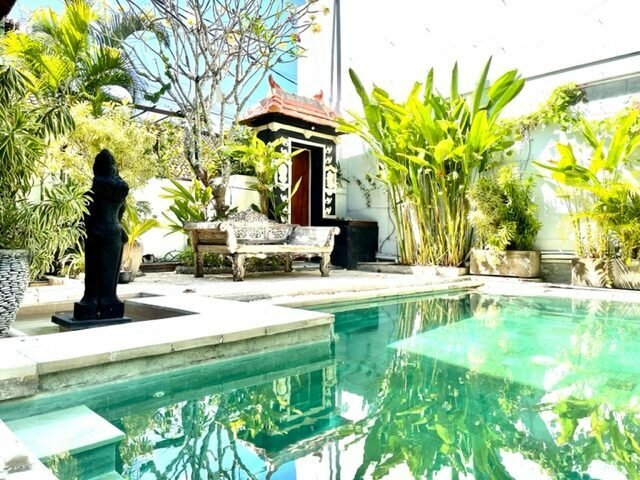
Carissa villa in seminyak
Villa Carissa in Seminyak Center

Things to do when arriving at Bali Airport

Once the tickets are purchased, your bag is ready and you know where to sleep during your trip to Bali for your first night, all you have to do is fly quietly to paradise. Once you got your luggages and out from the Customs (Douane), here are things to do when arriving at Bali Airport:

Don’t forget to check how you are covered by your travel insurance!

Once you arrived, you will see that the Balinese culture will jump out at you (or above… we will come back to this!). You may be a bit lost if it’s the first time. But we are here to help and reassure you. So what to do when you arrive at Bali airport? Here are our tips on the 5 things to do when you get off your plane.

1 – Complete the Electronic Customs Declaration (e-CD) before you arrive

This will save you time at the airport and make the immigration process smoother. You can complete the e-CD online up to 4 days before your arrival in Indonesia.

2 – Have your passport, visa (if required)

Make sure your passport is valid for at least six months after your departure date from Indonesia. If you are a visa-exempt citizen, you will receive a visa on arrival (VOA) at the airport. If you are not a visa-exempt citizen, you will need to apply for a visa before you travel to Indonesia.

3 – Go through the immigration queue

Once you have your documents ready, join the immigration queue. There are separate queues for visa-exempt citizens and those who need a VOA.

4 – Collect your luggage

After you have cleared immigration, you will collect your luggage from the baggage carousel. Safety: Stay cautious of your belongings and be aware of your surroundings, especially in crowded areas. Read here for: Passing through Customs, how will it happen? WELCOME TO BALI and Enjoy your trip to Bali!

5 – Arrival in Bali: withdraw money from the ATM machine at the airport (once you collected your bags)

As you know, your $, €, £, AUD… will clearly not be able to be used in Indonesia! You will have to withdraw Indonesian Rupiahs. As soon as you arrive you will have the opportunity to do so. Moreover, we strongly advise you to withdraw directly from Bali airport so that you are safe for your first purchases. There are several ATMs in the airport you will see after you finish with immigration and customs (douane) and pickup your bags. If you do not know how much to withdraw, we advise you to withdraw the maximum per withdrawal, that is to say IDR 2.5 million around: USD 165 or AUD 245 or EUR 150 or SGD 220 or GBP 130 or CHF 150).

Read also: Bali Airport DPS | Important and Practical Tips to Improve your Experience at Ngurah Rai Airport

But what to do in Bali with all that money?

Seen like that, IDR 2.5 million is a lot! But in reality it is only around EUR 150. It’s quite surprising at first, and you can quickly get lost in it. With time and experience you will get used to it.

IMPORTANT: if you go to a money changer, ALWAYS count again right infront of the person handing that money to you. Read also: Cheapest Credit Card to Use Abroad | Maximizing Savings and Convenience, Especially When Traveling to Bali

Duty Free

Duty Free on Bali airport arrival is not at all interesting and extremely expensive. if you can, do your shopping before your arrival if you are stopping over in Singapore, Dubai, Kuala Lumpur. Or when departing from Bali, indeed, the Duty free in Bali on departure is much more interesting and with prices close to those of other airports in Asia.

Bali Airport (DPS) I Gusti Ngurah Rai International AirportBali Airport DPS | Important and Practical Tips to Improve your Experience at Ngurah Rai Airport Bali Airport (DPS) I Gusti Ngurah Rai International Airport. Pinterpandai.com, CC BY-SA 3.0, via Wikimedia Commons

6 – Use your cell phone in Bali

Your plane lands, you get off and arrive in the hall to collect your luggage and your first instinct will surely be to turn on your phone to tell the parents that you have arrived safely. For that, no problem: there is free wifi in the airport!

We advise you to buy your local SIM card directly at Bali airport. If you wish to use your own SIM, make sure before going to Indonesia, ask your phone company to activate the international option. This is one of the most important things to do when arriving at the Bali Airport, get a SIM card! If you stay in Bali for more than 90 days… scroll down for important info.

But once out, you will need your phone to communicate with someone there or find your direction. In this article we intervene to help you! Recently, stands located in Bali airport have been selling SIM cards at very good prices. You have the choice between SIM cards with internet+call or SIM cards with internet only. It all depends on what you want, but we, for example, only take data, just to use the internet and communicate via WhatsApp. The good thing is that it’s really cheap. We often take between 15 and 20 Gigas for barely EUR 7, and that makes you the whole stay. Or you can buy online an eSIM (Google it: eSIM), or if you want, you can buy Airalo. Revolutionize Your Connectivity with Airalo eSIM!

WHICH OPERATOR TO CHOOSE AT BALI AIRPORT?

There are 6 operators in Indonesia. Some have fairly good global coverage and others cover specific small regions. We advise you to turn to a large operator that covers a large territory with 4G present in Bali, Lombok, Java and Flores. The two biggest are Telkomsel and XL. For having tested both, we advise you to take Telkomsel which covers many more areas than XL and which is not more expensive.

WHY BUY A SIM CARD AND NOT USE WIFI IN HOTELS AND CAFES?

It is above all a story of comfort. We communicate a lot on social networks so we need to have a 24/7 connection, no matter where we are. We use TikTok, WhatsApp, Facebook, Instagram, emails, Skype etc… It is also good to orient you on the island with Google Map or to seek important / emergency information when you are on the move.

SUPER IMPORTANT INFO

Since April 2018, a new law obliges any purchaser of an Indonesian SIM card to present an identity document in order to register the SIM card. We recommend that you buy your SIM card at Bali Ngurah-Rai International Airport (DPS Airport) or in town in an official shop, and not in a small street shop. If you buy from a street shop, your card will not be registered with your passport and will be blocked for a few days after first use. You can’t know everything when you arrive in Bali and that’s why we thought it was important to write this article.

Read also: Itinerary in Bali, Lombok and Gilis in 3 Weeks Stay

Can I still use my mobile phone in Indonesia without registering the IMEI?

The answer is yes, if you purchased your phone from abroad, and if you are going to stay less than 3 months in Indonesia, you will be able to acquire a SIM card called Telkomsel PraBayar or Telkomsel Tourist Card, which will work for 3 months and it will not be necessary to register the IMEI of your phone. THE BEST is using the eSIM. You can Google them, there are many operators for international eSIM out there. For examples: Holafly, Nomad or you can compare them by using esimdb.

Or if you want, you can buy Airalo (our referral code: ALDO8725 to get US$3 discount, when you buy it for the first time).

Register your IMEI if you wish to stay for more than 90 days, and if you want to use Indonesian SIM

If you are going to stay more than 3 months in Indonesia and want to continue using your phone (purchased abroad) with an Indonesian SIM card, you must register the IMEI at the Customs office in Jakarta or Bali.

If you are planning to stay in Indonesia for over 90 days and wish to use a local SIM card, you will have to register your phone (if it is not already in the database). You can do so at the airport of Jakarta or directly in Bali.

  • The IMEI (International Mobile Equipment Identity) registration for the phones that are worth less than US$500 is free of charge. Read also: Bali Online Customs Form to Complete | A Complete Guide to Filling it out the ECD
  • The amount of tax to be paid for foreigners is 40% of the cost of the phone, exceeding the rate of US$500. For example, if your phone costs US$800 the 40% will be charged from US$300, therefore the tax amount would be US$120. No one really finds much fault in the cost of the phone, so it can be understated, but within reasonable limits of course.
  • If you have Indonesian work / residence permit for foreign nationals (KITAS) and a tax number (NPWP) the tax amount will be 30% of the cost of the phone exceeding the rate of US$500. Read also: Entry Requirements to Bali and Navigating Stay Visas in Indonesia
  • If you don’t register the phone within first 5 days, will lose the opportunity to get the discount of USD 500 and must pay 30-40% of the original price of the mobile.
  • Keep in mind that you must register your phone within 90 days of your arrival in Indonesia if you wish to use it. Alternatively, you can buy a mobile phone in Indonesia and use it as a Wi-Fi modem.

7 – Taxi / driver at Bali airport

Once you have money and a working phone, all you have to do is get out of the airport and discover the wonderful Balinese world. If this is your first time to Bali, please leave a comment to tell us how you felt and how it went! Read also: Bali for the Firstimer | Advice, Good Adresses and Idea for Visit

Some people were very surprised to see about fifty Balinese people literally jumping on clients to get them into their taxi! They felt a little attacked by them and they do not hide it from you. Nowadays they dont really jump on you or a bit less aggresive.

In Bali, they all want to be your driver. After several times, you get used to it, but the first time can be shocking. That’s why we’re telling you about it, so you won’t be surprised. But above all, this is only to give you good ideas about it. Read also: How to Take a Taxi in Bali Without Getting Scammed or Cheated?

WHAT TO DO AT BALI AIRPORT TO NOT BE RIPPED FOR TAXI?
GOOD DEAL N°1

If you’ve followed the steps from our previous article, you’ve likely secured your first night’s stay for a peaceful arrival. Don’t forget to ask your host if they provide airport transfer services. If not, they’ll likely assist you in arranging a reliable driver. Balinese hospitality is renowned for its warmth and exceptional service, ensuring your needs are met with care and attention.

GOOD DEAL N°2

Arranging a driver to pick you up at Bali airport offers great comfort and peace of mind. By negotiating the price in advance, you avoid scams and save time, as your driver already knows your destination.

If you wish, you can even explore the island by taxi. Ask your airport driver if they’re available for future trips or if they can recommend someone reliable.

Alternatively, with internet access on your phone, you can use transport apps like Grab or Gojek to book rides at fair prices. These apps provide a convenient and budget-friendly way to get around Bali.

GOOD DEAL N°3

Book online your airport transfer via Traveloka (local website / Apps), they proposed fixed price. Find more about this: Bali Airport PickUp, Drop-Off Service, Excursion, Travel and Transportation Services at Villa Carissa

BALI INDONESIA AIRPORT: OUR SUPER IMPORTANT INFO

As a reminder, the price of an Uluwatu / Sanur / Kuta / Seminyak / Canggu / Denpasar airport trip should not exceed Rp 200,000. To go to Ubud, count double of that.

8 – Rent a scooter in Bali

Renting a scooter in Bali is the best way to explore the island, enjoy breathtaking views, meet locals, and experience ultimate freedom.

Traveling with a backpack instead of a suitcase is more practical for scooter rides. Rentals are widely available, and many hotels offer them too.

Here are 3 essential tips to ensure a safe and enjoyable scooter adventure:

  • Take a helmet, really. It may seem like silly advice to you, but you will see a lot of Balinese and especially a lot of tourists without helmets.
  • On the other hand, be aware that the roads are still super dangerous and that the traffic is dense. There are serious accidents every day on the island. And then the controls get tighter. Before, they let pass the non-wearing of a helmet. Now they are stricter. It can save you a fine and your life.
  • DOUBLE CHECK YOUR TRAVEL INSURANCE! insurance for scooter accident overseas. If you have a motorbike accident and are injured overseas, who will pay for your emergency medical treatment and hospital expenses?

Do not rent your small scooter + helmet more than IDR 80,000 per day (= € 5) so as not to be fooled!

Read also: Tips for Scooter Travelers in Bali | Safety, Price, Road conditions, Driving license and Insurance

9 – A few Indonesian words to know

Make yourself understood as soon as you arrive at Bali airport.
When you speak the same language, it is easier to be understood but above all more difficult to be scammed. So if you want to find a good place to stay in Bali cheap because your travel budget is limited, or even find the best restaurant in Bali, these few words will help you enormously. For this, we give you a small simple list to express yourself a minimum in Indonesian language.

INDONESIAN LANGUAGE BASICS
  • Ya: Yes
  • Tidak: No (a word that will be extremely useful for you to get rid of a salesman who is a little too pushy)
  • Terima kasih: Thank you (soksma in Balinese dialect)
  • Sama-sama: You’re welcome
  • Halo: Hi
  • Sampai jumpa: goodbye
  • Selamat makan: Bon appetit
  • Selamat datang: Welcome
  • Selamat jalan: Have a good trip
  • Maaf: sorry
MOMENTS OF THE DAY
  • Pagi: morning
  • Siang: noon
  • Sore: afternoon
  • Malam: evening / night
  • Selamat tidur: good night
POLITE FORMULAS
  • Selamat pagi: Good morning (in the morning)
  • Selamat siang: Good afternoon (noon, from 11 am say)
  • Selamat sore: Good afternoon (afternoon, between 4 p.m. and 7 p.m.)
  • Selamat malam: Good evening (evening and night)
  • Selamat tidur: Good night

The locals often remove the “selamat” to go faster. You can then say “pagi” (morning) to say hello. It’s like you know.

Now you now about things to do when arriving at Bali airport, why don’t you share your experience when the first time you arrived in Bali airport, in the below…

Sources: Forbes, Huffingtonpost, Traveller

Photo credit: RainerPrang via Pixabay


Ready to book your villa in Seminyak center?

I need more information

Book Your Private Villa

Promotions

Located in Center Seminyak – Bali, Villa Carissa offers a private swimming pool and enclosed garden to guarantee your privacy. You can book your private pool villa here with us.

Whether you’re traveling with family, friends, or on a romantic getaway, villa Carissa in Seminyak center offers the perfect base for exploring Bali’s many attractions and enjoying a relaxing vacation.

 
Carissa villa in seminyak
Villa Carissa in Seminyak Center

Important and Practical Tips at (DPS) Bali Airport

Your trip to Bali will soon begin! You have been preparing for this trip for several weeks, looking for the best spots for sunrise, the ideal place to observe the animals, the forest to explore, the temples to visit… You can access the island of Bali and its airport located in Denpasar from the airports of Jakarta, Singapore, Kuala Lumpur, Australia and all major European cities. Here are our practical tips at DPS (Bali Airport) for your arrival and departure.

Location on Google map

There is only 1 airport in Bali. Bali’s airport is small, it has 2 terminals, one for domestic flights and the other for international flights. Bali airport is located in the south of Bali and called I Gusti Nurah Rai (local hero), or you can just simply call it Bali Airport.

Airlines and destinations

Bali’s Denpasar Airport is a hub of Garuda Indonesia. Several Indonesian airlines fly from Denpasar, as well as several major airlines from Asia and Australia: Jetstar, Qantas, Virgin Australia, Garuda Indonesia, Scoot, Air Asia, Batik & Malindo Air (Lion Air).

There is no direct flight from Europe to Bali and you will necessarily need to do a stopover with a change of plane.

From Europe only KLM fly from Amsterdam via Singapore and Turkish Airlines from Istanbul to Bali.

With a stopover, Bali can also be reached with the following airlines: Emirates Airlines flies from Dubai, Singapore Airlines from Singapore, Cathay Pacific from Hong Kong, Qatar Airways from Doha and Thai from Bangkok. You can fly to Denpasar via Taipei with China Airlines. At the moment, American or African companies do not fly to Bali.

Read also: International Direct Flights to Bali

Bali Airport (DPS) I Gusti Ngurah Rai International Airport
Bali Airport (DPS) I Gusti Ngurah Rai International Airport. Pinterpandai.com, CC BY-SA 3.0, via Wikimedia Commons

Arrival Procedures at Bali Airport

Once you landed at the Bali airport international terminal, this is how you get through the airport:

During Covid time, please install PeduliLindungi app (an application developed to help government agencies carry out digital tracking to stop the spread of the Corona virus) on Google Play or Apple Store before you arrive to Bali.

1. Immigration (passport control)

There are 2 sections, 1 for Visa-on-Arrival (VoA) and the other for those who got their visa in advance (“Non Visa on Arrival”).

There are at least 169 nations eligible to enter Indonesia visa-free. Read below for the VOA and free entry.

The waiting time can be quite long during peak season. Please read below for the fast track service (in case you need it).

Immigration arrival hall at DPS airport (International Bali Airport)
Immigration arrival hall at DPS airport (International Bali Airport). Pinterpandai.com, CC BY-SA 3.0, via Wikimedia Commons

2. Collecting your luggages

Follow the “Arrival” instructions to the baggage claim. Check the screen information on the conveyer belt according your flight.

Get a trolley bag if you need one. If the luggage lost, you may contact the airline staff at the Lost and Found counter.

There are porters to help carry your luggages (they will get your luggage, escort you to your car, taxi or pick up service and help you load into the car).

Then you will go the the Customs (Douane)….

But before, you must to fill out the Indonesian custom declaration form. Arriving passenger and crew must fill in the Customs Declaration Form and submit it to the Customs and Excise officer at the Customs Inspection Gate. THIS FORM IS NO LONGER USED!!!! Bali Airport is going paperless!

Please go to: Bali Online Customs Form to Complete | A Complete Guide to Filling it out the ECD

Indonesian custom declaration form (BC 2.2) in English
Indonesian custom declaration form (BC 2.2) in English. Pinterpandai.com, CC BY-SA 3.0, via Wikimedia Commons. This is no longer available.

To fill out the E Customs form

If you’re traveling to Bali and need to fill out the Bali Customs Declaration Form, here is a step-by-step guide that will help you through the process, from providing personal information and flight details to declaring any goods or foreign currency you may be carrying, and submitting the form to the customs officer upon your arrival at the Bali airport.

Bali Online Customs Form to Complete | A Complete Guide How to Fill Out the ECD (Bali arrival card)

3. Indonesian customs (Douane)?

Going through customs is never much fun. This passage can even be rather long. So, to make it more enjoyable, we advise you to prepare in advance.

After you get your bags from the conveyer belt, you must put all your luggage and hand luggage through a scanner. If the officers don’t pick you for a luggage check; you may exit the airport building.

Go through customs towards the exit sign and give them the electronic tax card (Customs Declaration). You will only need 1 for PER family. Or you can do it online through: NGURAH RAI CUSTOMS
E-CUSTOMS DECLARATION here.

If Custom officers don’t pick you for a luggage check, you can exit the airport building

Make sure you declare if you bring more then IDR 100,000,000 (around € 6500 or US$ 6600) and of course…

Make sure:
  • You need to make sure that you are not importing prohibited products into Bali.
  • You cannot enter with more than 200 cigarettes or 50 cigars or 100 grams of sliced tobacco. Regarding alcohol, if you carry more than 1 liter of alcoholic beverage, they will be confiscated.
  • For airline crews: 40 cigarettes, 10 cigars, or 40 grams of sliced tobacco or other tobacco products, and/or 350 milliliter of alcoholic beverages
  • You must also declare the import of your cameras, video cameras, binoculars and sports equipment at the time of inspection. This is the only condition to allow their entry into the territory.
  • You MUST notify the Customs Officer if you are bringing:
    • Currency and/or bearer negotiable instrument (cheque, traveller cheque, promissory notes, or bilyet giro) in Indonesian Rupiah or other currencies which equal to the amount IDR 100 million (around € 6500 or US$ 6600) or more. If you fail to declare it, administration penalty is applicable (administration penalty is charged 10% from the amount of cash, in accordance to the regulation of Indonesia Ministry of Finance Number 100 in 2018).
    • Foreign banknotes which equal to the amount of IDR 100 million or more.
    • Tell them the reason why you need to bring this money (holiday, paying hotels, restaurants?)… Or else, you can bring your credit card or one of the cheapest is by using the Wise card.
  • Personal goods:
    • Every personal passenger goods, per person on every arrival, is granted import duties, excise, and taxes exemption of USD 500 on their personal goods (personal effect) that were purchased or obtained abroad and will remain in Indonesia.
    • Every personal crew goods, per person on every arrival, is granted import duties, excise, and taxes exemption of USD 50 on their personal goods (personal effect) that were purchased or obtained abroad and will remain in Indonesia.
    • For those who import goods for other purposes than personal use (e.g. the total amount of the goods are unusual for personal use or the goods are used for commercial purposes such as companies/store/institution/industry), are subject to import duties, excise, and taxes.
  • Obviously, you cannot be armed with a firearm.
  • No narcotic drugs. You may end up enjoying an “all-inclusive” holiday in Bali’s Kerobokan prison for a very long time, or even face the death penalty.
  • In general, the importation of drugs is prohibited. So be sure to take your doctor’s prescriptions with you and mark your medication as being for ‘personal use’ on any customs forms. Likewise, no Chinese medicine can enter the country. Read also: Travelers Diarrhea and MEDICINES IN BALI | Preparing for your trip to Bali
  • Pornographic articles, transmitters and receivers are not allowed in Bali. If you enter with DVDs, these will be filtered by censorship. Better bring your NetFlix or Amazon codes 🙂
  • If you wish to stay in Indonesia for more than 90, register your mobilephone’s IMEI in the Cutoms (read for more info > Things to do when arriving at the DPS airport > Use your cell phone in Bali)

4. Arrival hall

Each terminal has it’s own arrival hall, located in the public area after customs & baggage reclaims.
Airport visitors can verify the terminal and designated exit on the airport monitors.
Meeting points are located in each terminal after the baggage reclaim area.

5. Leaving the airport

Visit their transport section for details on trains, buses or taxis from Bali airport to Kuta, Seminyak, Canggu and beyond. Read also: Things To Do When Arriving at Bali Airport (DPS) | Tips for Every Traveler As Soon As We Land

Read also: Health and Safety in Indonesia

Ngurah Rai Internasional Airport Welcome Sign
The Ngurah Rai Internasional Airport Welcome Sign. Softwarestatistik, CC BY-SA 4.0, via Wikimedia Commons

VISA ON ARRIVAL (VOA) at DPS

Visa On Arrival (VOA) or Visit Visa on Arrival is granted to Foreign Citizens who intend to visit Indonesia in the context of tourism, socio-cultural visits, business visits, or government assignments.

Visa On Arrival is given by immigration officials to foreign nationals who meet the requirements, upon arrival in Indonesian territory through certain immigration checkpoints.

I Gusti Ngurah Rai (DPS) Airport has 20 Visa on Arrival counters at the international arrivals terminal.

The requirements for applying for a Visa On Arrival are as follows:

1. Travel letter or national passport with a minimum validity period of 6 (six) months.
2. Not listed on the deterrence (obstacle) list.
3. Pay fees in accordance with applicable regulations US$35 or IDR 500 000 (you can pay by cash or credit card).

Official website of Directorate General of Immigration (Ditjen Imigrasi Republik Indonesia): https://www.imigrasi.go.id/en/

Visa On Arrival is granted for a period of 30 (thirty) days with the following conditions:
1.The immigration permit can be extended for a maximum of 30 (thirty) days
2.Cannot be changed to another Immigration Permit

Visa On Arrival is given by affixing a visa stamp or sticker on a valid and valid Travel Letter or Nationality Passport.

List of Airports with Visa On Arrival Facilities:
1.Sultan Iskandar Muda, Banda Aceh11.Ahmad Yani, Semarang
2.Kuala Namu, Medan12.Adi Sumarmo, Surakarta
3.Sultan Syarif Kasim II, Pekanbaru13.Juanda, Surabaya (SUB)
4.Hang Nadim, Batam14.Supadio, Pontianak
5.Minangkabau, Padang15.Sepinggan, Balikpapan
6.Sultan Mahmud Badaruddin II, Palembang16.Sam Ratulangi, Manado
7.Soekarno-Hatta, Jakarta17.Sultan Hasanuddin, Makassar
8.Halim Perdana Kusuma, Jakarta18.Ngurah Rai, Bali (DPS)
9.Husein Sastranegara, Bandung19.Selaparang, Mataram
10.Adi Sutcipto, Yogyakarta20.El Tari, Kupang
Based on Presidential Regulation Number 21 of 2016, the following is a list of 169 Citizens of FREE VISA ENTRY:
AlbaniaGuatemalaPhilippines
AlgeriaGuyanaPoland
AndorraHaitiPortugal
AngolaHondurasPuerto Rico
Antigua and BarbudaHong Kong SARQatar
ArgentinaHungaryRomania
ArmeniaIcelandRussia
AustraliaIndiaRwanda
AustriaIrelandSamoa
AzerbaijanItalySan Marino
BahamasJamaicaSao Tome and Principe
BahrainJapanSaudi Arabia
BangladeshJordanSenegal
BarbadosKazakhstanSerbia
BelarusKenyaSeychelles
BelgiumKiribatiSingapore
BelizeKuwaitSlovakia
BeninKyrgyzstanSlovenia
BhutanLaosSolomon Island
BoliviaLatviaSouth Africa
Bosnia and HerzegovinaLebanonSouth Korea
BotswanaLesothoSpain
BrazilLiechtensteinSri Lanka
BruneiLithuaniaSt Kitts and Nevis
BulgariaLuxembourgSt Lucia
Burkina FasoMacau SARSt Vincent and Grenadines
BurundiMacedoniaSuriname
CambodiaMadagascarSwaziland
CanadaMalawiSweden
Cape VerdeMalaysiaSwitzerland
ChadMaldivesTaiwan
ChileMaliTajikistan
ChinaMaltaTanzania
Commonwealth of DominicaMarshall IslandsThailand
ComorosMauritaniaTimor-Leste
Costa RicaMauritiusTogo
Cote D’IvoireMexicoTonga
CroatiaMoldovaTrinidad & Tobago
CubaMonacoTunisia
CyprusMongoliaTurkey
Czech RepublicMoroccoTurkmenistan
DenmarkMozambiqueTuvalu
Dominican RepublicMyanmarUganda
EcuadorNamibiaUkraine
EgyptNauruUnited Arab Emirates (UAE)
El SalvadorNepalUnited Kingdom (UK)
EstoniaNetherlandsUruguay
FijiNew ZealandUSA
FinlandNicaraguaUzbekistan
FranceNorwayVanuatu
GabonOmanVatican City
GambiaPalauVenezuela
GeorgiaPalestineVietnam
GermanyPanamaZambia
GhanaPapua New GuineaZimbabwe
GreeceParaguay
GrenadaPeru

Please kindly note that rules and regulations may be changed without prior notice. Please contact your Indonesian Embassy near your place before departure and double check about the free visa entry to Indonesia.

Entry Requirements to Bali and Navigating Stay Visas in Indonesia


Bali Airport Departures – Practical Tips

The following are the stages that passengers must go through:

1. Security Check

To enter the departure terminal, all passengers must go through the Security Check gate. Things to consider at this stage include:

Prepare your travel documents as follows:

  • Tickets according to the date of departure
  • Passport or ID card for doestic flights.
  • All luggage must be checked through an x-ray machine.
  • For a smooth inspection process, all metal objects such as cell phones, keys, etc. should be put in a bag.
  • All passengers must go through the Walk Through Metal Detector (WTMD).
  • If necessary, passengers and luggage can be checked manually by the Airport Security Officer.
  • Report to the Airport Security Officer if you:
    • Using a pacemaker
    • Bringing a firearm
  • You are not allowed to bring along sharp objects and dangerous goods, such as knives, folding knives, nail cutting tools, cutters, matches, gas lighters, and so on.

2. Check-in

Prepare your travel documents, as follows:

  • Tickets according to the date of departure.
  • Passport.
  • Queue at the check-in counter that corresponds to your airline. The reporting desk opens 2 hours before departure time.
  • For flight safety, please report your baggage that weighs more than 7 Kg, and you are only allowed to bring 1 piece of baggage that weighs less than 7 Kg into the aircraft cabin (depending on the cabin class).
  • Scanning / Tapping Boarding Pass.
  • Hand over your boarding pass to the tapping officer.

3. Security Check 2

Passengers are required to remove their belts, watches, hats, jackets, keys, coins and empty the contents of their pants/shirt pockets.

4. Departure Hall

After checking-in your departure at the check-in desk, you can wait for the departure time in the Departure Room according to the location listed on the Boarding Pass.

5. Waiting…

The hardest part now is to wait at the airport. In general, this moment is the least interesting of your trip! Yet, with a few very simple tips, you can keep busy during all those hours of waiting.

Take a tour of the press side. The kiosks offer newspapers from all over the world. You will discover unsuspected alphabets there. Why not buy one to have fun translating? You can also take an Indonesian magazine to keep up to date with national news. Likewise, if you forgot to take some books for your vacation, jump at the chance and buy some from the airport bookstore!

After that, it’s time to go to one of the restaurants or cafes. In general, the bigger the airport, the more choice you have. It’s the perfect opportunity to grab a bite before your flight, buy a bottle of water or drool over pastries.

While eating, start contemplating the different planes. They all have a different shape, with a more or less appreciable aestheticism. It’s up to you to classify the most beautiful and imagine to which destinations they fly! You may find inspiration there for a future trip…!

Boarding your flight will begin soon! You can stop shopping around the airport and head straight yo yoour next destination. In the meantime, there is nothing better than to observe the landscape through the porthole. Also take the opportunity to rest. The jet lag will be less hard to bear if you take a nap during the journey!

Important tips:

Excess baggage: take your time, before your departure, to weigh your luggage carefully. You might be surprised when you arrive at the airport when your luggage, exceeding the authorized weight, it will be costly and the cost depending on the destination of your holiday


http://villacarissabali.com/things-to-do-when-arriving-at-the-bali-airport-dps/


Departure Bali airport maps

International flights

DPS Bali airport international departure map
DPS Bali airport international departure map. Source: I Gusti Ngurah Rai Airport

Domestic flights

DPS Bali airport domestic departure map
DPS Bali airport domestic departure map. Source: I Gusti Ngurah Rai Airport

Services at DPS Airport to make your journey easier

1. Premium Airport Special Services (PASS) both on departure and arrival

Premium Airport Special Services give the best services for all passenger from Check in Assistance, Baggage Handling & Wrapping, Escort Service For Custom & Imigration Clearance (fast track), and Executive Lounge Service. Passenger may choose one of this services at DPS airport:

  • Domestic PASS
  • International PASS
  • Connecting PASS

Operational Hour: 07.00 – 23.00 (local time)

Prices:

  • PASS International IDR 300 000 for Indonesian and IDR 500 000 for foreigner.
  • PASS Domestic IDR 200 000.

Contact Number: +62 361 8496997 or +62 878 6062 8178
Email: dps@premium-pass.id
Website: https://premium-pass.id/service (in Indonesian)

2. Lounges Ngurah Rai-Bali Airport (DPS)

Indonesia counts among its international airports, that of Bali, one of the most important. Ngurah Rai Airport has private lounges, where departing passengers of international or local flights are invited to wait for their flights in a pleasant setting.

To ensure comfortable while waiting for your boarding, all lounges are equipped with air conditioning, an information monitor, and are accessible to disabled people. They provide their occupants with alcoholic or non-alcoholic beverages, snacks to eat, but also newspapers, magazines, television, telephones, wifi and showers (certain lounges).
All lounges are non-smoking and proper attire is required.

Garuda Indonesia Lounge

DPS airport’s international terminal can be found airside, one floor above the main departures level. Available for, First Class, Business Class, Garuda Miles Platinum, SkyTeam Elite Plus (for gold and platinum cards if you have Air France KLM, SkyTeam Mileage Card).

You can acces via stairs and elevator located along the wall of the central part of the terminal, and it’s located next to the other two lounges in the terminal – T/G Lounge and Premier Lounge.

Premier Lounge

The Premier Lounge, located on the 3rd floor, welcomes international travelers with a Priority Pass, Dragonpass or Diners Club International card free of charge at any time of the day. Also complimentary are First Class passengers of Cathay Pacific, Dragonair or oneworld, Diamond and Emerald members of oneworld on flights on Cathay Pacific, Dragonair or oneworld airlines.

The stay is limited to 2 hours. Visitors are allowed if space is available. Free for children under 2 years old, the price is 24 euros per person online and IDR 250,000 (about € 18) on site. There is also a supplement to consume more than two drinks per person, for international calls and faxes and to benefit from a massage session. This service is only available in the afternoon. A conference room can also be reserved there.

Dewa Lounge

The Dewa Lounge is located on the 2nd floor of the International Terminal, near Gates 7 and 8. It is open from 5:00 am until the last flights. The entrance fee is IDR 100,000 (around €7). Access is possible for all travelers from the airport.

Prada Priority Lounge

The Prada Priority Lounge, located near Gate 7, at the International Terminal is open from 6:00 a.m. to 3:00 a.m. The entrance fee is IDR 150,000 (around €10). Access is possible for all passengers, except those on flights to Europe. In this lounge, wifi is chargeable and a private prayer room is available.

T/G Lounges

The airport has two T/G Lounges. The first, located in the international departures area on the mezzanine level, is open 24/7. It offers Macs, a cinema room, a pool table and cable television. Visitors also have the opportunity to enjoy a reflexology session in the private massage room. Customers can choose to help themselves to the buffet or enjoy the chef’s dishes that he prepares in public. A wide selection of drinks is offered at the bar.

The second is in the Domestic Terminal near Gate 2. It is open between 5am and 10pm. In addition to the various dishes and drinks served at the buffet, pastries are available. Each armchair in the saline is equipped with a terminal that allows you to recharge your electronic devices (smartphone, tablet, laptop, etc.). There are also meeting rooms and VIP areas. Access to the lounges is free with a Dragonpass and children under 5 years old. The stay is limited to 3 hours.

Concordia Lounge (domestic DPS departure)

Passengers who want to travel through domestic Terminal Bali, will be spoiled with different views from other airport lounge. Our specialty are spacious lounge, iconic design, comfortable and well flavored food. Each sofa in T/G Lounge Bali also equipped with recharging terminal. The total area of T/G Lounge Bali Domestic is 620m² (6673 ft²). For the first step, we built within the land area of 420m² (4520 ft²) with around 110 seats. T/G Lounge is open every day from 5am – 10pm.

Operational Hour: 05:00AM – 10:00PM
Contact: +62 361 8496981
Email: tg.sekretariat@taurus-gemilang.com
Website: www.taurus-gemilang.com

How do I access the airport lounges?

There are several ways to access these rooms:

  • If you have a business class or first class ticket, you have access to your company’s VIP lounge (but your company must still have a lounge in the airport from which you are departing, some of them share with one of the lounges available in the airport).
  • If you have a Mastercard World Elite card, you can access 1000 airport lounges in 120 different countries (be careful, the N26 card is not concerned unless you are UK residents).
  • Dragon Pass International is a program providing access to lounges at partner airports around the world. Here’s how it works and how you can enter to take advantage of it, using your credit card.
  • If you have a Revolut card (Premium or Metal only) you can access the 1000 lounges of the Collinson Group. You have free access per year and can buy additional access for GBP 25 (about € 30)
  • The crypto.com card (from a certain status) offers Key Lounge access allowing free access to many lounges.
  • You can buy access directly on site at the lounge counter. The prices vary but it takes on average about forty euros. Objectively we find it expensive but why not if you have a very long stopover and want to be able to rest.
  • Purchase to via LoungeBuddy, to get your airport experience by giving any traveler the ability to discover, book and access premium airport lounges around the world. Previously, access to the lounges was reserved for privileged frequent flyers and certain credit cards only.
  • By having a Priority Pass card which we will tell you about in more detail just below…

Read also: International Direct Flights to Bali

The Priority Pass card

Priority Pass is a subscription that allows access to 1,300 lounges in 600 cities in 148 countries. You will find at least one in all international airports.

Priority Pass offers 3 different formulas:

  • The Standard offer at €89 per year allowing you to access the exhibitions at the price of €28 / visit
  • The Standard Plus offer at €259 per year offering you 10 visits. Additional visits will be charged at €28.
  • The Prestige offer at € 399 / year giving you unlimited access to all lounges.

The Priority Pass subscription is really ideal because it is the way to access as many lounges as possible. You are pretty sure to find one near your boarding gate.

With the Prestige offer, you can even afford to test all the lounges on your terminal until you find the one you prefer.

Note that in addition to the Priority Pass, you must be in possession of a boarding pass for the same day to be admitted to the lounge.

Honestly, we find that unless you travel a lot, the prices remain very high (but this is probably what makes it possible to limit the attendance of the lounges and that they remain “VIP”).

If we take advantage of it, it is because the American Express Platinum card allows you to benefit from a free Priority Pass Prestige subscription.

For information, Priority Pass does not operate the lounges themselves. They negotiate its access for their members to use lounges around the world, so amenities do vary across airports.Please

LoungeKey pass

LoungeKey is owned by the same company as Priority Pass and offers virtually the same service.

Unlike Priority Pass, LoungeKey is not obtained through a subscription but comes in advantage of certain bank cards.

Please note that rules & regulations, opening hours mentioned above; may be changed without prior notice.

Sources: The New York Times, Garuda Indonesia, SkyTeam, Bali Airport, Ngurah Rai Customs

Photo credit: JoshuaWoroniecki via Pixabay


Ready to book your villa in the heart of lively Seminyak, Bali?

I need more information

Book Your Private Villa

Promotions

Located in Center Seminyak – Bali, Villa Carissa offers a private swimming pool and enclosed garden to guarantee your privacy. You can book your private pool villa here with us.

Whether you’re traveling with family, friends, or on a romantic getaway, villa Carissa in Seminyak center offers the perfect base for exploring Bali’s many attractions and enjoying a relaxing vacation.

Carissa villa in seminyak
Carissa villa in Seminyak Center


Useful Tips for Visiting Temples in Bali

With more than 50,000 temples (including those present in houses, caves, shops, restaurants, nightclubs (!), hotels, markets…), Bali deserves its nickname of “the island of the Gods”. Here are useful tips for visiting temples in Bali.

Some consider the island to be a high place of spiritual energies in Indonesia! So much so that many expats-dressed-in-sari will tell you that Bali is located at a point of convergence of particularly powerful energies!
So “spiritual energy” and “particularly powerful energies”, sincerely, I don’t know, but on the other hand what is certain is that the island is located in a very active seismic and volcanic zone and for once very powerful !

Finally, in any case, a visit to Bali would be incomplete if you failed to visit some of its temples. Indeed, the main religion on the island – Hinduism – is an integral part of the Balinese soul. It is so rooted in the culture that it is what gives rhythm to the life of the island, from the offerings placed in the early morning, to the processions to the temples at the end of the day…

And one of the strengths of the Balinese is their deep respect and attachment to religious traditions.
So much so that Bali is today the only place on earth where, for 36 hours, the inhabitants remain cloistered at home, just like tourists who are prohibited from leaving their hotels. The streets – like the beaches, mountains and rice paddies – are deserted. The island finds itself isolated from the world: no plane lands or takes off from the airport, no boat enters or leaves the ports.
And absolute silence reigns over the island…
This unique event in the world is called Nyepi: it is the Balinese New Year.

Read also: Tanah Lot Bali | Temples Bordering the Indian Ocean

It is also impossible to open a business without celebrating a blessing beforehand (as explained in this article: Blessing Urbi and Bali); or in any case, it is not recommended at all!

Finally, for many visitors visiting a temple in Bali (or “temples” for that matter, it’s true… why restrict yourself?) is one of the best things to do during your stay (it’s also widely recommended by the Lonely Planet guide) and you should read this useful tips for visiting temples in Bali.

Besakih Bali Indonesia Pura-Besakih-03
Seen from the temple of Besakih at the foot of the Mount Agung. Photo by CEphoto, Uwe Aranas (CC BY-SA 3.0) via Wikimedia Commons

“The Pura”: The Temple in Bali

Pura Uluwatu, Pura Ulun Danu, Pura Tirta Empul… So you guessed it: “Pura” (pronounced “Poura”, rolling the “r”) is therefore the name for the Temple in Bali.

Of Sanskrit origin, the word literally means “space surrounded by a wall”.

And while many temples are visible (and again, “many” is an understatement), their construction and meaning are no coincidence because, as with many things in Bali, many small details reveal big symbols.

Thus, the temple is always oriented along a mountain-sea axis; the part facing the mountain contains the sacred heart of the temple, while on the opposite (so, if you follow correctly: facing the sea) is the entrance to the temple.

The mountain they face is Mount Agung, Bali’s sacred volcano.

The temple, like the conception of the Universe in Balinese culture (note also that the houses follow the same architectural scheme), is organized in 3 levels with, from the outside to the inside:

1 > The “Jeroan”

Facing Mount Agung, it is the highest, holiest and holiest (hence the most important) part of the temple. It represents the World of the Gods, or Superior World (“Swah”).
It is here that the ceremonies are organized, that the Balinese come to pray and place the offerings on altars.

2 > The “Jaba Tengah”

Separated from the Jeroan by a large door (“Kori Agung”), this central part of the temple symbolizes the world of Men; the Intermediate World, or Center of the World (“Bwah”), therefore situated between that of the Gods and that of the Demons.
It is in this part of the temple that the Balinese meet to prepare the ceremonies.
Under the “Balés”, the beach (the Balés are a kind of shelter on stilts covered with a roof of tiles or palm leaves), the women make decorations and offerings which will then be deposited in the “Jeroan” during ceremonies.
There is also cooking, and secondary ceremonies can take place there.

3 > The “Jaba Pisan”

Separated from the Jaba Tengah by a door called “Candi Bentar”, it is the part which symbolizes the Lower World (“Bhur”), that of the Demons, outside the temple (although it is inside the walls…). It is therefore the part facing the sea and the lowest part of the temple.
In this area, there are mainly flower gardens, free areas that can be used for religious dances and Bale.
The Balinese also gather there to have lunch together, to play and to organize cockfights (even if they are officially prohibited).
Thus allowing to pass from one part of the temple to another, the different doors (“Candi Bentar” and “Kori Agung”) thus serve as a symbolic passage between the different “worlds” and represent the separation between the material world and the spiritual world.

The Candi Bentar gate would be a representation of Mount Meru, which would have been separated into 2 symmetrical parts by the God Shiva, thus becoming Mount Agung and Mount Batur (the 2 volcanoes of Bali).

The interior walls of the door being smooth, the Candi Bentar door would crush the demons who would like to enter the sacred part of the temple…
– Do you know the story of “Paf le Demon”?
– Uh no…
– So, it’s the story of a demon who wanted to enter the temple and bang the demon” (Balinese variant of “Bang the dog… here, here, here… Sorry!”).

Thus, the most sacred temples are built on the highest parts of the island, therefore in places corresponding to the Swah, or the World of the Gods.

And thanks to the trees, the flowers, and the various offerings placed, the temples are very colorful and fragrant. Symbol carriers, parasols and various fabrics add a little more color. Symbols of the Hindu trinity, 3 colors dominate moreover:

Red, which represents Brahma, the creator God of the universe
Black, which symbolizes Vishnu, the guardian God, the one who maintains and protects the universe
White, which is the color of Shiva, the destroyer God of the world but obviously also of recreation and fertility.
There is also Yellow, to symbolize the God Iswara (it is he who would have given birth to Vishnu, according to Hindu mythology… but at this level, I am a little lost in their Gods and their roles).

Throughout the temple, there is an interwoven black and white checkerboard fabric, the “Poleng”.

Decorative, the Balinese use it to surround, among other things, trees, altars, temples… This motif symbolizes the fact that in life, good and evil, splendor and evil are closely intertwined.

And so for harmony to reign, it is important to maintain a balance between the 2 forces.

Finally, there are also many umbrellas whose color is just decorative white.

Parasols and yellow and white sheets in a temple

Originally, the temples were built of red bricks and white stones. For a long time they were maintained using the same materials. But techniques, materials and technologies are evolving… But now red bricks and white stones are being replaced by new materials: lava stones! These have the significant particularity of being much more resistant to time. But they are also much darker (the aesthetics of the temple is therefore not the same, while the symbolism remains the same).

This is also part of a founding principle of the Hindu religion: construction – maintenance – and destruction (to then be rebuilt)… A symbolism carried by the 3 Gods.

The Meru (towers) of the Temple

In addition to the altars, one of the most important buildings of the temple, and particularly visible (often from outside the temple) is the Meru (pronounced “Meru”, yes, like the fish).

Located in the most sacred part of the temple, the Jeroan, it is a wooden tower erected on a square base built of bricks. Like an arrow pointing towards the sky, the tower is made up of multiple overlapping roofs, made of palm fibers. It symbolizes the mythical Mountain of the Gods of the Hindu religion: Mount Meru.

The number of roofs is always odd and varies according to the importance of the God or the person to whom it is dedicated. This goes up to a maximum of 11 floors. It is located at the Ulun Danu Beratan Temple and is dedicated to Mount Agung – the Sacred Volcano of Bali – and to Shiva (while the Gods Brama and Vishnu are only entitled to 9 floors).

In temples, the Meru is therefore dedicated either to the Supreme Gods of the Hindu pantheon, or to a deified local personality. According to the Balinese, the Meru serves as a “temporary palace” for the gods when they visit for certain ceremonies. However, one does not find in the temples of the statue of the God, or the Goddess, venerated.

Finally, because of its sacred character, the construction is erected on a very, very solid base to prevent the Meru from blowing up (yes, I know, I already made that joke in a previous article, but I got involved in an ecological approach: I recycle the jokes…)!

And as “life is a celebration and a disaster” (Jean d’Ormesson) and the temples in Bali are considered as living beings, each temple celebrates its “semi-anniversary” every 6 months. This is the Odalan ceremony, during which multiple activities celebrate the descent to earth of ancestors from the Odela (uh… beyond, sorry!).

In addition to family temples, each village has 3 types of temples:

1. The Temple of Origins (Pura Puseh), the most important, dedicated to God Brahma (the Creator God) and to the founders of the village. It is located towards Mount Agung.
2. The Village Temple (The Pura Desa), dedicated to Vishnu (the Protector God) is located in the heart of the village; the inhabitants come there to venerate the spirits who protect the community.
3. The Temple of Death (the Pura Dalem), located at the end of the village, towards the sea. It is also the temple of “evil” spirits (not those who make jokes in bad taste) and demons. Indeed, the Balinese also respect the demons in order to maintain a balance between positive and negative energies. It is dedicated to Shiva, the destroyer and regenerator God.

Surprisingly, temples in Bali never have a roof that covers the entire structure. Indeed, the temple is a link between the beyond and the world of the living: it therefore allows the Gods and ancestors who would like to visit the living, to come directly from the beyond. Where a roof would therefore cut communication…

There are also more important temples: some are located in the mountains (like the temple of Besakih, called the “mother” temple, because it was built on one of the slopes of Mount Agung) and others located by the sea (like by example Uluwatu, or even Tanah Lot), which therefore create a kind of spiritual protection that encircles and protects Bali.

The temples in Bali are therefore important places for the life of the village: well decorated, adorned with flowers and trees, they are places of rituals where daily processions take place. Through the various temples and the offerings deposited daily, the Balinese thus attract the good graces of the Gods and also appease the Demons.

The Human Body as a Temple

In the Balinese-style Hindu religion, the Human Being is an integral part of the Cosmos, of which he is both a constituent element and a mirror.

Just as the cosmos is divided into 3 parts, the human body is therefore also (and like the temple) divided into 3 parts:

The Head (directed towards the sky, therefore the Gods; the Swah), therefore the purest (this is why it is recommended not to touch someone’s head);
The Trunk (intermediate zone), “neutral” part;
From the Waist to the Feet (directed towards the ground, therefore the Demons, the Bhur), the impure zone (this is the reason why it is recommended to hide one’s legs during visits).
In Balinese culture, the Universe (and therefore the world) is considered as a living whole.

The material (feminine principle) and spiritual (masculine principle) elements are linked there within an eternal transformation process that unifies 3 forces:

– those of creation (via the God Brahma),
– that of balance (the God Vishnu)
– and that of destruction (the Goddess Shiva).

We also find this balance in a symbol very present in Bali: the swastika, or Hindu swastika.

Still according to Balinese belief, the condition of the human being evolves during cycles of reincarnations, conditioned by karma. These cycles of transmigration of the soul, succession of birth, death, then rebirth (the soul finds itself linked to the body) are called: “Samasara”.

In this way, the human being is fully integrated into the process of transformation of the Universe.

The incarnation is therefore experienced as a condition of suffering that man must strive to overcome, to reach the “Moksa”, namely the ultimate deliverance – or revelation – (the equivalent of Nirvana among the Buddhists): soul and body then return in peace to their cosmic equivalent.

The practice of Yoga, meditation and the respect of certain rules would make it possible to reach this awakened state.

Some Tips before Visiting a Temple in Bali | Useful tips for visiting temples in Bali

When visiting temples in Bali, remember that these are sacred places, and that the Balinese consider them to be “alive”. In addition, remain silent during ceremonies, respect water sources (basins, fountains), offerings or any religious artifacts, because religion is extremely sacred for the Balinese and you should read useful tips for visiting temples in Bali.

In order not to offend the Balinese, here are some rules of good conduct and ethics to follow, whatever the temple:
  • Shoulders and upper arms covered (therefore: no bare torso or “marcel”),
  • Knees covered, either by trousers, or otherwise wearing a sarong tied at the waist (no shorts above the knee therefore). The sarong is a kind of sarong to tie around the waist. You can easily buy one in Bali, otherwise you can always rent one at the entrance of the temple (if you don’t mind that it has been worn by several people before you…).
  • Ideally, tie a scarf or shawl around your waist (like the belt of Balinese outfits: the “sash”)
  • Wear shoes or flip flops, but don’t go barefoot.
  • Do not step on the offerings placed on the ground.
  • Of course: do not spit, do not throw your waste on the ground, do not smoke, do not shout or swear.
  • Do not walk in front of the faithful during prayers, to avoid disturbing them and disrespecting them.
  • So stay back, or to the side.
  • Do not place yourself above the priest during the ceremonies, because to put yourself higher than him is a singular lack of respect.
    Finally, if you are a woman, two more specific rules apply to you:
    • During periods of menstruation – which is considered impure (risks inducing an imbalance of the world, according to the Balinese) – it is possible that access to the temple is simply forbidden to you (so calculate your shot ladies to visit the temples at the right period… or in any case between 2 periods!).
      You cannot enter a temple compound if you are pregnant.

Note: during ceremonies and processions, Balinese men cover their heads with an “udeng”. A sort of hat, or turban, it prevents hair from falling and thus defiling the temple.

I hope this information concerning the useful tips for visiting temples in Bali will be useful to you in order to visit the temples in Bali while respecting the beliefs of its inhabitants.

And in a future post we will list my favorite temples, those that I consider essential during your stay in Bali!

Sources: CleverlySmart, PinterPandai, Bali Holiday Secrets

Photo credit: Author: Sean Hamlin from Wellington, New Zealand (CC BY 2.0) via Wikimedia Commons

Photo description: the Mother Temple of Besakih, or Pura Besakih, in the village of Besakih on the slopes of Mount Agung in eastern Bali, is the most important, the largest and holiest temple of Agama Hindu Dharma in Bali, Indonesia and one of a series of Balinese temples.

Best Temples in Bali | You need to visit one of them at least once during your stay in Bali


Ready to book your villa in the heart of lively Seminyak, Bali?

I need more information

Book Your Private Villa

Promotions

Located in Seminyak Center – Bali, Villa Carissa offers a private swimming pool and enclosed garden to guarantee your privacy. You can book your private pool villa here with us.

Bali Airport PickUp, Tips and Recommendations for Stress-Free Arrival

Villa Carissa, located in the heart of Seminyak, Bali, offers a range of travel and transportation services for visitors to Bali. f you’re planning to visit Bali, the first thing you’ll need is a reliable Bali airport pickup service to get you to your accommodation safely and comfortably.

When planning a trip to Bali, consider transportation options such as excursions, car rentals (with or without a driver), and transportation services. Enjoy a hassle-free arrival at Bali International Airport with our private Bali Airport PickUp transfer service. Meet your driver and relax on the journey to Villa Carissa.

Private door-to-door transfer between DPS Airport and our centrally located accommodation in Seminyak. Enjoy a smooth, friendly and hassle-free transfer service Comfortable seats with room for legs and luggage, and air conditioning. Welcome service by a professional driver.

For Bali, there is actually only one airport. Ngurah Rai International Airport, which is officially known by the full name I Gusti Ngurah Rai International Airport, is Bali’s main airport. It has the airport code DPS and is located a few kilometers from Denpasar, the capital of Bali. Rates are includes gasoline, parking fee, mineral water, car and driver.

Choose eco-conscious transportation solutions from their range of hybrid and electric vehicles, offering both sustainability and style for your journeys throughout Bali.

Transportation Options and Tips

Here are some tips to help you choose the best travel and transportation options for your Bali trip:

Airport Pick-Up and Drop-Off:

Villa Carissa provides airport pick-up and drop-off services (with cgarge) to and from Ngurah Rai International Airport (DPS). Their professional drivers will meet you at the airport with a sign bearing your name, and take you directly to the villa. On the day of your departure, they will ensure that you arrive at the airport on time for your flight.

Excursions:

Excursions are a great way to explore Bali’s many attractions without worrying about transportation. Many tour operators offer guided tours that include transportation, so all you have to do is sit back and enjoy the sights.

Excursions can be booked for half-day, full-day, or multi-day trips, and can include visits to temples, waterfalls, rice terraces, and other popular attractions. Some popular excursion providers in Bali include Bali Adventures, Bali Tour Organizer, and Bali Sun Tours. (Scroll down for the online internet booking).

Car Rentals with or without a Driver:

Renting a car is a popular option for travelers who want to explore Bali at their own pace. You can rent a car with or without a driver, depending on your preference and driving experience. If you plan to drive yourself, keep in mind that Bali’s roads can be challenging, with narrow streets, heavy traffic, and occasional road closures.

If you prefer to have a driver, you can easily hire one through your car rental company or through a transportation service. Some popular car rental companies in Bali include Bali Car Rental, Balicarfinder, and Bali Nice Car Rental.

Travel and Transportation Services:

There are several transportation services available in Bali, including taxis, ride-sharing apps, and shuttle buses. Taxis are widely available, but make sure to negotiate the fare in advance to avoid overcharging.

Ride-sharing apps like Grab and Gojek are popular and convenient, but may not be available in all areas of Bali. Shuttle buses are a cost-effective option for getting around Bali, with many companies offering routes to popular tourist destinations. Some popular transportation services in Bali include Blue Bird Taxi, Grab, and Perama Shuttle Bus.

When choosing travel options in Bali, consider your budget, itinerary, and preferences. Fortunately, there are plenty of choices available, including excursions, car rentals, and transportation services, to ensure a hassle-free experience. These options will help you explore Bali’s many attractions and enjoy a hassle-free trip.

Book and pay online with Traveloka (local website) for your airport transfer, Bali airport pickup

When visiting Bali, one of the most important things to arrange is your Bali Airport PickUp from Ngurah Rai International Airport (DPS). After a long flight, you don’t want to waste time negotiating with taxi drivers or worrying about last-minute changes.

That’s why we recommend using Traveloka to book your Bali Airport PickUp. Traveloka is a trusted local platform that allows you to book, pay, and manage your airport transfer online, so everything is secure and hassle-free.

By the way… You may want to check this local website for your airport transfers and they may have promotions / good rates and you can pay online securely.

https://www.traveloka.com/en-id/airport-transfer (from your laptop)

Or

https://m.traveloka.com/en-id/airport-transfer (from your mobile)

Bali Airport Pickup Traveloka online
How to:

Please chooce “Airport Transfer”

> From: [type] DPS
> To: [type] Villa Carissa Seminyak
> Insert your date and time and click search
> Choose: Private cars…

Book and Pay Online with Traveloka for Your Bali Airport Transfer

Traveloka is a local website that offers a convenient and hassle-free way to book and pay for your Bali airport transfer. Whether you are travelling for business or leisure, Traveloka’s airport transfer service ensures that you arrive at your destination safely and comfortably. Here’s everything you need to know about their service.

Booking Process:

To book your Bali airport transfer with Traveloka, simply visit their website and enter your pickup and drop-off locations, date and time of your travel, and the number of passengers. You will then be presented with a list of available transfer options, including private cars, shared shuttle buses, and more. Once you have selected your preferred option, you can proceed to make your payment securely online.

Payment Options:

Traveloka offers a range of payment options to suit your needs, including credit/debit cards, bank transfers, and e-wallets. Their payment gateway is secure and reliable, ensuring that your personal and financial information is protected.

Vehicle Options:

Traveloka offers a wide range of vehicle options for your Bali airport transfer, including private cars, shared shuttle buses, and more. Their vehicles are well-maintained and equipped with air conditioning, ensuring that your journey is comfortable and convenient.

Professional Drivers:

Traveloka’s airport transfer service includes professional and experienced drivers who are knowledgeable about Bali’s traffic and road conditions. They will ensure that you arrive at your destination safely and on time.

24/7 Customer Support:

Traveloka provides 24/7 customer support to assist you with any queries or concerns you may have about your airport transfer. Their support team is responsive and helpful, ensuring that your Bali travel experience is stress-free and enjoyable.

In conclusion, Traveloka offers a convenient and reliable way to book and pay for your Bali airport transfer. Their wide range of vehicle options, secure payment gateway, professional drivers, and 24/7 customer support ensure that your Bali travel experience is hassle-free and enjoyable.

Other transports that you can book online by yourself while you’re in Bali

Booking transportation online has never been easier. There are now many platforms available that offer a wide range of transportation options that you can book online, including flights, trains, buses, and taxis. Here are some of the popular options that you can book online by yourself:

Limitations to Online Taxis

Note that, as in many parts of the world, there is an ongoing struggle in Indonesia between traditional (regular) taxis and online taxi services.

Please note that in certain areas online taxis are not allowed to take passengers, then in UBUD, CANGGU, JIMBARAN they are not allowed either, finally there are sometimes hotels or other establishments that require to use the services of their driver or a partner carrier, so it’s up to you to improvise depending on the situation. Please note that if you stay in Villa Carissa, you don’t have to be worried, you can hire an online taxi and it’s easy!

From Bali Airport to Villa Carissa in Seminyak Center

It takes around 30 to 40 minutes from Bali airport (DPS) to Villa Carissa.

  • Follow Jl. Airport Ngurah Rai to Jl. Bypass Ngurah Rai: 4 min (1.7 km oo 1 mile)
  • Take Jl. Sunset Road to Jl. Kayu Aya/Jl. Laksamana Basangkasa in Kuta Utara: 15 min (8.0 km or 5 miles)
  • Continue on Jl. Kayu Aya to your destination: 11 min (2.9 km or 1.8 mile)

Sustainable Travel Options in Bali: Minimize Your Footprint, Maximize Your Experience

From Bali Airport to Villa Carissa: A Guide to Hassle-Free Transportation

When traveling to Bali, transportation from the airport to your accommodation can be daunting, especially for first-time visitors. However, there are various seamless and hassle-free transportation options available. Here’s a guide to transportation from Bali airport to Villa Carissa:

Airport Taxi

Airport taxis are a convenient and reliable option for transportation from the airport to Villa Carissa. You can find official airport taxis at the airport taxi stand, and the rates are fixed based on the destination. The fare from the airport to Villa Carissa should cost around IDR 300,000 – 350,000 ($20 – $25) depending on the time of day and traffic conditions. It’s recommended to only use official airport taxis to avoid scams and overcharging.

Private Car Rental

Another option for transportation from the airport to Villa Carissa is renting a private car. Many car rental companies offer this service, and you can pre-book your car rental online to avoid any last-minute stress. The cost of a private car rental from the airport to Villa Carissa should cost around IDR 400,000 – 500,000 ($28 – $35) for a one-way trip. This option is recommended for those who prefer a more private and comfortable ride.

Online Transportation

Online transportation services, such as ride-hailing apps, are also available in Bali. Apps like Grab and Gojek offer airport pick-up services, and you can pre-book your ride before arriving in Bali. The cost of online transportation from the airport to Villa Carissa should cost around IDR 150,000 – 250,000 ($10 – $18) for a one-way trip, depending on the time of day and traffic conditions.

In conclusion, various transportation options make it easy to travel from Bali airport to Villa Carissa. Airport taxis, private car rentals, and online transportation services offer a convenient and hassle-free way to get to your accommodation. Depending on your preference and budget, you can choose the option that suits you best. Always ensure to use official airport taxis or reputable transportation services to avoid scams and overcharging.

Read also:

Official Bali Airport Website: https://bali-airport.com/en

Photo credit: Pxhere (CC0 Public Domain)

How to Take a Taxi in Bali Without Getting Scammed or Cheated?


Seek tranquility, luxury, and seamless access to Bali’s attractions at Villa Carissa

I need more information

Uncover Bali’s enchanting wonders from Villa Carissa, a perfectly located haven. Immerse yourself in a world of tranquility, luxury, and unforgettable experiences.

Whether you’re traveling with family, friends, or on a romantic getaway, villa Carissa in Seminyak center offers the perfect base for exploring Bali’s many attractions and enjoying a relaxing vacation.

Carissa villa in seminyak
Villa Carissa in Seminyak Center

International Direct Flights to Bali

When you want to go to Bali, it’s getting easier nowadays. Find out the international direct flights to Bali! who flys direct to bali? direct flights to Bali from Asia?

Bali, the enchanting island in Indonesia, is a popular destination known for its stunning landscapes, rich cultural heritage, and warm hospitality. Travelers from around the world can easily access Bali through international direct flights, making it a convenient and accessible getaway.

Bali is a constant delight. All its beauty is in its landscapes and in its energy. The Island of the Gods is magical. It transports you to unsuspected scenery, at sunrise and at sunset. All you have to do is fly to Indonesia to discover them with your own eyes! Getting to Bali by plane is quite simple. There are many airlines that offer flights throughout the year.

Denpasar Airport (IATA: DPS, ICAO: WADD), also known as Ngurah Rai International Airport DPS, is the only airport in Bali.

If Indonesia has many airports on its territory, there is only one on the island of Bali. This is Ngurah Rai Airport (DPS). With some airlines you find it rather as Denpasar or Bali. Located a few kilometers from Kuta.

There are quite a few international direct flights to Bali. It is then necessary to make a stopover in Asia to be able to reach the island. However, this is only a setback that allows you to rest before arriving at the place of your stay! There are still many airlines connecting Bali. You can count Air Asia, KLM, Korean Air, Qatar Airways, Singapore Airlines, Eva Air, Garuda Indonesia…

In general, with the stopover and the flight time, it takes between 17 and 26 hours of travel. This duration explains the price of plane tickets. These can reach up to €1,500 during the high season. It is therefore important to plan your trip several months in advance.

You can also take domestic flights through national airlines. In general, they have their own counter in the airport. Thus, you can directly book outward and return flights to an Indonesian city of your choice!

List of international direct flights to Bali (By Alphabets)

Here is a comprehensive list of international direct flights to Bali, arranged alphabetically for your convenience: Amsterdam, Bangkok, Doha, Dubai, Hong Kong, Kuala Lumpur, Seoul, Singapore, Sydney, and Tokyo. These destinations offer convenient non-stop flights to Bali, allowing travelers from around the world to easily access this enchanting island paradise.

Adelaide (Australia) to Bali: 5h 30mn nonstop

JetStar, Batik Air

Bangkok (Suvarnabhumi Airport BKK) To Bali: 4 hours, 15 minutes nonstop

Thai Airways

Dili (East Timor) To Bali: 2 hours, 5 minutes nonstop

Citilink, Garuda Indonesia

Delhi Indira Gandhi (India), 8 hours 5 minutes, nonstop

Vistara

Don Muang (Bangkok) To Bali: 4 hours, 15 minutes nonstop

Air Asia

Dubai (UAE) To Bali: 9 hours, 10 minutes nonstop

Emirates, Garuda Indonesia

From 1st June 2023, Emirates A380 aircraft flight, EK369, will depart Bali at 19:40 hrs, arriving in Dubai at 00:45 hrs local time. All times are local.

Doha to Bali: 9h 50m nonstop

Qatar 3 times a day

Fuzhou Changle (China) To Bali: 5h 25 mn nonstop 

XiamenAir

Hanoi (Vietnam) to Bali: 5h 25m nonstop

ViaJet Air

Ho Chi Minh (Vietnam) To Bali: 5h, 50m nonstop

Vietnam

Hongkong To Bali: 4h 50m nonstop

Cathay Pacific, Garuda Indonesia

Gold Coast to Bali: 6h 25 mn nonstop 

JetStar, Virgin, Malindo Air

Istanbul (Turkey) to Bali: 12h 30 min nonstop

Turkish Airlines

Kuala Lumpur to Bali: 3h 5m nonstop

Air Asia, Malaysia Airlines, Malindo Air

Manila To Bali: 3h 55m nonstop

Philippine Airlines

Melbourne To Bali 5 hours, 57 minutes nonstop

Garuda Indonesia, Jet Star, Qantas

Perth To Bali: 3h 40m nonstop

Air Asia, Jet Star

Port Moresby to Bali: 5h nonstop

Citilink

Seoul (Korea) To Bali: 7h 10m nonstop

Korean Air

Singapore to Bali: 2h 45m nonstop

Air Asia, Garuda Indonesia, Singapore Airlines

Shanghai Pudong (China) To Bali: 6h 20 mn nonstop

China Eastern

Sydney To Bali: 6h 15m nonstop

Garuda Indonesia, Jet Star, Qantas

Taipe To Bali: 5h 25m nonstop

Eva Air

Tokyo To Bali 7 hours 25 minutes nonstop

International Direct Flights to Bali from Tokyo: Air Asia (Haneda), Japan Airlines, Garuda Indonesia (Narita)

Brisbane to Bali: 5h 40m nonstop

Jet Star, Lion Air, Virgin

Melbourne to Bali: 5h 25m nonstop

Jet Star, Lion Air, Virgin, Qantas

Cairns to Bali: 4h 35m nonstop

Jet Star

Adelaide to Bali: 4h 50m nonstop

Jet Star

Darwin to Bali:  2h 35m nonstop

Jet Star

Xiamen Gaoqi (China) To Bali: 5h 5mn nonstop

XiamenAir

Please not that the above time flights are the fastes nonstop flying and it may varies depending on the weather and other circumstances.

Read also: Bali Online Customs Form to Complete | A Complete Guide How to Fill Out the ECD

From Bali to Darwin | Complete Guide to Visit Darwin and Surroundings

Direct flights from Australia and Auckland to Bali

This is a list of an international direct flights to Bali from Australia. Very easy when flying from Australia to find the International Direct Flights to Bali:

Adelaide to Bali: 5h 30mn nonstop

JetStar, Batik Air

Auckland to Bali

Air New Zealand (starting March 2024)

Brisbane to Bali: 5h 40m nonstop

Jet Star, Lion Air, Virgin

Melbourne to Bali: 5h 25m nonstop

Jet Star, Lion Air, Virgin, Qantas

Cairns to Bali: 4h 35m nonstop

Jet Star

Adelaide to Bali: 4h 50m nonstop

Jet Star, Batik Air

Darwin to Bali:  2h 35m nonstop

Jet Star

Gold Coast to Bali: 6h 25 mn nonstop

JetStar, Virgin, Malindo Air

Melbourne To Bali: 5h 57m nonstop

Garuda Indonesia, Jet Star, Qantas

Perth To Bali: 3h 40m nonstop

Air Asia, Jet Star

Sydney To Bali: 6h and 15m nonstop

Garuda Indonesia, Jet Star, Qantas

Bali Airport DPS | Important and Practical Tips to Improve your Experience at Ngurah Rai Airport

Direct flights to Bali from Asia

Bangkok (Suvarnabhumi Airport BKK) To Bali: 4 hours, 20 minutes nonstop

Thai Airways

Delhi Indira Gandhi (DEL) To Bali: 8 hours 5 minutes nonstop

Vistara

Dili (East Timor) To Bali: 2 hours, 5 minutes nonstop

Citilink, Garuda Indonesia

Don Muang (Bangkok) To Bali: 4 hours, 15 minutes nonstop

Air Asia

Fuzhou Changle (China) To Bali: 5h 25 mn nonstop

XiamenAir

Hanoi (Vietnam) to Bali: 5h 25m nonstop

ViaJet Air

Ho Chi Minh (Vietnam) To Bali: 5h, 50m nonstop

Vietnam

Hongkong To Bali: 4h 50m nonstop

Cathay Pacific, Garuda Indonesia

Istanbul to Bali: 12h 30 min nonstop

Turkish Airlines

Kuala Lumpur to Bali: 3h 5m nonstop

Air Asia, Malaysia Airlines, Malindo Air

Manila To Bali: 3h 55m nonstop

Philippine Airlines

Port Moresby to Bali: 5h nonstop

Citilink

Seoul (Korea) To Bali: 7h 10m nonstop

Korean Air

Singapore to Bali: 2h 45m nonstop

Air Asia, Garuda Indonesia, Singapore Airlines

Shanghai Pudong (China) To Bali: 6h 20 mn nonstop

China Eastern

Taipe To Bali: 5h 25m nonstop

Eva Air

Tokyo To Bali 7 hours 25 minutes nonstop

International Direct Flights to Bali from Tokyo: Air Asia (Haneda), Japan Airlines, Garuda Indonesia (Narita)

Xiamen Gaoqi (China) To Bali: 5h 5mn nonstop

XiamenAir

Things To Do When Arriving at Bali Airport (DPS) | Tips for Every Traveler As Soon As We Land

Direct flights to Bali from Middle East

Dubai (UAE) To Bali: 9 hours, 10 minutes nonstop

Emirates twice a day, Garuda Indonesia

From 1st June 2023, Emirates A380 aircraft will be flying to Bali (flight EK368, will depart from Dubai International Airport (DXB) at 03:25 hrs, arriving in Denpasar International Airport (DPS) at 16:35 hrs local time). The returning flight, EK369, will depart Bali at 19:40 hrs, arriving in Dubai at 00:45 hrs local time. All times are local.

Read also: Things To Do When Arriving at Bali Airport (DPS) | Tips for Every Traveler As Soon As We Land

Doha to Bali: 9h 50m nonstop

Qatar Airways 3 times a day

Istanbul (Turkey) to Bali: 12h 30 min nonstop

Turkish Airlines

Cheapest Credit Card to Use Abroad | Maximizing Savings and Convenience, Especially When Traveling to Bali

There is no direct flight from Europe, USA and Canada to Bali

There are no direct flights from most European cities or from the United States or Canada to Bali, Indonesia. However, there are a number of airlines that offer connecting flights with a layover in another city.

For example, you could fly from London to Bali with a layover in Singapore or Kuala Lumpur. Or, you could fly from New York to Bali with a layover in Hong Kong or Jakarta.

The total travel time for a connecting flight will be longer than a direct flight, but it will still be possible to reach Bali from almost anywhere in the world.

Here are a few of the airlines that offer connecting flights from Europe and North America to Bali easily:
  • Air France
  • KLM Royal Dutch Airlines
  • Lufthansa
  • Singapore Airlines
  • Thai Airways International
  • Turkish Airlines
  • United Airlines

When booking a connecting flight, it is important to allow enough time for the layover. You should also make sure that you are on the same airline for both legs of your journey, as this will make it easier to check in your luggage.

No International Direct Flights to Bali From/to France

There is no direct flight to Bali from France. You will make at least one stopover in Shanghai Pudong, Singapore, Bangkok, or Kuala Lumpur for example. Count on average between 17 and 25 hours of flight. Some travelers land in Jakarta (from €600 round trip) and take the opportunity to visit the island of Java before reaching Bali by ferry.

Air France and KLM operate a daily flight to Denpasar via Singapore (from €1,020). Eva Air, Malaysia Airlines, Thai Airways and many other companies fly to Bali regularly. Singapore Airlines, for example, offers a flight via Singapore at €815 return.
In all seasons, by booking well in advance, you can find offers around 700 € round trip.

The service providers below are likely to offer interesting flights only:

Air France (www.airfrance.fr)
Travel exchange (www.bourse-des-vols.com)
Travel Connoisseurs (www.connaisseursvoyage.fr)
Tui (formerly Nouvelles Frontières www.tui.fr)
Oui SNCF (www.oui.sncf)

No International Direct Flights From/to Belgium

By taking it well in advance, a flight (with stopovers; around 25 hours) can cost around €600 off season and €700 in high season. Singapore Airlines, Emirates and KLM and Etihad Airways are among the companies serving Bali, with 1 or 2 stopovers. Brussels Airlines does not offer flights to Indonesia (you will need to transit through Singapore or Bangkok).

Some recommended carriers and agencies:

SN Brussels Airlines (www.Brusselsairlines.com)
British Airways (www.britishairways.com)
Connections (www.connections.be)
Éole Gigatour (www.Gigatour.be)

No International Direct Flights From/to Switzerland

Flights with 1 or 2 stopovers frequently connect Geneva (or Zurich) to Denpasar. Count 18 to 25 hours of travel and at least 700 CHF in low season and 1,000 CHF in high season. Some of the companies serving Denpasar include Qatar Airways, Emirates, Lufthansa or Etihad Airways.
Some useful carriers and agencies:
Swiss International Air Lines (Tel. 848 700 700; www.swiss.com)
Lufthansa (Tel. 0 900 900 922; www.lufthansa.com)
Jerrycan (Tel. 022/346 92 82; www.jerrycan-travel.ch)

No International Direct Flights From/to Canada

From Canada, it will be necessary to pass most of the time through a European and/or Asian city. Thus, Cathay Airlines, KLM and Korean Air offer flights to Denpasar from Montreal with 2 or even 3 stopovers. The Montreal-Denpasar trip takes a minimum of 23 hours. Return fares start at C$1,200.
Some useful addresses:
Air Canada (Tel. 1 888 247 2262; www.aircanada.com)
Expedia (www.expedia.ca)
Flight Hub (Tel. 1 800 900 1431; www.flighthub.com)
RedTag Travel Cuts (Tel. 1 800 667 2887; www.travelcuts.com)

No International Direct Flights / Airlines Flying from USA to Bali

  • EVA Air (BR)
  • China Airlines (CI)
  • Cathay Pacific (CX)
  • China Southern Airlines (CZ)
  • AirAsia X (D7)
  • Emirates (EK)
  • Jetstar Airways (JQ)
  • Korean Air (KE)
  • China Eastern Airlines (MU)
  • Air New Zealand (NZ)
  • Philippine Airlines (PR)
  • Qatar Airways (QR)
  • United Airlines (UA) via Singapore, then DPS Bali

Denpasar airport balinese gate
Balinese temple (Candi Bentar) style gate at the tarmac in Bali airport. Craig, Public domain, via Wikimedia Commons

Information about Bali (Denpasar): Cheap Flights & Booking Strategies

Are you looking for information about Bali (Denpasar), tips on finding affordable flights to the island, and the best times to secure budget-friendly airfares to this stunning destination?

To take an eco-friendly airplane journey from your country to Bali, consider several sustainable travel practices. Opt for airlines that prioritize fuel efficiency and carbon offsetting programs. Choose direct flights whenever possible to reduce emissions from take-offs and landings. Additionally, packing light to minimize the aircraft’s weight can lower fuel consumption. Finally, consider purchasing carbon offsets to mitigate the environmental impact of your flight.

How to find a cheap flight to Bali

You can be sure to find a cheap flight to Bali easily thanks to the many flight website comparators like Google Flights, Expedia, FareCompare, Momondo, FlightsFinders, Skyscanner… flight search engine for an average price of 449 Euros round trip. The price indicated will fluctuate depending on the number of seats remaining when you make your reservation, but also on your departure dates and the airport of origin…

You will also have the opportunity to search the entire month from the flight website comparators, in order to have an overview of the different prices for a specific month. You will choose your flight to Bali at the best price according to your availability and your own constraints.

When to book a cheap flight to Bali

For those who can, it will be more interesting to take your flight to Bali 30 weeks in advance to get your plane ticket 9% cheaper. The most affordable month for a flight to Bali will be November. Seven weeks before your departure, you can still buy a ticket 7% cheaper than the average price.

All you have to do is click on the “search for price alerts” link at the top left of your search page, after having defined your personal criteria and provided an email address.

French airports with direct flights to Bali

No French airport will offer direct flights to Bali. On the other hand, many platforms serve as a base for journeys with stopovers for this destination, such as Paris, Bordeaux or Lyon. Regardless of the city of departure, you will land at Bali Denpasar airport.

Count at least 20 hours of flight with stopover included for a flight to Bali from France.

Airlines offering cheap flights to Bali from France, The Netherlands (Amsterdam)

Many airlines operate flights to Bali Denpasar, including KLM, Singapore Airlines, Air France, China Southern and Korean Air.

You can gather more information on this subject by going to the page of the airlines that serve Bali Denpasar.

Bali Denpasar Airport

Most airlines flying to Bali from France, Europe, Asia will land at Bali Denpasar Airport.

Denpasar-Ngurah Rai Airport

Named after the Indonesian national hero, Bali Denpasar Airport was built fifteen kilometers from the city. Taxis will be available at the exit of the terminal, on your right. You can also opt for a rental car at Bali Denpasar airport.

When to go to Bali?

The months of May, June and October will be particularly suitable for those who do not tolerate tropical climates and humid heat. It will be just as pleasant to make visits as to enjoy the sun and the local beaches. Between July and September, the weather will be fine and you will fall into the high tourist season to discover Bali. Read also: Bali Weather | When to go to Bali? Monthly Bali Tropical Climate

What’s the weather like in Bali?

Bali’s rainy season begins in November and lasts until February in Bali. The thermometer then oscillates between 24 and 32°C (75.2 and 90°F), with a peak of precipitation (rain) in January. The dry season will therefore extend from March to October with equivalent temperatures. The center of the island will generally be cooler than the coasts. On the heights, you will benefit from a certain freshness with averages between 20 and 25°C (68 and 77°F).

City guide: what to do and see in Bali

Commonly called the Island of the Gods, Bali conceals many treasures. Walking lovers should not miss the night climb to the summit of the Batur volcano, perched at 1717 meters (5633 ft) and accessible to all.

Known to surfers from all over the world, Kuta beach will be one of the island’s must-sees, while to the east, the village of Amed will satisfy divers of all levels.

The village of Munduk in the center of Bali will be an unforgettable stopover for those looking for authenticity and landscapes that have remained wild. Several temples are also worth a visit, including Pura Besakih, Tanah Lot and Pura Luhur, built by the sea. You will need to cover your waist with traditional clothing before entering these religious buildings.

Art lovers should head to Ubud, for its many galleries, dance performances and music concerts. A monkey forest will be nearby and will delight those traveling with the family.

Local dishes, multi-storey rice fields, Lake Bratan will also make up this Balinese picture that will certainly disorient you.

Things To Do in Bali and What to Visit, Where To Go While Vacationing in Bali? (Top Attractions)

Further information

Local guide. Read also: Why choose SEMINYAK during your trip to Bali?2 Weeks Itinerary in Bali | What to do and visit in Bali for 14 Days | Best Itinerary

What to do and see in Bali, our selection of unmissable activities

Where to stay

Hotels, Villas with private pool.

Thanks to hotel comparators, find the ideal hotel for your trip to Bali.

List of cheap flights or lowcost airlines in Indonesia

In Indonesia, there are several low-cost airlines that offer affordable flights for travelers on a budget. These airlines provide an extensive network of domestic flights, allowing passengers to explore various destinations within Indonesia without breaking the bank.

With their competitive pricing and frequent promotions, these low-cost carriers make it more accessible for travelers to experience the diverse beauty and culture of Indonesia without compromising on affordability.

BATIK AIR

Batik Air is generally considered a mid-range airline, offering services that are positioned between budget carriers and full-service airlines. While it’s not typically classified as a low-cost carrier, it’s known for providing relatively affordable fares compared to premium airlines while offering additional amenities and services beyond what budget airlines provide.

CITILINK

Citilink is the low-cost subsidiary of Garuda Indonesia based in Jakarta. It serves 8 destinations in Indonesia.

INDONESIA AIR ASIA

Indonesia Air Asia is the Indonesian subsidiary, based in Jakarta, of the Malaysian company Air Asia. It flies to 13 destinations in Indonesia.

LION AIR

Lion Air is the largest private airline in Indonesia. Based at Jakarta Soekarno-Hatta airport, it serves 121 destinations in Indonesia (Batam, Malang or Ambon), but also around ten in Malaysia, Singapore, Vietnam, Thailand, China, Saudi Arabia…

SRIWIJAYA AIR

Sriwijaya Air is known for providing relatively affordable options for domestic travel within Indonesia and Fuzhou Changle International Airport in China (via Jakarta). While it may not be classified as a dedicated budget airline like some others, it often offers competitive fares and cost-effective choices for passengers traveling within the country.

Bali on a Budget: Tips and Tricks for Affordable Travel

Sources: CleverlySmart, PinterPandai

Photo credit: Terry Chay (CC BY-NC-ND 2.0) / Flickr

Travel Plans Registration Before Leaving Your Country | Where to Register? Traveling for Safety and Advice


Indulge in tranquility, luxury, and effortless exploration of Bali’s attractions at Villa Carissa

I need more information

Book Your Private Villa

Promotions

Nestled in the heart of Seminyak, Bali, Villa Carissa is your stepping place and well-located haven. With a private swimming pool and enclosed garden, your privacy is assured. Book your private pool villa with us and experience the best of Bali.

Whether you’re traveling with family, friends, or on a romantic getaway, villa Carissa in Seminyak center offers the perfect base for exploring Bali’s many attractions and enjoying a relaxing vacation.

Carissa villa in seminyak
Villa Carissa in Seminyak Center


Tips for Scooter Travelers in Bali

Are you preparing your next trip to Bali and would you like to rent a scooter on the Island of the Gods? Here is everything you need to know for renting a motorcycle in Bali in the form of 5 practical tips on driving a 2-wheeler that will help you before your trip but also once there: Driver’s license, insurance, price scooter rental and fuel, safety and road conditions.

You can explore Bali by scooter but also Lombok, Flores or Sulawesi. The scooter is undoubtedly the best way to fully enjoy Indonesia in complete freedom. But there are laws and rules of conduct to know and respect.

Here is the outline of this blog post on scooter rental in Bali:

1. Scooter safety on the roads of Bali
2. The price of a scooter rental in Bali
3. Road conditions in Bali
4. Where to refuel your scooter in Bali?
5. What driving license and what insurance to rent a scooter in Bali?
6. Get a good insurance to cover during your stay

If you are reading this article, it means that you will surely go on vacation to Bali! All our Indonesia travel stories can be accessed from this link. We take you to Bali but also to Lombok, Gilis, Komodo, Flores or Sulawesi. And yes, Indonesia has been our favorite playground since forever. This is how we have become experts on the destination for international travelers and tourists.

Best Travel Insurance for Bali: A Comprehensive Guide for Visitors from Around the World

5 Tips for scooter travelers in Bali

1. Scooter safety on the roads of Bali

To visit Lombok and Bali by scooter, know that you have to drive on the left (like in the UK). Better to know it from the start! It can be unsettling at first for some but you get used to it quickly.

Wearing a helmet is mandatory (it’s a must) with permanently attached strap. Avoid riding at night for your safety and due to the lack of public lighting. In Bali, it gets dark around 6 p.m.

Be careful, you can be arrested at any time by the local police, unfortunately still too often corrupt. Avoid them as much as possible and if possible ignore them. At red lights, avoid being in the front line! They love to stop tourists on this occasion. Even if you have nothing to reproach yourself with, they will always find something to complaint about.

What to do in case of arrest by the local police?

If the policeman is alone, hand him a small ticket or demand a ticket (or fine) and tell the policeman who is often more of a rural warden (for towns) that you are asking for the case to be settled in the court of justice of Denpasar. This is how it should normally be. However, the policeman will not want to go and waste half a day in the capital for that. Know that in 2016, only 52 tickets in all were filed in court! He will therefore let you go in 99.9% of cases, always trying to get something in the end. It can go as far as a candy!

If it is a police roadblock, stop and present all the requested documents. If you are in good standing, the police have nothing to ask you to pay.

The villagers can also warn you of possible roadblocks and offer you to cut across the field. It has already happened to many people on the road between Ubud and Mount Batur. Normally the signs are: honking, flashes their headlights, or just simply saying: polisi… polisi (police, police).

2. The price of a scooter rental in Bali

The scooters for rent in Bali are mostly 110 or even 125 cc, which is more than enough to explore the island, even if the coasts can be steep in some places. FYI, two with two backpacks, we traveled Bali and Lombok on a single scooter the first time but it is not necessarily the most practical, we grant you. It is therefore better to plan to travel light in this case.

Renting a scooter is very simple. Speak to your host as soon as you arrive in Bali. In any case, he will be able to either bring your scooter directly to your accommodation or he will tell you about a scooter rental company nearby. And scooters, in Bali, that’s not what’s missing!

Read also: Itinerary in Bali, Lombok and Gilis in 3 Weeks Stay

Scooter rental prices in Bali are low and decreasing depending on the duration, but you can also rent a scooter for a single day from any village.

The average price of renting a scooter varied between IDR 70 000 and 80 000 per day, or around €4.50. A price that starts to be negotiated if you rent the scooter for more than 3 days. For 1 month’s rental, you should pay around IDR 850 000 or around €50 after negotiation.

Good to know: Near surf spots in the south such as Kuta, Legian, Seminyak, Canggu or on the Bukit peninsula, the scooters are equipped with a rack on the side to carry your surfboard!

3. Road conditions in Bali

Visiting Bali by scooter means taking roads that are generally in good condition. Many have even been redone in recent years. Traffic in the south of the island is generally very dense and even becoming denser. We could see the evolution of the traffic between 2011 and 2021 becausewe livie in Bali. It is better to be used to riding a scooter and in any case not be afraid of traffic.

You have to let yourself be carried away by the flow of other scooters which do not hesitate to take sidewalks or other verges, especially in the south of Bali. So be extra careful in the big cities and especially in the alleys of Kuta, Legian, Seminyak and in Ubud which are often congested and where respect for the highway code becomes secondary.

For information, it took about 45 minutes to reach Ubud from the beaches of southern Bali. In July 2023, it took more than 2 hours! It becomes hellish and more and more dangerous, especially because of the trucks that have become ubiquitous.

Watch out for potholes everywhere else. Last point, the roads around Sidemen are often in poor condition.

Bali scooter breakdown! Watch out for the road of death!

Last important point: Absolutely avoid the seaside road between the beaches of southern Bali and Java. The road is nicknamed the highway of death. Indeed, it is the road (which does not look like a highway at all but rather a secondary road) that thousands of trucks take daily from Jakarta to/from Denpasar.

Drivers in Indonesia are used to driving more than 50 hours in a row. They take substances that we will not describe here which allow them to hold. They are not in their normal state behind the wheel and you can imagine that it is not a small scooter that stops them. There are a lot of injuries and especially deaths on this road every year.

Travel Plans Registration Before Leaving Your Country | Where to Register? Traveling for Safety and Advice

5. What driving license and what insurance to rent a scooter in Bali?

Before you leave and before you can visit Bali by scooter, get an international permit from your city hall.

Know that in Indonesia, as in Thailand, the French car license (for example) which normally allows you to drive a scooter of less than 125 cm³ in France and in many countries in the world is not sufficient to legally drive a scooter in Indonesia.

So there are 2 solutions:

Illegally

Either you drive illegally at your own risk and in the event of an accident, it could cost you extremely dearly because the usual insurance does not cover driving 2 wheels outside France and therefore in Indonesia. So, we still found a solution in case you hurt yourself (slip, broken arm, sore knees, etc.) by subscribing to one of the travel insurances which will reimburse you for hospitalization costs.

On the other hand, if the accident involves third parties and the police on the spot block your repatriation, for example, because you are not in the legality, that will be another problem. We contacted Chapka and the case fortunately never happened but you should know that you could have very big problems.

Legally

Either you want to drive legally. The 1st solution is to have a motorcycle license passed in your country and the stamp well placed on your international license. The 2nd solution is to obtain directly on the spot in Bali a temporary local permit reserved for tourists, the Surat Izin Mengemudi also known in Indonesia under the name of SIM C for motorcycles of less than 250 cm³.

This local permit is obtained from the police (Polersta) in the city of Denpasar. It is then necessary to plan to block 1 whole day for the steps which can prove to be very long and to go to the following address: Jl. Gunung Sanghyang No.110.

Provide photocopies of the passport and the residence visa as well as a medical certificate of good mental and physical health which must be established in Bali (possible in the small hospital located opposite the police station for IDR 25000).

There is normally then a theoretical exam in the form of a MCQ of 30 questions and a practical exam. It is very common that the temporary local permit is issued without going through these examinations for a small ticket.

The theoretical total cost to obtain this permit is normally IDR 200000 but you will often be asked for more. Now you know why! Significant additional consequence: saving time. This is how to be completely legal to drive a scooter in Bali and therefore not have any problems with the Police, especially in the event of an accident involving third parties and thus be insured.

Your international license

Your international license will be required when renting the scooter. You will have to present your national license and your international license during controls as well as your valid passport. Check before finalizing the rental, the vehicle papers of course but also the brakes, the tires, the light and most importantly the horn, essential for driving in complete safety. Do not hesitate to take pictures of the scooter or even film it before leaving the rental company.

Also check the license plate. The expiry date of the insurance appears as 01-2023 for January 2023 for example. This date must always be valid otherwise during a possible control, you will have to pay! And visiting Bali by scooter can end up being expensive at the end of the stay if you are unlucky.

Be careful but everything is easy in Indonesia. It happened to many people, that the engine of the scooter stopped working in the middle of nowhere, locals brought their help, with only 5 minutes waiting. In short, you will always find a villager who will struggle to help you. And it’s an opportunity to meet locals!

The scooter is one of the ideal means of transport during a trip to Indonesia because it brings unparalleled freedom of discovery.

With the traffic which has developed enormously since, we advise you now rather to take a taxi, an Uber (not accepted everywhere on the island), a Grab, a Gojek, or a car with driver to make the journeys between each step and then rather to rent a scooter to radiate around the drop points. This remains the least dangerous solution. So ready to visit Bali by scooter?

Read also: Bali Airport PickUp, Drop-Off Service, Excursion, Travel and Transportation Services at Villa Carissa

6. Make sure you have an insurance to cover

There are thousands of tourists who circulate without any problem with rental motorbikes.
Scooter travelers in Bali take risks, but in the vast majority of cases, they have no worries / accidents. It is true that this allows a very appreciable feeling of freedom.
Driving in Bali is not as diabolical as some people write. There’s no real priority, but people drive quite slowly.

Make sure your insurance cover a scooter accident in Bali and for a third party injuries.

Leave your country with good insurance because it is rare that “all included” insurance includes a 3rd party.

Remember that in Bali, medical costs are very important and you will be asked for your insurance before any intervention. Or if you don’t have an insurance, they will ask you to pay first.

Also keep on you papers allowing you to identify yourself, address of your hotel, copies of identity papers. It’s tempting to go surfing with your board and swimsuit. For example, the consul of France related a few years ago, how a comatose victim, whose path had crossed that of a dog and of which no identifying document was found on him, remained in the state for several days and finally died, because no one could identify it, authorize the interventions and foot the bill.

Read also: Best Travel Insurance for Bali: A Comprehensive Guide for Visitors from Around the World

In the event of an accident

In the event of an accident, you are likely to be held responsible. Especially because the Balinese are uninsured and they know you are. Often cars and motorcycles are rented without full insurance (it’s up to you to claim them knowing that they may not cover all the damage caused).

Know also that the rule is that wherever you come from, whatever happened, you go into someone, even if he came from nowhere: you are responsible!

There are few accidents, no more than in Australia, France, US or any other countries in any case, they are however more serious because they often involve motorcycles. We also sometimes find trucks in the ditch – probably after a risky doubling. You will be able to note on the spot, that the cars of the Balinese are less dented than ours, testimony of a more “careful” general conduct and this despite appearances. Be aware, however, that scooter accidents are the number 1 cause of death for tourists in Bali.

Damage to a third party

If you cause damage to a third party, whether bodily injury in the case of an accident, for example, or property damage, your civil liability may be incurred. The costs to be reimbursed can in extreme cases amount to several million Euros or Dollars. Travel insurance therefore has ceilings high enough to cover significant damage.

Read also: Important Numbers in Bali | Essential numbers and addresses

It should also be noted that travel insurance includes reimbursement of search and rescue costs which can be significant if a boat or a helicopter are mobilized.

Sources: Wikipedia, United Nation Treaty Collection of Road Traffic Convention Agreements (treaties.un.org)

Photo credit: Max Pixel (CC0 Public Domain)

Notes: all prices are subject to change without prior notice.

Best Travel Insurance for Bali: A Comprehensive Guide for Visitors from Around the World


Ready to book your villa in the heart of lively Seminyak, Bali?

I need more information

Book Your Private Villa

Promotions

Located in Seminyak Center – Bali, Villa Carissa offers a private swimming pool and enclosed garden to guarantee your privacy. You can book your private pool villa here with us.

Whether you’re traveling with family, friends, or on a romantic getaway, villa Carissa in Seminyak center offers the perfect base for exploring Bali’s many attractions and enjoying a relaxing vacation.

Carissa villa in seminyak
Villa Carissa in Seminyak Center