Tirta Gangga Palace is a former royal palace located in East Bali, between Candidasa and Amed (30 minutes drive from Amed). From Seminyak to Tirta Gangga you need 2 hours 30 minutes drive. It is particularly known for its water palace. Try to visit the water gardens of this palace during our stay in Bali and spent a small part of the afternoon there.
Original: an accessible swimming pool within the royal palace Tirta Gangga!
As you walk around the aquatic garden, you will notice an entrance fee (IDR 15 000 /person or USD 1). It gives access to a small swimming pool whose water comes directly from Mount Agung. What an original experience to swim in this historic place!
Not knowing the existence of this “public swimming pool” before going to Tirta Gangga, we were a little frustrated not to take advantage of it. Only a few locals were peacefully splashing around in the pool… with a view of the aquatic garden. A king’s bath, the best!
Where is Tirta Gangga located?
Tirta Gangga is a village located in eastern Bali, near Mount Agung. Our stay in Bali was based on “star” trips from the villas or hotels we had rented. We visited the eastern part of the island for one day, going back and forth from Kuta. This day also included the visit of the temples of Besakih.
This place is also known by the English name of Tirta Gangga Water Palace. It is under this name that you will find it on Google Maps.
Very quiet place, and a very beautiful architecture. Allow 1 to 2 hours for the visit.
This region of the island is also famous for its beautiful rice fields.
History of Tirta Gangga Palace
Tirta Gangga Palace is a water palace built between 1946 and 1948 by the then ruler of Karangasem. Karangasem is a kubapaten (administrative subdivision in Indonesia) of Bali. It bears the name of an ancient kingdom of Bali. For information Indonesia has about 400 kubapaten, including 8 in Bali.
The springs of Tirta Gangga are considered sacred. The village bears this name because it refers to the sacred river of the Hindus: the Ganges. Indeed, in Hindu, Tirta Gangga means the “water of the Ganges”. This sovereign also appreciating the aquatic environment, therefore decided to build this palace by including some basins. As well as luxurious gardens, many statues, and fountains.
The palace was built on a plot of approximately 1 hectare. Unfortunately almost all of the palace was destroyed in 1963 during the eruption of the nearby Agung volcano. It was subsequently renovated and then opened for visits.
View from the lower part to the upper part of Tirta Gangga water palace. Manuae, CC BY-SA 3.0, via Wikimedia Commons
The walk in the gardens
When you are in the park you will immediately notice that water occupies an important place. And in particular the central element that immediately emerges from the decor: a magnificent 11-storey fountain. In addition to this sculpted fountain, the park is also planted with dozens of Balinese statues.
The different basins have some particularities. There are those in particular in which you can contemplate very beautiful aquatic flowers, or carp. We can thus discover water lilies and lotus flowers. There are also those with a slightly more playful aspect, such as this basin near the entrance to the park, on which flat stones are placed. It is then possible to walk on the basin, stepping over these stones.
Note that a pool is also intended for swimming. You can also meet locals there, and it is not forbidden to enjoy it either if you wish…
The gardens are open daily from 7 a.m. to 6 p.m. For the price it is around one euro per person… Note also that this park is not a temple, therefore is not a religious site. It therefore does not require the wearing of the sarong. Count an hour for the walk, because the gardens are still not very big.
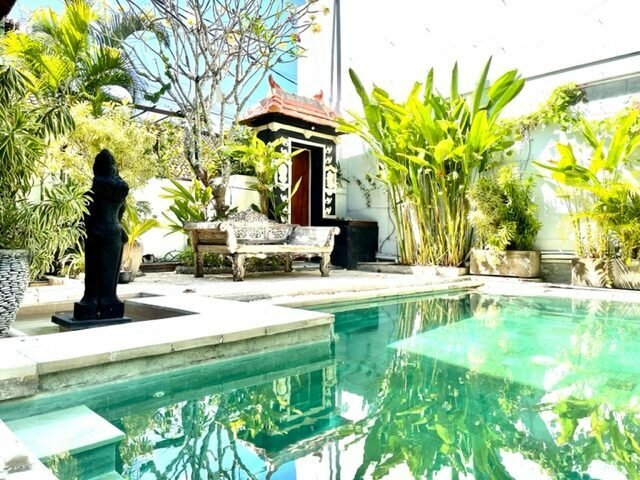
Located in Seminyak Center – Bali, Villa Carissa offers a private swimming pool and enclosed garden to guarantee your privacy. You can book your private pool villa here with us.
Whether you’re traveling with family, friends, or on a romantic getaway, villa Carissa in Seminyak center offers the perfect base for exploring Bali’s many attractions and enjoying a relaxing vacation.
Bali’s rich cultural heritage and traditions have helped make it a unique and fascinating place to visit. From its intricate art and music to its traditional ceremonies and rituals, Bali is an island that celebrates its past while embracing the present. Bali heritage and culture remains extremely lively, coexisting and/or adapting to the new tourist situation, and that’s good!
The island’s culture is deeply rooted in Hinduism, with many traditional ceremonies and rituals taking place throughout the year. Visitors can witness these ceremonies and learn about the island’s customs by attending a temple ceremony or visiting a cultural museum.
Bali may well receive more than 3 million tourists each year, but it has not been distorted. Everywhere on the island – except perhaps around Kuta – you can attend processions, ceremonies or traditional shows. Bali is more than just a tourist destination; it is an experience that touches the heart and soul. The island’s natural beauty, rich culture, and warm hospitality make it an authentic paradise that visitors will never forget.
Bali Heritage and Culture: Traditions, Temples, Dance, and Daily Life
Bali heritage and culture is one of the strongest reasons travelers fall in love with the island. Beyond beaches and resorts, Bali offers a living cultural landscape shaped by Balinese Hinduism, community traditions, and centuries-old rituals that still happen every day, from temple offerings on sidewalks to major ceremonies that bring entire villages together.
Bali’s identity is deeply rooted in a local form of Hinduism blended with older indigenous beliefs. Culture here is not only performed for visitors, it’s woven into everyday life:
1. Dances and musics
Bali is well-known for its traditional dances and music which are an essential part of the island’s rich culture. Balinese dance is often accompanied by gamelan music, which features a unique blend of percussion, gongs, and xylophones.
Dances
Balinese dance is an important aspect of the island’s culture, and it is an expression of the island’s religious beliefs. These dances are usually performed during temple festivals and ceremonies and tell stories of gods and goddesses.
The Balinese dance is one of the most famous art forms in the world. It is a beautiful blend of traditional dance and drama, with intricate movements and colorful costumes. Balinese dance is performed in temples, ceremonies, and festivals, and it is a vital part of Balinese culture.
They are one of the finest and best-known expression of this cultural vitality. There are some 2,000 troupes on the island, which perform in temples, because dance in Bali is linked to the divine and the sacred: many shows are inspired, for example, by the Hindu epic Ramayana.
Under no circumstances miss a performance of legong or kecak (very spectacular): bewitchment guaranteed to the haunting sound of the gamelans (traditional instrument). Another show to discover: the wayang kulit puppets.
Balinese Kecak dance with Legong dancers. Raymonst3, CC BY-SA 4.0, via Wikimedia Commons
Musics
Music is also an integral part of Balinese culture. Gamelan music, which is a traditional Indonesian ensemble, is played during ceremonies, dances, and other important events. The music is made up of gongs, drums, and other percussion instruments.
The beautiful traditional dance costumes of leak dance from Bali. Mufidqa91, CC BY-SA 4.0, via Wikimedia Commons
2. The people
The Balinese people are an ethnic group native to the island of Bali in Indonesia. They make up the majority of the island’s population, with over 4 million people identifying as Balinese. Balinese culture is rich and diverse, with a unique blend of Hinduism, animism, and indigenous traditions.
The Balinese people are a vibrant and resilient ethnic group that resides in the Indonesian island province of Bali. Known for their distinct culture, art, and way of life, the Balinese have a rich heritage that has withstood centuries of political, social, and economic changes.
Ethnic group
The Balinese people are an ethnic group native to the island of Bali in Indonesia. They are part of the wider Indonesian-Malay ethnic group and speak Balinese, a distinct Austronesian language.
Despite facing numerous challenges throughout their history, including Dutch colonialism and the devastating effects of natural disasters, the Balinese people have remained resilient and adaptable. They have managed to maintain their cultural traditions and way of life while embracing modernization and technological advancements.
Today, the Balinese people are a thriving community, with a population of over four million people. They continue to preserve their cultural heritage through their art, music, dance, and religious practices
Traditional Lifestyle
Historically, the Balinese people were primarily farmers and fishermen, with a strong connection to the land and sea. Traditional Balinese houses were built using local materials and featured open-air courtyards, reflecting the importance of community and family in Balinese culture.
The Balinese people have a long and complex history that dates back to the prehistoric era. The earliest evidence of human habitation in Bali dates back to around 3000 BC. Over the centuries, the Balinese people have been influenced by various cultures, including Indian, Chinese, and Javanese, which have left their mark on Balinese art, music, religion, and way of life.
Family and Community
Family and community are important aspects of Balinese culture. The Balinese practice a form of Hinduism that emphasizes the importance of community and social harmony. Family members often live together and work together, with older generations passing down traditional skills and knowledge to younger generations.
Bratan, Bali, Indonesia: Balinese family after the Hindu worship service (“puja”) in Pura Ulun Danu Bratan. The wet rice grains on the foreheads are called “Bija”, meaning “God has blessed us”.
Photo by CEphoto, Uwe Aranas (CC BY-SA 3.0) via Wikimedia Commons
3. Traditional Fashion
Bali has a rich tradition of clothing and textiles, with a variety of styles and fabrics used in traditional Balinese fashion. Some examples of traditional Balinese clothing include:
Kebaya: A fitted blouse with a traditional batik or songket sarong worn as a skirt.
Sarong: A long piece of fabric wrapped around the waist and worn as a skirt by both men and women.
Udeng: A headband worn by men, made from a long piece of cloth that is tied around the head.
Songket: A traditional fabric made from silk or cotton, with intricate patterns and designs woven into the material.
Endek: A hand-woven fabric made from cotton or silk, with a distinctive pattern of squares and rectangles.
Batik: A method of dyeing fabric using wax to create intricate patterns and designs.
Many of these traditional clothing items can still be seen in Balinese culture today, particularly during religious ceremonies and festivals. They can be found in local markets and boutiques throughout Bali, and are often used as inspiration for modern fashion designs.
The Balinese architecture is another example of the thriving Balinese community. Balinese temples and buildings are famous for their intricate carvings, statues, and pagodas. The traditional Balinese house, known as a “compound,” is also a beautiful example of Balinese architecture. It is characterized by a blend of Hindu and Buddhist influences, with elements of traditional Javanese architecture as well.
Balinese temples and buildings are adorned with intricate carvings of mythical creatures, gods, and goddesses. The carvings often depict scenes from Hindu epics, such as the Ramayana and the Mahabharata.
Kori Agung or Paduraksa, also known as kori is a type of gateway covered with towering roof that can be found in the island of Java and Bali, Indonesia. This architectural feature is commonly found in buildings from the classical Hindu-Buddhist period of Indonesia. Arsonal, CC BY-SA 3.0, via Wikimedia Commons
Another prominent feature of Balinese architecture is the use of pagodas, which are multi-tiered towers that serve as a symbol of religious and spiritual significance. Pagodas are often found in Balinese temples and are used to house statues of deities.
Water is also an important element in Balinese architecture, and many temples and buildings are built near rivers, lakes, or the ocean. Pools and fountains are often incorporated into temple designs, and water is used in purification ceremonies.
The second bedroom at Villa Carissa in Seminyak is adorned with a beautifully crafted wooden Buddha statue and a traditional Balinese wooden headboard. The alang-alang natural roof, made from woven grass, adds a touch of traditional charm, creating an atmosphere of artistic elegance.
5. Temples and ceremonies
Temples, or “pura” in Balinese, are scattered throughout the island and are a critical aspect of Balinese culture. Bali is also known for its traditional ceremonies and rituals. One of the most important ceremonies is the Galungan, which is a celebration of the victory of good over evil. During this ceremony, families visit temples, decorate their houses with bamboo poles and offerings, and share traditional dishes.
Temples are the other major expression of Balinese cultural vitality. Throughout the year, even every day, ceremonies take place there. Tourists can attend with respect and discretion.
Cremations (in public) or Ngaben in Balinese are among the most amazing ceremonies in the eyes of Westerners. Generally taking place 6 weeks after the death, they take on a certain splendor, as they constitute a crucial rite of passage for the deceased towards the afterlife.
Another surprising ceremony: the filing of teeth, which marks the adolescent’s entry into the adult world. Finally, there are lots of religious festivals throughout the year, bringing villages and temples to life, but also games, such as cockfighting, bird singing or kite flying competitions…
Another important ceremony is the Nyepi, also known as the Day of Silence. On this day, the island comes to a complete stop, with no lights or sounds, and people are encouraged to stay indoors and reflect.
Ngaben is a profound and sacred ritual deeply embedded in the cultural fabric of Bali. This ancient ceremony serves as a poignant farewell to those who have passed away, guiding their souls towards a realm of eternal peace. The serene island of Nusa Penida, situated within the Klungkung Regency of Bali, holds Ngaben ceremonies in high regard, reflecting the profound spiritual connections that bind the community together. Imadedana, CC BY-SA 4.0, via Wikimedia Commons
Some of the most famous temples in Bali include:
Pura Besakih: Known as the “Mother Temple,” this complex is the largest and most important temple in Bali, located on the slopes of Mount Agung.
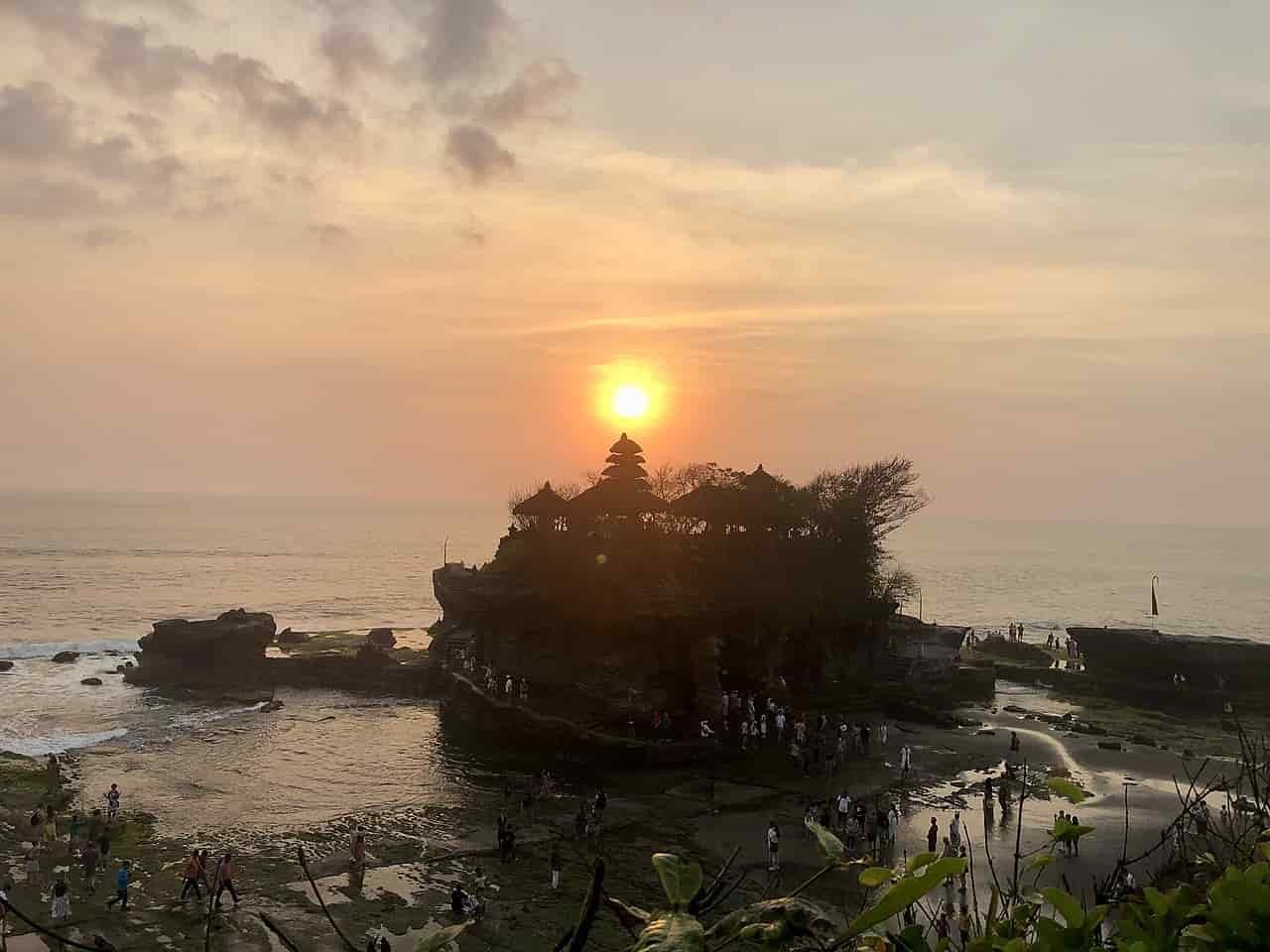
Pura Tanah Lot: This temple is situated on a rocky outcrop in the sea and is one of Bali’s most photographed sites.
Pura Ulun Danu Beratan: Located on the shores of Lake Beratan, this temple is dedicated to the goddess of water and is renowned for its stunning reflection on the lake’s surface.
Pura Luhur Uluwatu: This temple is perched on a cliff overlooking the ocean and is known for its spectacular sunset views and traditional dance performances.
Ceremonies, or “upacara” in Balinese, are an integral part of Balinese culture and religion. These rituals are held to honor the gods, ancestors, and spirits, and they can range from small family gatherings to elaborate island-wide festivals.
Some of the most famous ceremonies in Bali include:
Galungan: A ten-day festival that celebrates the victory of good over evil. This festival celebrates the victory of good over evil and is held every 210 days. Balinese families decorate their homes with “penjor,” tall bamboo poles adorned with offerings and decorations.
Nyepi: This is the Balinese Day of Silence, which falls on the day after the new year according to the Balinese calendar. On this day, all activity on the island comes to a complete halt, and the Balinese people spend the day in quiet contemplation.
Odalan: This is a temple anniversary celebration held every 210 days. The temple is decorated, and elaborate ceremonies are held to honor the gods and ancestors.
Kuningan: This festival marks the end of the Galungan period and is celebrated with offerings, dance performances, and traditional Balinese cuisine.
Visiting temples and witnessing ceremonies in Bali is a unique and awe-inspiring experience. It offers visitors a glimpse into the island’s ancient culture and religious traditions and allows them to participate in the island’s vibrant community celebrations.
6. Pictorial and culinary arts
Bali is also renowned for its painting, and in particular its naive paintings in an easily recognizable style, combining vegetation, animals and humans.
Balinese cuisine is unique and flavorful, with a mix of spices, herbs, and fresh ingredients. The Balinese dishes such as Babi Guling (suckling pig) and Nasi Goreng (fried rice) are famous all over the world. Balinese cuisine is also known for its use of traditional cooking methods, such as grilling over coconut husks.
Nicknamed the Island of the Gods, this Indonesian island is perfectly suited to locals and foreigners eager for cultural heritage, respect for traditions, water sports enthusiasts, scuba diving enthusiasts, adventurers of all kinds as well as retirees in search of calm and tranquility, Bali is intended as much for shopaholics as it is for lovers of relaxation.
Tri Hita Karana is a traditional philosophy of life on the island of Bali, Indonesia. The literal translation is roughly the “three causes of well-being” or “three reasons for prosperity.”
The three causes referred to in the principle are as follows:
Harmony between humans
Harmony with nature or environment
Harmony with God
Culture value
By implementing Tri Hita Karana steadily, creatively and dynamically, a harmonious life will be realized which includes the development of a complete human being who is devoted to God Almighty, loves the environment and is in harmony and peace with others.
Illustration of the Tri Hita Karana using the Sustainable Development Goals. Furyanto, Public domain, via Wikimedia Commons
9. Subak, a traditional Balinese irrigation system that has been in use for over a thousand years
Subak, the traditional Balinese irrigation system, has been recognized as a UNESCO World Heritage Site since 2012, highlighting its importance not only to Bali’s agriculture but also to its cultural heritage. This ancient system, which was developed by Balinese farmers over a thousand years ago, is not only a marvel of engineering but also a prime example of sustainable water management.
Jatiluwih Rice Terraces with Subak irrigation system. Imacim, CC BY-SA 4.0, via Wikimedia Commons
Subak Museum in Tabanan, which showcases the history and importance of Subak and its role in Bali’s agricultural traditions. The museum also offers workshops and training programs to local farmers on sustainable agriculture practices, such as crop diversification and water-saving techniques. Their website (in Indonesian language): http://museumsubak.com
By preserving the Subak system and promoting sustainable agriculture practices, these local sustainability projects in Bali are helping to safeguard Bali’s unique cultural heritage and environment. With the UNESCO recognition, the importance of the Subak system has been highlighted on a global scale, encouraging further efforts to conserve and promote this vital piece of Balinese heritage for generations to come.
Origins of Subak
The exact origins of Subak are not entirely clear, but it is believed to have started in Bali around the 9th century during the era of Bali’s ancient kingdoms. The development of Subak was an innovation by Balinese farmers who faced the challenge of supplying water to their rice paddies, which were located at different elevations and distances from water sources.
Balinese altar at Rice terraces of Gunung Batukaru. Arabsalam, CC BY-SA 3.0, via Wikimedia Commons
The farmers developed a system of water management based on the principles of collaboration and cooperation, which became the basis for Subak. Over time, the Subak system evolved to include water temples and irrigation networks that are managed by a democratic organization of farmers known as Subak. Today, Subak remains an integral part of Bali’s agricultural practices and cultural identity, reflecting the island’s history and the ingenuity of its people.
Religion and Festivals
One of the most distinctive aspects of Balinese culture is their unique Hindu religion, which is a blend of Hinduism, Buddhism, and animism. The Balinese believe in a complex system of gods and goddesses, with each deity having a specific role and function in the universe. Balinese religious ceremonies and rituals, which are often accompanied by music, dance, and colorful costumes, are a fundamental part of Balinese culture and identity.
It is a must in Bali, one of the first things you notice on the whole Island of the Gods. Everywhere in the streets, we see sorts of small baskets filled with flower petals. These small colorful baskets, made of coconut or banana leaves, are called “Canang Sari“.
The Balinese Hindu custom consists of depositing daily offerings everywhere. It is in a way a ritual to give back, to share, what has been given by the Gods…
This ancestral Balinese rite has existed for several centuries and continues to this day. These pretty colorful offerings are not created for the pleasure of tourists. They are an integral part of local culture and beliefs. For the Balinese, these offerings help preserve and maintain balance and peace in the world.
Offerings for prayers in Bali with: flowers, fruits, food, perfume scent. Canang sari is one of the daily offerings made by Balinese Hindus to thank the Sang Hyang Widhi Wasa in praise and prayer, as a form of thanking for the peace had given to the world; it is the simplest daily household offering. We will see them in the Balinese temples (pura), on small shrines in houses, and on the ground or as a part of a larger offering. The philosophy behind the offering is self-sacrifice in that they take time and effort to prepare. Canang sari is not offered when there is a death in the community or family. Dennis Sylvester Hurd, CC0, via Wikimedia Commons
Segehan, the offerings to the Demons
These offerings are simply placed on the ground to appease the demons. Unlike the “Canang Sari” which will always be placed high up to thank a deity.
Indeed, the Balinese think that if they pay homage to the Gods, they must also be careful to satisfy the demons! Belief in evil spirits therefore remains as important as belief in benevolent spirits.
It is therefore to maintain the “balance” of these forces and not to offend them that, every day, they place offerings on the ground.
Segehan can contain spoiled food. Indeed, the demons, very voracious, do not even know the difference with good food, unlike the Gods, who are very delicate! Some will tell you that the Segehan are less pretty than the Canang Sari, a matter of taste…
Demons, named Bhuta and Kala, are monsters. Through the offerings presented, the goal of the Balinese is not to make these demons disappear. Indeed, it is impossible since they are part of the universe. All they want is for them to be happy enough and avoid coming forward, to let the population live in peace.
To sum up, you will have understood it, it is enough to walk in the streets in Bali to find yourself in a completely different universe… Here, approximately 90% of the population is Hindu and, consequently, the occasions for celebrations and processions remain endless for Bali heritage and culture…
You have to come to the Island of the Gods to understand this atmosphere and this very special atmosphere. You will see how rituals and temples punctuate the daily life of the majority of Balinese.
More than 10,000 Balinese temples, including the very famous Pura Batukaru Temple, located on the southern slope of the mount of the same name, surrounded by lush vegetation, bordering a lake.
According to the inhabitants, it is a Paradise, nothing is more wonderful than getting up early for a visit to the temple in order to start a magnificent day.
The Balinese tradition imposes appropriate clothing for visiting the temples, the body must be covered with a sarong, this makes it possible to keep the body intact. sacred side of the place. Read also: Useful Tips for Visiting Temples in Bali
Balinese art is another important aspect of the island’s culture. The island is known for its intricate wood carvings, which are used to decorate temples, houses, and other buildings. Balinese paintings are also famous for their vibrant colors and intricate designs.
The center of Ubud is the ideal place to discover Balinese art and the wealth of local crafts.
Bamboo work, household furniture, traditional clothing, Sarongs, toys, artistic paintings, everything that Indonesian craftsmanship can produce can be found in the Ubud market.
Visitors take the opportunity to admire the royal palace located a few steps from the center, where the royal family usually resides.
Bali’s arts and crafts scene is rooted in its rich cultural heritage, and many traditional crafts have been passed down through generations.
Balinese handicrafts are a significant part of Balinese culture. Balinese artisans create beautiful carvings, paintings, and textiles using traditional techniques passed down through generations. Balinese handicrafts are sold in markets and shops all over the island, and they are popular souvenirs for tourists.
Some of the most popular crafts and arts in Bali include:
Batik: Batik is a traditional technique of wax-resist dyeing that is used to create beautiful textiles. In Bali, batik is often used to make clothing, bedspreads, and other decorative items.
Woodcarving: Balinese woodcarving is known for its intricate designs and attention to detail. The island is home to many talented woodcarvers who create everything from statues to furniture.
Silver and Goldsmithing: Bali is known for its beautiful silver and gold jewelry, made using traditional techniques that have been passed down for generations.
Painting: Balinese painting is a unique style that blends traditional and modern techniques. Many local artists sell their paintings in galleries and markets throughout the island.
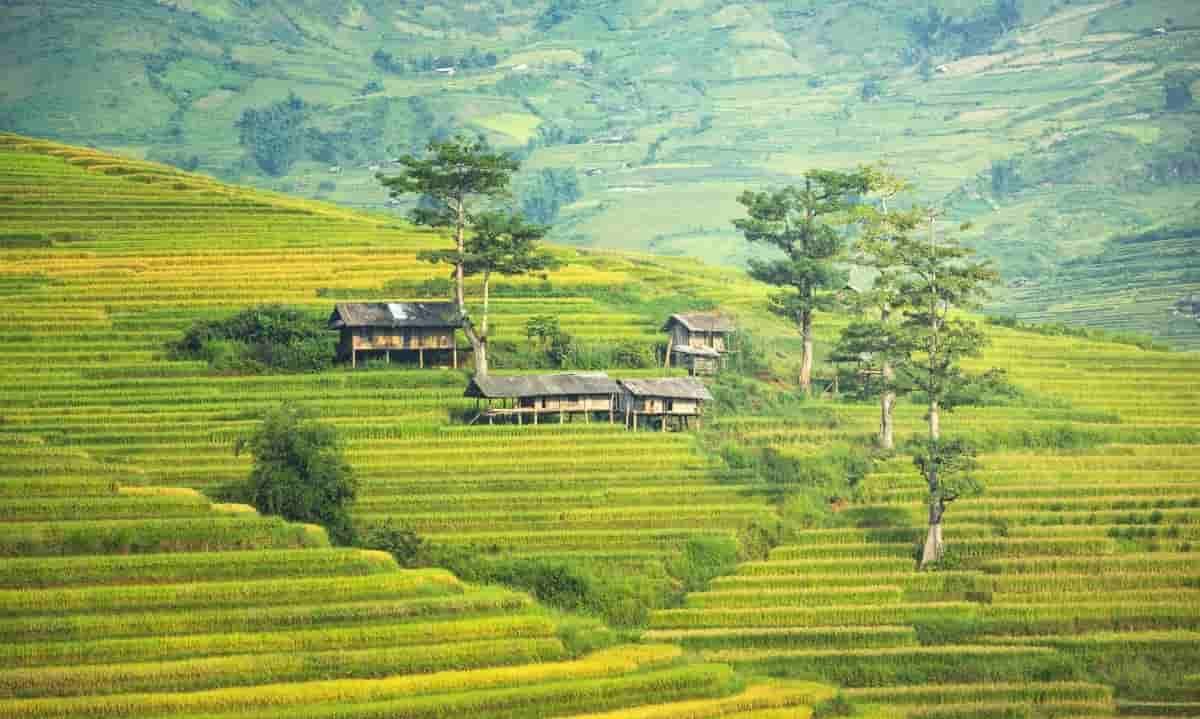
In the most mountainous regions of the island, the cultivation of rice is a curiosity, terraces are laid out on the sides of the hills allowing the main agricultural activity of rice. Tourist attraction that fascinates apprentice photographers who park their vehicle as close as possible to the summit and thus enjoy the idyllic setting of the rice fields with the valley in the background.
Bar, cafe and restaurants offer exotic dishes made from rice which among the Balinese is the equal of a goddess very appreciated by the population of Bali.
The most famous beach in Bali is of course Kuta Beach, which is often overcrowded, it is nice to know that a few steps from Kuta Beach is Seminyak Beach, which is less popular and therefore less crowded with tourists.
If you have a vehicle or scooter, Sanur beach, known for offering magnificent sunsets, is half an hour away, for peace and quiet, Nusa Dua beach, for privacy, the beaches near Kuta less accessible but delicious, Seminyak beach is glamorous, water sports enthusiasts will find themselves on the beach of Tanjung Benoa where water activities are numerous.
Balinese gastronomy is particularly rich and varied. The national dish is nasi goreng, made from fried rice with pieces of meat, vegetables and eggs. In bakmi goreng, rice is replaced with fried noodles. Sates are small skewers of meat, grilled over a wood fire.
They are usually drizzled with a sauce made from peanuts. We also eat fresh tuna, crab, lobsters, avocado salads, as well as babi gugling [roast suckling pig], bebek betutuh [honey duck] which are the specialties of the island. The fruits are plentiful and tasty: mangoes, pineapples, papayas (which make excellent juices!), guavas and lychees can be found along the busy streets or in the markets.
Duck nasi campur. The Balinese version of this dish may contain grilled tuna, fried tofu, cucumber, spinach, tempeh (fermented soybeans), beef, curried vegetables, corn and chili. Midori, CC BY 3.0, via Wikimedia Commons
Traditional Balinese clothing
Bali an island full of colors. You will never cease to be in awe of the Balinese wearing their most beautiful traditional outfits to go to religious ceremonies or attend a wedding, for example, etc.
For women, or little girls, the hair is important. The favorite hairstyle is the chignon which is reminiscent of that of the pretty princess Drupadi, the wife of one of the Pandawa brothers, in the Mahabharata. Women who have short hair often add false locks in order to be able to wear it. But it is important that those with sufficient length of hair tie it up and be neatly combed so that the strands of hair do not fall into the temple area and the sanctity of the temple is maintained. And for special events, such as their wedding, their teeth filing, or when they dance, a multitude of gold metal flowers are stuck in the girls’ hair, it’s very pretty, but it’s very heavy!
A long time ago, to dress themselves, women wrapped a long piece of cloth called sabuk all around their bust. It was narrower than the saput, but much longer, measuring more than three meters. Dancers and brides today still wear it, but other women wear kebaya. They are very beautiful long-sleeved shirts, mostly in colored and transparent lace and under corsets. Nowadays the fashion is to have our shirts at elbow length or even shorter). They then wrap around their waist a sarong, it is a piece of cloth about two meters long, usually in printed batik that extends to the ankles. And finally, above, they tie a belt: selendang. The set is very colorful, but still well matched. Children dress like adults, but there are ready-made outfits for them bought in the markets, where the sarong is replaced by a long skirt, which is much more practical!
Until the 1930s Balinese women went to ceremonies topless but this changed because of the Dutch who managed to convince them to cover up
Normally women should be dressed simply and correctly to go to the temple, but in recent years there has been a change in fashion in the traditional outfits of women who wear kebaya with mid-length or very short sleeves. This is starting to bother some who take a dim view of this change considering that it almost becomes a beauty contest to go to the temple and it’s too sexy. For example, at the Shiva temple in my village, it has been forbidden for a few months for women to wear kebaya with sleeves shorter than the elbow.
Colors of the kebaya
As for the colors of the kebaya originally, we expect them to be the color of purity and glory: white which symbolizes purity and yellow which represents triumph and prosperity.
During cremation the Balinese will wear black or dark colored kebaya, the highest castes can sometimes wear white if they wish.
Unfortunately in Bali times are changing and from now on the Balinese do not pay too much attention to the meaning and philosophy of all this. Today it’s more about fashion trends, luxury etc. and sometimes there are differences in social status.
From its conception until its death, many ceremonies punctuate the life of a Balinese. Existence is a succession of lives and deaths. The newborn (reincarnation of an ancestor) must not touch impure soil before its 42nd day. On his first birthday (oton – 210 days), a ceremony marks his entry into the community. The filing of the teeth then marks the entry into adult life. This ritual is generally performed at puberty, when the front teeth are filed to counter the animal side in humans.
Marriage represents a sacrifice to lower spirits in order to purify the sexual act. Cremation, on the other hand, allows the soul to reincarnate. It is a question of freeing the soul by destroying the carnal envelope which imprisons it. It is the most important ceremony in the cycle of life which gives rise to great celebrations.
The Balinese use two traditional calendars. The main one is the Pewukon which regulates a large part of Balinese life. It superimposes various cycles over a period of 210 days. The saka calendar, on the other hand, is inherited from the Indian system. Each month begins after the new moon, which gives rise to great ceremonies.
Odalan
Every 210 days (one year according to the Pawukon calendar), the whole village comes together to commemorate the founding of the temple (the odalan). It is then the occasion to pay homage to the divinities by offerings and prayers. With more than 20,000 temples in Bali, the opportunities to attend a ceremony are very numerous!
Odalan temple anniversaty procession. Balinese women dressed in traditional costume on their way to the temple. Midori, CC BY 3.0, via Wikimedia Commons
The inhabitants wear the traditional dress and the women carry the offerings on their heads to take them to the temple. The temples are decorated with many flowers and offerings.
After the prayer, water is sprinkled on the faithful and blessed rice is distributed to them. The faithful then apply it to the temples, throat and forehead.
Every 210 days, Galungan celebrates the creation of the universe. The Balinese believe that the gods and the souls of the ancestors descend to the temples. Bali then comes alive to give rise to countless ceremonies and the festivities culminate ten days later for Kuningan.
On the eve of Galungan, penjor (bamboo arches decorated with coconut leaves) are erected in front of the houses. The altars of domestic temples are dressed in yellow ornaments. Many shops are closed, the administration is idling but the big hotels remain open.
Placing offerings in a temple. Kuningan celebration at end of Galungan festival. Spencer Weart, CC BY-SA 3.0, via Wikimedia Commons
Saraswati
Festival dedicated to the goddess of knowledge. The Balinese pay homage to books by sprinkling sacred water. It is the name of the goddess of knowledge. This event is also celebrated every 210 days. As the “patron saint” of schools, she is celebrated primarily by children who pray and bring offerings to the school temple in her honor. The Balinese also pay homage to the goddess and to the books by sprinkling holy water.
Goddess Saraswati, Goddess of knowledge. This print from the Ravi Varma Press derived from a painting by Raja Ravi Varma follows the iconographic description of Saraswati as found in the 50th chapter of the Agni Purana. She is described in the Agni Purana as being attired in white and playing the Veena with two arms and holding an aksha-mala (a string of pearls) and a pustaka (book) in the other hands. Raja Ravi Varma, Public domain, via Wikimedia Commons
Tumpek
Every 35 days, the Balinese make offerings to precious goods such as iron objects (Tumpek Landep), animals (Tumpek Kandang), shadows (Tumpek Wayang), trees (Tumpek Uduh) or musical instruments , masks and other objects used during ceremonies (Tumpek Krulut).
Pagerwesi
This day is dedicated to spiritual strengthening, called Iron Gate, prayers and offerings are directed to save mankind. This Iron Gate has the meaning of a firm attitude of faith and knowledge possessed by humans, because without science human life will experience darkness.
If they can, the Balinese will go to the big temples such as the Pura Besakih (national temple) or the Pura Jagatnata (large public temple which each kingdom has) or if they cannot go there, they will pray to the evening in their family temple to protect themselves from the negative elements.
Pagerwesi is closely related to Saraswati (day dedicated to the goddess of knowledge) since it is celebrated a few days later. The Balinese mainly honor Shiva on the day of Pagerwesi who transmitted his knowledge during the Sarawati festival. Therefore, it should also be seen that the Balinese also want knowledge to be protected from bad influences and abuse.
An important ceremony for us Hindus is Melasti which consists of the purification of the Pratima (representations of all the gods of the village) as well as other Hindu religious symbols which are carried in procession to the sea for those living not far from it. or to the lake for mountain people.
This Melasti ritual is important because it reminds us of the value of life and how important it is and that we need a day to purify ourselves and the universe. So with this ceremony all the components of the universe have a pure spirit so that the world can survive against the threat of evil.
Melasti ceremony
This Melasti ceremony is one of the Bali heritage and culture and takes place 3/4 days before the Balinese New Year: Nyepi it depends on the rules of each village. This day we must dress in our traditional white outfits: symbol of purity.
Many offerings were prepared for this special day as well as a beautiful traditional welcome dance for the gods.
Our advice: go to any beach that day in Bali to observe these processions.
Melasti ritual is usually carried out to welcome the Nyepi day in Bali. This ritual is carried out in water centers such as lakes, springs and beaches. Imadedana, CC BY-SA 4.0, via Wikimedia Commons
Nyepi
A few days before Nyepi, Melasti is celebrated all over the island. This is the great purification. The Balinese then converge on the sea to purify themselves there. On the eve of Nyepi (New Year of the Saka calendar), all major crossroads receive large offerings that are believed to exorcise evil spirits. In the evening, large processions wander through the streets displaying the ogoh-ogoh. Nyepi is the day of silence, no one has the right to go out in the street or turn on a light.
Ogoh-Ogoh, demonic figures, are paraded in Bali on the eve of Nyepi (Day of Silence). Ngrupuk-Ngrupukan, also known as the Ogoh-Ogoh parade celebrated on the night before Nyepi. MagdaLena7, CC BY-SA 4.0, via Wikimedia Commons
August 17
Bali gathers to celebrate Independence Day. This national holiday is important and allows everyone to remember the hardships they have gone through.
FAQ
What is Bali heritage and culture best known for?
Temple ceremonies, daily offerings, traditional dance, gamelan music, and a community-centered Hindu culture.
Can tourists attend Balinese ceremonies?
Yes, often, if you dress appropriately, stay respectful, and follow local rules.
What is the most unique cultural day in Bali?
Nyepi (Day of Silence), when the island shuts down for reflection.
What is Subak in Bali?
A traditional irrigation system combining agriculture, community governance, and water-temple spirituality (UNESCO-recognized).
Located in Center Seminyak – Bali, Villa Carissa offers a private swimming pool and enclosed garden to guarantee your privacy. You can book your private pool villa here with us.
Whether you’re traveling with family, friends, or on a romantic getaway, villa Carissa in Seminyak center offers the perfect base for exploring Bali’s many attractions and enjoying a relaxing vacation. We look forward to welcoming you to our villa soon!
Taman Ujung or “water palace” is located near the village of Seraya in the Karangasem region, east of Bali. It is the sister site of Tirta Gangga, also built by the late King of Karangasem. The Ujung water palace consists of several large pools and historic structures set against the backdrop of Mount Agung to the north and the coastline to the south. The site was devastated by fiery clouds following the eruption of Mount Agung in 1963 as well as an earthquake in 1979. Restoration efforts over the past 10 years have given way to its present splendor for the greatest pleasure of visitors.
A real architectural gem as you only see in Bali! In the background, the sea, the mountains and the rice fields provide an extraordinary setting for this refined park. A decor that looks like paradise.
Water Palace Ujung Soekasada Bali decorated with large water pool, garden with beautiful mountain & sea view. Construction started in 1909 and finished in 1921.
Away from the main road in East Bali is the magnificent Soekasada Ujung Water Palace (or Taman Soekasada Ujung in Indonesian; or Soekasada Ujung Water Palace in English). Built in 1919, this palace is much less known to tourists than that of Tirtagangga. His visit, very pleasant, is free. Its geographical location adds a plus to the beauty of the site: on one side you can see the blue of the ocean, and on the other the Gunung Agung volcano. Paid access IDR 50 000 (around € 3 + parking € 0.50).
History and architecture of the Ujung Water Palace
Bali’s Ujung resort has the official name “Taman Sukasada Ujung”. It is the private property of the royal family of the late King of Karangasem.
This water palace was built in 1909 by a Dutch and Chinese architect, for the raja of Karangasem. The complex therefore combines Balinese and European architecture through its three ponds connected by bridges, steps and paths. It was founded in the same period as its neighbor the Tirta Gangga Water Palace.
In 1963, the eruption of Mount Agung then in 1975 the earthquake severely damaged the palace which was renovated to perfection. In 1921, the Taman Ujung Royal Estate became officially open to the public and became known as a Royal Water Garden Complex.
The Ujung Water Palace has undergone many changes over time, various expansions and additions around Kolam Dirah Basin, the only pool existing at the time. This basin was a place of punishment for partisans accused of witchcraft. The Dirah pool takes its name from the legendary witch of Calonarang.
Location
Situated in Karangasem, east of Bali.
Visit the Ujung Water Palace
The Ujung Water Palace is one of the most beautiful sites in Bali with its green garden and its large lawns, its large pools, its many statues and open-air sculptures, its parasols and the palace’s play of light and shadow.
Taman Ujung Soekasada’s main pool has a sculpted bridge that provides access to the “Gili Bale”, the main building set over the water.
Step inside the palace to marvel at the vistas from the windows, doorways and many walkways.
Ujung’s Taman Sukasada Palace is set against the backdrop of the majestic Mount Agung volcano to the north, the sea to the southwest, and an expanse of verdant rice fields to the east.
Many Balinese newlyweds go here for their photographs and many lovers come to hug as the breathtaking decor inspires romance. The park has very beautiful panoramas that can be reached by climbing up the steps.
Located in Seminyak Center – Bali, Villa Carissa offers a private swimming pool and enclosed garden to guarantee your privacy. You can book your private pool villa here with us.
Whether you’re traveling with family, friends, or on a romantic getaway, villa Carissa in Seminyak center offers the perfect base for exploring Bali’s many attractions and enjoying a relaxing vacation.
Bali Local Ecosystems: Fauna, Flora, Rice Terraces, Reefs & Conservation
Bali is beloved for its surf, temples, yoga culture, rice terraces, black- and white-sand beaches, and extraordinary biodiversity.
Yet the same popularity that made the island world-famous has also put pressure on its water, land, forests, reefs, and wildlife.
This guide explores Bali’s natural ecosystems, the species that define them, and why responsible travel matters more than ever.
Bali’s ecosystems are not just beautiful scenery. They regulate water cycles, protect coastlines, support farming, preserve biodiversity, and shape the island’s spiritual and cultural identity.
Waste treatment challenges
Traditional Balinese packaging once relied heavily on natural materials such as palm leaves, which were biodegradable and easy to return to the earth.
Modern consumption changed that pattern. Plastic waste now creates pressure on roadsides, rivers, ravines, beaches, and illegal dumps, especially where waste infrastructure is limited.
Water resources under pressure
Bali’s freshwater supply must serve roughly 4 million residents as well as millions of visitors each year.
In some parts of the island, tourism growth, seasonal drought, and changing rainfall patterns have increased tension around water use between local agriculture and hospitality development.
Marine ecosystems at risk
Coral reefs, seagrass habitats, mangroves, and nearshore ecosystems are affected by rising sea temperatures, pollution, sedimentation, and unsustainable coastal practices.
Healthy reefs are essential because they shelter fish, protect shorelines, and sustain Bali’s diving economy.
Long-term conservation work
Real progress depends on residents, schools, businesses, and travelers making better choices together.
Eco-conscious initiatives, education, reef-safe behavior, reduced plastic use, and respect for local water resources all help protect Bali’s future.
Travel smarter in Bali: choose refillable water bottles, avoid single-use plastic, never touch coral, use reef-safe sunscreen when possible, and support local businesses that treat nature as part of Balinese heritage rather than just a backdrop for tourism.
Fauna and flora of Bali
One of Bali’s greatest strengths is its diversity. Climate, elevation, coastline, volcanic soils, forests, and traditional irrigation systems all create different habitats.
From temple gardens and bamboo groves to reefs and rice terraces, Bali supports an impressive variety of plant and animal life.
South Bali
Mangroves, beaches, urban gardens, coastal ecosystems, surf zones.
Central Bali
Rice terraces, forested valleys, rivers, waterfalls, temple landscapes.
North & West Bali
Marine reserves, Bali Barat National Park, drier forests, key bird habitats.
The flora of Bali
Bali’s flora is lush, layered, and deeply tied to ritual life. Tropical trees, temple flowers, edible plants, medicinal species, and ornamental gardens all shape the visual identity of the island.
Bali Barat National Park is one of the places where visitors can observe especially rich plant diversity.
Trees
Representative tree species include mangroves in coastal zones, coconut palms, giant bamboo, and the sacred banyan.
In many parts of Bali, banyan trees are wrapped in black-and-white checkered cloth as a symbol of spiritual protection and reverence.
Bamboo is especially important in Bali. Strong, flexible, and fast-growing, it is used for architecture, decoration, furniture, ceremonial structures, and musical instruments.
Lontar palms have also been used historically for writing material.
Plants and flowers
Bali’s floral world includes magnolia, hibiscus, jasmine, bougainvillea, orchids, lotus, and frangipani.
These flowers are not only decorative. They are central to daily offerings, ceremonies, temple ornamentation, and household rituals.
Bali’s wildlife ranges from temple macaques and wetland birds to reef fish, turtles, and manta rays.
Some species are common and easy to encounter, while others, such as the Bali Myna, are rare and critically endangered.
Macaques
Long-tailed macaques are among Bali’s most recognizable animals. They are especially associated with temple environments and forested sacred areas such as Ubud’s Monkey Forest and Pura Pulaki in the northwest.
In Balinese Hindu tradition, monkeys can hold symbolic and spiritual meaning, and at some temples they are regarded as part of the sacred landscape.
Other animals
Across Bali you may also see buffaloes, reptiles, frogs, geckos, black pigs, roosters, butterflies, dragonflies, and a wide variety of birds.
The island is home to hundreds of bird species, including one of its best-known conservation symbols: the Bali Myna.
Video embed: macaques around Pura Pulaki, one of Bali’s best-known temple environments for monkey sightings.
Bali Myna / Starling / Jalak Bali
The Bali Myna (Leucopsar rothschildi) is one of the island’s most iconic birds. This striking white bird with vivid blue markings around the eyes is endemic to Bali and critically endangered.
Adults are about 25 cm long, which is roughly 9.8 inches.
Protecting remaining habitat and supporting breeding and reintroduction efforts remain crucial to its survival.
Video embed: Bali Myna / Jalak Bali, one of the rarest and most emblematic birds of Bali.
Marine species and coral reefs
Bali’s underwater world is one of the island’s greatest ecological treasures. Reefs around Tulamben, Amed, Menjangan, Nusa Penida, and other dive areas support fish, coral communities, turtles, rays, nudibranchs, and seasonal visitors such as mola mola.
Coral reefs
Coral reefs function like underwater cities, providing shelter, feeding grounds, and breeding habitat for countless marine species.
For divers and snorkelers, Bali’s reefs are among the island’s most memorable experiences.
The waters around Nusa Penida are particularly famous for manta ray encounters.
At the right time and in the right conditions, snorkelers and divers may see these graceful giants gliding through cleaning stations and current-rich channels.
Video embed: coral garden and reef life in Tulamben, one of Bali’s classic underwater ecosystems.
Video embed: manta ray trip in Nusa Penida, one of the best-known marine wildlife experiences near Bali.
Exploring Bali’s natural world: local ecosystems
Bali is a compact island, but its landscapes change quickly. Within a single trip, you can move from coral coastlines to irrigated rice terraces, temple ponds, humid jungle valleys, mangroves, and cool volcanic viewpoints.
Beaches and coastlines
Bali’s coasts support fish, reef systems, sea turtles, surf breaks, intertidal life, and mangroves. These zones are essential to both tourism and marine biodiversity.
Bali’s rice terraces are not only beautiful; they are living agricultural ecosystems shaped by the traditional subak irrigation system.
They provide habitat for insects, frogs, birds, and beneficial wetland species.
Rainforests and jungle valleys
In central Bali, forested ravines and humid valleys support dense vegetation, monkeys, birds, insects, and hidden streams.
These landscapes create the green, spiritual atmosphere many travelers associate with Ubud and inland Bali.
Temples and gardens
Bali’s temples, lotus ponds, koi pools, shrines, and sacred gardens form intimate human-made ecosystems.
Plants are carefully selected not just for beauty, but also for symbolism and ritual use.
Wetlands and swamps
Wetlands absorb water during heavy rains and release it more gradually, helping regulate hydrology.
They also provide habitat for amphibians, insects, and water birds.
Volcanic highlands
Bali’s highland areas are cooler than the coast and shaped by volcanic geology.
Places around Mount Batur and Mount Agung have different vegetation patterns, broader views, and distinct ecological conditions compared with the lowlands.
Video embed: Jatiluwih rice terraces, one of Bali’s most famous agricultural landscapes and a classic rice-field ecosystem.
The Video embed: Bali jungle and rainforest atmosphere, illustrating the island’s lush inland ecosystems.
Video embed: Kintamani and Mount Batur highlands, showing Bali’s volcanic landscape and cooler upland environment.
Bali’s ecosystems form an interconnected puzzle. Coral reefs support marine life and tourism. Rice terraces depend on careful water management. Forests and wetlands help regulate biodiversity and local hydrology. Temple gardens preserve living links between culture and nature. Volcanic highlands shape climate, scenery, and agriculture.
To enjoy Bali well is also to protect it well. The more travelers understand the island’s ecosystems, the easier it becomes to support businesses, activities, and local communities that respect them.
Located in Seminyak Center, Villa Carissa offers a private swimming pool and enclosed garden to preserve your privacy.
Whether you travel as a couple, with friends, or with family, the three-bedroom villas combine comfort, location, and elegant Balinese style.
Wondering what to do in Ubud, where to go, what to visit, where to eat, and how to get around?
This Ubud complete travel guide brings together the best temples, museums, rice terraces, cultural landmarks, nature walks, wellness spots, and practical travel tips to help you enjoy one of the most iconic destinations in Bali.
Ubud sits in the green heart of Bali, about 35 km (22 miles) north of Denpasar and around 1 to 1.5 hours from Seminyak depending on traffic.
It is widely loved for its temples, traditional arts, jungle scenery, healing atmosphere, and nearby rice fields.
Ubud is often described as the cultural soul of Bali. It is the place to slow down, admire traditional Balinese architecture,
explore sacred sites, walk through rice terraces, discover museums and galleries, enjoy wellness experiences, and reconnect with nature.
It is also a great base for day trips to waterfalls, temples, volcano viewpoints, and nearby villages. If Seminyak is about beach life and sunsets,
Ubud is about atmosphere, heritage, greenery, craft, ritual, and calm.
Quick Ubud highlights
Best for Culture, temples, rice terraces, yoga, art, nature walks
Distance from Seminyak About 35 km (22 miles)
Ideal stay 2 to 4 nights
Vibe Spiritual, artistic, green, lively but slower than the coast
Nearby must-sees Tegallalang, Goa Gajah, Tirta Empul, Campuhan Ridge Walk
Best things to do in Ubud
If you want a complete yet balanced Ubud itinerary, these are the places and experiences worth prioritizing:
• Saraswati Temple
• Ubud Palace
• Ubud Market
• Campuhan Ridge Walk
• Monkey Forest
• Goa Gajah
• Tegallalang Rice Terrace
• Neka Art Museum
• ARMA Museum
• Puri Lukisan Museum
• Blanco Renaissance Museum
• Balinese massage and yoga
Top places to visit in Ubud
Saraswati Temple
Saraswati Temple is one of the prettiest cultural stops in central Ubud. Dedicated to the goddess of wisdom, arts, and learning,
it is famous for its lotus pond, stone carvings, and elegant temple approach.
It is especially beautiful in the late afternoon and in the evening when cultural performances take place nearby.
Ubud Palace
Also known as Puri Saren Agung, Ubud Palace is one of the easiest cultural sites to visit in town.
Its ornate gates, statues, and traditional architectural details make it a classic stop in any Ubud itinerary.
It pairs perfectly with a walk to Saraswati Temple and the market.
Campuhan Ridge Walk
The Campuhan Ridge Walk is one of the most relaxing free things to do in Ubud. The trail is about 4 km (2.5 miles) round trip,
and it rewards you with breezy ridge views, greenery, and a quieter side of Ubud.
Go early in the morning or late in the afternoon for softer light and less heat.
Gunung Lebah Temple
Near the start of the ridge walk, Gunung Lebah Temple offers a peaceful and less crowded spiritual stop.
It helps you experience Ubud beyond the busiest streets and gives more context to the sacred geography of the area.
Monkey Forest
Ubud Monkey Forest is one of the most famous attractions in town. It combines jungle paths, temple scenery, mossy stone bridges,
and hundreds of macaques in a lush setting.
Keep glasses, phones, and loose items secure. It is beautiful, but the monkeys are confident and curious.
Goa Gajah, also called the Elephant Cave, is one of the oldest and most atmospheric temple complexes near Ubud.
Its demon-mouth entrance, stone carvings, bathing pools, and sacred ambiance make it one of the strongest heritage stops in the region.
It is a great complement to the more central Ubud cultural sites.
Tegallalang Rice Terrace
Around 10 km (6.2 miles) north of Ubud, Tegallalang is one of Bali’s most famous rice terrace landscapes.
It is photogenic, easy to combine with a half-day trip, and a classic stop for first-time visitors.
It can be busy, but the views are still superb, especially in the morning light.
If you want more practical driving advice before going, read: Tips for scooter travelers in Bali.
The traditional irrigation system used in Bali is called Subak, one of the cultural features that makes these landscapes so special.
Best museums and art spaces in Ubud
Neka Art Museum
Excellent for understanding Balinese painting traditions alongside Indonesian and foreign artists who worked in Bali.
ARMA Museum
More than a museum, ARMA is a cultural space with gardens, exhibitions, performances, and workshops.
Blanco Renaissance Museum
A very distinctive museum experience in a dramatic hilltop setting, ideal for travelers who enjoy art with personality.
Wellness, yoga, and slow living in Ubud
Ubud is one of the best places in Bali for yoga, holistic treatments, and Balinese massage.
Many travelers come here not only for sightseeing but also to slow down, reset, and enjoy a more peaceful rhythm.
Ubud is also a great area for healthy cafés, organic restaurants, and scenic lunch spots overlooking greenery and rice fields.
Day trips from Ubud
Mount Agung sunrise trek
For experienced and fit hikers, Mount Agung is one of Bali’s most dramatic adventure experiences.
The volcano rises to 3,031 m (9,944 ft) and rewards the effort with unforgettable sunrise views.
From Ngurah Rai International Airport or Seminyak, expect around 1 to 1.5 hours by car depending on traffic.
Ubud is not far in distance, but Bali traffic can be slow.
Healthy bowls, juices, and a photogenic atmosphere in central Ubud.
Alchemy
A classic for raw, vegan, and salad-focused meals in a calm setting.
Warung Falafel
Simple, fresh, affordable, and well placed near the market area.
Café Pomegranate
A quieter rice-field setting if you want a scenic meal away from the busiest streets.
Where to stay for visiting Ubud
You can stay directly in Ubud if you want quick access to temples, cafés, yoga studios, and rice field walks.
But many travelers also combine Ubud with a stay in Seminyak, which gives a nice balance between culture and beach life.
If you are looking for a private villa in Seminyak as a stylish base before or after Ubud, explore: Villa Carissa in Seminyak Center
Ready to combine Ubud culture with Seminyak comfort?
Discover Bali’s temples, rice terraces, jungle walks, museums, and wellness experiences in Ubud,
then come back to the comfort of your private villa in Seminyak.
Whether you stay in Bali for a few days or a few weeks, Seminyak Beach remains one of the island’s essential coastal experiences.
Chic, lively, and always photogenic, it is loved for its bars, beach clubs,
villas, hotels, long sandy shoreline, and unforgettable sunsets over the Indian Ocean.
Seminyak Beach stretches for about 3 kilometers (1.86 miles) along Bali’s west coast.
It is ideal for relaxed walks, sunset drinks, beginner surf sessions, massage on the sand, and beach club afternoons that turn into vibrant evenings.
Quick answer: why visit Seminyak Beach?
Seminyak Beach is one of the best beaches in Bali for sunsets, beach clubs, beginner-friendly surf conditions, stylish dining, shopping, spa treatments, and lively beach atmosphere.
It is especially popular from late afternoon onward, when the sky turns orange and the beachfront fills with beanbags, cocktails, and music.
At a glance
Best for: Sunset, beach clubs, beginner surf, dining, nightlife
Beach length: About 3 km (1.86 miles)
Best time to go: Late afternoon to sunset
Why Seminyak Beach is so popular
Seminyak Beach combines wide golden sand, easy access, a social atmosphere, and one of the best sunset scenes in South Bali.
It is not the island’s quietest beach, but that is exactly why so many travelers love it.
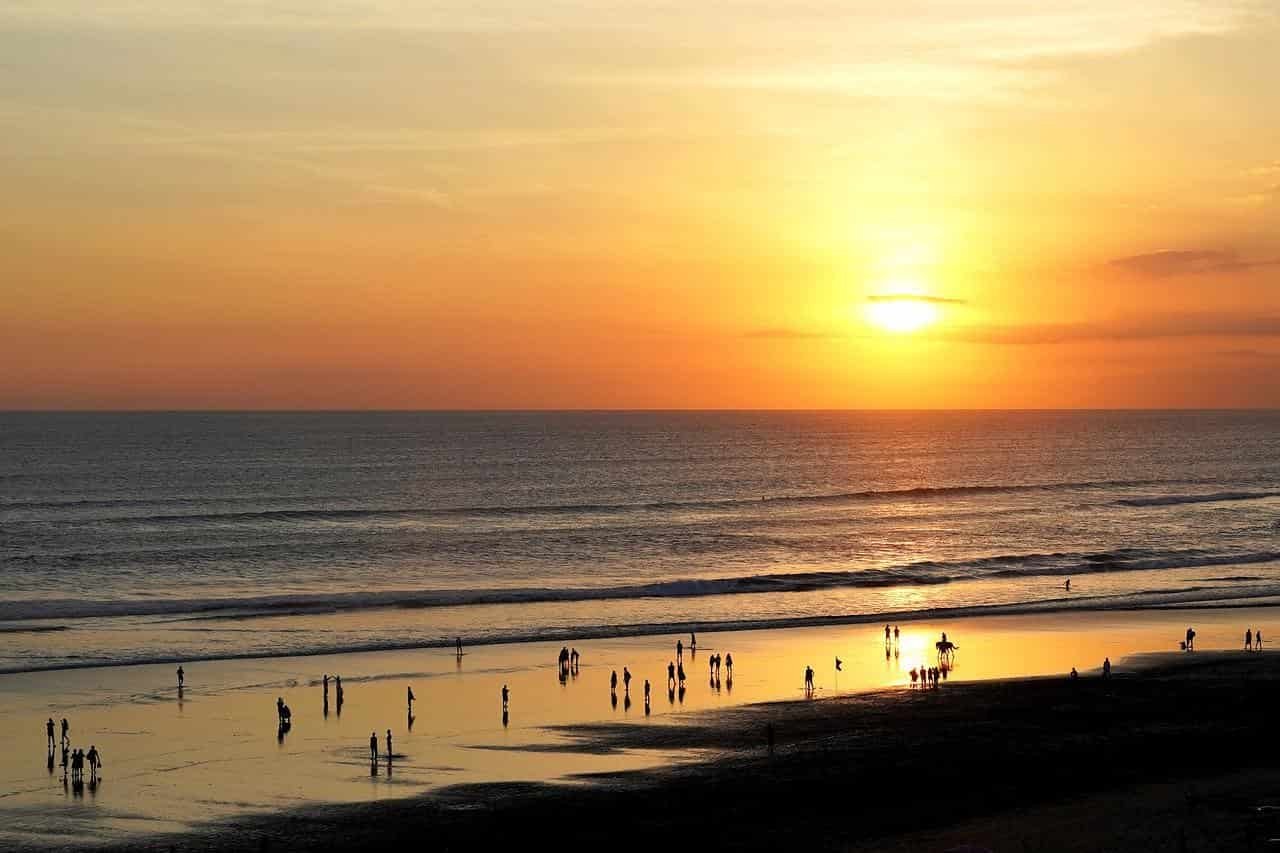
In the late afternoon, usually from around 5:30 p.m., the beach becomes one of Bali’s great sunset stages.
Visitors settle into colorful beanbags, sip cocktails or coconuts, and watch the sky change over the Indian Ocean.
During the day, Seminyak is also a very enjoyable place for beginners who want to try surfing, for beach walks, or for a simple massage on the sand at a very accessible price.
Good to do
Enjoy a massage by the beach
Watch the sunset between about 5 p.m. and 7 p.m.
Take a first surfing lesson
Have drinks at a beach club or beachfront bar
Seminyak Beach atmosphere at sunset
The beaches here are wide and lively, and the energy is festive from day to night. Like nearby Kuta, Seminyak attracts beach vendors offering
clothes, jewelry, tattoos, watches, snacks, and massages. It can feel busy, but it also reflects the vibrant atmosphere of this coast.
Even if surfing is not your thing, you can still enjoy football on the sand, sunset drinks, local food, and the warm orange light that transforms the shoreline every evening.
Seminyak Beach: best places to visit and things to do
Shopping
Seminyak is one of Bali’s best shopping districts, with boutiques, galleries, lifestyle stores, and local design labels.
Popular areas include Seminyak Square, Seminyak Village, and Jalan Laksmana.
Dining
Seminyak is also a major dining destination. You will find everything from Balinese cuisine to modern fine dining.
For a more romantic side of the area, see: Romantic dining experiences in Seminyak.
Spas and wellness
Seminyak has excellent spas and wellness spaces, from Balinese massages to mani-pedi sessions and reflexology.
Read more: Spa and beauty treatments in Seminyak.
Beach clubs
Seminyak is famous for its beach clubs. Some of the best-known names include KU DE TA, Potato Head, and nearby options that stretch toward Petitenget and Batu Belig.
Read more: Seminyak beach clubs.
Nightlife
Seminyak is one of Bali’s most stylish nightlife areas, with bars, lounges, and late-night venues.
Read more: Bali nightlife guide.
Temples and culture
Beyond beach life, Seminyak also offers cultural points of interest such as Pura Petitenget and Pura Masceti,
which reflect Bali’s religious traditions and coastal temple heritage.
Double Six Beach: perfect for swimming and learning to surf
Double Six Beach is one of the best-known parts of the Seminyak shoreline. It is wide, sandy, social, and ideal for swimming on gentler days and for first surfing lessons.
Around 4 p.m., it becomes one of the most photogenic places in Bali, with beach bars bringing out bright beanbags and umbrellas.
This is the classic postcard image of Seminyak.
Places such as La Plancha are famous for music, colorful seating, and sunset energy.
By early evening, the beach becomes lively, social, and very atmospheric.
Seminyak Beach, aka Kayu Aya Beach: sunset in style
The Kayu Aya side of Seminyak feels especially polished and stylish. This is where days of beach relaxation flow naturally into chic sunset drinks and sophisticated dinners.
KU DE TA remains one of the most iconic beachfront venues in Seminyak. Located near Kayu Aya, close to Eat Street and not far from Villa Carissa’s location,
it is known for sunset drinks, events, and refined dining.
Petitenget Beach: surf, swings, and beach club-hopping
Petitenget Beach begins near Pura Petitenget, one of the area’s famous coastal temples. This stretch is one of the best places in Seminyak for mixing surf, temple atmosphere, and beach clubs.
Nearby highlights include Potato Head, Mano Beach House, and other beachfront venues. The beach itself has darker sand and surfable waves that often appeal to beginner and intermediate surfers.
Batu Belig Beach and Berawa side trips
Batu Belig is quieter, more laid-back, and still close to Seminyak and Canggu. It suits travelers who want a calmer base with surf, cafés, and beach bars nearby.
Berawa is a short drive away and feels like a bridge between Seminyak and Canggu. It is known for black volcanic sand, surf, cafés, and large beach clubs.
Seminyak Beach is one of the best places in Bali to enjoy sunset, beach life, beginner surf, beach clubs, shopping, spa time, and nightlife in one area.
It is especially appealing if you want a beach destination that feels stylish, social, and easy to combine with dining and villa living.
Book Your Villa Carissa Getaway and Enjoy Bali’s Famous Seminyak Sunsets
Villa Carissa is located in Seminyak Center and offers a private swimming pool and enclosed garden for privacy and comfort.
It is an excellent base for sunset evenings, beach club afternoons, dining, shopping, and exploring Bali’s best coastal areas.
Experience one of Bali’s most beautiful sunset rituals just minutes from your villa.
Whether you are traveling with family, friends, or as a couple, Villa Carissa offers a stylish and peaceful base for enjoying Seminyak.
East Bali Black Sand Coast Snorkelling • Diving • Volcano Views
Amed, the Little Paradise in Bali
Amed is a peaceful chain of fishing villages on Bali’s northeast coast, bordered by black volcanic beaches and calm clear water.
It is one of the best places in Bali for snorkelling, scuba diving, and slow travel.
Renowned for coral gardens, drop-offs, wreck sites, and spectacular views of Mount Agung, Amed has become one of East Bali’s most rewarding destinations.
If you are looking for a different side of Bali, less hectic and more ocean-focused, Amed is a superb choice.
The drive there is also part of the experience, with beaches, rice fields, temples, and water palaces along the way.
Quick answer: why visit Amed?
Amed is one of the best places in Bali for snorkelling, diving, black sand beaches, fishing village atmosphere, Mount Agung views, and easy day trips to East Bali landmarks.
It is especially attractive for travelers who prefer nature, underwater life, and a slower pace over nightlife and crowds.
At a glance
Best for:
Snorkelling, diving, calm beach days, East Bali road trips
Drive from Seminyak:
Just under 3 hours in normal traffic
Ideal stay:
At least 2 nights
Location of Amed
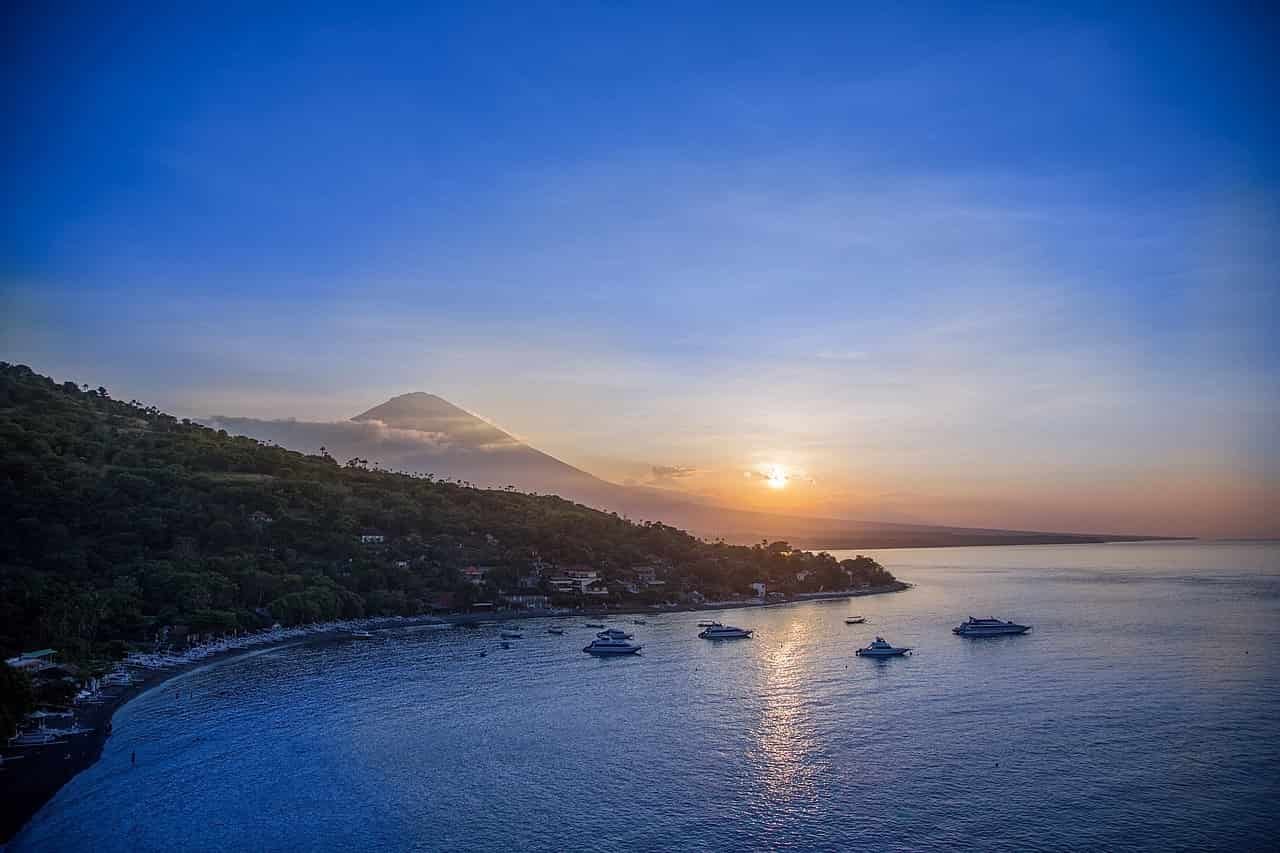
Amed lies on Bali’s eastern coastline, at the foot of Mount Agung, Bali’s most sacred volcano.
The area is known for its long coastal stretch of black sand and pebbled beaches, with excellent access to snorkelling and diving spots.
Nearby beaches and attractions include Lipah Beach, Jemeluk Beach, Virgin Beach,
the Tirta Gangga Water Palace, the Taman Soekasada Ujung Water Palace, and the Lempuyang temple area.
A fishing village
Amed is still very much a fishing village. You will see traditional fishing boats along the shore and a way of life that feels slower and more local than South Bali.
Late afternoon is a wonderful time to take a short traditional boat ride, go fishing, or simply watch the light fade behind Mount Agung.
A diving and snorkelling destination
Amed is one of Bali’s best regions for underwater exploration. Jemeluk Bay, Lipah Beach, Selang Beach, the Japanese Wreck, and nearby Tulamben all offer exceptional underwater scenery.
For divers, the famous Liberty wreck in Tulamben is one of Bali’s must-do sites.
If you only plan to climb one volcano during your Bali trip, many travelers find Mount Batur easier than Agung, especially for a sunrise hike.
But Amed’s setting beneath Agung gives the whole coast a dramatic and almost mystical atmosphere.
Amed is also a great base for discovering East Bali landmarks such as the Taman Soekasada Ujung Water Palace,
Tirta Gangga, and Lempuyang.
Amed overview and East Bali atmosphere
How to get around?
Amed is just under 3 hours by road from Kuta, Seminyak,
Canggu, or Ubud in normal traffic. The easiest way to explore the area is by scooter if you are confident, or with a private driver if you prefer comfort and flexibility.
If you take a private driver, it is worth planning stops along the route, because East Bali has many scenic and cultural places on the way.
What to do in Amed, on the east coast of Bali?
The road to Amed is part of the adventure. If you travel by scooter, you can stop wherever you like. If you hire a driver, tell them in advance which places matter most to you.
The most famous wreck near Amed is the USAT Liberty, a former U.S. Army ship torpedoed during World War II.
After being brought to Tulamben, it was later pushed farther underwater by lava flows during the 1963 eruption of Mount Agung.
To enjoy Amed properly, staying at least 2 nights is a good idea. One day can be spent stopping at places of interest on the road to Amed,
and another can be dedicated to Amed itself, with snorkelling or diving.
1. Go to Pantai Jemeluk (Jemeluk Beach)
Jemeluk Bay is one of Amed’s best playgrounds for snorkelling. Depending on conditions, it can be ideal for beginners because much of the snorkelling is shallow and accessible.
Some submerged structures, including statues and temple-like features, lie at around 2 to 5 meters (6.6 to 16.4 ft) depth. The reef also includes canyons and reliefs that attract schools of fish.
Most beachfront restaurants can arrange snorkel gear rental. If you wear fins, be careful not to strike corals.
2. Snorkel or dive at the Japanese Wreck
The Japanese Wreck is one of Amed’s most fascinating shallow underwater sites. It is unusual to be able to explore a wreck so close to shore with only mask and snorkel.
The remains lie at around 2 to 6 meters (6.6 to 19.7 ft) depending on tide. Soft and hard corals have colonized the wreck,
attracting many fish including trumpetfish, surgeonfish, butterflyfish, bannerfish, and damselfish.
The site is in front of the Kawi Kawa Beach Cottages area and is often indicated by large black buoys.
3. Snorkel or dive at the wreck of the USAT Liberty
From Amed to the USAT Liberty wreck in Tulamben takes around 20 minutes by car, or slightly less by scooter.
Even if you are not diving, part of the wreck can still be appreciated while snorkelling from the beach. Strong freediving skills are not required to enjoy the shallower sections.
Deeper parts of the wreck sit around 30 meters (98.4 ft), but some sections are accessible much shallower, making it one of Bali’s most famous mixed snorkel-and-dive experiences.
4. Relax, snorkel or dive at Lipah Beach
Lipah Beach is often described as one of Amed’s top snorkelling and diving spots. Many of the best reefs begin a few tens of meters from shore and extend toward a drop-off roughly 100 meters (328 ft) offshore.
It is a magical coral garden where you may see octopus, triggerfish, tiny mantis shrimps, and sometimes even small reef sharks.
Snorkelling is often best between mid and low tide.
5. Selang Beach
Selang Beach is a small protected bay shaped like a half moon. It is quieter and less famous than some of Amed’s other snorkelling spots,
which also means it can feel more preserved.
Snorkelling is usually done in shallow water. Blacktip reef sharks are sometimes seen here; they are generally harmless if left undisturbed.
If you encounter one, move calmly and avoid splashing or sudden gestures.
Amed itself is relatively small, so many travelers use it as a base for East Bali excursions. Scooter rental or a driver makes these side trips easy.
1. Visit Tirta Gangga Water Palace
Tirta Gangga is one of East Bali’s most famous water palaces and lies only about 15 minutes by car or less by scooter from Amed.
Its pools, gardens, fountains, and stepping stones make it both a cultural site and one of Bali’s most photographed places.
2. Mount Agung and the sacred mountain landscape
From Amed, Mount Agung is a constant presence. The volcano is both a natural landmark and a sacred mountain in Balinese culture.
The nearby Pura Besakih, Bali’s “mother temple,” is one of the island’s most important spiritual sites.
Besakih temple: about 1 hour 30 minutes by car
Pura Pasar Agung trailhead: about 1 hour 15 minutes by car
Batur trailhead: about 1 hour 30 minutes by car
3. Walk through the Ababi rice fields
The Ababi rice fields are around 20 minutes by car from Amed. They offer a beautiful rural landscape of green terraces, traditional irrigation, and quiet countryside.
It is a rewarding stop if you want to contrast Amed’s coast with East Bali’s inland scenery.
4. Explore Taman Soekasada Ujung Water Palace
The Taman Soekasada Ujung Water Palace is one of East Bali’s most elegant historic sites.
Built in 1909, it combines ponds, pavilions, bridges, and long views toward the sea and nearby islands.
Have you booked your private villa in Seminyak Center?
Villa Carissa offers a private swimming pool and enclosed garden in Seminyak Center, making it an excellent base for exploring Bali’s beaches,
temples, water palaces, volcanoes, and day trips to East Bali destinations like Amed.
Whether you are traveling with family, friends, or on a romantic getaway, Villa Carissa gives you a comfortable and stylish Seminyak base
while keeping Bali’s best attractions within reach.
Bali’s climate is tropical. Bali weather in May, June, July, August, September and October during the dry season which extends from April to October.
December, January and February as this is the rainy season, but the Bali weather is still very warm.
First of all, before leaving, you have to know when to go to Bali! The idea is not only to detail the climate of Bali month by month but rather to explain to you what are the best times to go there.
The island is located near the equator, in the heart of Indonesia and next to Java. So the climate of Bali is a tropical climate. This means that the temperatures are always very hot throughout the year (with an average temperature of 27°C (80°F), and that there are periods of heavy rain.
Bali weather with two seasons climate
Bali has a tropical type climate with two seasons, the rainy season and the dry season. The ideal time to visit Bali runs from May to October, corresponding to the dry season with an average temperature of around 26 °C (78.8 °F), ideal temperature to enjoy the beaches and discover the temples and archaeological sites.
Located near the Equator, Bali is subject to a hot and humid climate all year round with two distinct seasons.
Rainy and dry season
– The hot season or rainy season which goes from December to March. During this season, the month of January is the rainiest.
– The cool season or dry season goes from May to October with July being the driest and coolest month. Note that during this season it can also rain, but the rains are short-lived and usually occur in the late afternoon.
Average temperatures
In terms of temperatures, even if we talk about hot season and cool season, temperatures are very constant throughout the year. They vary between 23° and 32°C (73.4 °C to 89.6 °F), so ideal for discovering the country and enjoying the sumptuous beaches around Seminyak and Nusa Dua.
Note that in the central mountains, the temperatures are a little cooler, ranging from 20°C to 25°C (68 °F to 77 °F), great for nature lovers and hikers ready to attack the Gunung Agung volcano. In Bali, a little advice, it is better to get up early to fully enjoy the day, because the sun rises around 6 a.m. and sets abruptly around 6 p.m. and this throughout the year.
Bali weather by month in Celcius and Fahrenheit
Bali weather – Average temperatures
Month
Min (°C)
Max (°C)
Averge (°C)
January
25
31
27,8
February
25
31
27,9
March
25
31
27,9
April
25
31
28
May
24
31
27,6
June
24
30
27
July
24
29
26,5
August
23
29
26,4
September
24
30
26,8
October
24
31
27,7
November
25
32
28,3
December
25
31
28
YEARLY
24,4
30,6
27,45
We recommend the months of May to October for your trip to Bali. If you can, avoid the months of July and August to avoid more tourists and benefit from cheaper hotel rates. But if you can’t it’s ok too!
Bali weather in Fahrenheit
Bali weather – Average temperatures
Month
Min (°F)
Max (°F)
Averge (°F)
January
77
87.8
82.4
February
77
87.8
82.4
March
77
87.8
82.4
April
77
87.8
82.4
May
75.2
87.8
81.5
June
75.2
86
80.6
July
75.2
84.2
79.7
August
73.4
84.2
78.8
September
75.2
86
80.6
October
75.2
87.8
81.5
November
77
89.6
83.3
December
77
87.8
82.4
YEARLY
75.95
87.05
81.5
Swimming in Bali, Sea temperature
To swim in Bali, no questions to ask: the water is warm all year round, between 27°C and 29°C (80.6 °F to 84.2 °F).
You know when to go to Bali, but do you know where you will land? If this is your first time traveling to Bali, be aware that the airport is not located in the city of Denpasar. Many peopole confused for the sirst time, that’s why we mention it. The airport is actually called Ngurah Rai and is located on the south west coast of the island (south of Kuta).
When you leave the airport, you will be surprised to see dozens of Balinese jumping on you to offer you a taxi! Don’t be offended and just say no with a smile, they will understand and go see another tourist! It’s quite boring! when you have to negotiate for several minutes because we know (WE KNOW) that we are being scammed from the start and that they triple their prices! Then we have two solutions for you:
Now that you know when to go to Bali, when you book your accommodation before you leave, ask the host to arrange a driver for you who will wait directly at the airport. Often they ask you for your number to communicate via WhatsApp for your arrival time. You will have wifi at the airport so you can find your driver right away and won’t have to deal with the cacophony of other taxi drivers!
If you have not booked a driver, try to negotiate your taxi for IDR 250,000 maximum when you stay around Kuta or Seminyak.
Located in Seminyak Center – Bali, Villa Carissa offers a private swimming pool and enclosed garden to guarantee your privacy. You can book your private pool villa here with us.
Whether you’re traveling with family, friends, or on a romantic getaway, villa Carissa in Seminyak center offers the perfect base for exploring Bali’s many attractions and enjoying a relaxing vacation.
Do not miss to visit the Temple of Tanah Lot in Bali, Temple of legend, and essential of the island! This iconic sea temple is perched on a rock formation just off the coast, making it one of Bali’s most photographed sites, especially during sunset.
Built in the 16th century by order of the priest Nirartha, who came to meditate on an isolated rock in the sea, the temple of Tanah Lot now overlooks this rock. Its name means “land in the sea” in Balinese. According to popular beliefs, the base of the temple is invested by a giant sea serpent which protects the sacred place from intruders.
What is it?
Head for the Indonesian archipelago, where the wonderful island of Bali is located. Between its idyllic beaches, its luxuriant nature, its breathtaking rice fields, its impressive volcanoes, its mystical and authentic culture and the gentleness of its inhabitants, it is truly a dream destination!
But the charm and beauty of Bali also reside in its collection of temples, each more incredible than the next, starting with the Temple of Tanah Lot.
This temple is one of the most famous on the island, because of its location: the Temple of Tanah Lot in Bali is “set” on a small rock in the middle of the ocean, about 100 meters from the coast, accessible at low tide. The spectacle of this temple in the middle of the waves at high tide is just magnificent!
So to help you visit the Tanah Lot Temple in Bali, we have prepared a mini-guide for you with all the important information you need to know.
The temple has acquired its notoriety partly thanks to its particular architecture: located on a rocky promontory, it is cut off from the rest of the island twice a day, at each high tide.
The temple has acquired its notoriety partly thanks to its particular architecture: located on a rocky promontory, it is cut off from the rest of the island twice a day, at each high tide.
Legend has it that the sage once went to the rocky promontory that was then Tanah Lot, connected to the moor by a natural stone bridge.
Captivated by the spectacle of the ocean caressing the banks and by the backwash of the waves, the man would have decided to spend the night there… And in the early morning, in total harmony with the sea stretched out in front of him, he decided to build the temple to pay homage to this element of nature. Even today, the caves dug by the waves at the foot of the cliffs that surround it are said to be inhabited by sacred serpents, descendants of the former protectors of the site.
Tanah Lot Temple at high tide, Bali, Indonesia. Jakub Hałun, CC BY-SA 4.0, via Wikimedia Commons
Myths about Tanah Lot
The myths and legends associated with this sacred place are almost as beautiful as the temple itself. The story goes that the holy priest Danghyang Nirarta spent the night here and the people of Bali decided to build the Tanah Lot temple on his resting place.
It is also said that at the time, there was a bridge between the continent and the temple, but that it was destroyed by the force of the sea. Another interesting detail: there is under Tanah Lot a cave sheltering a source magical. Curiously, the spring water is fresh while the temple is surrounded by the ocean and its salty waters.
The temple of Tanah Lot has thus become one of the 7 temples of the Sea which border the island of Bali. These seven temples have the function of protecting the island of the Gods from any bad influence coming from the waves, and have the particularity of being always visible from at least one of the other temples of the Sea.
Today, Pura (temple) Tanah Lot is one of the most popular religious buildings on the island, and also the most visited. Right next to the temple, a “tourist village” has been created in order to stem the flow of daily visitors to the sacred site.
Sportswear shops, crafts, various clothes, the main street offers everything you need for an entire afternoon of shopping! The sunset is a particularly appreciated moment on this site, which also offers the possibility of enjoying a dinner in a restaurant in height.
Shhh, don’t tell anyone! The Pura Batu Bolong, located 10 minutes walk from the Tanah Lot temple, is just as impressive as its neighbor and much less crowded! Of more modest size, it is perched on a ledge plunging into the Indian Ocean.
During the Melasti celebrations, a few days before the Balinese New Year, hundreds of pilgrims come to deposit earthly offerings intended for the marine deities.
Visit the temple of Tanah Lot: Variable hours, expect about 2 hours to spend in this area.
Price: Allow IDR 20,000 to enter the temple, IDR 20,000 more to touch the tail of a small sacred reptile.
Discover Pura Batu Bolong: Follow the path that runs along the cliff to the west of Pura Tanah Lot: the site is open every day from 8 a.m. to 6 p.m. and admission is free.
Tanah Lot is easily reachable from any locality in South Bali (Sanur, Kuta, Seminyak, Legian or Canggu), or from Ubud, both by your own means (scooter) and by car (taxi or Go-Jek application).
From the latter you can therefore go there for the day, without sleeping there.
From other tourist locations such as Uluwatu, Munduk or Amed it seems complicated and a shame to go there for the day, since you would spend too much time on the road.
It will therefore be necessary to book a room in the surroundings (see below), for at least one night.
Please note that these times are estimates and can be subject to change depending on traffic conditions and other factors. It’s advisable to plan your journey accordingly and consider allowing extra time for unforeseen delays.
Located in Seminyak Center – Bali, Villa Carissa offers a private swimming pool and enclosed garden to guarantee your privacy. You can book your private pool villa here with us.
Whether you’re traveling with family, friends, or on a romantic getaway, villa Carissa in Seminyak center offers the perfect base for exploring Bali’s many attractions and enjoying a relaxing vacation.
Jalan Camplung Tanduk (sometimes referred to as Dhyana Pura) in Seminyak is the center of Bali’s gay nightlife. Bali gay nightlife is witty, charming and a surfer’s paradise, the island of Bali attracts millions of visitors every year, who come here to savor the laid-back lifestyle, tropical beaches and party the night away. what is now considered one of the best nightlife destinations.
Seminyak’s vibrant gay life scene boasts a variety of bars, clubs, and events, making it a popular destination for LGBTQ+ travelers seeking a lively and welcoming atmosphere. It draws a large crowd of LGBTQ+ individuals from around the world.
Homosexuality in Bali and Lombok
While there isn’t a specific “LGBT area” in Bali and Lombok, there are many places that are popular among the LGBTQ+ community.
Homosexuality is generally accepted in Bali and Lombok, with a growing number of establishments catering to the LGBTQ+ community in both destinations. While same-sex marriage is not yet legally recognized in Indonesia, there is a growing awareness and acceptance of the LGBTQ+ community, particularly in Bali, which is known for its liberal and open-minded atmosphere.
However, it’s important to note that Indonesia is still a predominantly Muslim country, and some areas may be less tolerant than others. It’s always a good idea to exercise caution and respect local customs and traditions while exploring Bali and Lombok as an LGBTQ+ traveler.
Bali is a top destination for LGBT visitors, featuring a large community of gay and lesbian expats who run many gay-friendly businesses.
Although same-sex marriage isn’t legal in Indonesia, Bali is known for its open-minded atmosphere. In southern Bali and Ubud, gay couples generally face few issues, but should note the local modesty in public behaviors.
Seminyak, in particular, offers several gay-friendly nightclubs. However, all visitors should avoid public displays of affection due to increasing conservatism.
That said, LGBT visitors to Bali (and Indonesia) should follow the same recommendations as heterosexuals and avoid any public displays of affection. With the country becoming more and more conservative, any form of same-sex closeness is even unwise.
The “waria” community (transvestites and transsexuals) is recognized, albeit not always respectfully. While Muslim communities do not accept homosexuality, incidents of physical assault are rare.
It’s important to note that Lombok is a predominantly Muslim island and therefore may have more conservative attitudes towards LGBTQ+ individuals compared to neighboring Bali.
In Lombok, LGBT travelers should also avoid public displays of affection, like cuddling, kissing… (the advice also applies to heterosexual couples).
It’s important to respect local customs and beliefs while exploring the island and to exercise caution when it comes to public displays of affection, regardless of sexual orientation.
Gay Bars in Bali
Jalan Dhyana Pura (sometimes referred to as Jalan Camplung Tanduk) is famous for having several small gay-friendly bars, while the Batu Belig area near Canggu is quite trendy and less touristy than the rest of Seminyak.
These venues cater to the LGBT community and are known for their friendly atmosphere and lively events. Whether you’re looking for a relaxed evening or a vibrant night out, you’ll find plenty of options to enjoy Bali’s inclusive and diverse nightlife.
Tourists, expats and locals, everyone loves Seminyak! This seaside town buzzes night and day from Double Six to Oberoi and Petitenget. There are too many cool hangouts to discover, but here are the most famous and loved ones:
Bali Joe Bar
A bar/clubbing with super professional transformist shows and gogo boys. Staff and kindness are at the rendezvous here. Very good cocktails served with real non-freulated or sub-brand alcohol. To avoid Saturday evening too many people… Smaller and more confined than its neighbor the Mixwell, also very festive but younger…
Another popular bar on the same street as Mixwell, known for its fun drag performances and friendly crowd. Excellent atmosphere with shows by transformists and gogodancers. Bali Joe is open daily from 4pm until around 3am.
Bali Joe Bar is a popular gay bar located in the heart of Seminyak, Bali’s vibrant nightlife district. The bar is known for its lively and welcoming atmosphere, making it a popular spot for LGBTQ+ travelers and locals alike. Bali Joe Bar offers a range of drinks, including cocktails, beers, and wines, and often hosts drag shows and other live performances.
The bar is relatively small, but it has a lively and energetic atmosphere, making it a great spot for socializing and meeting new people. The staff is known for being friendly and welcoming, and the overall vibe is fun and inclusive.
F Bar Bali
F Bar Bali (previously Facebar) in Seminyak at Jalan Camplung Tanduk is very well known & popular for gay nightlife in Bali. The focus is more on the go-go dancers with a “shower” and pole dancing show. The second floor is available for private parties. F Bar is open Tuesday to Sunday from 7pm to 3am.
Located near Bali Joe and Mixwell, offering entertaining shows and a great cocktail menu.
The bar has a spacious dance floor and a large outdoor terrace, making it a great spot to party and socialize with friends. The club is known for its theme parties, which often attract a diverse and energetic crowd. The staff is known for being friendly and attentive, and the overall vibe is fun and inclusive.
Mixwell Bar
Very popular place, it offers what you need for a festive and colorful evening! Certainly very gay, the Mixwell is very international and almost of all ages.
This establishment is known for its friendly and welcoming atmosphere, making it a popular spot for LGBTQ+ travelers and locals alike. It offers a range of drinks, including cocktails, beers, and wines, and often hosts live music and other events.
A staple in the Bali gay scene, known for its drag shows and lively atmosphere. It is located on Jalan Camplung Tanduk, Seminyak.
Very jovial and courteous welcome from the always smiling team. Mixwell is open daily from 6pm to 3am.
One of the unique features of Mixwell Bar is the balcony area overlooking the street, which is a great spot to people-watch and take in the bustling atmosphere of Seminyak.
The bar also offers a happy hour and other special promotions throughout the week, making it an affordable and enjoyable spot to spend an evening. If you’re looking for a relaxed and welcoming gay bar in Seminyak, Mixwell Bar is definitely worth a visit.
Stonewall Bali
This is a good venue that serves as both a restaurant and a nightlife spot. It offers outdoor seating where guests can enjoy the pleasant Balinese weather. Known for its great cocktails and live performances, Stonewall provides an inclusive and vibrant atmosphere for locals and tourists alike.
Address: Jl. Raya Seminyak, Seminyak, Bali 80361, Indonesia (Near Bintang supermarket)
Enjoy a day of fun at M.A.N Resort Bali, a vibrant day club that features a bar and a crystal clear pool open from 7:30 AM to 10:00 PM. It’s the perfect place to socialize, sip cocktails, and dine at our restaurant, whether you’re grabbing lunch or dinner. You can also relax under the sun or top up your tan.
Address: Jl. Padma Utara Gg. Bujangga No.8, Legian, Bali 80361, Indonesia
Opening hours:
Day Club, Bar, Pool 07:30-10:00pm
SPA treatments available from 9:00 AM to 9:00 PM.
Here are some of the top places to visit in Bali
Seminyak: This trendy neighborhood in Bali is home to a variety of gay-friendly bars, clubs, and restaurants. Some popular spots include Bali Joe Bar, Mixwell Bar Bali, and Bottoms Up Bar.
Kuta: Kuta is another popular area for nightlife in Bali, and it has a number of LGBTQ+ friendly venues. Sky Garden Bali and M-BAR-GO Bali are two popular bars that attract a diverse crowd.
Canggu: This laid-back beach town is popular among surfers and yoga enthusiasts, and it’s also known for its LGBTQ+ friendly vibe. Deus Ex Machina and The Slow are two popular spots that attract a diverse crowd.
Ubud: Ubud is a popular destination for wellness retreats and spiritual experiences, and it has a growing LGBTQ+ scene as well. Bali Bohemia and Nine Heaven Vegan Warung are two popular spots that are known for their welcoming atmosphere.
Gay-friendly accommodations: There are many gay-friendly accommodations in Bali, including hotels, resorts, and private villas.
There are several beaches in Bali and Lombok that are known to be popular among the LGBTQ+ community. It offers a relaxed and welcoming environment for sunbathing, swimming, and socializing.
Bali
There isn’t an official gay beach in Bali.
The most well-known gay beach is Batu Belig Beach, located just north of Seminyak. You’ll find here a mix of locals and tourists, and a relaxed atmosphere where you can soak up the sun and meet new people.
Batu Belig Beach is a calm spot to unwind and catch the sunset. It’s up north from Seminyak, close to the W Hotel. The area is known to be inclusive and welcoming to everyone and has a beach café with colorful flags, tables, chairs, and places to relax in the sun.
It’s better not to swim because the water can be rough, and there’s no one watching over the beach.
To find it, head north on Sunset Road from Seminyak and take a left onto Jalan Petitenget (which turns into Jalan Batu Belig). Just keep going until you reach the end, then turn left again to reach the sandy beach.
Another popular gay-friendly beach in Bali is Padang Padang Beach, located on the Bukit Peninsula. This stunning stretch of sand is surrounded by towering cliffs and crystal-clear water, and is a popular spot for surfing as well as lounging.
In Lombok, the most well-known gay beach is Gili Meno Beach, located on the small island of Gili Meno. Here, you’ll find a laid-back atmosphere and plenty of opportunities for snorkeling, diving, and exploring the island’s natural beauty.
Overall, Bali and Lombok offer a variety of gay-friendly beaches. Each of them with their own unique atmosphere and charm, making them a top destination for LGBTQ+ travelers seeking sun, sand, and relaxation.
Gay Bar in Lombok
The gay comunity in Lombok is rather small. Unfortunately there is no gay bar in Lombok. But thousands of gay travellers pick Lombok to spend their vacations. Here is a gay-friendly bar: The Office Bar and Restaurant in Senggigi, Lombok.
The Office Bar and Restaurant, Senggigi : consultez 295 avis sur The Office Bar and Restaurant, noté 4 sur 5 sur Tripadvisor et classé #27 sur 116 restaurants à Senggigi.
Homosexuality is generally accepted in Lombok. It’s important to note that Lombok is a predominantly Muslim island. They may have more conservative attitudes towards LGBTQ+ individuals compared to neighboring Bali.
While there are some establishments on the island that cater to the LGBTQ+ community, they may be less visible compared to those in Bali.
Overall, while Lombok may be less visible in terms of LGBTQ+ establishments compared to Bali, there are still places on the island where LGBTQ+ travelers can feel comfortable and welcome.
Discover your tranquil haven at Villa Carissa, nestled in the heart of bustling Seminyak, Bali. With a private pool and lush garden exclusively for you, your privacy is our priority. Book your secluded villa experience today.
Whether you’re traveling with family, friends, or on a romantic getaway, villa Carissa in Seminyak center offers the perfect base for exploring Bali’s many attractions and enjoying a relaxing vacation.
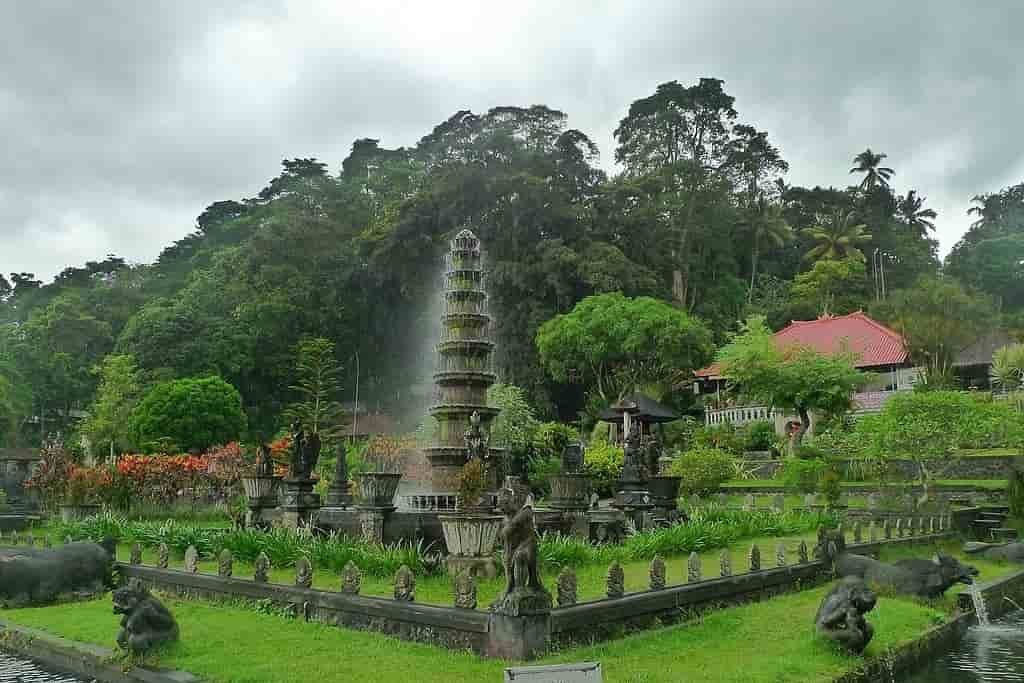


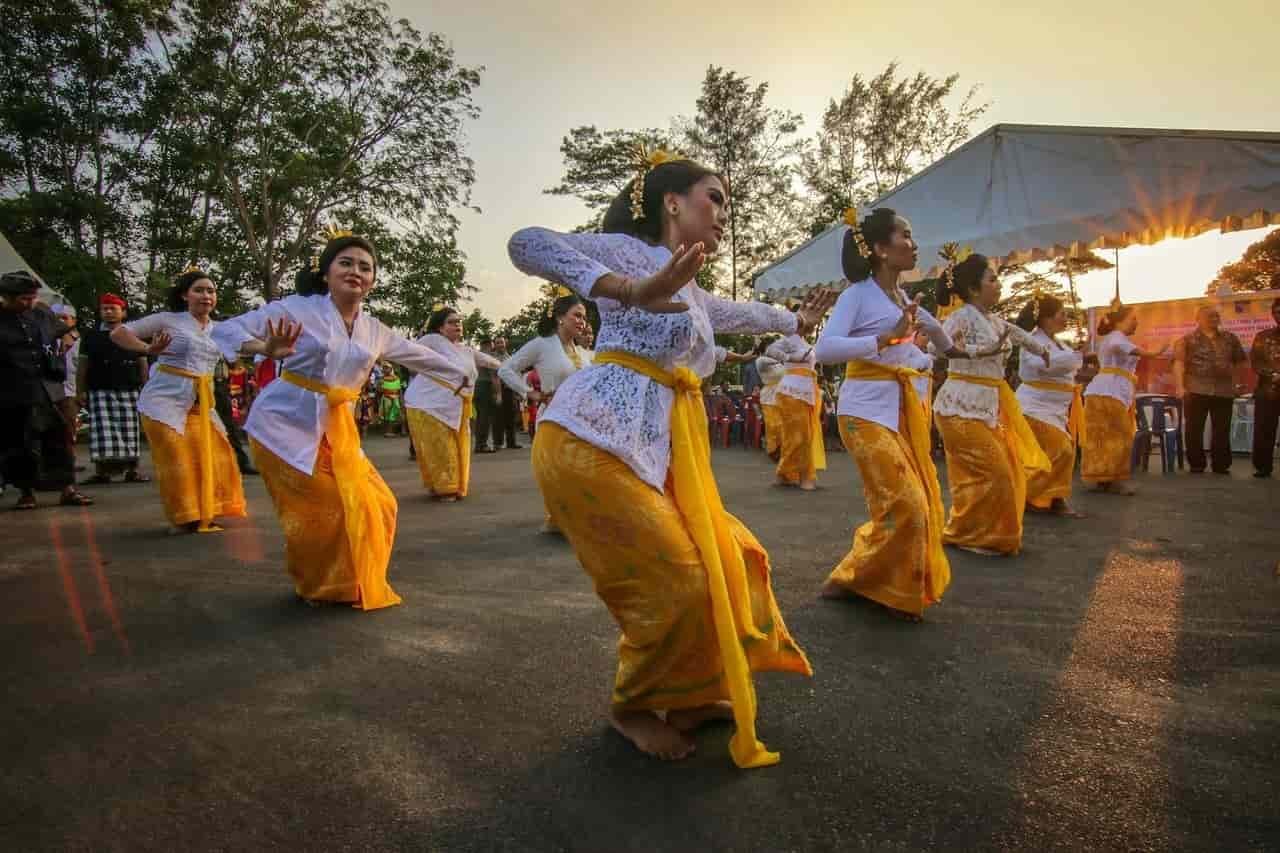


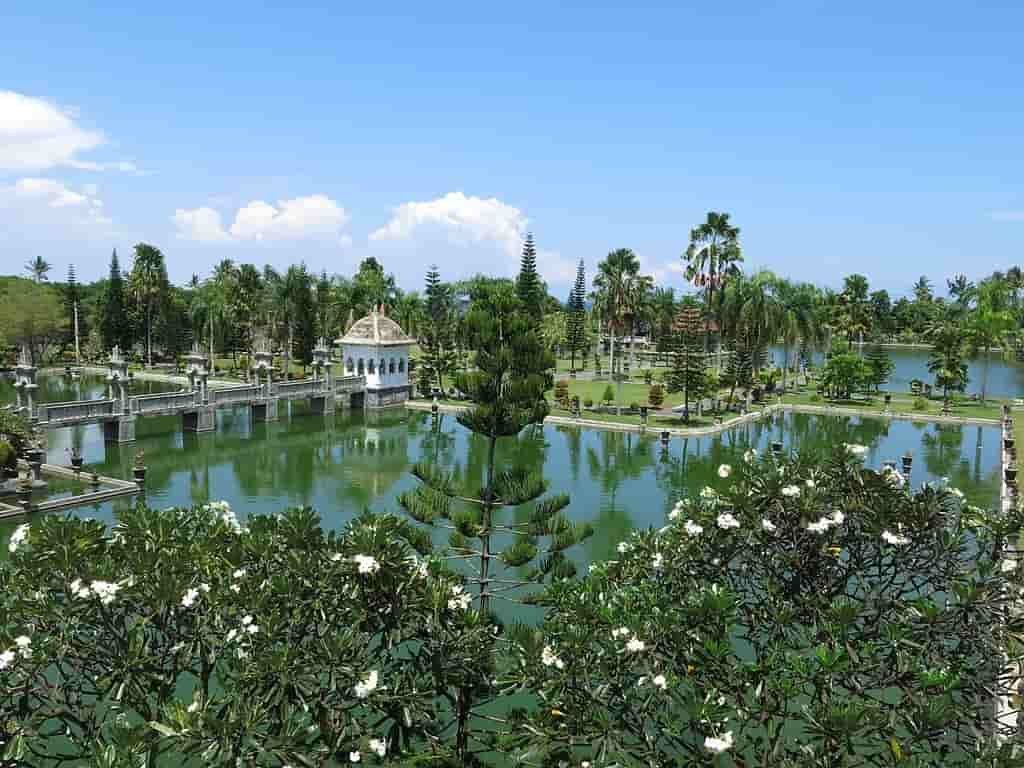
.jpg)