Tag Archives: Sumatra

Sumatra Travel Guide: Uncovering the Best Must-Visit Destinations and Experiences

Sumatra, one of the world’s great islands, is a treasure trove of natural wonders, cultural diversity, wildlife, surf, volcanoes, rainforest adventures, and places that still feel wilder and less crowded than many of Indonesia’s better-known destinations. A good Sumatra travel guide should not only inspire you with where to go, but also help you understand how the island fits together: its long distances, regional contrasts, distinct ethnic cultures, and the practical reality that one trip rarely feels enough.

From the volcanic beauty of Lake Toba to the orangutan-rich forests of Bukit Lawang, the wave paradise of the Mentawai Islands, the Minangkabau culture of Bukittinggi, the cool highlands of Berastagi, and the heritage cities of Medan, Padang, and Palembang, Sumatra offers an astonishing range of experiences.

This rebuilt article keeps the spirit of the original while making it more useful, more readable, more mobile-friendly, and more SEO-friendly for travelers who want real ideas, practical preparation, and strong reasons to put Sumatra high on their Indonesia wish list.

Good to know before you plan: Sumatra is vast, and many of its best experiences involve combining flights, road transfers, ferries, or guided treks. The reward is that the island feels adventurous, varied, and deeply memorable.

Related reading:
From Bali to Krakatoa: Discovering the Volcanic Wonders Between West Java and Sumatra


Must-Visit Places in Sumatra, Indonesia

Sumatra is one of those destinations where every region feels like a different chapter. In the north, you find enormous crater lakes, orangutans, and cool volcanic highlands. In the west, you meet surf islands, Minangkabau culture, and dramatic coastal and mountain landscapes. In the south and center, there are wildlife reserves, heritage cities, geoparks, waterfalls, and less-visited cultural zones that still feel refreshingly under the radar.

Best for scenery
Lake Toba, Berastagi, Bukittinggi, Lake Maninjau
Best for wildlife
Bukit Lawang, Way Kambas, Kerinci Seblat
Best for culture
Bukittinggi, Lake Toba, Nias, Padang, Palembang

1. Lake Toba: Paradise on Earth

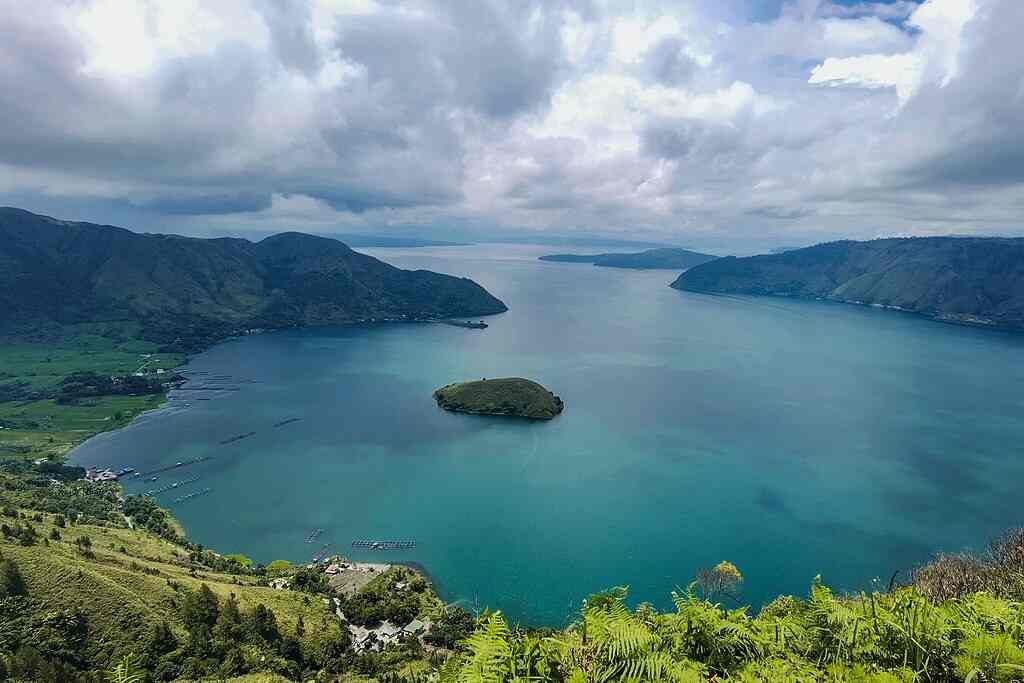
Lake Toba is one of the most powerful landscapes in Indonesia. This giant crater lake, with Samosir Island at its center, combines peaceful water, green mountains, traditional Batak villages, cultural heritage, and a sense of scale that photos rarely capture properly.

Start with Samosir Island, the jewel at the center of the lake. It is one of the best places to slow down, rent a bicycle, explore traditional villages, and understand Batak culture more deeply. The island’s appeal lies not only in the views, but also in its atmosphere: quiet roads, lakeside villages, local food, music, and architecture that feel very different from Bali or Java.

Samosir Island: Serenity on Lake Toba

Samosir is where many travelers fall in love with the region. Traditional Batak villages, local dance performances, and characteristic wooden houses with dramatic rooflines give the island both visual character and cultural depth. It is also an easy place to be active without feeling rushed: boat rides, swimming, lakeside wandering, hill viewpoints, and food stops all fit naturally into a few relaxed days.

Activities to Experience

  • Take a boat ride across the lake and enjoy the mountain views
  • Swim in the clear water or simply relax by the shore
  • Explore Samosir by bike or scooter
  • Visit traditional Batak villages and cultural sites
  • Look for viewpoints such as Holbung Hill on Samosir

Culinary Delights

Lake Toba is also a destination for food lovers. Batak cuisine is known for bold flavors, grilled fish, spiced dishes, and strong coffee. “Arsik,” the region’s well-known grilled or seasoned fish preparation, is one of the dishes many travelers seek out first.

How to Get to Lake Toba

There is no direct transport to Samosir itself. Most travelers first fly to Medan or Silangit Airport, then continue by road and, depending on the route, by boat to Samosir. If you go via Medan, the classic route is to travel onward to Parapat and then take the ferry to Tuk Tuk on Samosir Island.

Schedules and fares can change, so it is best to confirm current transport times locally or through your hotel, guesthouse, or driver rather than relying on older prices published online.

Read also:
From Bali to Lake Toba: Complete Guide to Visit the Lake, Medan Region and Bukit Lawang Orangutans

2. Bukit Lawang: Encounter Orangutans in the Wild

Bukit Lawang is one of the best-known wildlife gateways in Sumatra. Located beside Gunung Leuser National Park, it gives travelers the chance to explore dense rainforest, hear the forest come alive, and, with luck, observe orangutans in their natural habitat.

This is the kind of destination that feels adventurous in a very different way from Lake Toba. Here, the focus is jungle trekking, river scenery, local guides, wildlife awareness, and the humbling experience of stepping into one of Sumatra’s most biodiverse forest regions.

Gunung Leuser National Park

Gunung Leuser is one of the great forest landscapes of Indonesia. Trekking through it brings the possibility of spotting orangutans and other wildlife, while also revealing just how rich and complex Sumatra’s rainforest ecosystems are.

Orangutan Encounters

Seeing orangutans in the wild is the main reason many travelers come to Bukit Lawang. The experience is at its best when approached with patience and respect. Rather than expecting a zoo-like encounter, it is far more meaningful to see the forest on its own terms and appreciate every sign of animal life as part of a larger ecosystem.

Beyond Orangutans

  • River tubing on the Bohorok River
  • Waterfalls and natural pools
  • Forest walks and guided treks
  • Village stays and local food
  • A slower and greener side of North Sumatra

How to Get to Bukit Lawang

Bukit Lawang is in North Sumatra, roughly a few hours by road from Medan and Kualanamu Airport, depending on traffic. Many travelers fly first to Medan, then continue by private car, tourist bus, or public transport. It can also be combined with Lake Toba or Berastagi on a longer overland itinerary.

3. Batang Palupuh Nature Conservation Center: See Rafflesia Flowers

Batang Palupuh Nature Conservation Center in West Sumatra is one of the places associated with the extraordinary Rafflesia, one of the most remarkable flowers in the world. This flower fascinates travelers not only because of its size, but because of the strange way it grows.

Rafflesia does not behave like a typical plant with familiar stems, leaves, and roots. It is parasitic and depends on a host vine, which is part of what makes it so rare, fragile, and fascinating. For travelers interested in unusual botany and offbeat nature experiences, this is one of Sumatra’s most memorable niche attractions.

Accessibility

The area can be reached by road via Bukittinggi and Palupuh. The original route information points to a location around 12 km (7.5 miles) away on the Bukittinggi–Palupuh route, with a short onward access path in the area. Local access conditions can vary, so it is worth checking road and trail conditions before you go.

4. Mentawai Islands: Surfing and Cultural Immersion

The Mentawai Islands are legendary among surfers, but the archipelago offers more than surf. It combines remote island landscapes, reef breaks, local traditions, forested interiors, and a sense of Indian Ocean remoteness that feels very different from mainland Sumatra.

Surfing Mecca

Surfers know the Mentawais for their consistent swells, reef breaks, and names that have become almost mythic in the surfing world. Places such as Macaronis, Lance’s Right, Rifles, and other breaks have made the islands a dream destination for wave hunters.

Sipora Island

Sipora Island is one of the key surf hubs in the Mentawai region. For avid surfers, it is one of the places where the scenery, surf culture, and wave quality all come together.

Immersive Cultural Experiences

Beyond the surf, the islands are home to indigenous Mentawai culture, known for strong traditions, tattooing, shamanistic practices, and village life that remains distinctive in Indonesia. Travelers who go beyond the beach often find the cultural side of the Mentawais just as memorable as the waves.

Explore Beyond the Waves

  • Island hopping
  • Snorkeling and diving
  • Rainforest walks
  • Cultural village visits
  • Remote beaches and coves

Getting to the Mentawai Islands

Most travelers use Padang Airport (PDG) as their main gateway. From Padang, travel usually continues by ferry or arranged surf transport, depending on where you are staying. Some travelers spend a night in Padang before continuing.

Related reading:
From Bali to Jakarta
and
From Bali to Bintan

5. Bukittinggi: Immerse Yourself in Minangkabau Culture

Bukittinggi is one of the most culturally rewarding cities in Sumatra. It is a center of Minangkabau identity, known for its architecture, food, markets, and scenic highland setting.

The Cultural Hub of Minangkabau

Bukittinggi is rich in rumah gadang, the famous Minangkabau houses with sweeping horn-like rooflines. These buildings are more than just photogenic structures. They reflect the social and cultural traditions of a community well known for its matrilineal heritage.

Jam Gadang: The Iconic Clock Tower

Jam Gadang is the city’s landmark and one of the most recognizable symbols in West Sumatra. It sits at the heart of Bukittinggi and remains one of the easiest ways for visitors to orient themselves while exploring the city.

Culinary Delights of Minangkabau

Bukittinggi is also a major culinary stop. Minangkabau food is famous across Indonesia, and dishes such as rendang, nasi Padang, and sate Padang make the city a dream destination for travelers who care about food as much as scenery and history.

Ngarai Sianok: The Grand Canyon of Indonesia

Just outside the urban center lies Ngarai Sianok, a dramatic canyon landscape with steep green walls and beautiful panoramic views. It is one of the natural highlights that gives Bukittinggi its special mix of culture and scenery.

6. Merangin Jambi UNESCO Global Geopark

Merangin Jambi UNESCO Global Geopark is one of the most geologically intriguing places in Sumatra. It is known for ancient fossil deposits, old rock formations, and a scientific landscape that appeals not only to nature lovers but also to travelers interested in Earth history.

What makes the geopark especially fascinating is that it combines geology, natural scenery, and local cultural heritage. It is not simply a “scientific site.” It is also an outdoor travel destination with waterfalls, viewpoints, and stories tied to ancient landscapes.

What Is It Famous For?

The area is particularly known for fossilized flora and geosites connected with very old geological periods. It is the kind of destination that feels rewarding if you enjoy places that are visually beautiful and intellectually fascinating at the same time.

How to Get to Merangin Jambi

Travelers usually reach the area via Sultan Thaha Syaifuddin Airport (DJB) in Jambi, then continue by road. Because this is a more specialized destination than Lake Toba or Bukit Lawang, it is wise to plan your onward transport in advance.

7. Berastagi: Nature’s Marvels and Cultural Delights

Berastagi is one of North Sumatra’s classic highland bases. It is popular because it combines cool weather, market life, volcano scenery, and access to some of the region’s best-known natural attractions.

Sipiso-piso Waterfall

Sipiso-piso Waterfall is one of the best-known waterfalls in North Sumatra. Its height is often given as about 120 meters (394 feet), and the dramatic setting near the highlands makes it one of the strongest scenic stops in the region.

From Medan, the drive is often described as a few hours depending on traffic and the exact route. Once you reach the area, there is a short approach on foot to the main viewpoint.

Mount Sibayak

Mount Sibayak is one of the more accessible volcano hikes in North Sumatra and is often recommended to travelers who want a rewarding volcano experience without an extreme expedition. The hike is known for its steaming volcanic landscape, scenic viewpoints, and approachable trail compared with more demanding climbs.

More Great Places to Visit in Sumatra

8. Way Kambas National Park: Wildlife Encounters

Way Kambas National Park in Lampung is one of the key wildlife destinations in southern Sumatra. It is especially associated with Sumatran elephants, but it also matters as a broader conservation landscape.

Travelers interested in wildlife, forest landscapes, and conservation-themed travel will find this region particularly meaningful.

9. Nias Island: Cultural Traditions and Pristine Beaches

Nias Island is known for its stone-jumping ceremonies, traditional houses, surf culture, and beautiful beaches. It blends powerful cultural imagery with an adventurous island atmosphere.

Surfers often come for the waves around Sorake and Lagundri, but Nias also rewards travelers who are interested in architecture, ritual, village culture, and off-mainstream island travel.

10. Padang: History, Cuisine, and Vibrant Streets

Padang, the capital of West Sumatra, is both a city destination and a transport gateway. It is famous across Indonesia for Minang food, but it is also worth visiting for its beaches, museums, urban life, and regional connectivity.

  • Pantai Air Manis Beach
  • Pasumpahan Beach
  • Adityawarman Museum
  • Sitti Nurbaya Bridge

11. Lake Maninjau

Lake Maninjau is one of West Sumatra’s quieter scenic gems. Surrounded by green hills, it is a strong choice for travelers who want gentler scenery, cycling, viewpoints, and a quieter pace.

12. Belitung Island

Although Belitung sits east of Sumatra in the Java Sea, it is often considered in broader Sumatra-region travel planning because of its flight connections and island atmosphere. It is known for granite rock formations, clear water, beaches, and a calmer coastal mood.

13. Kerinci Seblat National Park

Kerinci Seblat National Park is one of Sumatra’s most important protected areas. It is ideal for travelers who love volcanoes, trekking, biodiversity, and deeper wilderness travel.

14. Bengkulu

Bengkulu is one of Sumatra’s lesser-known coastal cities and appeals to travelers who enjoy historical layers, colonial traces, beaches, and destinations with less tourist traffic.

15. Palembang

Palembang, capital of South Sumatra, blends river-city atmosphere, history, bridges, markets, and the famous local dish pempek. It is one of the better choices for travelers who want a city stop with a stronger local flavor.

16. Medan: Gateway to Sumatra

Medan is the main gateway city for many northern Sumatra itineraries. It is practical, energetic, and worth more than a brief transit if you enjoy food, city life, local markets, and a mix of colonial, Malay, and modern influences.

  • Maimun Palace
  • Street food and markets
  • Durian and regional specialties
  • A logical base before Lake Toba or Bukit Lawang

Read also:
Must-See Places in Indonesia: A Guide to the Country’s Best Attractions to Explore and Discover

How to Build a Strong Sumatra Itinerary

If You Have 5 to 7 Days

  • North Sumatra focus: Medan + Lake Toba + Bukit Lawang
  • Or West Sumatra focus: Padang + Bukittinggi + Lake Maninjau

If You Have 10 to 14 Days

  • North Sumatra circuit: Medan + Bukit Lawang + Berastagi + Lake Toba
  • West Sumatra circuit: Padang + Mentawai or Bukittinggi + Rafflesia + Maninjau
Best mindset for Sumatra: do not try to see everything at once. Sumatra is large, travel times are real, and the most rewarding trips usually focus on one or two regions rather than the entire island in one rushed itinerary.

Have You Booked Your Villa in Seminyak Centre, Bali?

If Bali is part of your wider Indonesia journey before or after Sumatra, Villa Carissa in Seminyak offers a private swimming pool, enclosed garden, and a central location that makes it easy to enjoy the best of Bali in comfort and privacy.

Whether you are traveling with family, friends, or on a romantic getaway, Villa Carissa in Seminyak center offers the perfect base for exploring Bali’s many attractions and enjoying a relaxing vacation.


Villa Carissa in Seminyak Center, Bali
Villa Carissa in Seminyak Center.

From Bali to Krakatoa

Krakatoa, Krakatau or Gunung Krakatau in Indonesian and Javanese, is a subduction volcano in the peri-Pacific ring of fire, and whose eruptions are predominantly explosive (so-called “grey” volcano). From Bali to Krakatoa takes 6h 20 mn in total (1h 40mn flight + 2h 40mn drive from Jakarta to Carita harbour + 2 hours boat ride from Carita to Anak Krakatau).

Visiting Mount Krakatau can be an unforgettable experience for those who love adventure and nature.

Although this island was the scene of one of the greatest dramas in history, it retains an irresistible charm. In 1883 its archipelago was pulverized by a terrible earthquake. The shock wave of the latter was felt nearly 200 km away. A big tsunami followed. The scars are still visible there! Thousands of victims have been identified. The geography of the area has changed. Have no fear, you will be safe there.

Its activity is closely monitored. So you risk nothing by going there. Hurry to visit the site and take the opportunity to get a vibrant tribute to the many victims of this archipelago and its surroundings.

Gunung Anak Krakatau 081384368727 WCAI
Mount Anak Krakatau is a nature reserve that has an attraction for scientists because this area can function as a natural laboratory to study natural science, geography, volcanology and biology. Dwi Pambudo, CC BY-SA 4.0, via Wikimedia Commons

How to go from Bali to Krakatau Volcano? (cont’d)

To go to the Krakatau volcano, we have two options either from Anyer or Carita on Java, very accessible from West Jakarta, or from Kalianda on Sumatra, accessible from Bandar Lampung or from Bakauheni ferry terminal connecting Java and Sumatra.

Going to Krakatau from Java

We are not going to give you a chapter on how to get to Jakarta 😀

So from Jakarta, take the toll road towards Merak. You have several options:

  • Exit at Cilegon and follow the road to Anyer and Carita
  • Exit at the Pandeglang exit and head towards the coast at Labuhan. Then follow the road north to Carita and Anyer.
    The first option is easier to get your bearings, but the second option has better roads (Roads are improving pretty quickly right now).
  • From Carita there are several boats going to Krakatau. For Accommodation there are several options in Anyer and Carita. Carita is cheaper.
From Bali to Jakarta by air

The main airport of Jakarta, Hatta International Airport (CGK) is the one operating flights to Bali, the duration of the flight is on average 1 hour 50 minutes, sometimes a little bit less, the airlines offering these flights are:

Going to Krakatau from Sumatra

There is Radin Inten II Airport in Bandar Lampung (TKG) with internal connections to the following cities: Jakarta-Soekarno-Hatta, Bandung, Yogyakarta, Semarang, Batam, Palembang, Bengkulu.

To go to Kalianda, take a DAMRI bus towards Bandar Lampung (if you come from java) and towards Bakauheni if you come from Bandar Lampung and get off at Kalianda. Then head to the Canti pier and take a boat to Sebesi.

For accommodation several options in the Kalianda region.

From Bali to Sumatra, Bandar Lampung (TKG) by air

The main airport of Jakarta, Hatta International Airport (CGK) is the one operating flights to Bali, the duration of the flight is on average 1 hour 50 minutes, sometimes a little bit less, the airlines offering these flights are:

What to do and visit in Kratoa?

Krakatoa is a popular destination for adventure seekers and nature enthusiasts. Here are some things you can do in Mount Krakatau:

Trekking, Ascent to Anak Krakatau

Departure by boat from Java takes about 2 hours to Anak Krakatau. Walking time 45 minutes and max altitude 180 m (600 ft), easy level!

The ascent of Anak Krakatoa is not strictly prohibited, as long as the volcanic activity allows it. The easiest way is to organize the boat trip and the trek with an agency in Jakarta or in the seaside resorts of Labuhan or Carita in West Java. From there, we can take the boat to Krakatoa, in order to climb the flanks of its offspring, Anak Krakatoa.

This cone which emerged in the middle of the three islets in 1927 continues to rise, with the accumulation of pumice stones and basalt rocks that it rejects over the eruptions. It now reaches more than 300 meters but could well grow more! Arriving on the site, we see the thick fumaroles of sulfur and we hear a dull noise escaping from the crater.

Most often, the ascent will consist of carving a path among the slag that litters the ground to a first level, 180 meters (600 ft) above sea level. The heat and the density of the fumaroles unfortunately do not allow to climb to the top, but the view of this unique place in the world is already breathtaking! To the south, you can see the island of Rakata and its impressive gutted volcano, the highest point of the archipelago.

Krakatoa Islands
Map of the Krakatoa archipelago. Afrogindahood, CC BY-SA 4.0, via Wikimedia Commons

Snorkeling

Before leaving the place to join civilization, a short snorkeling session (diving with flippers, mask and snorkel) is a must! The coral reefs of Krakatoa are among the most beautiful in Indonesia and swimming among the corals and multicolored fish in this wild place is absolutely magical. And for those who would like to prolong the pleasure (and who like adventure!), it is also possible to camp overnight on the beach of one of the islands in order to enjoy the lush vegetation and local fauna for a little longer. .

Krakatoa is not a volcano like the others. Its history, its metamorphoses over time and its deadly eruption in 1883 have made it a unique place. Lost in the middle of the Sunda Strait, the Krakatoa fascinates and amazes, terrifies too. Its dangerousness and its sudden topographic changes have placed it at the center of all attention and continue to fascinate geologists and volcanologists. The Krakatoa, or the temptation of a wild getaway to the other side of the world, far from human agitation…

Gugusan Pulau Anak Krakatau.2. 10042017
Anak Krakatau Island Group. The Krakatau Island cluster is located in the Sunda Strait area, and is still included in the Lampung Province, South Sumatra. For Anak Krakatau Island itself is a small active volcanic island and is located in the middle between Sertung Island, Krakatau Kitjil Island, and Rakata Island.
This island is an island that emerged from the eruption of Mount Krakatau in 1883 and is still growing in height until now. Raviansyah Jawindra, CC BY-SA 4.0, via Wikimedia Commons

Relax on the beaches

Mount Krakatau is surrounded by beautiful beaches, and you can spend a day relaxing on the white sand beaches, soaking in the sun, and enjoying the calm waters.

Remember to follow safety guidelines, respect the local environment, and seek guidance from local authorities and guides before embarking on any adventure activities.

Visit Anak Krakatau

Anak Krakatau, which means “Child of Krakatau,” is a volcanic island that formed in the late 20th century. It is an active volcano, and visitors can witness the ongoing volcanic activity. However, due to safety concerns, visitors are only allowed to visit the island under certain conditions and with a licensed guide. You can take a boat tour to the island from the nearby towns of Carita or Anyer.

Photo credit (main picture): Uprising (CC BY-SA 3.0) via Wikimedia Commons

Photo description: Mount Anak Krakatau (Child of Krakatoa).

Before and after Krakatoa (History)

The island is famous for its massive eruption in 1883, which was one of the most powerful volcanic events in recorded history. Here’s a brief overview of what the area was like before and after the eruption:

Before the eruption:

Before the eruption in 1883, Krakatoa was a small volcanic island with three peaks, called Perboewatan, Danan, and Rakata. The island was uninhabited, but nearby communities on the coasts of Java and Sumatra relied on the surrounding sea for fishing and transportation.

Krakatoa evolution map-fr
Evolution map in French of the Krakatoa’s archipelago (Indonesia), between 1880 and 2005. The main eruption was in 1883. Sémhur, CC BY-SA 3.0, via Wikimedia Commons

The eruption of Krakatoa in 1883

The eruption of Krakatoa in 1883 was one of the largest volcanic eruptions in recorded history. It is estimated that the eruption released the energy equivalent of 200 megatons of TNT, or 13,000 times the power of the atomic bomb that was dropped on Hiroshima during World War II. The eruption created a series of tsunamis that devastated nearby coastal areas, killing an estimated 36,000 people.

Map krakatau
Krakatoa before and after. USGS, Public domain, via Wikimedia Commons

After the eruption:

The eruption of Krakatoa in 1883 was one of the most catastrophic natural disasters in recorded history. The eruption generated a series of massive tsunamis that devastated the surrounding coastlines, killing more than 36,000 people. The ash and debris from the eruption caused a global climate cooling effect, leading to cooler temperatures and unusual weather patterns in many parts of the world.

Today

Today, Krakatoa remains an active volcano and continues to draw visitors from around the world who are interested in witnessing the power and beauty of nature. You can take a boat tour from the nearby town of Anyer to the island of Anak Krakatau, which is the remnant of the original volcano that was destroyed in the 1883 eruption. The island is still active and visitors can witness small eruptions and volcanic activity.

Krakatoa NasaWorldWind 2000
Pulau Anak Krakatau Nature Reserve. Sémhur, Public domain, via Wikimedia Commons

From Bali to Jakarta, Complete Guide to Visit The Capital of Indonesia

Exploring the Top Best Must Visit Places in Java | Where to Go and Best Places to Visit for an Unforgettable Adventure


Have you booked your private pool villa in Seminyak center, Bali?

Located in Seminyak Center – Bali, Villa Carissa offers a private swimming pool and enclosed garden to guarantee your privacy. You can book your private pool villa here with us.

Whether you’re traveling with family, friends, or on a romantic getaway, villa Carissa in Seminyak center offers the perfect base for exploring Bali’s many attractions and enjoying a relaxing vacation.

Carissa villa in seminyak
Villa Carissa in Seminyak Center

Lake Toba Off the Beaten Track: What to See, What to Do, and How to Go from Bali

Lake Toba is one of those places that feels almost unreal the first time you see it. A huge dark volcanic caldera, a deep blue lake inside it, and a fertile island floating in the middle: the whole landscape looks like a masterpiece of nature. It is magnificent, peaceful, rejuvenating, and one of the most rewarding stops on a journey through Sumatra.

At the same time, Lake Toba is a destination that has to be earned. It usually takes more time, more planning, and more transport changes than an easier Bali getaway or a quick Java escape. But that is also part of its appeal. Once you arrive, the atmosphere is calmer, the scenery is bigger, and the experience feels deeper.

If you are asking what to see at Lake Toba, what to do around Samosir Island, and how to travel from Bali to Lake Toba, this guide is designed to help you get inspired, stay practical, and arrive well prepared.

Quick overview: Lake Toba is the largest lake in Southeast Asia and around 450 meters deep (1,476 ft). Samosir Island sits in the middle of the lake and is one of the best bases for travelers who want scenery, culture, and a slower pace.

What Can You Imagine About Lake Toba?

Lake Toba is the kind of destination where atmosphere matters as much as attractions. You can imagine a canoe drifting on still water, a fisherman carrying his net, and the whole lake turning bluish or soft pink toward evening. On the shore, the unusual rooflines of Batak houses point skyward, and time slows down enough for long lunches, quiet views, and conversations you remember long after the trip is over.

It is a place of calm. You do not come here for frantic sightseeing. You come here for perspective, for a feeling of space, and for the quiet satisfaction of reaching one of Indonesia’s truly special landscapes.

The History and Scale of Lake Toba

Lake Toba was not “created” in the ordinary sense. It was formed by one of the largest known volcanic eruptions in Earth’s history, around 74,000 to 75,000 years ago. The eruption caused the magma chamber roof to collapse, creating the huge caldera that later filled with water.

Length
100 km (62 miles)
Width
31 km (19 miles)
Depth
450 m (1,476 ft)

Samosir Island is not just any island in the middle of a lake. It is part of the caldera structure itself, which is why the whole area feels geologically unique. The scale is also larger than many first-time visitors expect: Lake Toba behaves more like an inland sea than a small mountain lake.

Travel tip: because the lake is so large, travel times around it can be longer than they look on a map. Build in extra time for ferries, viewpoints, winding roads, and weather changes.

How to Go from Bali to Lake Toba

By Plane: Bali to Silangit Airport (DTB)

One of the most practical ways to reach Lake Toba from Bali is to fly from
Ngurah Rai Airport (DPS)
to Silangit Airport (DTB), usually with a transit in Jakarta.

Typical route

  • Ngurah Rai (DPS) → Jakarta (CGK)
  • Transit in Jakarta
  • Jakarta (CGK) → Silangit (DTB)
  • Then continue by road to the Lake Toba area

Airlines often used on this route

By Plane: Bali to Medan (KNO)

Another common option is flying from Bali to Medan / Kualanamu International Airport (KNO), then continuing by road to Parapat before taking the ferry to Samosir Island.

Why choose the Medan route?

Medan is a major gateway city and often gives travelers more choices when searching domestic or international flight combinations. It can also make sense if you plan to combine Lake Toba with Medan city visits or Bukit Lawang.

By Car or Bus

Traveling all the way from Bali to Lake Toba by land is possible in theory, but it is extremely long and impractical for most travelers. For almost everyone, flying first is the realistic choice.

How to Get to Lake Toba Step by Step

Visiting Lake Toba, and especially Samosir Island, usually means combining several forms of transport. The route is not difficult, but it does reward a little preparation.

Step 1: Fly to Medan or Silangit

If you fly to Medan, you will usually have more booking options. If you fly to Silangit, you can save time on the overland transfer to the lake.

  • Bali (DPS) → Medan (KNO): often the easiest route to search and compare
  • Bali (DPS) → Silangit (DTB): usually with a stop, often in Jakarta
  • Silangit Airport to parts of the Lake Toba area: much closer than Medan

Step 2: Continue by Road to Parapat

From Medan, most travelers continue to Parapat, the ferry town on the lakeshore. Depending on traffic, weather, and the operator, the road transfer can be long, so do not overload your arrival day with too many extra activities.

Possible options usually include:

  • Shared taxi or minivan
  • Private car
  • Public bus
Important: I removed fixed fare numbers from this rebuilt version because transport prices change and I did not verify them as current. It is better to confirm current fares locally or with your hotel before travel.

Step 3: Ferry from Parapat to Tuk Tuk on Samosir Island

Once in Parapat, many travelers head straight to Tuk Tuk on Samosir Island. Tuk Tuk is one of the most popular places to stay because it combines lake views, guesthouses, restaurants, and easy access to island exploration.

Ferry schedules can vary, so it is always safer to re-check locally when you arrive rather than relying on an old online timetable.

How to Go from Medan to Parapat

If you arrive in Medan first, the next practical goal is getting to Parapat. Many travelers use a tourist minibus or shared taxi because it reduces the complexity of multiple bus changes. Local buses can still work if budget matters more than comfort.

How to Go from Parapat to Tuk Tuk

Parapat has little long-stay appeal for many travelers, so most visitors continue directly to Samosir unless they arrive too late for the boat. Once in Tuk Tuk, it is much easier to settle into guesthouses, find food, and organize your next day’s sightseeing.

Read also:
Bali Airport DPS | Important and Practical Tips to Improve Your Experience at Ngurah Rai Airport

Other International Gateways to Lake Toba

Direct Flight from Kuala Lumpur to Medan

If you are combining Indonesia with Malaysia, Kuala Lumpur can be a convenient gateway into North Sumatra before continuing to Lake Toba.

Direct Flight from Singapore to Medan

Singapore is another useful international jumping-off point if you want to continue into North Sumatra and then Lake Toba.

Culture and People of Lake Toba

Lake Toba is not only a natural destination. It is also one of the most distinctive cultural regions in Indonesia. Although Indonesia is the world’s largest Muslim-majority country, the Batak area around Lake Toba is especially known for its strong Christian Protestant heritage today, layered over much older Batak traditions and beliefs.

Samosir Island is widely associated with the cultural heartland of the Batak Toba people. As you travel, you may hear Batak songs, notice bold painted motifs on buildings, and see the remarkable wooden houses with their dramatic boat-shaped roofs.

Even when some experiences are adapted for visitors, they still offer real insight into a living culture. The region feels different from Bali, Java, or even other parts of Sumatra, and that difference is one of its greatest strengths.

Activities to Do and Visits Around Lake Toba

Lake Toba rewards travelers who stay a little longer. It is not only about looking at the view, although the view alone is worth the trip. It is also about village life, cultural sites, easy scenic stops, volcano hikes, lakeside boat journeys, and discovering corners of North Sumatra that still feel less crowded than Indonesia’s most famous tourist circuits.

1. Samosir Island

Samosir is often the heart of a Lake Toba itinerary. A day cruise can take you past traditional villages, white-sand stretches, swimming spots, and cultural sites such as Tomok and Simanindo. If you only have a few days in the region, staying on or around Samosir usually gives the strongest Lake Toba experience.

Tomok Village

Tomok is one of the easiest and most rewarding cultural stops on Samosir. It is known for its Batak houses, historical character, and convenient location for visitors arriving by ferry or exploring nearby.

Tomb of King Sidabutar

One of Tomok’s best-known attractions is the Tomb of King Sidabutar. Around it, you may also find traditional carvings, stone statues, cultural performance spaces, and stalls selling typical Batak souvenirs.

Binangalom Waterfall

Binangalom Waterfall, also called Situmurun by many locals, is one of the most memorable natural excursions around the lake because the waterfall flows directly into Lake Toba. It is one of those places that feels cinematic in person.

Hike Pusuk Buhit Volcano

Pusuk Buhit is more than a mountain hike. It is a place tied to Batak ancestral stories and remains spiritually meaningful for many local people. If you enjoy hiking and want one of the region’s most symbolic viewpoints, this is a powerful choice.

Depending on your pace and route, the climb can take most of the day, so start early, carry enough water, and prepare for changing conditions.

Holbung Hill (Bukit Holbung)

Holbung Hill is often recommended because it offers one of the best effort-to-reward ratios in the region. The climb can be fairly short, but the views are wide and memorable, with rolling slopes, fresh air, and sweeping views over the lake. Some travelers call it “Teletubbies Hill” because of its rounded, open landscape.

It is especially good for those who want a scenic stop without committing to a full-day mountain hike.

Huta Bolon Simanindo Batak Museum

The museum is a worthwhile stop if you want a stronger sense of Batak history, architecture, and artistic traditions. The complex itself is part of the appeal, not just the objects inside.

  • Location: Simanindo, Samosir Regency
  • Published hours: daily, 10:00 AM to 5:00 PM
  • Entrance: check current fee locally before visiting

Bathe in the Natural Hot Springs: Aek Rangat

At the foot of Pusuk Buhit near Pangururan, the Aek Rangat hot springs offer a more relaxing contrast to hiking and road transfers. If you like balancing adventure with recovery, this is a smart addition to the itinerary.

Entrance pricing can change, so it is best to confirm current fees locally before your visit.

2. Parapat

Parapat is often treated as a transition point, but it has a few places worth noting if your timing or itinerary gives you room.

The Sunday Market in Pekan Tigaraja

The Sunday market in Pekan Tigaraja is useful if you want a more local feel, with Batak handicrafts, regional produce, traditional clothing, and the day-to-day energy of a working lakeside town.

Batu Gantung Rock in Parapat

Batu Gantung is linked to one of Parapat’s better-known local legends. Even if you are not a legend-seeker, it adds a layer of narrative to the town and can make a short stop more meaningful.

3. Merek

Sipiso-piso Waterfall

Sipiso-piso Waterfall is one of the standout natural sites in the greater Lake Toba region. It drops around 120 meters (394 feet) and is framed by green highlands and dramatic viewpoints. It is one of the most photogenic places in North Sumatra and a strong addition to any itinerary that includes road exploration.

Read also:
From Bali to Raja Ampat (4 Kings) | Complete Guide to Visit West Papua

Preparation tip: roads around Lake Toba are scenic but winding. If you are combining viewpoints, waterfalls, and ferry crossings in a single day, keep your plan realistic and leave room for delays.

Medan Region and Bukit Lawang

If you are traveling all the way to North Sumatra, it often makes sense to combine Lake Toba with at least one more regional destination. One of the most rewarding combinations is Medan + Lake Toba + Bukit Lawang, because together they give you urban culture, volcanic scenery, and rainforest wildlife.

Medan Region

Medan is the capital of North Sumatra and a major transport hub. Many people transit quickly, but the city has enough history and architectural interest to justify a short stay.

  • Maimun Palace
  • Tjong A Fie Mansion
  • Masjid Raya Al Mashun Mosque
  • Graha Maria Annai Velangkanni Temple

Bukit Lawang

Bukit Lawang is one of North Sumatra’s most famous nature destinations and a classic place for orangutan-focused jungle trips. It serves as a gateway to Gunung Leuser National Park and gives the trip a completely different mood from Lake Toba.

At Lake Toba, the rhythm is calm, open, and lakeside. In Bukit Lawang, it becomes forested, humid, and full of wildlife anticipation. That contrast is exactly why the combination works so well.

  • Jungle trek in search of orangutans
  • Bukit Lawang Wisata Alam
  • Bukit Lawang Bat Cave
  • River-based experiences on the Bahorok River

From Medan to Bukit Lawang

Also useful:
Sumatra Travel Guide: Discover the Top Must-Visit Places and Unforgettable Experiences

Practical Planning Advice Before You Go

What to prepare

  • Cash for local transport, smaller guesthouses, and markets
  • Extra time buffer for flights, transfers, ferries, and weather changes
  • Sun protection and a light rain layer
  • Comfortable shoes for villages, viewpoints, waterfalls, and ferries
  • A flexible mindset, especially if using public transport

Why people love Lake Toba

  • The scenery is genuinely grand and different from Bali
  • The Batak culture gives the trip real depth
  • The region feels calmer and less rushed
  • It suits slow travel better than checklist tourism
  • It combines geology, culture, villages, and nature in one destination

Sources and Useful Reading

Sources:
CleverlySmart,
PinterPandai,
Wonderful Indonesia,
Northabroad,
TripCanvas

Read also:
Bali Airport DPS Guide,
From Bali to Raja Ampat,
Sumatra Travel Guide

Ready to Book Your Villa in the Heart of Lively Seminyak, Bali?

If you are planning Bali before or after Sumatra, Villa Carissa in Seminyak offers a private pool, enclosed garden, and a central location that makes it easy to enjoy the best of Bali in comfort.

Whether you are traveling with family, friends, or on a romantic getaway, Villa Carissa in Seminyak offers the perfect base for exploring Bali’s many attractions and enjoying a relaxing vacation.


Villa Carissa in Seminyak Center, Bali
Villa Carissa in Seminyak Center.