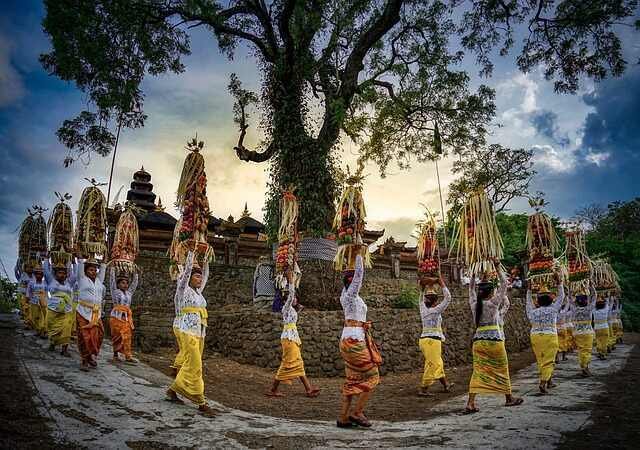
Bali and Religions
Bali is often described simply as a small Hindu island within the world’s largest Muslim-majority country, yet the reality is far richer and more nuanced. Religion in Bali shapes daily life, community identity, ceremonies, temple culture, and the rhythm of the year. For travelers, this spiritual dimension is one of the island’s most memorable features.
Seen from Bali, the island feels culturally distinct. Balinese Hinduism is deeply woven into homes, streets, villages, temples, offerings, festivals, music, dance, and social customs. Every day, visitors can witness ceremonies ranging from intimate family rituals to large-scale public processions, especially in towns and temple centers.
Balinese Hinduism, with influences from Buddhism, animism, and local ancestral traditions.
Daily offerings, temple ceremonies, processions, sacred dress, and community rituals.
Visit with curiosity, respect temple etiquette, and keep an open mind.
Religion in Bali: A Living Spiritual Culture
Bali is the only island in Indonesia where Hinduism is the dominant religion. However, Balinese Hinduism is distinct from Indian Hinduism because it also integrates Buddhist influences, animist beliefs, and local ritual traditions. This is one reason Bali is often called the Island of the Gods.
The majority of Balinese practice a local spiritual system often described as Agama Tirta, or the “religion of holy water.” Water is central to ceremonies, purification, temple blessings, and agricultural life. Religion is not confined to temples alone; it is present in homes, streets, businesses, fields, and village life.
There are also Bali Aga communities that preserve pre-Hindu traditions. Two of the best-known examples are Tenganan in Karangasem and Trunyan Village on Lake Batur.
Read also on Villa Carissa Bali
Learn more about Bali Aga traditions in
Trunyan Village | Complete Guide to Visit the Skull Village.
Beliefs and Religions in Bali
Hinduism
Hinduism is the dominant religion on the island. Balinese Hindus honor deities associated with Brahma, Shiva, and Vishnu, while also worshipping a supreme divine principle often called Sang Hyang Widhi Wasa.
Buddhism
Buddhism is a minority religion in Bali. One well-known Buddhist site is the Brahma Vihara Arama monastery in Banjar, in North Bali, where visitors may experience meditation and a peaceful hill setting.
Christianity
Christian communities exist across Bali, with Catholic communities especially visible in western Bali and around Denpasar. Churches remain active parts of local life for their congregations.
Islam
Islam is the majority religion in Indonesia, but only a minority religion in Bali. Villages such as Pegayaman show how Muslim and Hindu communities have coexisted peacefully for generations.
The Importance of Water in Balinese Hinduism
Water plays a sacred role in Bali. It symbolizes purification, prosperity, protection, and spiritual cleansing. This is why holy water appears in so many temple rituals, blessings, festivals, and rites of passage.
In everyday Balinese language, ordinary water may be called yeh, while holy water used in ritual settings is known as tirta. Water temples, springs, lakes, rivers, and the sea are therefore not merely natural sites, but spiritually significant places.
Offerings in Bali
Not a day passes in Bali without offerings. You will see small palm-leaf trays filled with flowers, incense, and symbolic items placed at shrines, family compounds, shops, crossroads, and temples. These offerings are part of a living devotional practice rather than a performance for tourists.
Daily offerings express gratitude, seek balance, and honor both benevolent and potentially disruptive spiritual forces. For visitors, they are among the clearest signs that religion in Bali is woven into ordinary life.
Related reading
For a deeper look at Balinese deities, see
Hindu Gods and Goddesses in Bali.
Religion in Lombok
Just east of Bali, Lombok has a very different religious landscape. The Sasak community is mainly Muslim, and mosques shape much of the island’s spiritual and social life. Lombok also preserves local traditions such as Wetu Telu, a syncretic belief system that blends Islamic and ancestral elements.
This contrast between Bali and Lombok makes the region especially fascinating for travelers interested in culture, belief systems, and local identity.
Read also on Villa Carissa Bali
Continue with
From Bali to Lombok | Complete Guide to Visit and Explore This Island.
Balinese Religious Festivals and Public Holidays
Festivals are everywhere in Bali, and they are one of the best ways to understand the island’s spiritual character. Many celebrations follow the Balinese calendar rather than the Gregorian calendar, so dates shift from year to year.
Some ceremonies are family-based and intimate, while others involve village-wide processions, temple celebrations, music, dance, and offerings. Visitors often encounter festivals unexpectedly, which can become one of the highlights of a Bali trip.
Galungan
Galungan marks the victory of Dharma over Adharma, or good over evil. Families return to their ancestral villages, offerings are prepared, and temples become central gathering points.
Kuningan
Celebrated ten days after Galungan, Kuningan honors purification and marks the departure of ancestral spirits from family temples.
Nyepi: Bali’s Day of Silence
Nyepi is one of Bali’s most remarkable religious observances. It marks the Balinese Hindu New Year and is unlike almost any other public holiday in the world. The day before Nyepi, villages hold noisy processions and carry giant demon effigies called ogoh-ogoh through the streets to drive away negative forces.
On Nyepi itself, the island becomes silent. Streets empty, flights pause, businesses close, and most residents remain at home. This silence is intended to promote reflection and to make evil spirits think the island is deserted.
Related reading
You may also like
Important Days in Bali | Cultural Events and Ceremonies.
Other Important Festivals in Bali
Melasti
Melasti takes place before Nyepi and is a purification ritual. Villagers bring sacred objects from temples to the sea, lakes, or springs in order to cleanse them. It is visually striking and spiritually significant.
Odalan
Odalan is the anniversary festival of a temple. Since Bali has thousands of temples, Odalan ceremonies happen constantly across the island. These temple anniversaries are major expressions of community devotion and artistic life.
During Odalan, worshippers gather in ceremonial dress, bring offerings, pray, and participate in temple festivities that may include dance, music, and theatrical performances.
Read also:
Useful Tips for Visiting Temples in Bali
Saraswati
Saraswati is dedicated to the goddess of knowledge. Books and learning are honored, and children commonly pray at school temples and receive blessings with holy water.
Pagerwesi
Pagerwesi is associated with spiritual protection and inner strengthening. Offerings and prayers focus on defending humanity from harmful forces and strengthening the spiritual self.
Tumpek
Tumpek celebrations occur every 35 days and honor different aspects of life, including animals, puppets, metal objects, plants, music, and artistic expression.
- Tumpek Kandang: offerings for animals, especially cattle
- Tumpek Wayang: offerings for puppets and shadow art
- Tumpek Landep: homage to metal objects and tools
- Tumpek Uduh: blessings for plants and harvests
- Tumpek Krulut: dedicated to music, masks, and performance
Read also:
Famous Flowers in Bali
World Kite Festival in Bali
Beyond temple ceremonies, Bali also celebrates cultural traditions with deep spiritual roots. The Bali kite season, especially from June to September, is one example. Kites in Bali are not just toys; they are associated with village identity, belief, competition, and the favor of the gods.
During the kite festival, some kites can reach around 5 m in width, which is approximately 16.4 ft. Traditional forms include:
- Layang Bebean: inspired by fish forms
- Layang Janggan: dragon- or bird-like designs
- Layang Pecukan: more experimental and difficult free-form designs
Read also:
Bali Arts Festival in Denpasar
Non-Religious Holidays in Bali
Bali also celebrates non-religious events such as Indonesian Independence Day on August 17, school competitions, and local races such as the buffalo races in Negara. Even outside the temple setting, public celebrations reveal how strongly tradition, identity, and performance shape life on the island.
Read more about Balinese culture
Continue with
Bali Heritage and Culture | Balinese Traditions.
Unwind at Villa Carissa: Your Oasis in Seminyak Center, Bali
After exploring Bali’s temples, rituals, ceremonies, and cultural landmarks, return to a peaceful private villa in the heart of Seminyak. Villa Carissa offers a relaxing base for travelers who want comfort, privacy, and easy access to Bali’s cultural and lifestyle experiences.
Discover the Villa
Explore the private pool villa, enclosed garden, and modern Balinese atmosphere.
Plan Your Stay
Check availability, promotions, and booking options for your Bali escape.
Experience serene tranquility with a private swimming pool and secluded garden, whether you are traveling with family, friends, or for a romantic Bali retreat.
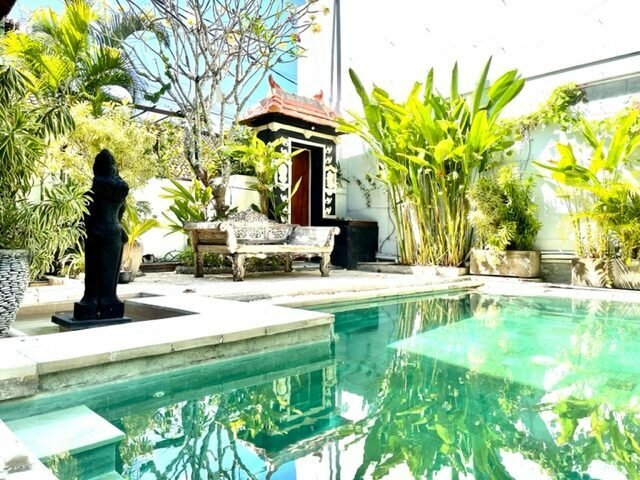
Villa Carissa in Seminyak Center, with a private pool.