Bali Culture • Ceremonies • 2026 Calendar
Important Days in Bali: Cultural Ceremonies and Events
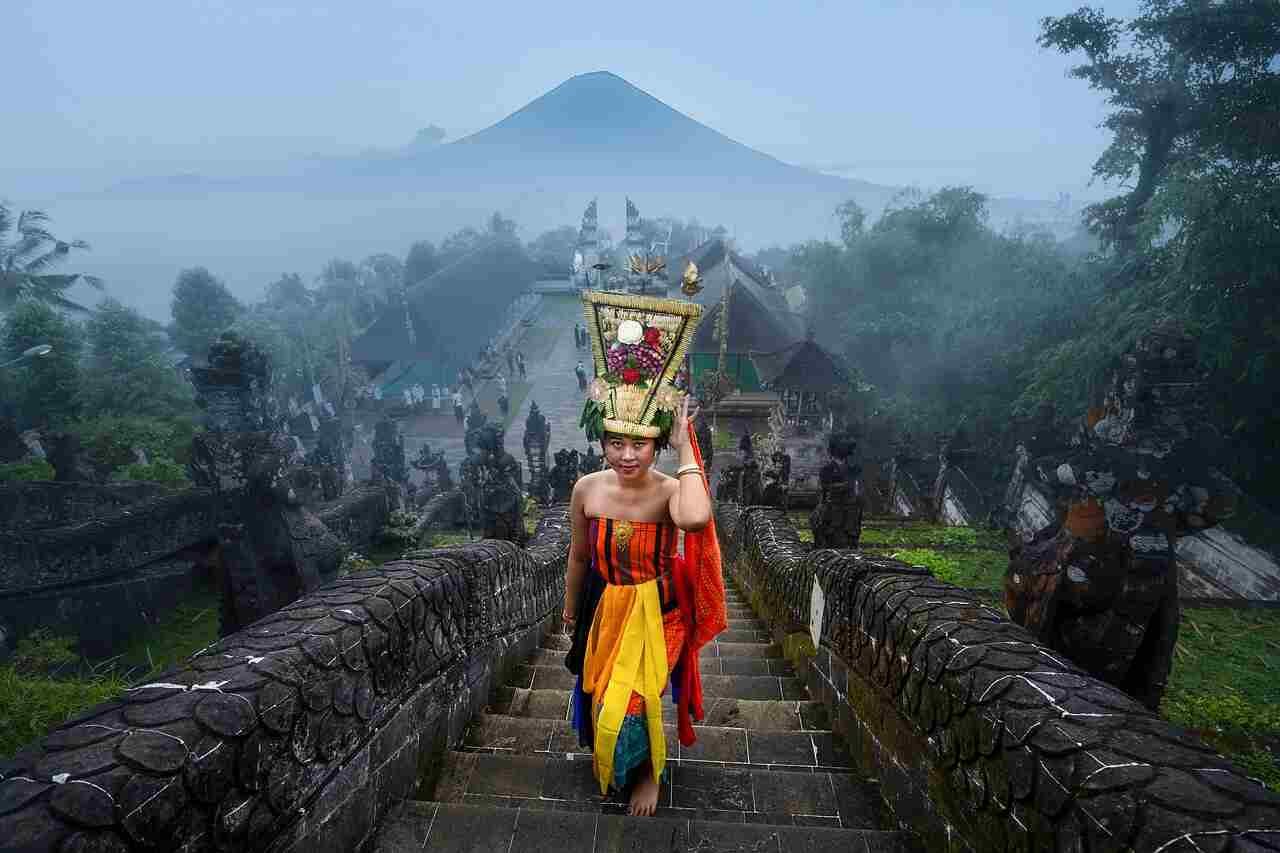
Important days in Bali are much more than entries on a holiday calendar.
They shape temple life, family duties, village activity, offerings,
processions, music and the rhythm of daily life across the island.
This guide explains Bali’s most important cultural and religious occasions,
including Nyepi, Melasti, Galungan, Kuningan, Saraswati, Pagerwesi, Odalan
and the Tumpek ceremonies.
Balinese calendar explained
Temple etiquette
Visitor planning tips
Last reviewed: July 2026
Understanding Bali’s Ceremonial Calendar
Bali uses more than one calendar system, which is why many ceremonies do not
remain on the same Gregorian date each year.
The Pawukon calendar follows a 210-day cycle. It determines
many temple anniversaries and recurring holy days, including Galungan,
Kuningan, Saraswati, Pagerwesi and the Tumpek observances.
The Saka calendar follows a lunar system and determines
Nyepi, Bali’s Day of Silence and Balinese Hindu New Year.
The international Gregorian calendar is still used for administration,
tourism, flights and national holidays, but religious dates are calculated
through Bali’s traditional calendar systems.
approached as acts of worship and cultural responsibility, not simply as
performances arranged for visitors.
Main Calendar Systems
Pawukon, based on a 210-day cycle, and the lunar Saka calendar.
Most Famous Observance
Nyepi, when Bali becomes silent and most public activity stops for
24 hours.
Best Visitor Approach
Dress modestly, maintain distance, follow local guidance and never block
a ceremony.
An introduction to Bali’s relationship between religion, community and
cultural life.
Important Days in Bali in 2026
The table below provides an overview of major island-wide or widely observed
dates. Odalan ceremonies are not included because every temple has its own
anniversary.
| Date in 2026 | Occasion | Calendar | What visitors should know |
|---|---|---|---|
| 18 March | Melasti and Nyepi-eve activity | Saka calendar period | Purification processions may occur before Nyepi. Ogoh-ogoh parades commonly take place on the evening before Nyepi. |
| 19 March | Nyepi | Saka New Year | Bali observes 24 hours of silence. Travelers must remain inside their accommodation. |
| 20 March | Ngembak Geni and Omed-Omedan | Day after Nyepi | Normal activity resumes. Omed-Omedan is associated specifically with Banjar Kaja in Sesetan. |
| 4 April | Saraswati | Pawukon | A holy day honoring knowledge, learning, literature and the arts. |
| 8 April | Pagerwesi | Pawukon | Associated with spiritual strength and the protection of knowledge. |
| 17 June | Galungan | Pawukon | Roads are decorated with penjor and families attend temples. |
| 27 June | Kuningan | Pawukon | The closing day of the Galungan period. |
| 17 August | Indonesian Independence Day | Gregorian | National flags, ceremonies, competitions and community celebrations take place across Bali. |
| 31 October | Saraswati | Pawukon | The second Saraswati observance within the Gregorian year. |
| 4 November | Pagerwesi | Pawukon | The second Pagerwesi observance within the Gregorian year. |
210 days, so some ceremonies can occur twice during one Gregorian year.
Nyepi: Bali’s Day of Silence
Nyepi is the Balinese Hindu New Year and one of the world’s most distinctive
island-wide religious observances.
For approximately 24 hours, Bali becomes quiet. Roads are closed to ordinary
traffic, the airport suspends operations, businesses close and residents and
visitors remain inside their homes or accommodation.
Nyepi is traditionally connected with four forms of restraint known as
Catur Brata Penyepian:
- Amati Geni: refraining from fire or bright light
- Amati Karya: refraining from work
- Amati Lelungan: refraining from travel
- Amati Lelanguan: refraining from entertainment
Thursday, 19 March 2026The silent period generally begins at approximately 6:00 a.m. and lasts
until approximately 6:00 a.m. on 20 March.
No normal airport or road movementDo not schedule flights, transfers, check-ins, check-outs or excursions
during the silent period.
What Hotel and Villa Guests Must Do
- Remain inside the accommodation grounds.
- Keep noise and lighting low.
- Do not walk onto public roads or beaches.
- Prepare food, medicine and essentials in advance.
- Follow instructions from accommodation staff and local authorities.
- Do not fly drones or create outdoor entertainment.
Emergency services continue operating, but ordinary travel and outdoor
activities are not allowed.
Nyepi transforms Bali into a remarkably quiet island for one full day.
Melasti: Purification Before Nyepi
Melasti is a purification ceremony conducted before Nyepi. Temple communities
carry sacred objects in procession toward the sea, a lake, a river or another
sacred water source.
The ceremony symbolizes cleansing the world and the individual before the
beginning of the Saka New Year.
Participants often wear white ceremonial clothing and carry temple objects,
umbrellas, offerings and musical instruments. The exact date and route vary
between communities.
Where Melasti Happens
Processions can be seen near beaches, lakes and sacred water sites across
Bali, particularly in the days immediately before Nyepi.
How to Observe
Stand to the side, keep a respectful distance, avoid interrupting the
procession and ask before taking close photographs.
Melasti processions carry sacred objects to water for ritual purification.
Ogoh-Ogoh Parades on the Eve of Nyepi
On the evening before Nyepi, many villages hold parades featuring
ogoh-ogoh: large sculpted figures representing destructive forces,
negative qualities or mythological beings.
The figures are carried through the streets with music, torches and large
crowds. Their designs often combine traditional mythology with contemporary
themes.
Parade organization can vary by village and year. Road closures and traffic
disruption usually begin before the procession starts.
close unexpectedly, and transport becomes increasingly difficult as the
parades approach.
Ngembak Geni: Reconnection After Nyepi
Ngembak Geni takes place on the day after Nyepi. Normal activity resumes, and
the day is associated with forgiveness, family visits, reconciliation and
renewed social relationships.
Roads, businesses and transport begin operating again, although the restart
can be gradual during the morning.
Friday, 20 March 2026Allow additional time for transport because many people are visiting family
and resuming normal activity after Nyepi.
Omed-Omedan in Sesetan
Omed-Omedan is a community tradition associated with Banjar Kaja in Sesetan,
Denpasar. It takes place after Nyepi and involves groups of unmarried young
people in a ceremonial pulling and embracing ritual.
It is often described in international media as a “kissing festival,” but that
description oversimplifies its local cultural meaning. The event is connected
with community identity, youth participation and local tradition.
Friday, 20 March 2026Expect crowds, limited parking and temporary road restrictions around
Sesetan.
respect crowd-control instructions and avoid intrusive photography.
Galungan
Galungan is one of Bali’s most important Pawukon-based holy days. It celebrates
the victory of Dharma over Adharma, commonly understood as
the victory of good or righteous order over harmful forces.
Balinese families prepare offerings, visit temples and honor ancestral spirits.
Roads and house entrances are decorated with tall curved bamboo poles called
penjor.
A penjor is decorated with coconut leaves, agricultural products, cloth and
symbolic ornaments. Each household creates its own, so village roads become
highly distinctive during the Galungan period.
Wednesday, 17 June 2026Preparations begin before the official day, and family and temple activity
continues throughout the Galungan period.
Galungan is recognizable by temple visits, family offerings and decorated
penjor lining the roads.
Kuningan
Kuningan takes place ten days after Galungan and closes the sacred Galungan
period.
Families prepare distinctive offerings and pray before ancestral spirits are
believed to return to the spiritual realm.
Ceremonial activity is often concentrated in the morning, and travelers may
notice temples and family compounds becoming busy early in the day.
Saturday, 27 June 2026Kuningan marks the conclusion of the Galungan cycle.
Kuningan concludes the ten-day sacred period that begins with Galungan.
Saraswati Day
Saraswati Day honors knowledge, learning, literature, art and wisdom. It is
dedicated to the goddess Saraswati.
Books, manuscripts and educational materials may receive offerings. Schools
and educational communities often conduct prayers and ceremonies.
The day demonstrates the importance of knowledge as something sacred rather
than merely practical.
Saturday, 4 April 2026Schools, homes and temples may hold prayers honoring knowledge and
education.
Saturday, 31 October 2026The 210-day Pawukon cycle allows Saraswati to occur twice during 2026.
Pagerwesi
Pagerwesi is associated with spiritual protection, strength and the safeguarding
of knowledge.
Its name is commonly translated as “iron fence,” symbolizing a strong spiritual
barrier against harmful influences.
Pagerwesi occurs shortly after Saraswati, linking the acquisition of knowledge
with the need to protect and use that knowledge wisely.
Wednesday, 8 April 2026Families may pray at household shrines, village temples and larger temples.
Wednesday, 4 November 2026Pagerwesi repeats according to the 210-day Pawukon calendar.
Tumpek Ceremonies
Tumpek refers to a sequence of recurring holy days within the Pawukon calendar.
Each Tumpek has a different ceremonial focus.
Tumpek Landep
Honors sharpness, skill and metal objects. Modern observances may include
blessings for vehicles and machinery.
Tumpek Uduh
Honors trees, plants and agricultural fertility. It is also known by
several local names, including Tumpek Wariga.
Tumpek Kuningan
Corresponds with Kuningan and concludes the sacred Galungan period.
Tumpek Krulut
Associated with music, gamelan, art, emotional harmony and compassion.
Tumpek Kandang
Honors animals and expresses gratitude for their role in human and
agricultural life.
Tumpek Wayang
Associated with shadow puppetry, ritual performance and the spiritual
dimensions of traditional theatre.
calendar when planning around a specific Tumpek date.
Odalan: Bali’s Temple Anniversary Ceremonies
Odalan is the anniversary ceremony of a Balinese Hindu temple. It generally
returns every 210 days according to the Pawukon calendar.
Bali has thousands of temples, ranging from small family shrines to major
regional temples. This means Odalan ceremonies occur throughout the island
during every part of the year.
During an Odalan, the temple may be decorated with ceremonial cloth, offerings,
flowers and bamboo ornaments. Worshippers arrive in traditional dress, and
music, dance or ritual performance may accompany the prayers.
Why There Is No Single Odalan Date
Each temple follows its own anniversary. A date applying to one temple does
not automatically apply to another.
How to Confirm an Odalan
Ask the temple, village authorities, accommodation staff or an experienced
local guide shortly before your planned visit.
Odalan ceremonies differ according to the temple, community and ceremonial
scale.
Indonesian Independence Day in Bali
Indonesia celebrates Independence Day every year on 17 August. It is a national
occasion rather than a specifically Balinese Hindu holy day, but it is widely
celebrated throughout Bali.
Visitors will see Indonesian flags, community decorations, official ceremonies,
school activities and traditional games.
17 AugustPublic institutions, schools and communities may organize ceremonies and
competitions around this date.
How to Observe Bali Ceremonies Respectfully
Visitors are often welcome near public processions and at many temple
ceremonies, but permission to observe does not remove the need for respectful
behavior.
Dress Appropriately
- Wear clothing covering the shoulders and knees.
- Use a sarong and sash when required.
- Avoid beachwear inside temple grounds.
Keep a Respectful Distance
- Do not stand between worshippers and a shrine.
- Do not walk in front of people who are praying.
- Do not enter restricted ceremonial areas.
Photograph Carefully
- Ask before taking close portraits.
- Avoid flash during prayer or performance.
- Do not use drones without clear authorization.
Respect Processions
- Stand to the side rather than in the route.
- Allow offerings and ceremonial groups to pass.
- Follow instructions from local security personnel.
A photograph or unobstructed view is never more important than the religious
activity taking place.
Travel Planning During Major Bali Ceremonies
Expect Traffic Changes
Processions, temple activity and road closures can delay journeys. Add
extra travel time and avoid tightly scheduled transfers.
Book Nyepi Accommodation Early
Choose accommodation where you will be comfortable remaining for the entire
silent period and confirm meal arrangements in advance.
Confirm Opening Hours
Shops, attractions, restaurants and government offices may close or operate
reduced hours around major holy days.
Ask Locally
Ceremony routes and temple anniversaries can change. Accommodation staff
and village residents are often the best source of local information.
Nyepi Preparation Checklist
- Complete shopping before the evening preceding Nyepi.
- Confirm accommodation meals and drinking water.
- Charge phones, power banks and essential devices.
- Download entertainment for use with headphones.
- Keep medication and personal necessities available.
- Return to the accommodation before road closures.
- Keep curtains closed and lighting subdued at night.
More Bali Culture Guides
Frequently Asked Questions
What are the most important days in Bali?
Major occasions include Nyepi, Melasti, Galungan, Kuningan, Saraswati,
Pagerwesi, Odalan ceremonies and the recurring Tumpek holy days.
What is the most important cultural day in Bali?
Nyepi is one of the island’s most distinctive and important observances,
although Galungan, Kuningan and temple ceremonies are also deeply
significant.
When is Nyepi in 2026?
Nyepi falls on Thursday, 19 March 2026. The silent period continues for
approximately 24 hours into the morning of 20 March.
Can tourists leave their hotel during Nyepi?
No. Visitors must remain within their hotel, resort, villa or accommodation
grounds except in a genuine emergency.
Does Bali Airport close for Nyepi?
Normal airport operations are suspended during the Nyepi silent period,
apart from exceptional emergency or authorized activity.
When are Galungan and Kuningan in 2026?
Galungan is Wednesday, 17 June 2026, and Kuningan is Saturday,
27 June 2026.
Why do some Bali holy days occur twice in one year?
Pawukon-based holy days repeat every 210 days, which is shorter than the
Gregorian year.
What is the difference between Galungan and Kuningan?
Galungan begins the sacred period associated with the victory of Dharma,
while Kuningan takes place ten days later and closes that period.
What is Odalan?
Odalan is a temple anniversary ceremony that generally repeats every
210 days according to the Pawukon calendar.
Why is there no single date for Odalan?
Every temple follows its own anniversary date, so Odalan ceremonies take
place throughout the year.
Can tourists attend Bali ceremonies?
Visitors can often observe public ceremonies if they dress modestly,
maintain a respectful distance and follow local instructions.
Should tourists wear a sarong at a temple?
A sarong and sash are commonly required. Rules vary, so follow the
instructions displayed or provided at the entrance.
What happens on the evening before Nyepi?
Many villages organize ogoh-ogoh parades with large sculpted figures,
music and processions.
What happens after Nyepi?
Ngembak Geni marks the return to ordinary activity and is associated with
forgiveness, family visits and reconciliation.
Sources and Date Verification
Bali holy-day dates should always be checked against current official or
specialist calendars, particularly when planning flights or attending a
specific temple ceremony.
Indonesian Ministry of Religious Affairs – Hindu and National Holiday
Calendar 2026
Bali Provincial Government
Nyepi Visitor Information
Balinese Pawukon and Saka Calendar Explanation
For a temple-specific Odalan, confirm the date directly with the temple,
village, accommodation staff or a knowledgeable local guide.
Stay at Villa Carissa in Central Seminyak
Villa Carissa is a private three-bedroom pool villa accommodating up to eight
guests in central Seminyak.
Its location provides convenient access to Seminyak’s beaches, restaurants,
shops and nightlife, while day trips can be arranged to temples, cultural
events and ceremonies across Bali.
The villa includes a private swimming pool, enclosed tropical garden, equipped
kitchen, fast Wi-Fi and comfortable indoor and outdoor living spaces.
Breakfast is freshly prepared by our staff and served in the comfort of your
villa. For a unique Bali experience, you can also enjoy a floating breakfast
served in your private pool.

Seminyak.